2022 marks the 200th anniversary of the birth of composer César Franck (on December 10, 2022). To celebrate Belgium’s bewhiskered wonder, Scott Dettra will perform all Franck’s major organ works in a two-part recital at Princeton University Chapel, tomorrow (Saturday) at 3:30 pm and 8 pm. The event is free and open to the public.
Decades ago, I attended a Franckathon in Philadelphia. On that occasion, the complete organ works were presented in a single session with two intermissions, as the audience anesthetized itself with free coffee and doughnuts.
No coffee or doughnuts advertised for tomorrow’s concert, but with a three-hour break between sittings, you should be able to nose around Princeton for some sustenance (and some NoDoz).
I never could say no to a good marathon, especially one that tests my endurance so assuredly as does the organ music of César Franck.
But if you’re going to do it, this is the setting, the instrument, the performer, and the occasion with which and on which to do so.
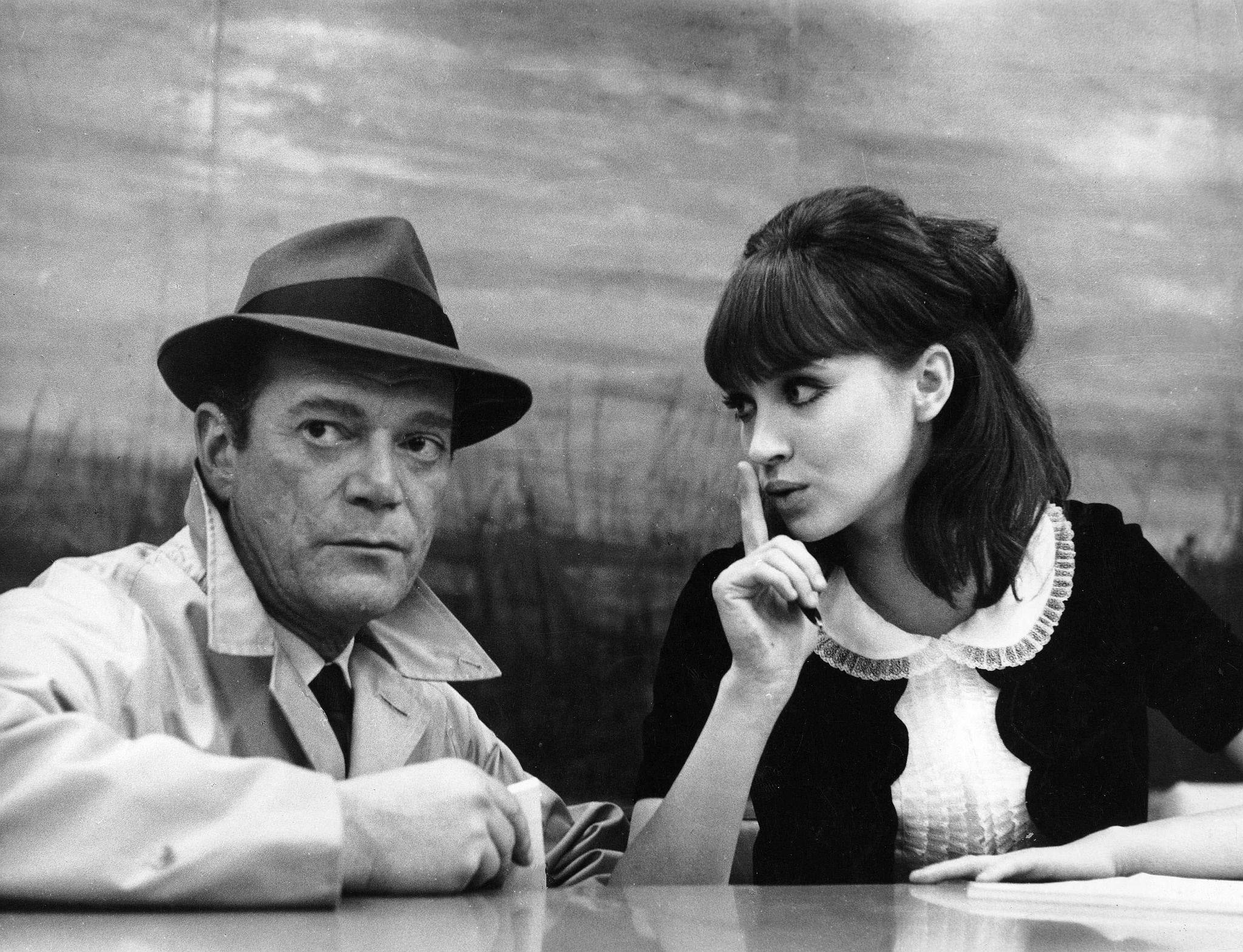
What would you get if you cast Charles McGraw in a French-language version of “Blade Runner” scripted by George Orwell and Jorge Luis Borges? I don’t know, but I think “Alphaville” (1965) would be pretty damn close.
“Alphaville” takes many of the familiar film noir tropes (brandished pistols, flashing switchblades, labyrinthine corridors, trench coats, whiskey in teacups, Zippo lighters, car chases, world weary cigarette smoking, flat voiceovers, alienation, Akim Tamiroff) and drops them in a “1984” setting (words are redacted from dictionaries or given new meanings; poetry, love, and emotion are punishable by death); then takes away the camera tripods, ignores the careful set-ups, the crazy angles, the moody lighting, and lets the air out of the tires of its car chases. The music placement is willy-nilly. The dialogue is improvised. The editing is uninvolving, deliberately disorienting, the very opposite of thrilling.
The trappings of noir and sci-fi are all there (with the exception of anything resembling a special effect), but run through the sieve of a perverse postmodernism. It’s an exercise that’s both pure film and an existential critique – of what? The menace and malaise of life in mid-century France, I guess.
Hats off to craggy Eddie Constantine, who played hardboiled Lemmy Caution in a series of straight noir films throughout the 1950s and ‘60s, for being game in lending his characterization to such a radically different approach.
We’ll take a slug from the mug – or a .45 – as we throw Caution to the wind on the next Roy’s Tie-Dye Sci-Fi Corner. Joining us in our salute to the late revolutionary filmmaker Jean-Luc Godard will be cinephile Christian Lalancette, who’s seen probably every movie worth seeing, and a good deal beside.
We’ll have serial numbers tattooed on our shoulders and knuckles tattooed on our jaws. The executioner’s swimming pool will be open in the comments section, for this discussion of film’s most celebrated French New Wave philosophical-dystopian sci-fi noir, when we livestream on Facebook, this Friday evening at 7:30 EDT.
Summer 2022 is on the wane. Autumn begins in the Northern Hemisphere at 9:04 pm EDT.
Thomas Moore’s poem, “The Last Rose of Summer,” was written in 1805. It was set to a traditional Irish tune, “Aisling an Óigfhear,” or “The Young Man’s Dream,” with words and music published together in 1813. The song proved to be a heady inspiration for dozens of composers. It’s interesting to reflect that for Beethoven and his brethren in the early 19th century, this would have been considered a contemporary hit.
Here it is, sung by Amelita Galli-Curci in 1921
Beethoven, “6 National Airs with Variations,” Op. 105, No. 4 “The Last Rose of Summer”
Ferdinand Ries, Sextet “The Last Rose of Summer” (the tune appears at 11:45)
Carl Czerny, “Variations on ‘The Last Rose of Summer’”
Felix Mendelssohn, “Fantasy on ‘The Last Rose of Summer’”
Sigismond Thalberg, “The Last Rose of Summer”
Heinrich Wilhelm Ernst, “Variations on ‘The Last Rose of Summer’”
Félix Godefroid
Joachim Raff
Max Reger
Paul Hindemith, “On Hearing ‘The Last Rose of Summer’”
Benjamin Britten
Friedrich von Flotow, from his opera “Martha”
“Soul of the Rose,” by John William Waterhouse (1908)
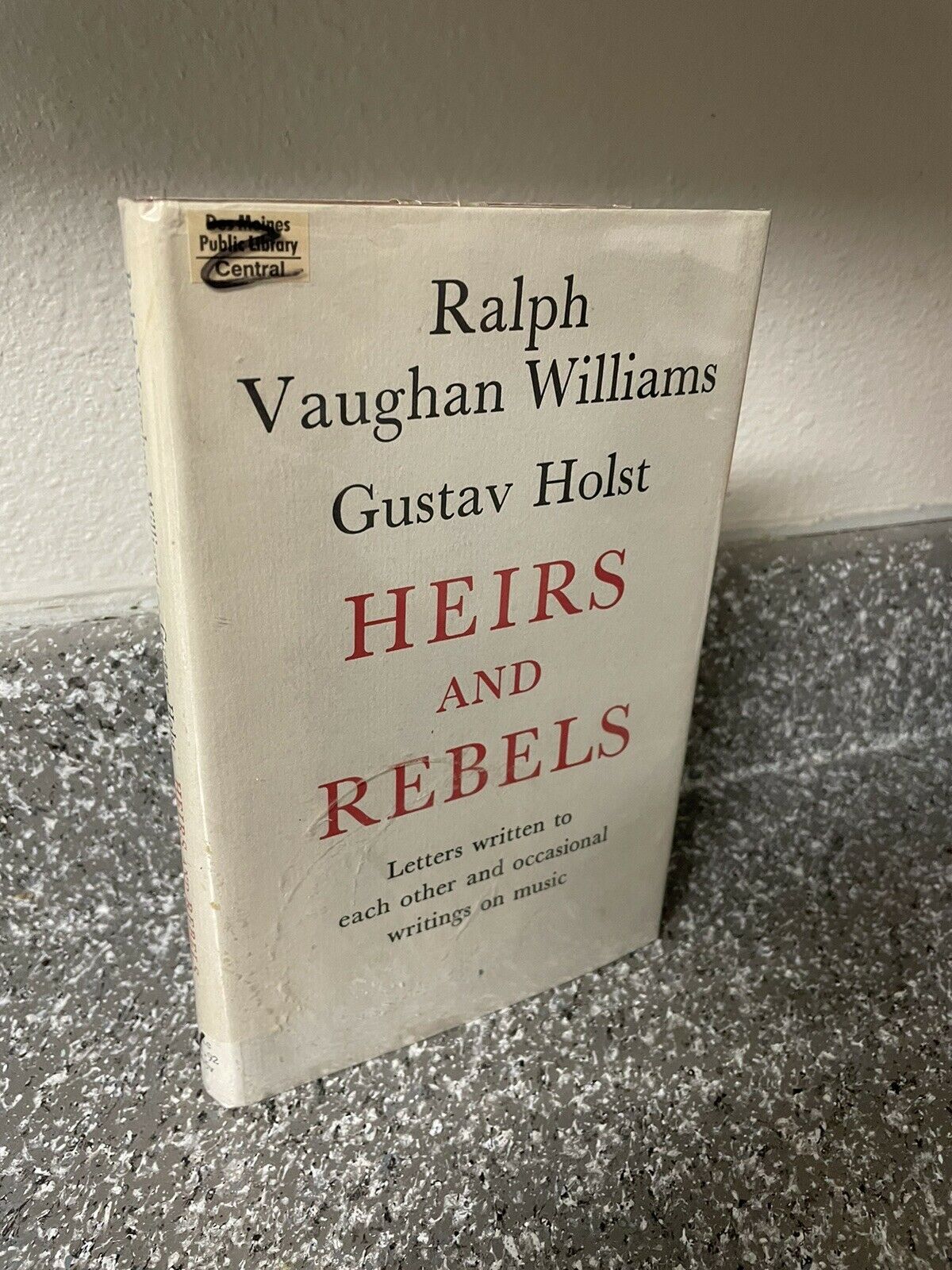
You may recall, I posted here a couple of times that I was the beneficiary of the Des Moines Public Library, which for some reason opted to discard a number of collectible volumes about Ralph Vaughan Williams, in the year that marks the sesquicentennial of his birth. (The actual date is October 12.) In any case, Des Moines’ loss is my gain, as I snatched them off eBay not long after they appeared.
One of these is a collection of correspondence between Vaughan Williams and fellow composer Gustav Holst, edited by Ursula Vaughan Williams (RVW’s widow) and Imogen Holst (Gustav’s daughter). The letters are interleaved with musical essays by both artists.
Having just finished the book, which is rather slender at just over 100 pages, I come away with a better understanding of their friendship and just how much they influenced one another. There was such honesty and trust between them. In their shared pursuit of artistic excellence and a new English music, neither of them were ever insensitive in their criticism, but they weren’t afraid to be direct in stating what they thought worked and didn’t work in each other’s compositions.
There are several interesting essays by Holst that make me want to revisit the music of Thomas Weelkes and Samuel Wesley, so highly did he regard them at their best. It’s interesting what things the editors decide to footnote and what they don’t. I got a bit of a swollen head when I realized how much I was able to pick up that would have slipped past a reader perhaps not quite so well-versed in English music.
Of course, being a library discard, there are a few instances in my copy of random scrawl in the margins and unnecessary underlining in ink, which is irksome – who writes in a book in pen? – but for the price I am glad to have it, as copies on the secondhand market are many times the cost.
The title is a reference to a lecture delivered by Holst at Yale in 1929, in which he quotes Gilbert Murray: “Every man who counts is a child of tradition and a rebel from it.”
Vaughan Williams and Holst embodied this dictum most demonstratively, absorbing their lessons from hidebound Hubert Parry and Charles Villiers Stanford at the Royal College of Music, striking out on their own to harvest English folk song from its natural habitat before it could be plowed under by industrialization, and, in Vaughan Williams’ case, reaching back to the Tudor era to revitalize “The English Hymnal.” Holst also found inspiration in ancient Hindu texts. Both men built their own idiosyncratic structures on these foundations to become two of England’s most distinctive musical voices.
Holst offered the following words to Vaughan Williams, in a moment of self-doubt. Amidst all the advice and constructive criticism, he writes perceptively, in a letter from 1903, “Your best – your most original and beautiful style or ‘atmosphere’ is an indescribable sort of feeling as if one were listening to very lovely lyrical poetry. I may be wrong but I think this (what I call to myself the REAL RVW) is more original than you think.”
Theirs was a special friendship, and Vaughan Williams felt keenly Holst’s loss when he died in 1934, at the age of 59. RVW had a lot of creative years ahead of him. He died in 1958, at 85, active until the end. For the rest of his life, he missed the valued input of his close friend and kindred spirit.
Happy birthday, Gustav Holst.
“Jupiter” (1914)
“Beni Mora” (1910)
Vaughan Williams’ setting of “Seventeen Come Sunday” from his “English Folk Song Suite” (1923)
Listen for the tune in Holst’s “Somerset Rhapsody” (1906), about three minutes in
“Choral Hymns from the Rig Veda” (1911), anticipating Britten?
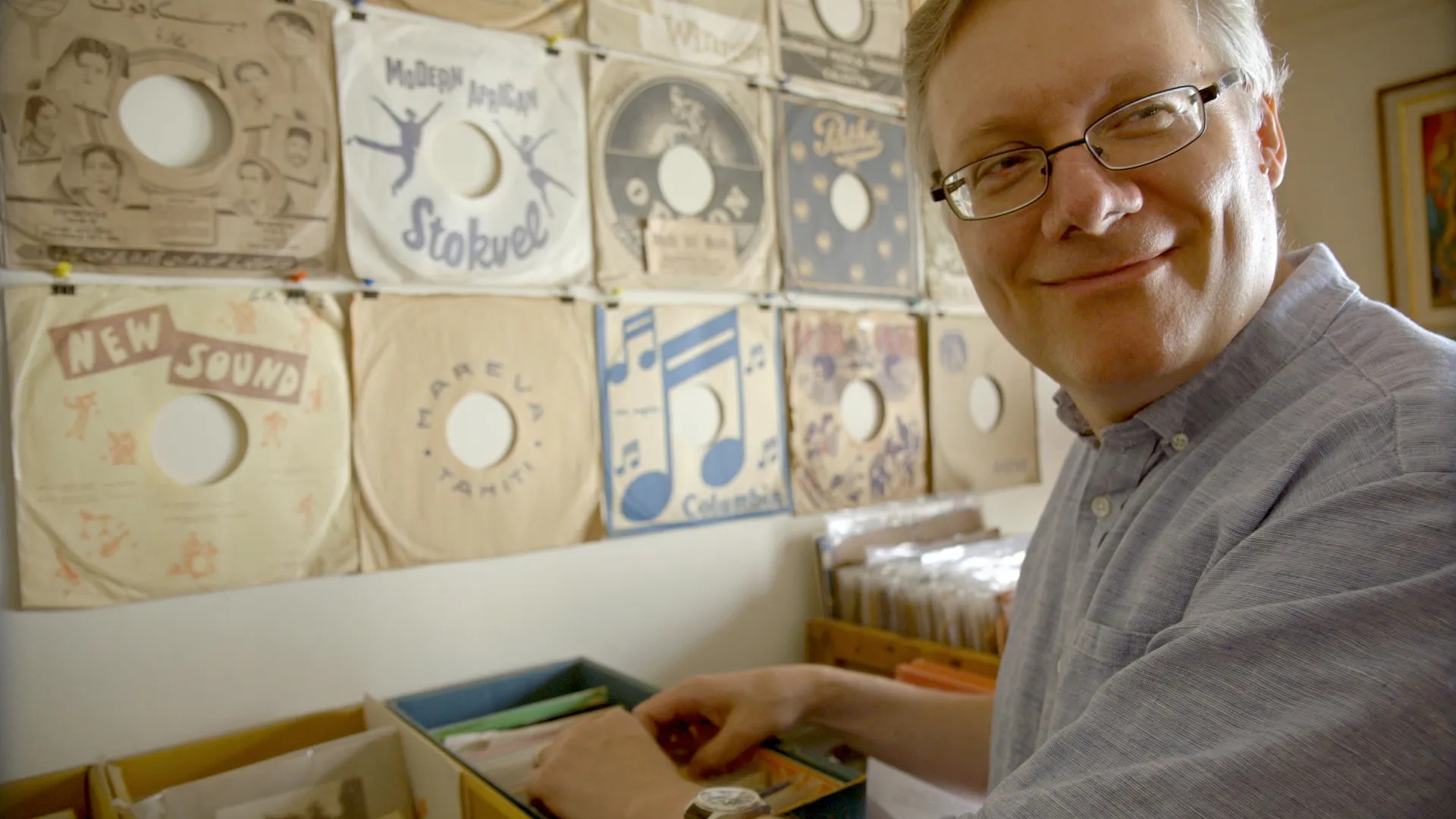
A couple of weeks ago, one of my prolific music searches brought me to a strange corner of the internet that introduced me to film that was released in 2018 that somehow I had never heard of. Superficially, “Bathtubs Over Broadway” is a documentary about a comedy writer for “The Late Show with David Letterman” who, through his perpetual search for weird LPs to be used as gags on the show, unlocks a world previously unknown to him – that of the industrial musical.
Industrial musicals were commissioned by America’s great corporations, extolling the magnificence of their products, whether they be tractors, dog food, or bathroom appliances, to be performed as one-offs at national or even regional sales conventions as morale boosters for its employees – mainly hardworking salesmen with unglamorous jobs that often kept them away from the suburban, nuclear family-occupied, pastel homes they were supporting.
The money and talent lavished on these “shadow musicals” is staggering. The budgets eclipsed those of some of Broadway’s biggest hits. The actors and composers, a number of them future Tony winners, were all drawn from the same pool. Bob Fosse, Tommy Tune, Chita Rivera, Florence Henderson, Tony Randall, Bob Newhart, Hal Linden, Ed McMahon, Martin Short, and the creative forces behind “Fiddler on the Roof,” “Cabaret,” and “The Producers” all worked in industrial musicals. They were lavishly rewarded, I might add. And yet, very few people know of the existence of genre.
Even if you think you don’t find the subject matter appealing, the film works on multiple levels. It goes without saying that it’s a must for musical theater enthusiasts. But hardcore collectors will totally get the mania of “the quest” and smile knowingly at Steve Young’s encounters with the few quirky people in the world who happen to share the focus of his own particular insanity.
Furthermore, he makes it his mission to track down a number of the performers and creative artists who actually worked on these musicals. These encounters blossom into real-life friendships, lending the proceedings an unexpected warmth and even poignancy.
It also makes for fascinating social history. Like any artistic or pop cultural development, the industrial musical holds a mirror to and reflects the realities of the time – in this case, a lost America of the 1950s and ‘60s.
The entire film is an agreeable 90-minutes well-spent. And I must say, the out-of-left-field meta ending is absolutely perfect.
I caught it on Netflix a couple of weeks ago. You can watch the trailer here:


8 responses