• Our Man Flint Spy-Fi Deep Dive

    Our Man Flint Spy-Fi Deep Dive

    by 

    in
    4 responses

    The conversation will be all about “spy-fi” on the next “Roy’s Tie-Dye Sci-Fi Corner.”

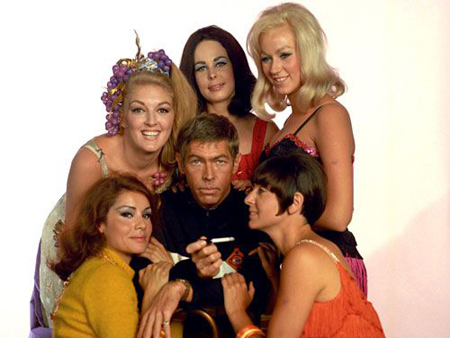
    A polymath on the level of Doc Savage (he’s a karate champion, brain surgeon, swordsman, and nuclear physicist), but with the sex appeal, sophistication, and gadgetry of James Bond (his cigarette lighter contains 82 death-dealing devices), Derek Flint effortlessly surfs the swinging ‘60s super-spy tsunami.

    There were two Flint films – “Our Man Flint” (1966) and “In Like Flint” (1967) – with talk of producing more, but according to star James Coburn, the studio simply wasn’t set on investing very much in the franchise. Bond knockoffs were rather thick on the ground at the time. Nevertheless, Flint proved to be a breakout role for Coburn. “Our Man Flint” firmly established him as an above-the-title leading man, and one of the era’s reigning tough guys.

    Of course, none of it is supposed to be taken very seriously (it’s not for nothing that the sequel, “In Like Flint,” is Austin Powers’ favorite movie), but that doesn’t keep Jerry Goldsmith from lavishing the film with his characteristic invention, including a breezy theme and abundant felicitous touches in the orchestration (requisite surf guitar, jazzy sax, romantic strings, accordion, electronics, mandolin, and Latin percussion). The composer had plenty of experience honing his espionage skills from his work on “The Man from U.N.C.L.E.”

    I hope you’ll join us, as Roy and I will be at our manliest (and flintiest) when discussing “Our Man Flint,” on the next Roy’s Tie-Dye Sci-Fi Corner. Your license to kill will be waiting in the comments section when we livestream on Facebook, this Friday evening at 7:30 EDT.
    https://www.facebook.com/roystiedyescificorner


  • PrincetonInfo Article by [Your Name]

    by 

    in
    4 responses

    Thanks for sharing, @[100063792690234:2048:U.S. 1 Newspaper – PrincetonInfo]! In case you missed it, here’s a link to my article in this week’s edition.


  • Princeton’s Lost Music: A Digital History

    Princeton’s Lost Music: A Digital History

    by 

    in
    11 responses

    60 years ago, Princeton University engineers noticed members of the music department, staring agog at a recently-installed computer. It wasn’t long before a not-so-unlikely alliance was formed that helped to change history. New Jersey’s role in the creation of digital music is the subject of a new podcast, “Composers & Computers.”

    The accessible, absorbing presentation illuminates the work of engineers at RCA Laboratories in Princeton in the 1950s, Princeton music faculty at the Columbia-Princeton Electronic Music Center in New York, and musicians who first entered the computer center in the Princeton University EQuad in 1962, with the intention of harnessing a new IBM 7090 to synthesize music.

    No less than 20 subjects were interviewed for the series, to create an oral history spanning six decades. Commentary, anecdotes, and insights are punctuated and underscored by samples of electronic music, from Milton Babbitt and Charles Wuorinen (his Pulitzer Prize-winning “Time’s Encomium”) to Stevie Wonder and The Beach Boys.

    Aaron Nathans, Digital Media Editor at Princeton’s School of Engineering and Applied Science, is the mastermind behind the podcast. He too is an interesting, multifaceted individual, who became the unexpected co-subject of an article I wrote for this week’s U.S. 1 Newspaper – PrincetonInfo.

    Learn more about electronic music pioneers Milton Babbitt, Godfrey Winham, Paul Lansky, Ken Steiglitz, and their colleagues and students, and the continued vitality of the Princeton computer scene as exemplified by the Princeton Laptop Orchestra and the multidisciplinary experimentation of Naomi Leonard and her “Rhythm Bots.”

    Look for the story in print in area vending machines and local businesses, or find immediate gratification here:

    https://www.communitynews.org/princetoninfo/artsandentertainment/a-good-ear-for-stories-and-electronic-music-inspires-a-princeton-podcast/article_93780110-3384-11ed-93a9-1ba8b9106ed7.html

    The “Composers & Computers” podcast, sponsored by Princeton University’s School of Engineering and Applied Science, can be heard on iTunes, Spotify, Google Podcasts, Stitcher, and other platforms. Show notes, including playlists, sources, rare photos, and podcast audio, are also available at https://engineering.princeton.edu/series/composers-computers-podcast


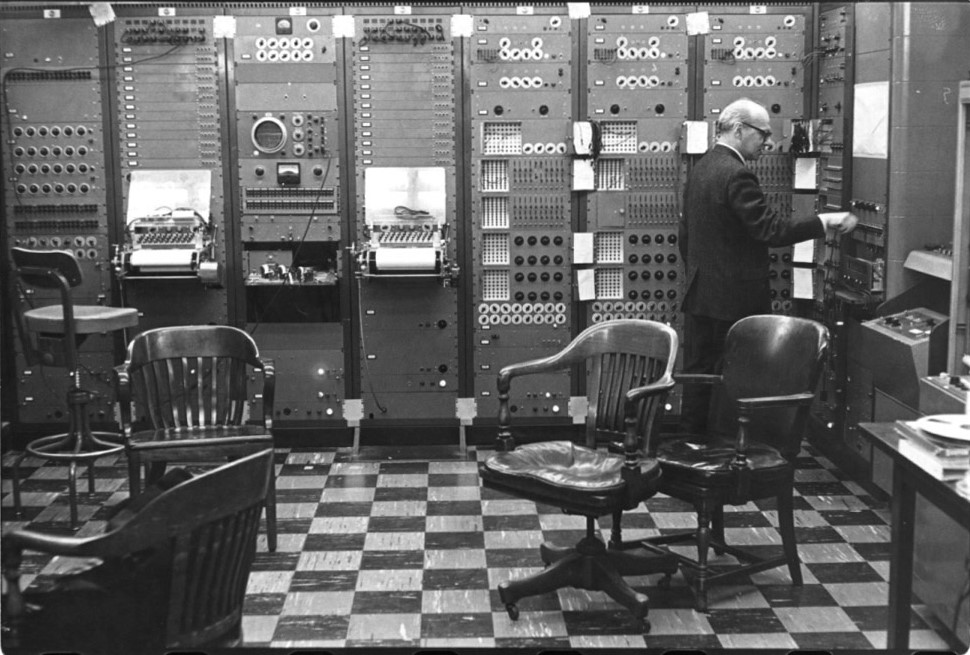
    ONCE UPON A TIME IN NEW YORK: Princeton composer Milton Babbitt at the Columbia-Princeton Electronic Music Center


  • Schoenberg: Beyond the Twelve-Tone Legend

    Schoenberg: Beyond the Twelve-Tone Legend

    by 

    in
    6 responses

    Okay, pointy heads! It’s back to school – the Second Viennese School – for the birthday of Arnold Schoenberg.

    The dour high priest of twelve-tone music was full of surprises. I venture to guess that many would be nonplussed to learn that the greatest prophet of dodecaphonic music claimed artistic kinship with Johannes Brahms. But then, some conductors (notably Karajan and Solti) have tried to interpret him that way. Even so, he remains one of the most hated composers among concertgoers who prefer programs of unsullied Beethoven and Dvořák.

    Schoenberg may have preached the death of tonality, but he composed at least three Romantic masterpieces, “Verklärte Nacht” (“Transfigured Night”), “Pelleas und Melisande,” and the opulent oratorio “Gurrelieder,” before venturing into Expressionism with works like his Chamber Symphony No. 1. In the meantime, he also orchestrated his share of Viennese operettas and arranged Strauss waltzes for performance by his friends.

    By the time he came to America, Schoenberg was probably the least “popular” composer in the world (if one of the most influential), but at his new home in Los Angeles his tennis partner was none other than George Gershwin. The two also shared a love of painting.

    Adding to this “beautiful mountain” of contradictions, Schoenberg, like that other titan of 20th century music, Igor Stravinsky, made a game attempt to break into films. He was courted to write music for the 1937 big screen adaptation of Pearl Buck’s “The Good Earth,” but his proposed fee of $50,000 put an end to that.

    Schoenberg did once prophesy that one day “grocer’s boys would whistle serial music on their rounds.” Maybe he actually meant cereal music. While to my knowledge that has yet to pass, I did once catch myself walking down the street humming the Golden Calf music from “Moses und Aron.”

    Happy birthday, Arnold Schoenberg!


    Schoenberg remembers his friend, George Gershwin

    Gershwin films Schoenberg

    Schoenberg home movies (Gershwin appears at the 30-second mark)

    Schoenberg in private

    Schoenberg on Alban Berg

    “Gurrelieder,” Part I (1900-03, 1910)

    Chamber Symphony No. 1 (1909)

    “Pierrot Lunaire” (1912)

    “Variations for Orchestra” (1926-8), conducted by Bruno Maderna

    “Moses und Aron” (1930-32), The Golden Calf

    A kinder, gentler Schoenberg – the Suite for String Orchestra (1935)


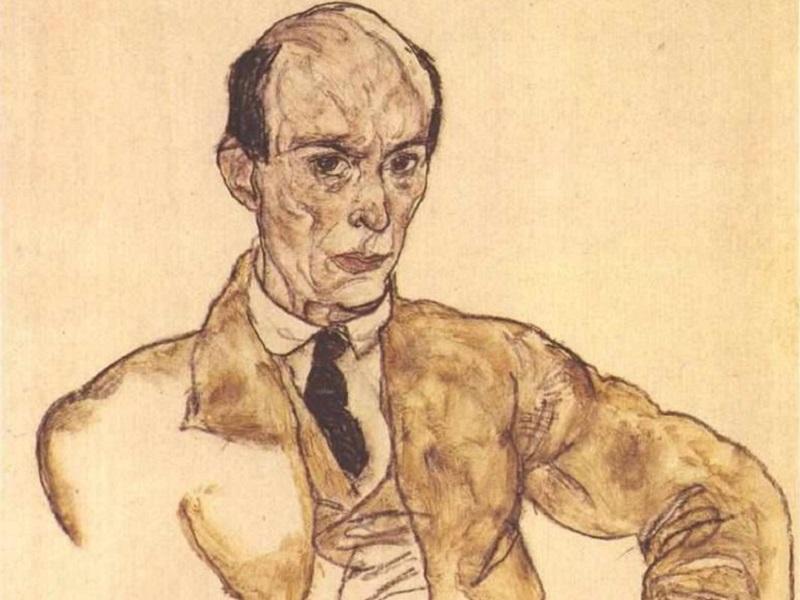
    TWELVE IMAGES FOR TWELVE TONES: As this gallery demonstrates, Schoenberg wasn’t always the grim, humorless figure his portraits would suggest (images identified when you click through)


  • Jorja Fleezanis Minnesota Orchestra Concertmaster Dies

    Jorja Fleezanis Minnesota Orchestra Concertmaster Dies

    by 

    in
    5 responses

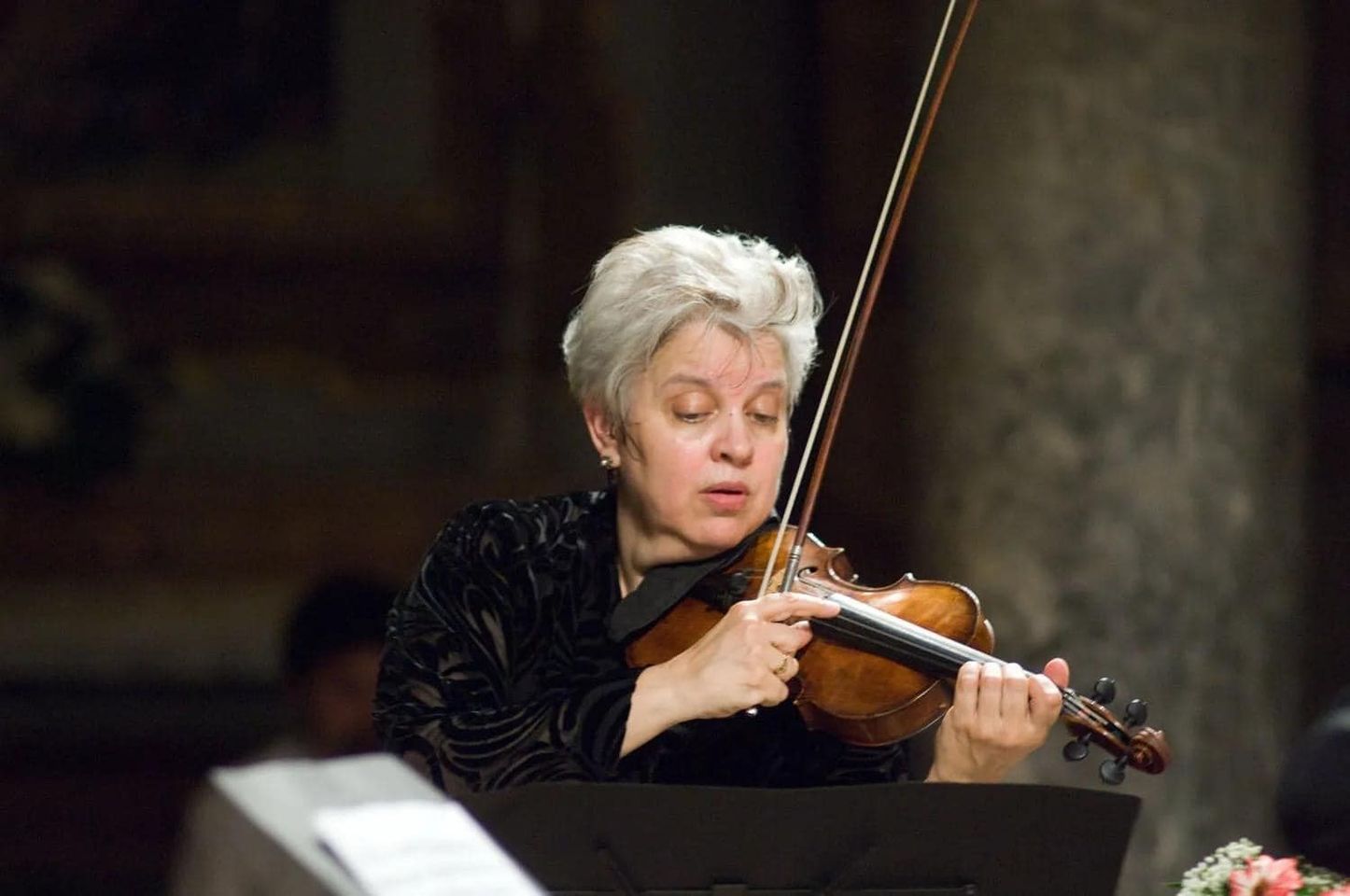
    The violinist Jorja Fleezanis has died. Fleezanis served as concertmaster of the Minnesota Orchestra for twenty years (1989-2009). At the time of her appointment, she was only the second woman to be named concertmaster of a major U.S. orchestra.

    Prior to her run in Minnesota, she was associate concertmaster in San Francisco for eight years. And before that, she was with the Chicago Symphony from the age of 23.

    Fleezanis gave the world premiere of John Adams’ Violin Concerto, a work commissioned for her by the Minnesota Orchestra, in 1994.

    With acclaimed pianist Garrick Ohlsson and principal cellist of the San Francisco Symphony Michael Grebanier, she formed the FOG Trio.

    Public radio listeners with long memories will also remember her from her frequent appearances on “St. Paul Sunday” with Bill McGlaughlin.

    Fleezanis was 70 years-old.


    Plenty examples of her artistry on YouTube, both with the FOG Trio and her colleagues from the San Francisco Symphony.

    Haydn & Brahms

    Beethoven

    Schumann

    Arensky, Chausson & Saint-Saëns

    Elgar

    Dvořák piano trios

    Dvořák quartet with members of the San Francisco Symphony

    San Francisco Ravel

    San Francisco Hindemith

    San Francisco Shostakovich

    Fleezanis interview

    https://interlude.hk/in-touch-with-jorja-fleezanisconcertmaster-and-prophet/


Tag Cloud

Aaron Copland (93) Beethoven (95) Composer (114) Film Music (145) Film Score (143) Film Scores (255) Halloween (94) John Williams (195) KWAX (229) Leonard Bernstein (104) Marlboro Music Festival (125) Movie Music (160) Mozart (91) Opera (213) Philadelphia Orchestra (89) Picture Perfect (174) Princeton Symphony Orchestra (109) Radio (88) Ross Amico (244) Roy's Tie-Dye Sci-Fi Corner (290) The Classical Network (101) The Lost Chord (269) Vaughan Williams (105) WPRB (397) WWFM (881)

DON’T MISS A BEAT

Receive a weekly digest every Sunday at noon by signing up here


RECENT POSTS