• 9/11 Reflection Music Solace & Memory

    9/11 Reflection Music Solace & Memory

    by 

    in
    4 responses

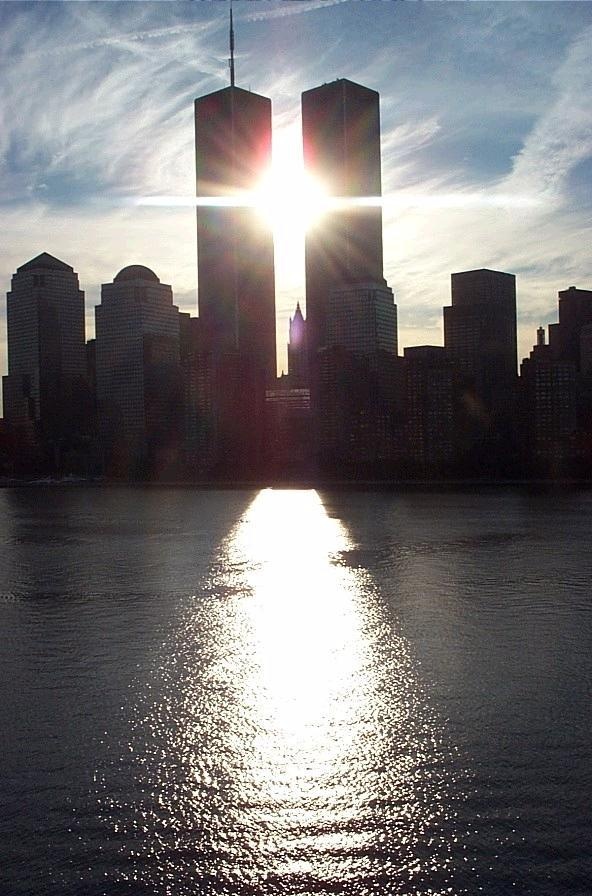
    9/11: A morning for reflection. The horror and surreality of that September morning, now 21 years ago, will never be forgotten. When my telephone (a land line!) rang around 9:00, I was already at work on my home computer (a Macintosh!), oblivious to the news. I picked up. A friend was on the line. She said a plane had crashed into the World Trade Center. I imagined the Empire State Building and the B-25 accident, back in the 1940s. I was thinking maybe a piper. Bad enough in itself, certainly, but accidents do happen. Then she said one of the towers “fell over.” That was what sent me to the TV.

    I had parents in the air that morning, on the way to China. The first leg of their journey took them west across Pennsylvania. Thankfully, they were not on United States Airlines Flight 93, that crashed near Shanksville, southeast of Pittsburgh, at 10:03.

    The phone lines were jammed. Nobody owned a cell phone. It was a long day until I learned that their flight had been grounded in Pittsburgh.

    My heart goes out to those who died senselessly, and for their survivors, for whom the day remains most vivid and painful, I’m sure.

    It was a dark turning point for America at the start of a new century, and a new millennium. I wonder if we ever fully appreciated how good we had it here in the halcyon days of the late 20th century?

    Not surprisingly, there has been a lot of music written in response to the horrific events of that morning, and the pain, heroism, and sacrifice. I’ve heard a lot of it, and for me, none of it as successful as Robert Moran’s “Trinity Requiem,” a masterpiece of solace and consolation.

    The work was composed in 2011 for Trinity Wall Street, the so-called “Ground Zero Church” in Lower Manhattan, to mark the tenth anniversary of the attacks.

    Here’s an interview I recorded with Bob shortly after the release of the CD (which I tweaked for rebroadcast last year), followed by a complete performance of the piece, a great balm for troubled times. If you’re not in the mood for the chit-chat, jump to the 16-minute mark for some truly lovely, reflective music.

    https://www.wwfm.org/webcasts/2021-09-02/the-lost-chord-september-5-the-persistence-of-memory

  • Royal Music for the House of Windsor

    Royal Music for the House of Windsor

    by 

    in
    2 responses

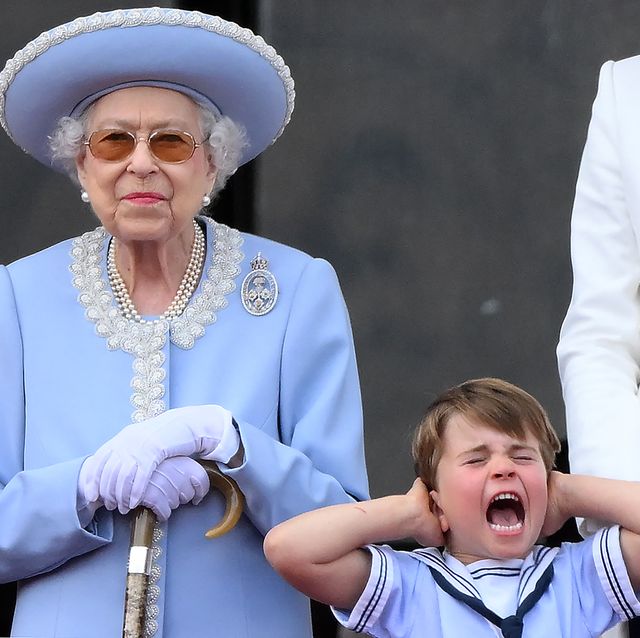
    Naturally, the death Queen Elizabeth II this week had me reflecting on all the music that was written for her. The coronation music alone could fill many hours, to say nothing of all the ceremonial and occasional pieces churned out over the course of her 70-year reign. It’s crazy to think that Sir Edward Elgar, so much an historical figure in our minds, wrote his “Nursery Suite” for then-Princess Elizabeth and her sister, Margaret.

    Eric Coates. Sir Arnold Bax. Sir William Walton. Ralph Vaughan Williams. Herbert Howells. Sir Arthur Bliss. Sir William Walton. Benjamin Britten. Malcolm Williamson. Judith Weir. Many, many others, all wrote music for the Queen.

    Be that as it may, this Sunday night on “The Lost Chord,” we’ll broaden our scope even further to listen to music written for the Royal Family.

    We’ll hear the “Suite for the Birthday of Prince Charles” by Sir Michael Tippett, the “Naxos” Quartet No. 8, composed for the Queen’s 80th birthday by Sir Peter Maxwell Davies, and “The Thistle and the Rose,” commissioned by Charles for the 90th birthday of the Queen Mother, by Patrick Doyle – a composer best known for his film scores, especially those for Kenneth Branagh.

    This is a rebroadcast from 2009, so don’t be scandalized if you hear King Charles III referred to as “Prince Charles” or Maxwell Davies alluded to as the “current Master of the Queen’s Music.” (Max died in 2016.)

    I hope you’ll join me for a diadem of music for the House of Windsor. That’s “Sounds Imperial,” this Sunday night at 10:00 EDT, on WWFM – The Classical Network and wwfm.org.


  • Queen Elizabeth II & Benjamin Britten’s Friendship

    Queen Elizabeth II & Benjamin Britten’s Friendship

    by 

    in
    6 responses

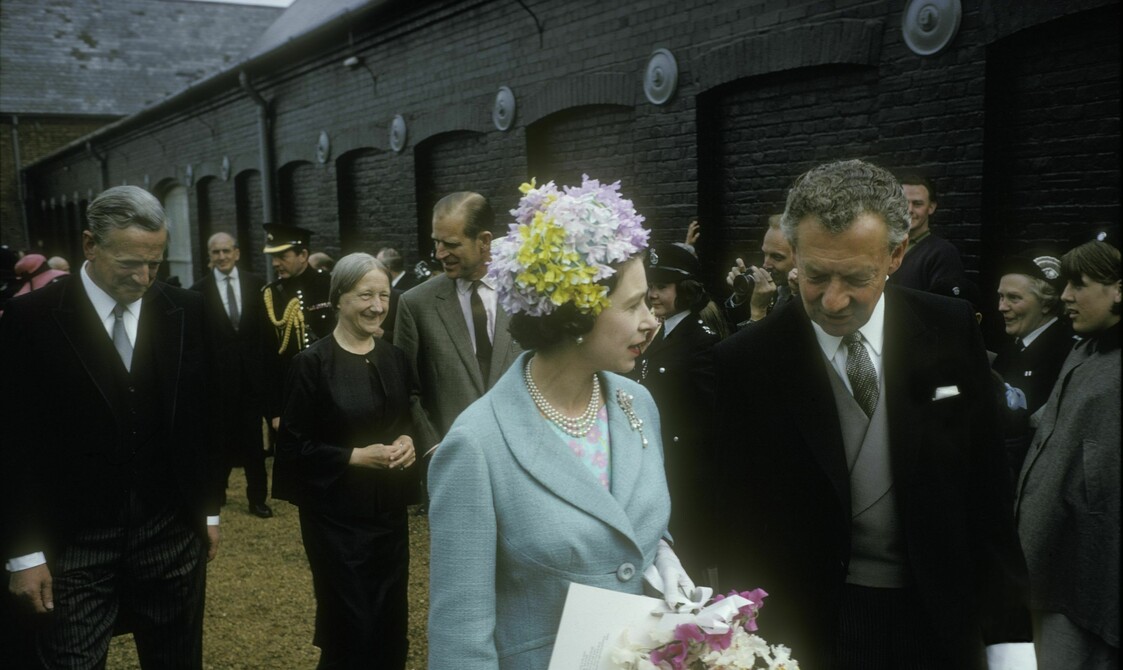
    Thank you so much to Colin Curless, who directed me to this touching article (linked below) about Queen Elizabeth II and her exceptional kindness to Benjamin Britten toward the end of his life. Britten enjoyed a special relationship with the Royal Family. The Queen Mother was a patron of the Aldeburgh Festival, founded by Britten in 1948, and the Queen, by all appearances, was a good friend over at least the course of his last decade.

    Britten wrote an opera, “Gloriana,” as part of the celebrations surrounding Elizabeth’s coronation in 1953. It was given its premiere at Covent Garden with members of the Royal Family, including the Queen, in attendance. The opera, which portrayed Elizabeth I in what many considered an uncomfortably human light, was downbeat and “modern” and rather coolly received. If Elizabeth II didn’t care for it, she didn’t hold it against him. In fact, the composer was left with the impression that she was “delighted and flattered.”

    The Queen opened the Snape Maltings Concert Hall at Aldeburgh in 1967, for the festival’s 20th anniversary. After the hall was damaged by fire in 1969, again she was in attendance at its reopening in 1970.

    Britten never spoke publicly about his sexuality and was very careful about public displays of affection with his muse and life partner, the tenor Peter Pears. Nevertheless, the couple came under scrutiny of the police and at one point Britten wondered if Pears would have to be set up in a sham marriage.

    It was only in 1967 that same-sex relationships were decriminalized in England. (In Scotland, it was not until 1981, and in Ireland 1993.) Although homosexuality was illegal in the UK for the first 54 years of Britten’s life, the Queen tacitly acknowledged his and Pears’ relationship, and after the composer’s death, she sent Pears a personal message of condolence. In all, Britten and Pears were creative and personal partners for almost 40 years.

    When Britten died in 1977, his memorial service at Westminster Abbey was headed by the Queen Mother. It’s believed that Britten had declined a knighthood some years earlier (oddly, there doesn’t seem to be a record of it), but toward the end of his life, he accepted a life peerage.

    This article is the first time I ever heard that he was offered the post of Master of the Queen’s Music – unusually, by Elizabeth herself, rather than an assistant, in advance of a public announcement – which Britten felt he had to turn down in light of his failing health.

    You can read more about the Queen and Britten here:

    https://www.classical-music.com/composers/how-the-queen-inspired-britten-to-start-composing-again-after-he-almost-died/?fbclid=IwAR1kWFYFBfe7QeT-g0oiUAsyGQHbz9NA_yBhslfScvp3reL-fgPdgmqaVgI

    No one seems to have posted online the definitive recording of Britten’s “A Birthday Hansel,” with Pears and harpist Osian Ellis, the work composed for the Queen Mother referenced in the article. (There are other performances available if you search on YouTube.) However, I did come across this interesting 10-minute documentary, full of fascinating footage and commentary. The Queen makes an appearance around the 7-minute mark.


    PHOTO: Britten and the Queen at Aldeburgh. In the background, left to right, Peter Pears, Imogen Holst (daughter of Gustav, a composer herself who served as Britten’s assistant), and Prince Philip


  • Trains on Film: Music for Movie Lovers

    Trains on Film: Music for Movie Lovers

    by 

    in
    10 responses

    Trains have always been very good for drama. They are symbols of departures and arrivals. They are conveyors of prisoners and vehicles of escape. They are objects of romance and objects to “hobo around” on. They are harbingers of civilization, and they are transports be robbed. You can fight on top of them. You can make out with Eva Marie Saint, or you can protect Marie Windsor so that she can testify against the mob. You can shuffle off to Buffalo.

    From the beginning, trains have provided good escapist fun at the movies. This week on “Picture Perfect,” we’ve got an hour of music from four memorable films in which trains play an important role.

    In “Strangers on a Train” (1951), arguably Alfred Hitchcock’s most underrated film of the 1950s, Farley Granger plays a tennis pro who unwittingly becomes involved in a double-murder plot (criss-cross!) through a chance encounter on a passenger train with a psychopath named Bruno (probably Robert Walker’s finest performance). The music is by Dimitri Tiomkin, who scored four films for Hitch – including “Shadow of a Doubt,” “I Confess,” and “Dial M for Murder.”

    Burt Lancaster stars in a film titled, simply, “The Train” (1964), as a reluctant railroad inspector who is persuaded to join the French Underground’s efforts to delay the transport of masterpieces looted from the museums of Paris by the Nazis, since Allied liberation of France is imminent. Paul Scofield plays the art-loving German officer determined to move the art at all costs. Real trains were destroyed in the making of the film, real dynamite was employed, and Lancaster, as was often the case, did all his own stunts. The score is by Maurice Jarre.

    “Murder on the Orient Express” (1974) is based on one of the best-known Agatha Christie vehicles involving her recurring character, celebrated detective Hercule Poirot. The late Albert Finney portrays Poirot most memorably in this, the first and best of the all-star Christie thrillers, set on a long-distance passenger train connecting Paris to Istanbul. The list of suspects includes Lauren Bacall, Martin Balsam, Ingrid Bergman, Sean Connery, John Gielgud, Anthony Perkins, Richard Widmark, and Michael York. The unforgettable score is by Richard Rodney Bennett.

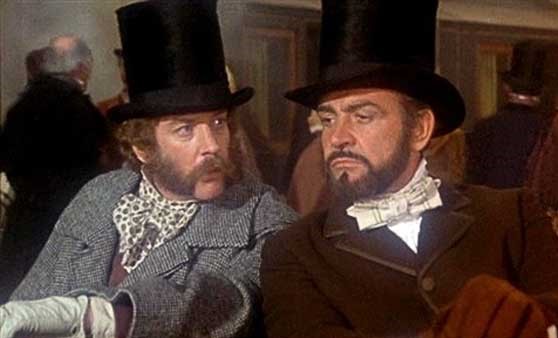
    Finally, we turn to the lighthearted caper “The Great Train Robbery” (1979), starring Sean Connery, Donald Sutherland, and Leslie-Anne Down. Michael Crichton wrote the screenplay, after his own novel, which in turn was based on an actual historical incident – an 1855 heist, in which an unbelievable amount of gold disappeared from a moving train. Crichton also directed the film. The music is by the great Jerry Goldsmith.

    All aboard! We’ll be taking the train today, on “Picture Perfect,” music for the movies, this Saturday evening at 6:00 EDT, on WWFM – The Classical Network and wwfm.org.


    TOP: Sutherland and Connery

    BOTTOM (left to right): Farley Granger and Alfred Hitchcock pass in the night; Finney as Hercule Poirot; Lancaster means business


  • Man Who Fell to Earth Deep Dive & Space 1999 Con

    Man Who Fell to Earth Deep Dive & Space 1999 Con

    by 

    in
    4 responses

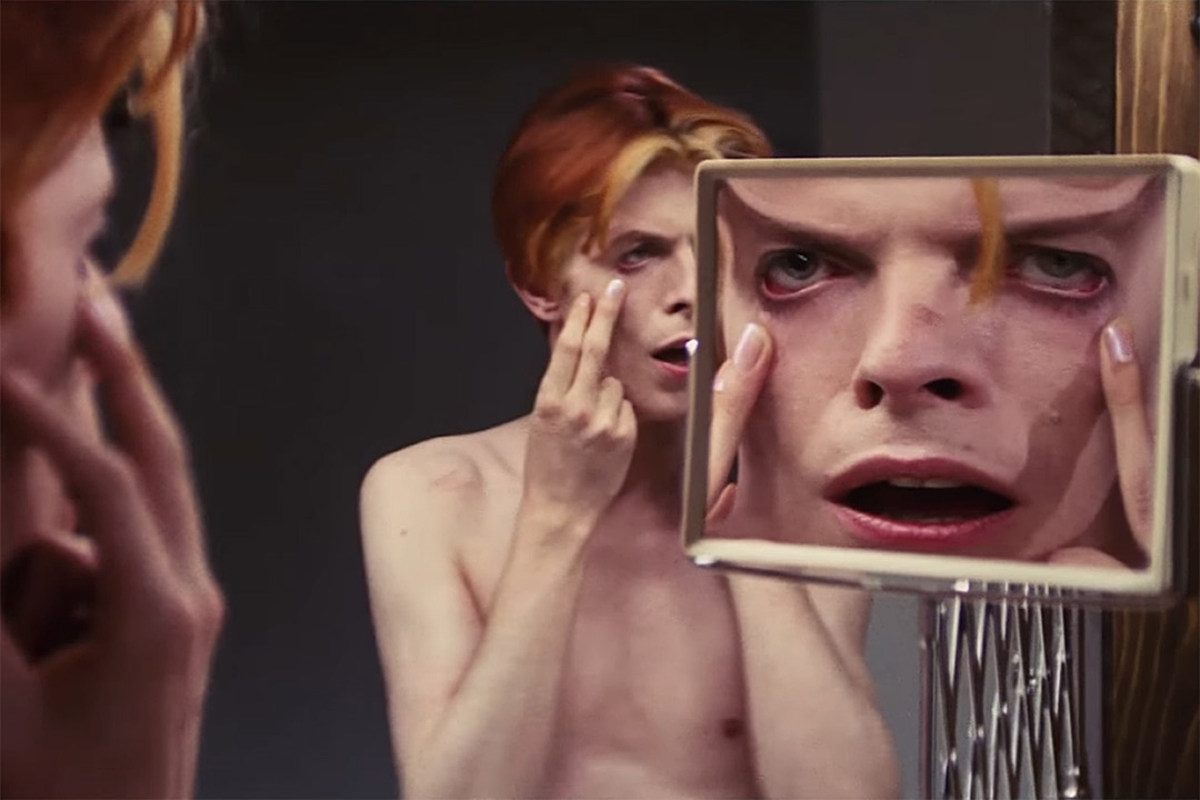
    It may have been a new, somewhat disorienting format, but our conversation about “The Man Who Fell to Earth” (1976) was up to the usual Roy & Ross standard.

    Last night was my first experience with StreamYard, with all the bells and whistles, including scrolling ticker, text banners, and a panoramic view of my CD library. (One viewer compared the effect to VistaVision.) But the content is only as strong as the talking points and the viewer comments that propel the dialogue.

    There were a number of very perceptive, and often hilarious insights. My pick for the week goes to Randy Piazza, who defined the film as an example of “the rarely-explored post-Watergate government distrust arthouse avant-garde sex sci-fi genre.” That, folks, is the movie in a nutshell. We could have closed-up shop and got on with our lives at the 22-minute mark.

    But if you’re curious to see the whole thing, it’s archived on the “Roy’s Tie-Dye Sci-Fi Corner” Facebook page.

    For any of you who are fans of the television series “Space: 1999,” you will be interested to know that there is a virtual convention being held this weekend, “Destination: Moonbase Alpha,” and Roy will be among the interviewers. The schedule is chock-full of talent associated with the show (including series stars Barbara Bain and Nick Tate and award-winning special effects artist Brian Johnson). It’s a two-day event, beginning this afternoon at 1:00 EDT. You’ll find details at the link.

    https://www.facebook.com/Destinationmoonbasealpha

    Roy and I will reunite for a discussion about the spy-fi parody “Our Man Flint” (1966), with flinty James Coburn in the title role. The Bond will be strong, when you join us in the comments section for another Roy’s Tie-Dye Sci-Fi Corner, next Friday evening at 7:30 EDT!

    https://www.facebook.com/roystiedyescificorner


Tag Cloud

Aaron Copland (93) Beethoven (95) Composer (114) Film Music (145) Film Score (143) Film Scores (255) Halloween (94) John Williams (195) KWAX (229) Leonard Bernstein (104) Marlboro Music Festival (125) Movie Music (160) Mozart (91) Opera (213) Philadelphia Orchestra (89) Picture Perfect (174) Princeton Symphony Orchestra (109) Radio (88) Ross Amico (244) Roy's Tie-Dye Sci-Fi Corner (290) The Classical Network (101) The Lost Chord (269) Vaughan Williams (105) WPRB (397) WWFM (881)

DON’T MISS A BEAT

Receive a weekly digest every Sunday at noon by signing up here


RECENT POSTS