• Germaine Tailleferre Les Six’s Forgotten Star

    Germaine Tailleferre Les Six’s Forgotten Star

    by 

    in
    3 responses

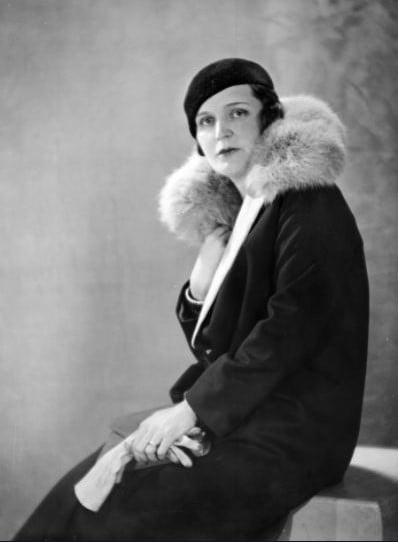
    Germaine Tailleferre was the only female member of Les Six, that loose collective of composers that rose to prominence in Paris in the late Nineteen-Teens and ‘20s, under the guidance of Jean Cocteau. Her famous colleagues included Francis Poulenc, Darius Milhaud, Arthur Honegger, and Georges Auric. Louis Durey, a hard-line communist who went on to set poems by Ho-Chi Minh and Mao Zedong, is the one nobody remembers. (I wonder why.)

    Tailleferre was strong-willed from the start. Her birth name was Taillefesse, but she changed it to spite her father, since the old man opposed her musical studies. However, she took piano lessons with her mother and was admitted into the Paris Conservatory. It was there that she met the rest of The Six and that the prizes began to pile up. She also earned the friendship and received the support of Maurice Ravel.

    In 1925, she married Ralph Barton, the American caricaturist, and moved to New York. Two years later, the couple returned to France, then divorced. Her career thrived in the 1920s and ‘30s. With the outbreak of World War II, however, she beat it back to the United States, leaving most of her scores at her home in Grasse, and passed the war years in Philadelphia. (Please, if anyone knows anything about her Philadelphia years, message me!)

    After the war, she again returned to France, where she resumed her career. As she got older, her pieces tended to be shorter, as she suffered from arthritis. She also wrote a lot for children and young pianists. She composed virtually right up until the time of her death in 1983, when she was 91 years-old. She wrote so much, in fact, that a lot of the music of her later years has never been published, and fresh discoveries from her output are being recorded all the time.

    Here’s an interesting write-up about Tailleferre and her relationship with Barton. The quote that headlines the piece is not by Tailleferre, but by Germaine Greer!

    https://interlude.hk/sex-fun-cars-cars-refuel-quicker-men-germaine-tailleferre-ralph-waldo-emerson-barton/

    Furthermore, I love that the video at the bottom of the page, of the composer’s “Six chansons françaises,” is age-restricted due to the fact that it’s illustrated with the painting of a nude. Mon Dieu!

    Happy birthday, Germaine Tailleferre!


    The Concertino for Harp and Orchestra (1927):

    The lovely and wistful “Arabesque” for clarinet and piano (1972):

    https://www.youtube.com/watch?v=i0E8tUzQezA See Less

    The Concerto for Piano and Orchestra (1924). The piece was given its U.S. premiere – in the presence of the composer – by Alfred Cortot and the Philadelphia Orchestra, conducted Leopold Stokowski.

    “Rêverie” (1964)

  • Leopold Stokowski The Genius at 140

    Leopold Stokowski The Genius at 140

    by 

    in
    3 responses

    Maestro. Showman. Magician. Matinee idol. Prima donna. Charlatan. Genius. Superstar.

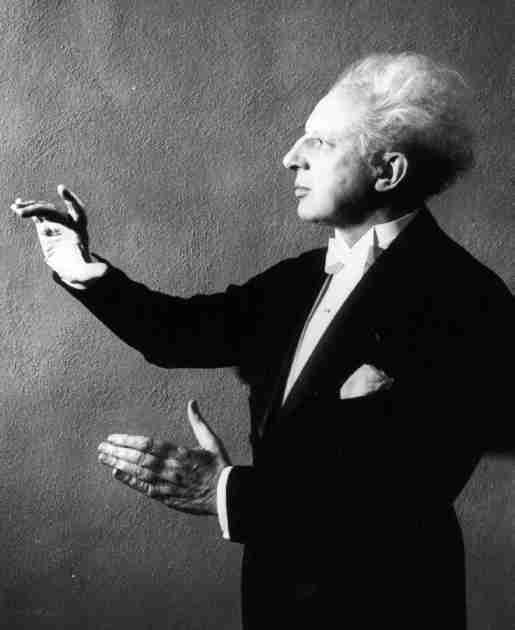
    The multifaceted Leopold Stokowski was born on this date, 140 years ago.

    Preserved (or parodied) in all media, he could be as outrageous as he was revelatory. He brought to concert music a glamour and vitality that today it too often lacks. His wild hair and faux middle-European accent, his dove-like hands, his flamboyant experiments in sound, his pursuit of the novel and the cutting edge of technology, made him a celebrity, often to the chagrin of his critics. But the proof is in the pudding, and thankfully his recorded legacy is enormous. There is ample evidence to support all claims.

    Stokowski died in 1977 at the age of 95. At 94, he signed his final recording contract, with Columbia Records, which would have kept him busy into his 100th year.

    Here’s a documentary filmed when he was 88:

    At around the 11:23 mark, he states, “We have a motto in the American symphony orchestra, which is ‘do better.’ And it would be a good motto for life all over the world today, when we are killing instead of loving. Do better, world!”

    Well said. Happy birthday, Leopold!


    One of my favorite live performances on YouTube, when it shows up (it keeps getting taken down), with Stokowski conducting Debussy at the age of 90.

    Bach in Philadelphia in 1927

    Conducting Tchaikovsky in the film “Carnegie Hall” (1947)

    Shaking hands with Mickey Mouse in “Fantasia” (1940)

    Parodied in “Long-Haired Hair” (1949)

    “Daphnis and Chloe” Suite No. 2

    London Phase 4 “The Firebird” finale


  • Rózsa’s Thief of Bagdad Birthday Tribute

    Rózsa’s Thief of Bagdad Birthday Tribute

    by 

    in
    6 responses

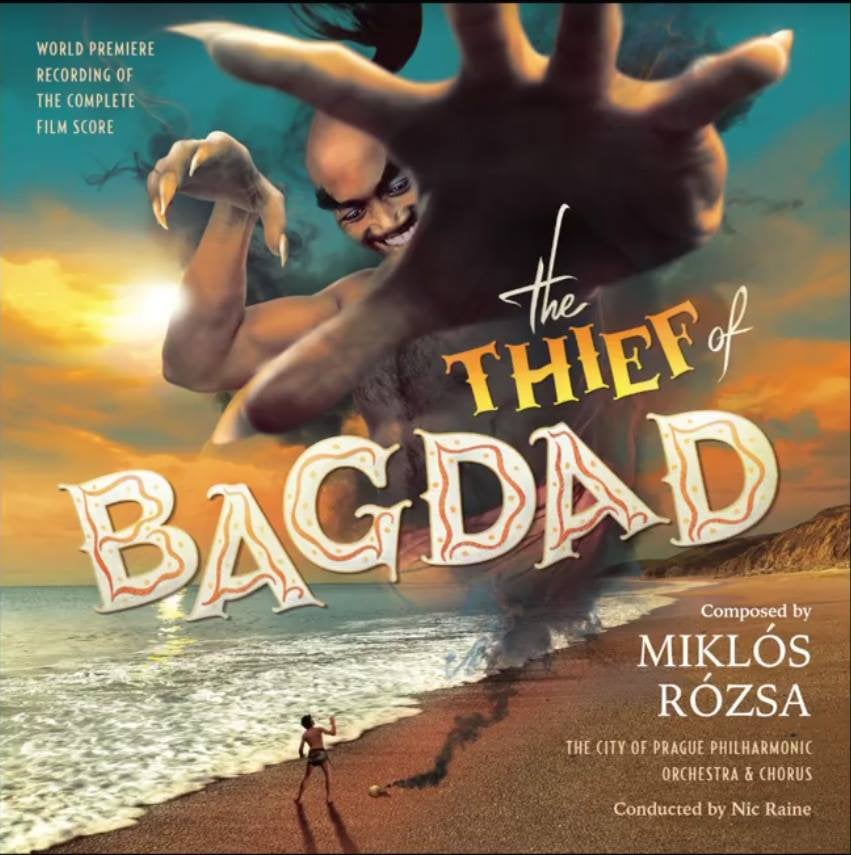
    Between Passover and Easter, Miklós Rózsa’s biblical epics may still be resounding in our ears. But he composed superb scores in most every genre. Here are two selections from one of my Rózsa favorites, “The Thief of Bagdad” (1940).

    “Love of the Princess”

    “Market of Basra”

    Both performances are from sessions for a complete recording of the work, released in 2017, a collaboration between Prometheus Records and Tadlow Music.

    If a genie would have offered to grant me three wishes, a recording of this score would have been one of them.

    Happy birthday, Miklós Rózsa.


  • Harrison Birtwistle: A Complicated Farewell

    Harrison Birtwistle: A Complicated Farewell

    by 

    in
    7 responses

    Monday is just about the only day I’m not around a computer, and wouldn’t you know it, it’s also the time that Harrison Birtwistle, ever the contrarian, died.

    I know I’ve posted here before about my complicated relationship with this composer. Despite sharing his fascination with Gawain, Punch, the Minotaur, Anubis, Orpheus, King Kong, and any number of other subjects that form the bases for his operas and concert works, I find he’s someone whose music I have only ever moderately warmed up to.

    In common with Peter Maxwell Davies, his former colleague of the Manchester School of composition, Birtwistle emerged from a working-class Lancashire background to radically modernize British music. But unlike Max, whose palpable sense of mischief made even his most scandalous works somehow approachable, Birtwistle never cracked a smile, unless perhaps it was at the audience’s expense.

    I don’t really need music to be “easy,” necessarily, or even tonal. There are times when I can put on a Birtwistle record and totally go with it. But I don’t know that anything he has written has ever engendered much affection in me. This is not an objective assessment, of course, and perhaps you will react differently.

    Interestingly, Birtwistle had a local connection. He attended Princeton University on a Harkness Fellowship, beginning in 1965. There, he completed his opera “Punch and Judy,” which begins with Punch tossing his baby into the fire This commences a murder spree that includes the stabbing of Judy, his wife. All is presented in human form, making it that much more disturbing than when enacted by puppets. The experience proved to be so unpleasant that Benjamin Britten walked out on the premiere.

    Perhaps you will find something to latch on to in one of these pieces recommended by The Guardian.

    https://www.theguardian.com/music/tomserviceblog/2014/jul/15/harrison-birtwistle-80th-birthday-five-introductory-pieces?fbclid=IwAR0dnkOT9wr0jsM91ngZM-h_N90rpenZdWuBhJj30c4LEO8FFxY-aJ_JDvY

    If I had to recommend a place to start, it would be “Earth Dances” from 1986.

    There is something primordial in Birtwistle’s work, but it is not someplace I generally choose to live. At least his music has integrity, which I can’t always claim for some contemporary works of an easier-going disposition.

    See what you think.

    Also, “The Moth Requiem” is a little gentler than most.

    Birtwistle was 87 years-old. R.I.P.


  • Happy Easter Vaughan Williams’ Mystical Songs

    Happy Easter Vaughan Williams’ Mystical Songs

    by 

    in
    4 responses

    Happy Easter!

    Look who’s in this week’s Country Life. Some-bunny very special, for his sesquicentenary (Vaughan Williams, born October 12, 1872).

    https://www.countrylife.co.uk/out-and-about/theatre-film-music/in-focus-vaughan-williams-the-composer-who-wrote-the-worlds-most-beautiful-melody-237631?fbclid=IwAR2TjTSnOUlQ74njTfvc1HaGWY7K1eXwTqUUzDEdB4dQAPT5iKLP_1U-xH0.

    To me, it’s never really Easter, until I listen to John Shirley-Quirk and the Choir of King’s College, Cambridge, sing RVW’s “Five Mystical Songs,” which opens with – appropriately enough – “Easter.”


Tag Cloud

Aaron Copland (93) Beethoven (95) Composer (114) Film Music (145) Film Score (143) Film Scores (255) Halloween (94) John Williams (195) KWAX (229) Leonard Bernstein (104) Marlboro Music Festival (125) Movie Music (160) Mozart (91) Opera (213) Philadelphia Orchestra (89) Picture Perfect (174) Princeton Symphony Orchestra (109) Radio (88) Ross Amico (244) Roy's Tie-Dye Sci-Fi Corner (290) The Classical Network (101) The Lost Chord (269) Vaughan Williams (105) WPRB (397) WWFM (881)

DON’T MISS A BEAT

Receive a weekly digest every Sunday at noon by signing up here


RECENT POSTS