• Composer Painters: Art & Music Collide

    Composer Painters: Art & Music Collide

    by 

    in
    4 responses

    For some people, being a master in one field, it seems, just isn’t enough. This Sunday night on “The Lost Chord,” we’ll hear works by three successful composer-painters.

    Carl Ruggles (1876-1971), a friend of Charles Ives, lived 95 years. The cantankerous American modernist was the creator of a handful of meticulously-crafted, uncompromising works. His complete, authorized output amounts to four times the length of an LP side. We know this, because Michael Tilson Thomas recorded just about everything as part of a two-LP set, issued on the Columbia Masterworks label back in 1980.

    Ruggles’ method was described by musicologist Charles Seeger as “dissonant counterpoint,” a system wherein all the traditional rules of counterpoint are reversed, so that dissonance, rather than consonance, is the norm. The very practice smacks of contrarianism!

    Not surprisingly, he was beloved by Ives. When someone had the audacity to boo a work by Ruggles at a concert given in 1931, Ives berated the critic as a sissy. “Why can’t you stand up before fine, strong music like this, and use your ears like a man?” he challenged.

    In addition to his activities as a composer, Ruggles created hundreds of paintings. They were deemed to be successful enough that he was invited to hang shows and even sold many of his canvases.

    His musical composition “Sun-Treader” was inspired by Robert Browning’s poem, “Pauline” – in particular the line, “Sun-treader, light and life be thine forever!”

    In contrast to Ruggles, a gifted dilettante who tossed off paintings in an afternoon, Mikalojus Čiurlionis (1875-1911) is considered every bit as important a painter as he was a composer.

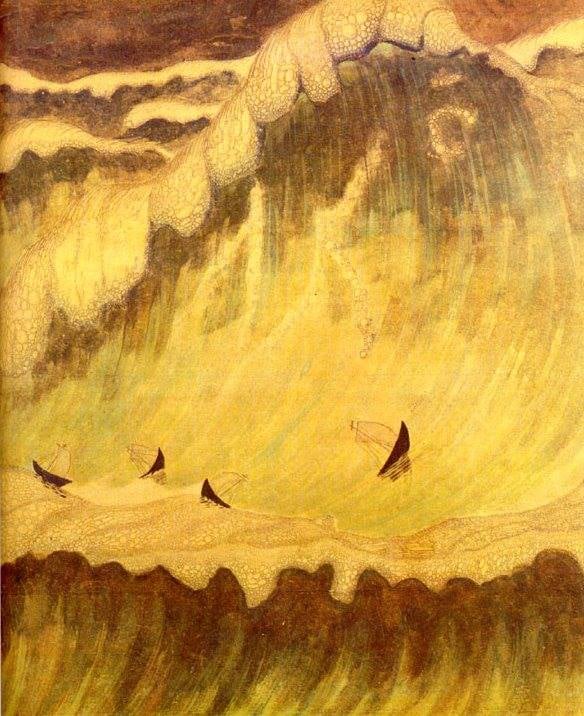
    In his 35 years, Čiurlionis managed to compose about 400 pieces of music and to paint about 300 canvases. A pioneer of abstract art in Europe, he was an exemplar of the symbolist and art nouveau movements, a representative of the fin de siècle epoch, and a major figure in Lithuanian culture. Interestingly, Čiurlionis was also a synesthete; that is to say, he perceived colors and music simultaneously. We’ll hear his vibrant symphonic poem, “The Sea.”

    Lyonel Feininger (1871-1956), on the other hand, is known almost exclusively as a visual artist. Born and raised in New York, he moved to Germany at the age of 16. There, he became a leading practitioner of German Expressionism and the Bauhaus. With the rise of the Nazis in the 1930s and the party’s campaign against modern art, Feininger was driven out of Germany, and after 50 years returned to the United States, where he met with great success.

    Feininger had no formal music studies, beyond a few years of violin lessons. Regardless, he composed thirteen fugues (with extant sketches for a fourteenth). These, he wrote by ear, with the music of Johann Sebastian Bach being an undisguised influence. Feininger claimed that the influence of Bach was equally evident in his paintings.

    Prepare to see double this week. It’s an hour of music by ambidextrous artists. Join me for “Fixtures at an Exhibition,” this Sunday night at 10:00 EDT, on WWFM – The Classical Network and wwfm.org.


    “Sonata of the Sea: Finale” (1908), by Mikalojus Čiurlionis

  • Roy’s Sci-Fi Corner Two Years of Bond & Beyond

    Roy’s Sci-Fi Corner Two Years of Bond & Beyond

    by 

    in
    7 responses

    104 weeks of Roy’s Tie-Dye Sci-Fi Corner, and all I got was this lousy t-shirt.

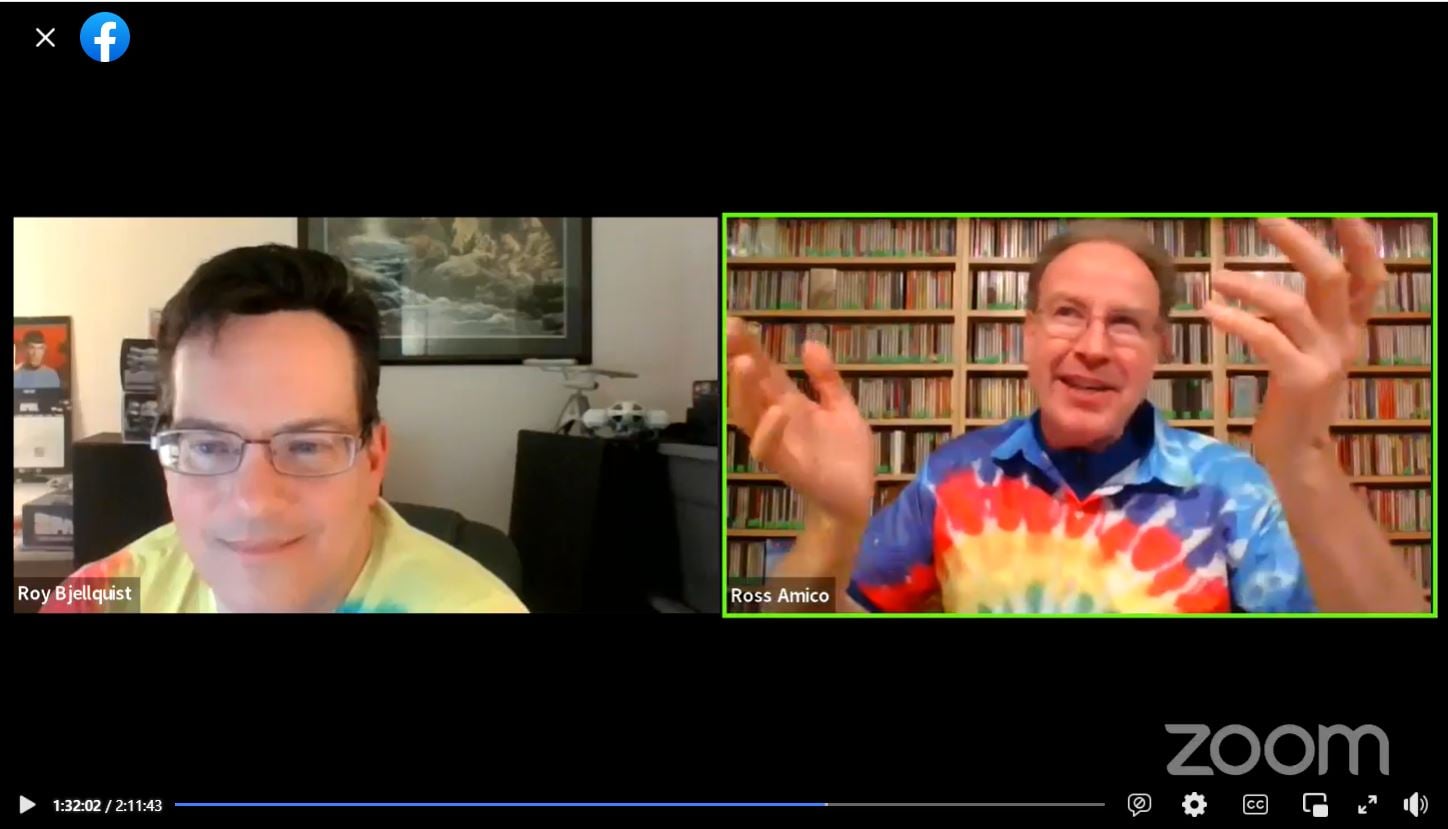
    Last night, Roy and I celebrated two years of delving into a shared nostalgia for science-fiction film and television of the 1950s, ‘60s, and ‘70s, with a conversation about “Dr. No” (1962), the first of the James Bond films – not coincidentally marking its 60th anniversary this year.

    Technically, I didn’t join the show until June 2020 (more to celebrate in June), but the series was initiated by Roy in April, with Phil Merkel the first guest, as a means of bringing everyone together during the doldrums of pandemic isolation.

    We’ve had plenty of laughs along the way. Thank you to all of you in our loyal audience, who show up week after week to share your wisecracks and insights. It’s always a great way to launch a weekend. Most amazingly, Roy and I had not seen one another for a good 35 years, prior to our Zoom reunion.

    You can watch two April fools blather about Bond at the link. We’ll do it again next week, once we decide on our next topic. Mix yourself a Vesper Martini (shaken, not stirred) and join us for the Facebook livestream, next Friday evening at 7:00 EDT.


  • Elmer Bernstein A Centennial Celebration

    Elmer Bernstein A Centennial Celebration

    by 

    in
    2 responses

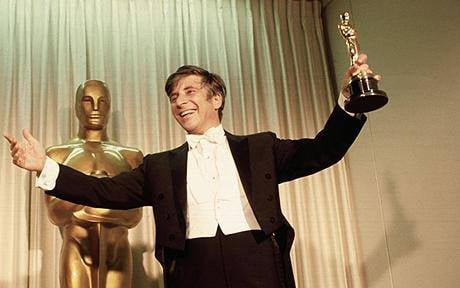
    April 4 would have been the 100th birthday of Elmer Bernstein. Over a career that spanned some 50 years, Bernstein scored dozens of film and television projects, many of them now classics.

    This week on “Picture Perfect,” sample his versatility with selections from just a few of them, including “The Magnificent Seven” (1960), “The Age of Innocence” (1993), “Stripes” (1981), and “To Kill a Mockingbird” (1962).

    In all, Bernstein was nominated for 14 Academy Awards, but claimed the Oscar only once, fairly early on, for his work on “Thoroughly Modern Millie” (1967), of all things. His final nomination was for his very last score, for “Far from Heaven” (2002). Bernstein died on August 18, 2004 at the age of 82.

    Elmer will have you glued to the radio, on “Picture Perfect,” music for the movies, this Saturday evening at 6:00 EDT, on WWFM – The Classical Network and wwfm.org.

    PLEASE NOTE: If you were hoping to hear some of Bernstein’s music for “The Ten Commandments” (1956), tune in next week, as we anticipate Passover with selections from Biblical epics from the Old Testament!


  • Uplifting Friday Music April Foulds

    Uplifting Friday Music April Foulds

    by 

    in
    4 responses

    April Foulds! Some uplifting music by John Foulds to brighten your Friday morning.


  • Bach or Rachmaninoff Music Styles Compared

    Bach or Rachmaninoff Music Styles Compared

    by 

    in
    2 responses

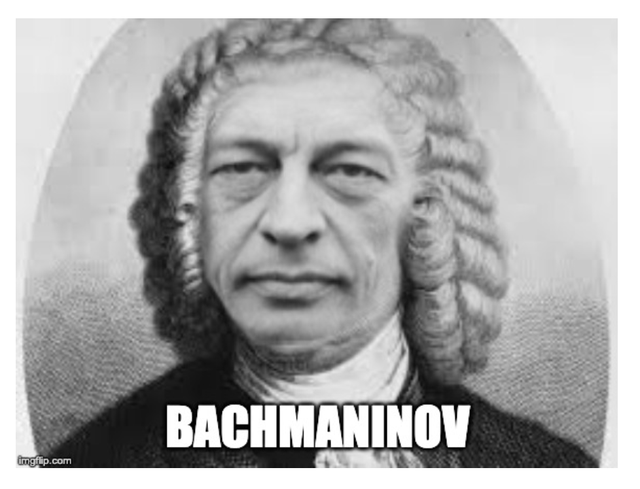
    Is it Bach or Rachmaninoff?

    When Rachmaninoff’s birthday falls on April Fool’s Day, it can only be…


Tag Cloud

Aaron Copland (93) Beethoven (95) Composer (114) Film Music (145) Film Score (143) Film Scores (255) Halloween (94) John Williams (195) KWAX (229) Leonard Bernstein (104) Marlboro Music Festival (125) Movie Music (160) Mozart (91) Opera (213) Philadelphia Orchestra (89) Picture Perfect (174) Princeton Symphony Orchestra (109) Radio (88) Ross Amico (244) Roy's Tie-Dye Sci-Fi Corner (290) The Classical Network (101) The Lost Chord (269) Vaughan Williams (105) WPRB (397) WWFM (881)

DON’T MISS A BEAT

Receive a weekly digest every Sunday at noon by signing up here


RECENT POSTS