• Victor de Sabata Unsung Genius

    Victor de Sabata Unsung Genius

    by 

    in
    7 responses

    It is ironic that one of the great conductors of opera would be comparatively unsung.

    Victor de Sabata is fondly remembered by collectors largely for a single recording – a classic performance of “Tosca” with Maria Callas. The reasons for this have little to do with De Sabata’s merit. De Sabata was a creature of the theater, as opposed to the recording studio. Also, he happened to flourish at a time before the widespread adoption of stereo recording methods. His most cherished recordings were captured on the wing, which might be viewed as something of a mixed blessing. But while few of his performances were preserved under controlled circumstances, what we do have accurately reflects his volcanic temperament in all its terrible glory.

    How much awe did De Sabata inspire? Apparently enough that a young Sergiu Celibidache was moved to hide overnight in the Bayreuth bathroom facilities in order to eavesdrop on his rehearsals of “Tristan und Isolde.”

    For decades, De Sabata was principal conductor at La Scala. For a time, he was also its artistic director. One observer described his appearance while conducting as a cross between Julius Caesar and Satan. In 1953, a massive heart attack brought all that to an end. “Tosca” was planned to have been the first of a series of recordings for HMV which would have documented much of De Sabata’s operatic repertoire. In the event, he would return to conduct only twice more.

    One of these “comebacks” was a molten performance of Giuseppe Verdi’s “Messa da Requiem,” a classic 1954 recording featuring soprano Elisabeth Schwarzkopf, mezzo-soprano Oralia Dominguez, tenor Giuseppe di Stefano, and bass Cesare Siepi. It’s a strikingly broad reading that yet manages to roil and sear.

    Like that other titan of the podium, Wilhelm Furtwängler, De Sabata placed more importance on his activities as a composer than as a conductor, which might seem strange to us, given the nature of their respective legacies. There’s a good recording in modern sound of De Sabata’s symphonic poems on the Hyperion label, conducted by Aldo Ceccato. But Hyperion is pretty diligent about taking down unauthorized postings of its material from YouTube. So here’s “Juventus” (“Youth”) conducted by the composer in 1933:

    Lorin Maazel conducts “La Notte di Plàton” (“The Night of Plato”)

    New to me! Suite No. 2 for Orchestra

    Verdi, “I Vespri Siciliani” Overture

    Fragment of the Mozart Requiem

    Rehearsing Brahms

    “Dance of the Seven Veils”

    Fly-on-the-wall “Tristan” from 1930

    Sibelius!

    Immortal “Tosca”

    Celibidache remembers De Sabata

    Happy birthday, Victor de Sabata, firebrand of the podium!

  • Somewhere in Time Secrets Revealed

    Somewhere in Time Secrets Revealed

    by 

    in
    5 responses

    We lost all track of time last night, as we discussed “Somewhere in Time” (1980). I suppose it’s only appropriate, given the subject matter. Still, the show ran to three hours! Then we stopped the stream on the assumption that everyone had had enough, and we wound up talking for another hour, until 11:00 pm!

    Thank you, Jo Addie, for sharing your recollections of working on the film. Jo is president of INSITE, the International Network of Somewhere In Time Enthusiasts. In that capacity, she has done great things for the film’s legacy – getting it restored and reissued on home video, getting it back into theaters for a limited run, producing documentaries, keeping up with the cast and crew, overseeing the newsletter, and hosting annual “Somewhere in Time” weekends on Mackinac Island.

    You can learn all about it and her amazing journey, and marvel at how spontaneity and serendipity can literally change the course of one’s life, by listening to her story here:

    Then definitely do check out the INSITE website, where you’ll find lots more great anecdotes and information:

    https://www.somewhereintime.tv/

    Ironically, in three hours, there was very little time to actually discuss the content of the movie itself, so maybe we’ll have to go back in time and address it again at some point.

    For the immediate future, Roy’s got another special guest lined up for tomorrow: actress and dancer Tanya Lemani. Fans of the original “Star Trek” television series will remember Lemani from the episode “Wolf in the Fold” (1967).

    Wolf down your dinner and make the trek to the comments section for an out-of-this-world conversation. You’ll be howling for more, on the next Roy’s Tie-Dye Sci-Fi Corner, when they livestream on Facebook, this Sunday evening at 7:00 EDT!

    https://www.facebook.com/roystiedyescificorner


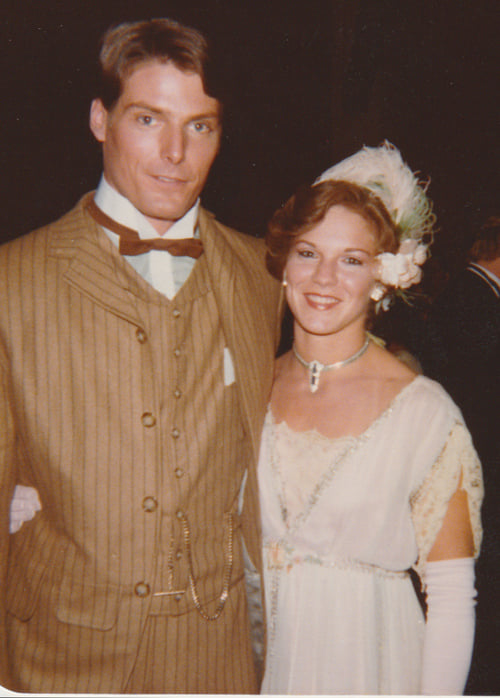
    PHOTO: Jo Addie with Christopher Reeve on the set of “Somewhere in Time”

    https://www.somewhereintime.tv/


  • Bible Movie Epics: Samson, Solomon & More

    Bible Movie Epics: Samson, Solomon & More

    by 

    in
    5 responses

    With Passover and Easter right around the corner, we’re entering the peak season for Bible movies. This week on “Picture Perfect,” it’s an hour of music from epics inspired by the Old Testament – including “Samson and Delilah” (Victor Young), “Solomon and Sheba” (Mario Nascimbene), “Sodom and Gomorrah” (Miklós Rózsa) and “The Ten Commandments” (Elmer Bernstein).

    We begin and end with two Cecil B. DeMille productions. DeMille could always be counted on to give his audience a good show. Both “Samson” and “The Ten Commandments” feature sultry temptresses, violent, bare-chested men, and plenty of austere moralizing. The climactic special effects in both films are still sublime.

    Tyrone Power was originally cast as Solomon in King Vidor’s “Solomon and Sheba.” However, he died of a massive heart attack during shooting (at the age of 44), paving the way for Yul Brynner to assume the role of the wise king. Brynner, of course, would later become DeMille’s pharaoh Rameses. With Gina Lollobrigida as the Queen of Sheba, you know there has to be an orgiastic dance.

    Miklós Rózsa characterized “Sodom of Gomorrah” as “an intriguing subject which developed into a bad picture,” and most critics agreed. Any film that casts Stewart Granger as Lot should be taken with a pillar of salt. Rózsa determined not to score any more Biblical epics after “Sodom,” though his music is nothing to be ashamed of. It possesses that classic Rózsa epic sound, much beloved, thanks to his work on “Quo Vadis,” “Ben-Hur” and “King of Kings.”

    Chariots! Tunics! Histrionic acting! It’s going to be epic, this Saturday evening at 6:00 EDT, on WWFM – The Classical Network and wwfm.org!


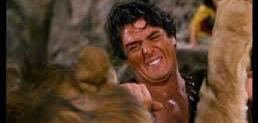
    PHOTOS: Victor Mature’s stuffed lion vs. Charlton Heston’s cotton candy beard


  • Florence Price Overnight Success

    Florence Price Overnight Success

    by 

    in
    2 responses

    It took nearly 90 years for her to become an overnight success.

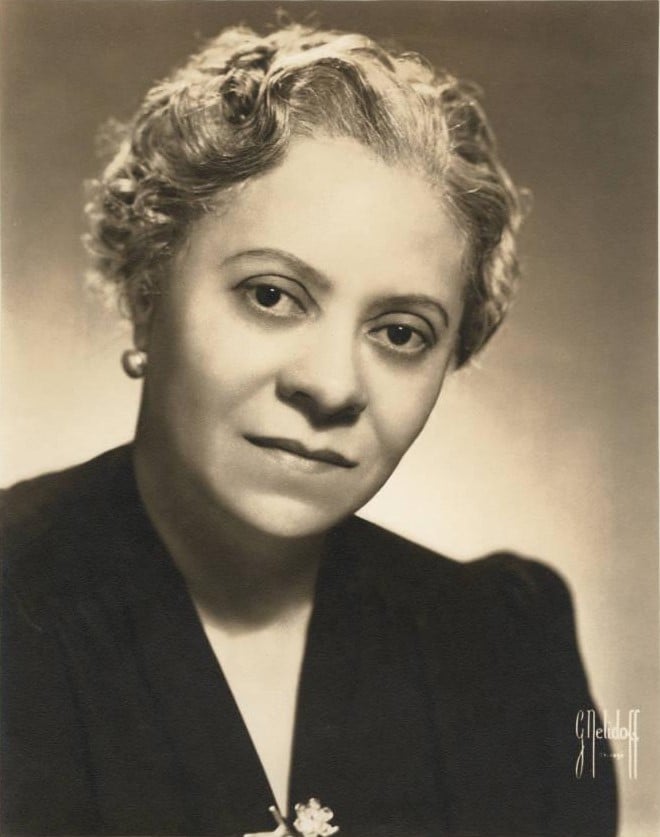
    Florence Price was the first African American woman to have a symphony performed by a major orchestra. Her Symphony No. 1 was played by the Chicago Symphony, conducted by Frederick Stock, in 1933.

    But it’s only fairly recently, after decades of comparative neglect, that her music has finally begun to gain traction. Now she’s being played everywhere.

    Is her sudden popularity a result of social or political trends? Who cares? When the music is this beautiful, everyone wins.

    The Chicago Symphony plays Price in 2021 – the Andante Moderato for string orchestra, after a Quartet in G major:

    Happy birthday, Florence Price.


  • Somewhere in Time: Jo Addie Interview

    Somewhere in Time: Jo Addie Interview

    by 

    in
    2 responses

    BREAKING! Jo Addie will be joining us tonight on “Roy’s Tie-Dye Sci-Fi Corner” to share her reminiscences of “Somewhere in Time” (1980). A series of happenstances led Addie to appear through most of the film as an extra. During her three weeks on the intimate shoot on Mackinac Island, she got to know everyone pretty well, and she’s full of anecdotes about cast and crew, including actors Christopher Reeve, Jane Seymour, Christopher Plummer, and Teresa Wright, writer Richard Matheson, and director Jeannot Szwarc.

    Addie is also longtime president of INSITE (International Network of Somewhere In Time Enthusiasts, founded by Bill Shepard in 1990). In this capacity, she hosts “Somewhere in Time” weekends at Mackinac’s Grand Hotel, conducts interviews, produces documentaries, and oversees the publication of the society’s fan magazine.

    Furthermore, I love the fact that her husband, Jim, worked for many years as an audio engineer at Chicago’s classical music station, WFMT!

    Join us on a sentimental journey to 1912, by way of 1980, when we meet up “Somewhere in Time,” on the next Roy’s Tie-Dye Sci-Fi Corner. Time flies like an arrow, but fruit flies like a banana, when we livestream on Facebook, this Friday evening at 7:00 EDT!

    https://www.facebook.com/roystiedyescificorner


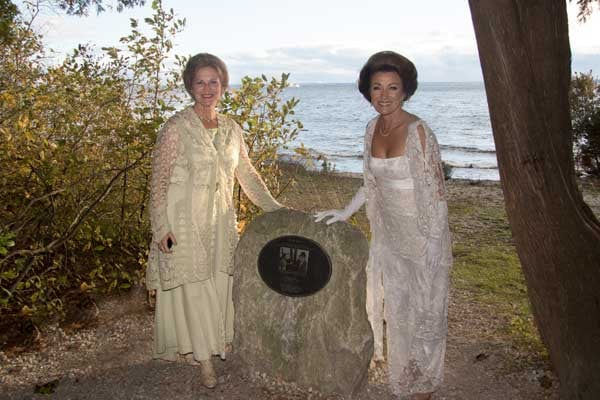
    PHOTO: Jo Addie (left) with Jane Seymour, on a visit to the plaque that now marks the location where the film’s time-defying lovers first meet.

    More insight into INSITE here:

    https://www.somewhereintime.tv/intro1.htm


Tag Cloud

Aaron Copland (93) Beethoven (95) Composer (114) Film Music (145) Film Score (143) Film Scores (255) Halloween (94) John Williams (195) KWAX (229) Leonard Bernstein (104) Marlboro Music Festival (125) Movie Music (160) Mozart (91) Opera (213) Philadelphia Orchestra (89) Picture Perfect (174) Princeton Symphony Orchestra (109) Radio (88) Ross Amico (244) Roy's Tie-Dye Sci-Fi Corner (290) The Classical Network (101) The Lost Chord (269) Vaughan Williams (105) WPRB (397) WWFM (881)

DON’T MISS A BEAT

Receive a weekly digest every Sunday at noon by signing up here


RECENT POSTS