• Somewhere in Time John Barry’s Magic Touch

    Somewhere in Time John Barry’s Magic Touch

    by 

    in
    7 responses

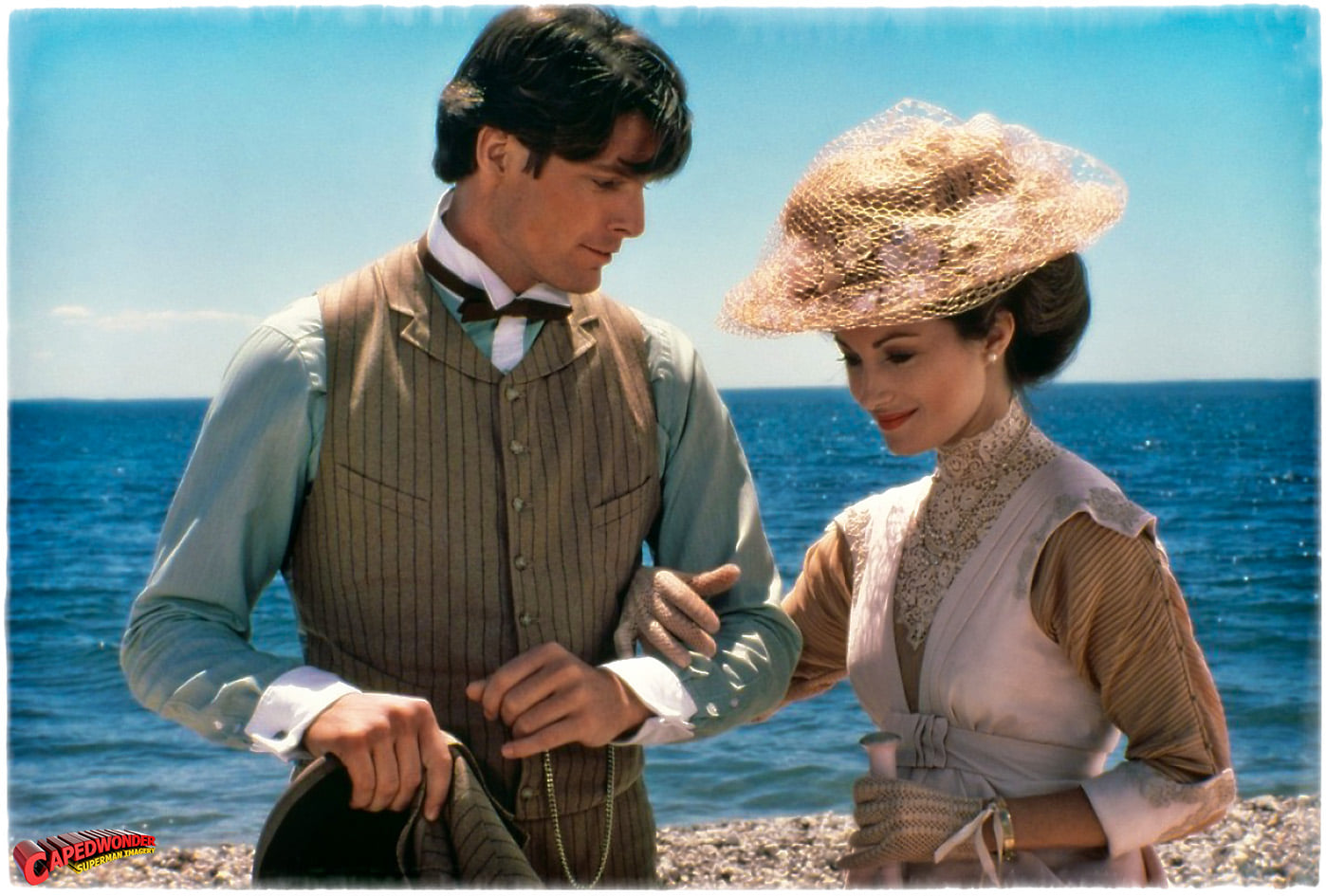
    Composer John Barry does a lot of the heavy lifting in the fantasy romance, “Somewhere in Time” (1980).

    Christopher Reeve and Jane Seymour star in a film about a modern-day playwright, who becomes obsessed with a portrait of an early 20th century actress, and wills himself, through self-suggestion, back through the decades to meet her.

    Richard Matheson provided the screenplay, based upon one of his own novels. Matheson is the weird fiction scribe who gave us “The Incredible Shrinking Man,” “I Am Legend,” “The Legend of Hell House,” “Duel,” “What Dreams May Come,” and some of the best “Twilight Zone” episodes.

    The author felt that “Somewhere in Time”s source material, “Bid Time Return,” represented some of his best writing. But in the movie, it’s Barry that really sells it. And a good thing too, since the director is Jeannot Szwarc – he of “Jaws 2,” “Supergirl,” and “Santa Claus: The Movie” notoriety.

    Barry, a five-time Academy Award winner, left his stamp on a dozen James Bond movies. He scored the project as a favor to Seymour, a personal friend. Elsewise, the film’s modest budget would have prohibited hiring the composer at his usual fee.

    Barry wrote the score shortly after losing both of his parents, which he credited, in part, for its strong emotional content. He must still have been under its spell a few years later, when he came to write his Oscar-winning music for “Out of Africa.”

    Oh yeah, Rachmaninoff gets a pretty good workout too, as the characters are fond of “Rhapsody on a Theme of Paganini.”

    At the time of its release, “Somewhere in Time” received lukewarm reviews, but the film has been kept alive by an ardent fanbase of hopeless romantics.

    You’ll need a steamer trunk full of lace handkerchiefs, when Roy and I make time for “Somewhere in Time,” on the next Roy’s Tie-Dye Sci-Fi Corner. Leave your implausible timepieces in the comments section (and your pennies at home), when we livestream on Facebook, this Friday evening at 7:00 EDT!
    https://www.facebook.com/roystiedyescificorner


  • Destouches Turns 350 A French Baroque Birthday

    Destouches Turns 350 A French Baroque Birthday

    by 

    in
    6 responses

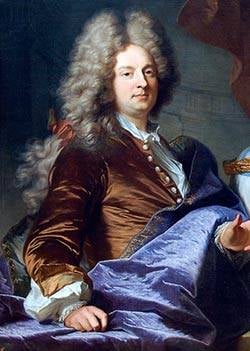
    Today is the 350th birthday of André Cardinal Destouches. My, but how time flies!

    Destouches’ best-known music is “Les Élémens” (“The Elements”) of 1721. The complete opéra-ballet, consisting of a prologue and four “entrées,” was written in collaboration with Michel Richard Delalande. In the grand tradition of footloose French kings, an 11 year-old Louis XV danced in the divertissements.

    According to the composer, “At its first appearance this ballet was by no means the success we hoped for. It was found to be long; it seemed to be too serious; it was danced by noble youths whose talents were not up to the highest standards. Which caused very unpleasant boredom that was most humiliating for the authors.”

    It was revived at the Paris Opera four years later to increasing success, and remained in the repertoire for half a century.

    In 1697, Destouches’ opera “Issé” had been a big hit with dancing monarch Louis XIV, who claimed to enjoy Destouches’ music as much as that of Jean-Baptiste Lully. (Lully, also a dancer, and the most powerful musician in France, died of a gangrenous foot wound ten years earlier.)

    In 1713, Louis appointed Destouches inspector general of the Académie Royale de Musique, at a stipend of 4000 livres a year. In 1725, Louis XV made him director of the Académie, as well as superintendent of La Musique de la Chambre du Roi. With the death of his colleague, Delalande, in 1726, Destouches was installed as Surintendant de la Musique du Roi – a post once held by Lully himself.

    Happy semiseptcentennial, André Cardinal Destouches!


    From “Les Élémens”

    From “Issé”

    And speaking of “entrées,” Delalande’s “Symphonies for the King’s Supper”


  • Philadelphia Orchestra Memories

    Philadelphia Orchestra Memories

    by 

    in
    5 responses

    It’s gotten to the point that I remember things I experienced 30-35 years ago more vividly than stuff I did 30-35 weeks ago. Even so, I will sometimes try to search for old concert reviews to confirm my memory of certain dates or performers or companion pieces on a given program.

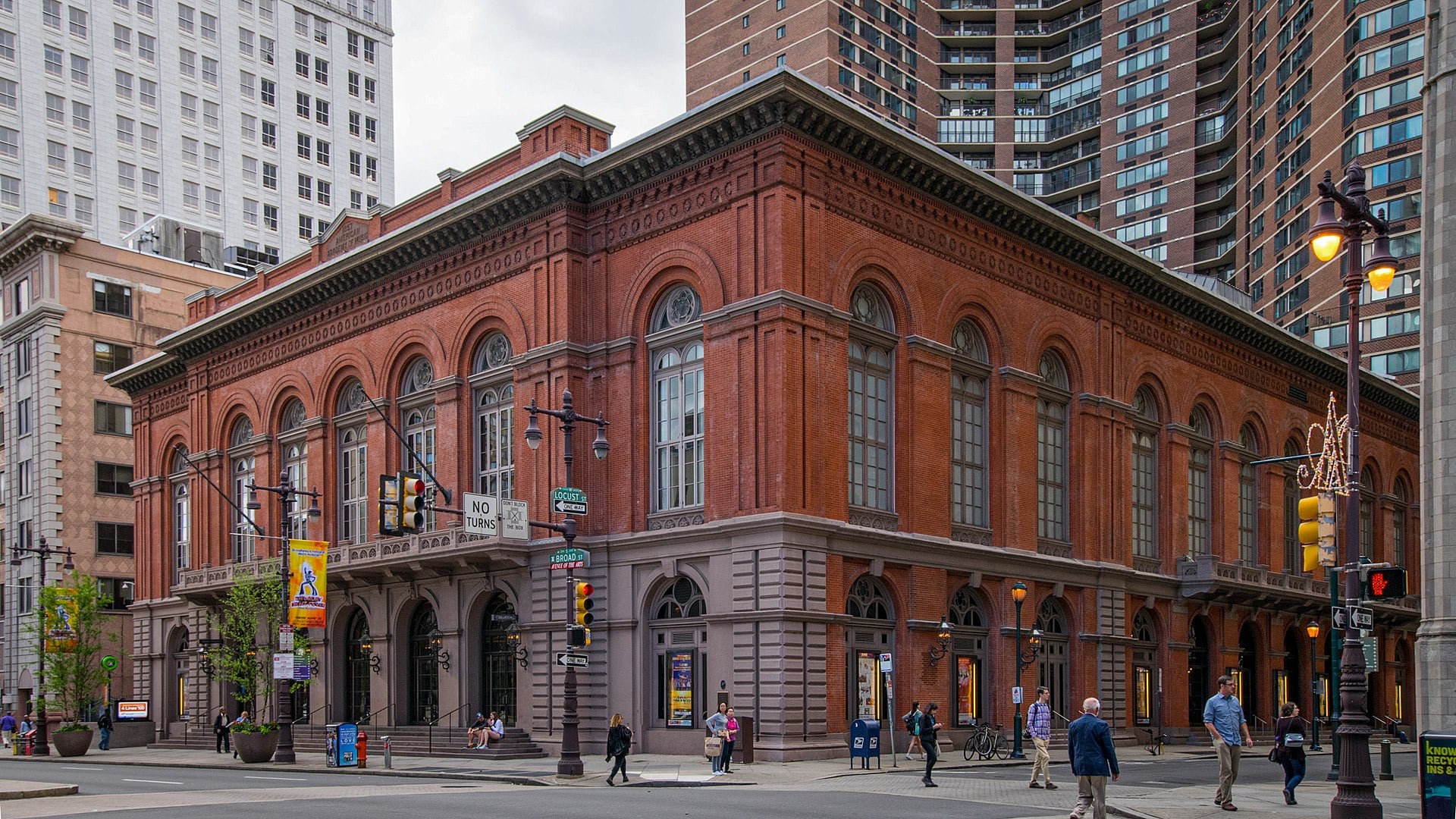
    In the course of one of such search, I happened across this: Philadelphia Orchestra concert listings from the 1980s and ‘90s, the era that formed the peak of my Philadelphia concert attendance – first as one of those who stood in line for an hour and a half, in all weather, outside the old Academy of Music at Broad and Spruce Streets, for a shot at a $1.50 amphitheater ticket (later raised to $2.00); then as a young subscriber.

    How strange it is to revisit these programs from my current perspective, all these years later. On the one hand I can remember vividly being there in the hall, and the actual performances, as if next to no time has passed; on the other, not only does it seem so very distant, but like from another dimension entirely. Surely it is for elusive sensations like this that the word as “uncanny” was coined.

    Looking back, I realize afresh how lucky I was to be able to see and hear so many of the greats in action. I can’t say that I took everything for granted, but with the passage of time, one starts to realize how seldom certain pieces are played in concert and how indispensable individual talents are.

    Pay attention not only to the conductors, but also the soloists – some of them drawn from the orchestra’s personnel. So many no longer with us, or getting toward the end of their careers.

    https://concertannals.blogspot.com/2018/12/philadelphia-orchestra-subscription_13.html

    Those of you with even longer memories may appreciate this. Scroll down for Ormandy in the ‘50s:

    https://concertannals.blogspot.com/search/label/Philadelphia%20Orchestra


    PHOTO: Philadelphia’s Academy of Music, where I saw Mieczylslaw Horszowski, Rudolf Firkušný, Leon Fleisher, Alicia de Larrocha, Max Rudolf, Klaus Tennstedt, Rafael Frühbeck de Burgos, Erich Leinsdorf, Oscar Shumsky, Isaac Stern, Paul Tortelier, Mstislav Rostropovich, Heinrich Schiff, Lynn Harrell, Jessye Norman, Luciano Pavarotti, John Shirley-Quirk, William Warfield, Gian Carlo Menotti, Einojuhani Rautuvaara, and so many others. Entrance to the amphitheater is toward the far right of the photo. If you were in line back to the poster on the front right of the building (seen center), you knew you were in. You just had to be sure to bring a coffee and a book. No cell phones then!


  • Elmer Bernstein A Centennial Celebration

    Elmer Bernstein A Centennial Celebration

    by 

    in
    9 responses

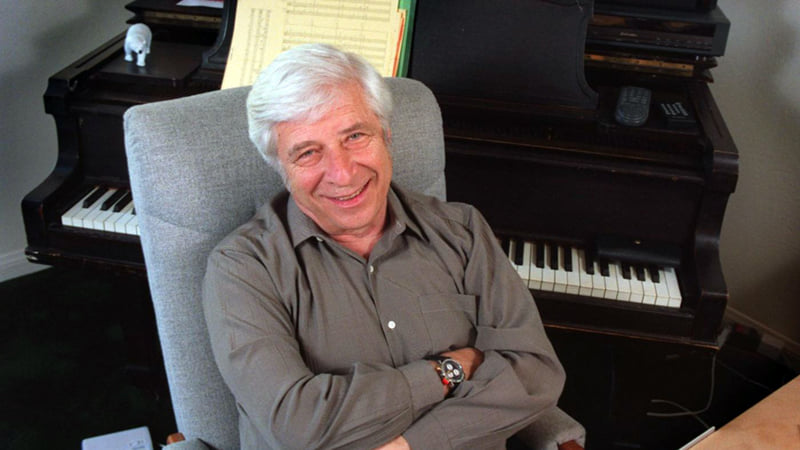
    His was an enviable career that spanned some 50 years. He composed music for over 150 movies and nearly 80 television projects, many of them still much-beloved, including “The Ten Commandments” (1956), “The Magnificent Seven” (1960), “To Kill a Mockingbird” (1962), “The Great Escape” (1963), and the iconic theme for the National Geographic television specials.

    Elmer Bernstein would have been 100 years-old today.

    Bernstein was composer-of-choice for John Wayne’s later films, including “The Comancheros” (1961), “The Sons of Katie Elder” (1965), “True Grit” (1969), and “The Shootist” (1976).

    In addition, he was one of the first film composers to incorporate jazz elements into his work for dramatic purposes, in movies like “The Man with the Golden Arm” (1955), “Sweet Smell of Success” (1957), and “Walk on the Wild Side” (1962).

    Coming out of the Swinging Sixties, a time when the industry clearly favored a more popular sound over purely orchestral music (that is, until John Williams changed everything), Bernstein kept right on working. Thanks to a generation of younger filmmakers who had grown up on his classics, he never lacked for choice. Suddenly, he found himself much in demand as a comedy composer, providing the underscores for “Animal House” (1978), “The Blues Brothers” (1980), “Airplane!” (1980), “Stripes” (1981), and “Ghostbusters” (1984).

    For Martin Scorsese, he composed music for “The Age of Innocence” (1993), “Bringing Out the Dead” (1999), and “The Gangs of New York” (2002) – although his score for the latter was ultimately rejected due to extensive tampering in post-production. He also adapted Bernard Herrmann’s music for Scorsese’s remake of “Cape Fear” (1991) and wrote the music for the Scorsese-produced “The Grifters” (1990).

    In all, Bernstein was nominated for 14 Academy Awards, but claimed the Oscar only once, fairly early on, for his work on “Thoroughly Modern Millie” (1967), of all things. His final nomination was for his very last score, for “Far from Heaven” (2002). Elmer Bernstein died on August 18, 2004 at the age of 82.

    No relation to Leonard Bernstein (or “Bern-STINE”), Elmer pronounced his name “Bern-STEEN.” The two were sometimes further differentiated as “East Coast Bernstein” and “West Coast Bernstein.”

    In the year 2000, Elmer Bernstein composed a guitar concerto and expressed regret that he hadn’t contributed more to the concert hall. At least it was good one. David Hurwitz of classicstoday.com described it as “incontestably the finest piece ever composed for this combination” (i.e. guitar and orchestra), going so far as to hold it up to Joaquin Rodrigo’s “Concierto de Aranjuez.” I don’t know if I’d take it that far, but it is pretty damn good.

    Movement 1 https://www.youtube.com/watch?v=_mrSyhK6174

    Movement 2 https://www.youtube.com/watch?v=f072Efxnw24

    Movement 3 https://www.youtube.com/watch?v=mBi-BHZPkq4

    Keep an eye out for my webcast for this past weekend’s “Picture Perfect,” devoted to Bernstein. I’m told the audio will be up this afternoon. Once it’s posted, you can click on “listen” at the link.

    https://www.wwfm.org/show/picture-perfect-with-ross-amico/2022-03-31/picture-perfect-apr-2-elmer-bernstein-at-100

    Some of Bernstein’s music for “The Ten Commandments” will also be featured on this weekend’s show, which will be devoted to scores composed for Biblical epics, this Saturday evening at 7:00 EDT, on WWFM – The Classical Network and wwfm.org.

    In the meantime, enjoy “Elmer Bernstein: This Is Your Life,” with appearances by John Williams, John Landis, Eli Wallach, and others, offering congratulations to the composer at the age of 80.

    Happy birthday, Elmer Bernstein. Thank you for your magnificent body of work!


  • Remembering Pianist Joseph Kalichstein

    Remembering Pianist Joseph Kalichstein

    by 

    in
    3 responses

    I know it’s been a few days since pianist Joseph Kalichstein died, but I can’t seem to have been able to find the time or focus to report it. Kalichstein, who was equally accomplished as a recitalist, soloist, and chamber musician, died at his home in Maplewood, NJ, on Thursday.

    His career spanned half a century. He was part of generation of Juilliard-trained musicians, including Itzhak Perlman, Pinchas Zukerman, Emanuel Ax, Leonard Slatkin, and James Levine, who rose to the top of their respective fields to become highly-visible and frequently-recorded performers.

    It was Claudio Arrau who heard him in Tel Aviv, when Kalichstein was 14 years-old. (Kalichstein later stated he had been able to read music before he could read words.) Arrau arranged for him to be brought to Juilliard in 1962. Kalichstein himself later taught there, beginning in 1983.

    He attracted the admiration of Leonard Bernstein, who invited him to perform on one of his televised Young People’s Concerts, and Rudolf Serkin, George Szell, and William Steinberg, who sat on the jury for the Leventritt Competition in 1969. Kalichstein won the the competition by unanimous decision.

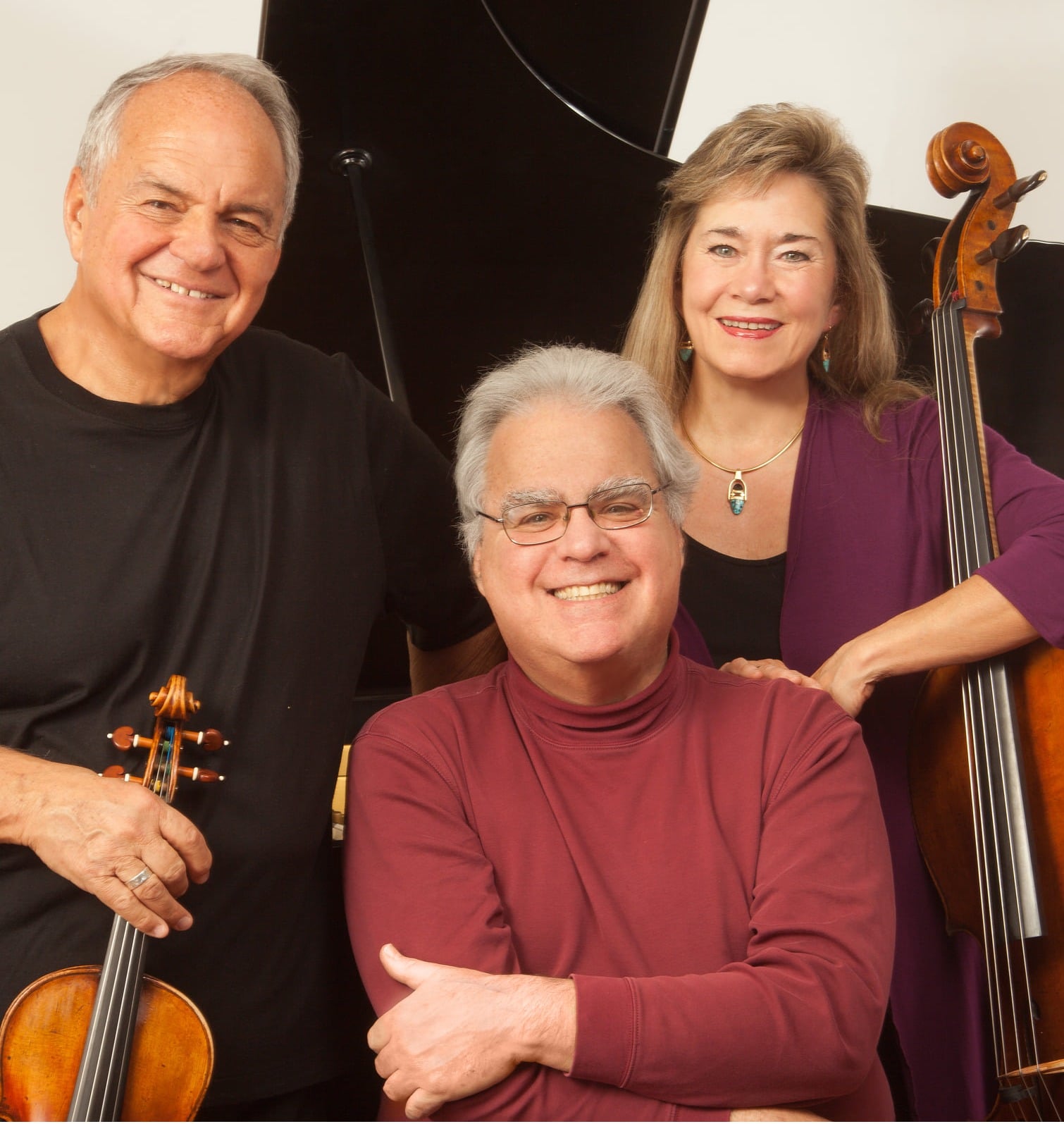
    In 1976, with violinist Jaime Laredo and cellist Sharon Robinson, he formed the Kalichstein-Laredo-Robinson Trio. The trio made its public debut at the Inauguration of President Jimmy Carter in 1977. Kalichstein’s final performance, in Phoenix on March 17, was with the ensemble, playing works by Schumann, Ellen Taaffe Zwilich, and Brahms.

    A sensitive interpreter and a self-effacing one, Kalichstein excelled as a collaborator, with a widely remarked-upon lack of ego. His peers, students, and audiences all benefited from his devotion to music.

    I was privileged to attend a few of his performances with the Kalichstein-Laredo-Robinson Trio in Philadelphia. Locally, he also appeared as soloist in Beethoven’s Piano Concerto No. 4, with the Princeton Symphony Orchestra, in 2014.

    Kalichstein’s repertoire embraced the core composers of the 18th and 19th centuries, 20th century masters such as Ravel, Bartók, and Shostakovich, and, with the trio, more contemporary works by Leon Kirchner, Arvo Pärt, Richard Danielpour, and Daron Hagen.

    He was 76 years-old.


    Beethoven’s Piano Sonata No. 22

    Beethoven’s Piano Concerto No. 4 with Szell

    Kalichstein-Laredo-Robinson Trio in Beethoven’s “Triple Concerto”

    Kalichstein-Laredo-Robinson Trio perform Brahms, Dvořák and Mendelssohn

    Kalichstein talks Brahms with David Dubal

    The Kalichstein-Laredo-Robinson Trio’s chamber music recordings across a broad repertoire are generously represented on YouTube, but most of them are posted in individual movements. So if you’re interested in more, definitely poke around!


    PHOTO: Joseph Kalichstein (center) with Jaime Laredo and Sharon Robinson


Tag Cloud

Aaron Copland (93) Beethoven (95) Composer (114) Film Music (145) Film Score (143) Film Scores (255) Halloween (94) John Williams (195) KWAX (229) Leonard Bernstein (104) Marlboro Music Festival (125) Movie Music (160) Mozart (91) Opera (213) Philadelphia Orchestra (89) Picture Perfect (174) Princeton Symphony Orchestra (109) Radio (88) Ross Amico (244) Roy's Tie-Dye Sci-Fi Corner (290) The Classical Network (101) The Lost Chord (269) Vaughan Williams (105) WPRB (397) WWFM (881)

DON’T MISS A BEAT

Receive a weekly digest every Sunday at noon by signing up here


RECENT POSTS