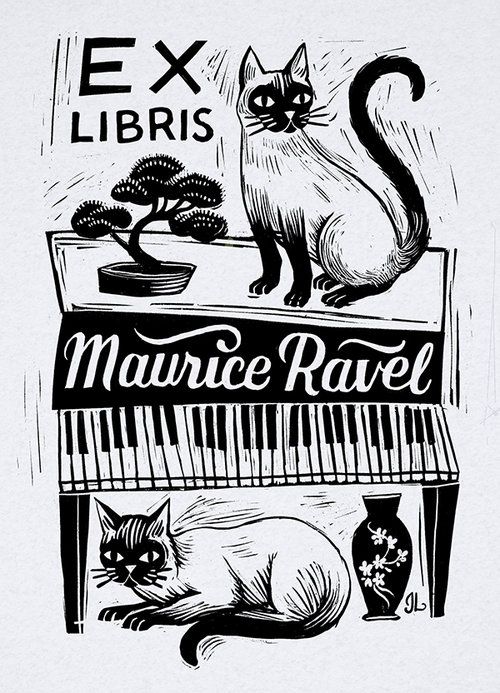
With all that I’ve been writing about bookplates recently, it’s very interesting that I would stumble across this today, the birthday of Maurice Ravel. Ravel was not only a masterful composer, he was also crazy for cats.
Bon anniversaire, mon vieux!
by
With all that I’ve been writing about bookplates recently, it’s very interesting that I would stumble across this today, the birthday of Maurice Ravel. Ravel was not only a masterful composer, he was also crazy for cats.
Bon anniversaire, mon vieux!
by
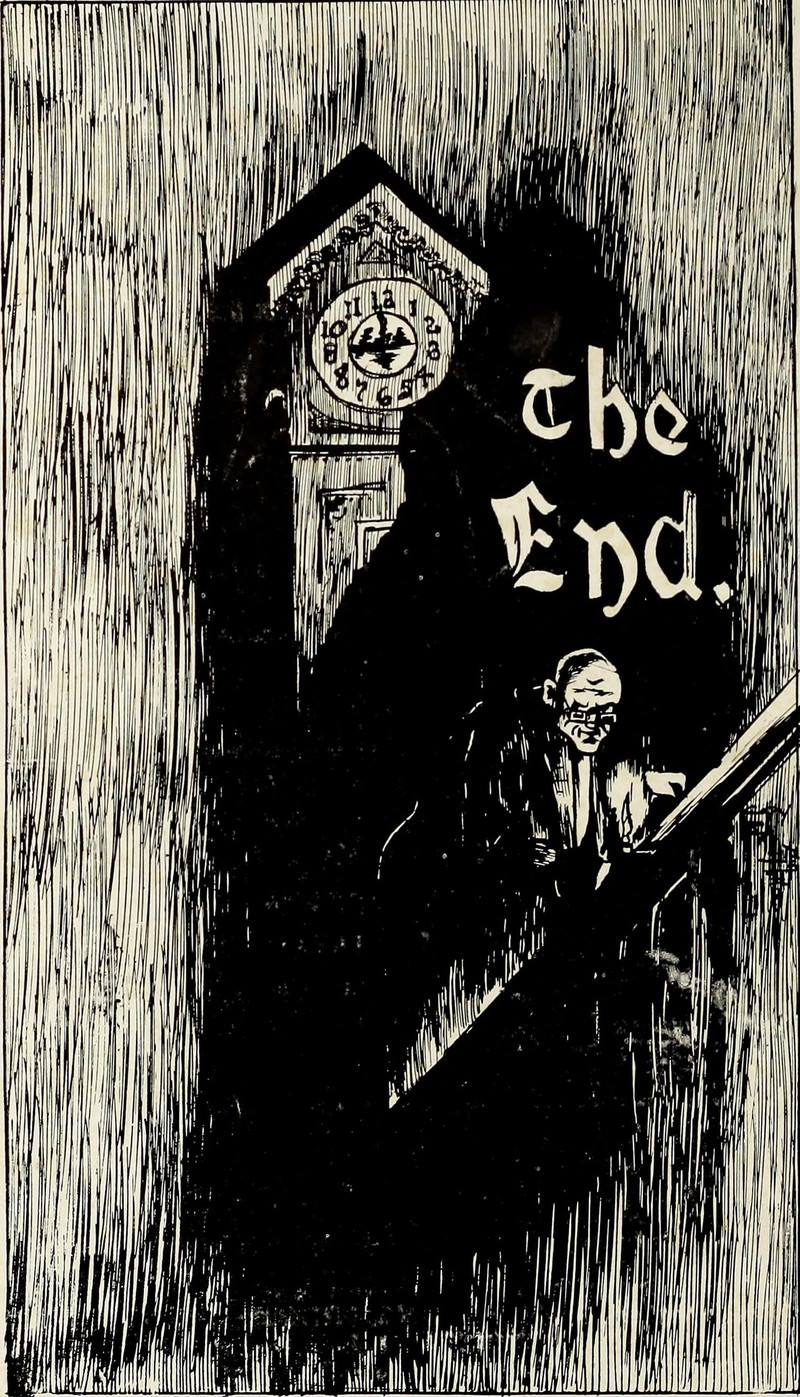
To coincide with Maurice Ravel’s birthday, a reminder to turn your clocks ahead tonight.
Spring forward, and lose an hour. Then brace yourself, as tomorrow, all across the country, bleary-eyed folks destroy things or injure themselves because of disrupted sleep cycles. The risk of stroke spikes the day after a time change, and productivity plummets on Monday due to worker fatigue.
But it’s all worth it, I suppose, so that we can have a little extra light at the end of the day, should someone decide they need a walk in the evening.
by
March is Early Music Month. While the concept may seem somewhat remote from the world of film music, this week on “Picture Perfect,” we’ll set the Wayback Machine and enjoy four scores that employ melodies and modes of the Middle Ages.
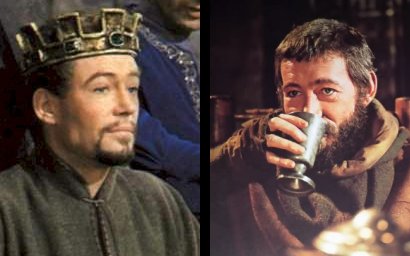
We’ll hear selections from “Becket” (1964), by Laurence Rosenthal. In the film, based on a play by Jean Anouilh, Richard Burton plays the Archbishop of Canterbury, and Peter O’Toole, King Henry II. The music is reliant on chant, with a quotation from the familiar Gregorian melody “Dies Irae” (“Day of Wrath”), occurring fairly early in the action.
Then we’ll hear music from “The Hunchback of Notre Dame” (1939), by Alfred Newman. This time based on a novel – “Notre Dame de Paris,” by Victor Hugo – the film features Maureen O’Hara as Esmeralda and Charles Laughton as Quasimodo, with Cedric Hardwicke, Thomas Mitchell, Edmond O’Brien, and Harry Davenport in the supporting cast. The project was one of nine scored by Newman that year, which many historians regard as Hollywood’s finest. Again, the composer evokes the era through sacred choral passages and secular dances.
“The Warlord” (1965) starring Charlton Heston, Richard Boone and Rosemary Forsyth, is the tale a knight who falls in love with a peasant woman, and in order to keep her, claims his right of “droit du seigneur” – his prerogative to spend the first night with any bride among his serfs. Unfortunately, she falls in love with him, and all hell breaks loose.
It was an unusual project for the composer, Jerome Moross, who is best-known for the kind of breezy Americana sound employed in his best-known music, that for “The Big Country.” Here, he evokes the 11th century with an underscore that, again, finds inspiration in authentic music of the era.
Finally, we’ll turn to “The Lion in Winter” (1965), adapted from a play by James Goldman, an historical drama set at the Christmas court of Henry II – again, as in “Becket,” played by Peter O’Toole. Henry spars with his estranged wife, the temporarily paroled Eleanor of Aquitaine (played by Katherine Hepburn), in a familial power struggle, which also involves their three sons, played by Anthony Hopkins, John Castle, and Nigel Terry. Timothy Dalton appears as Philip II of France.
The film was the winner of three Academy Awards, including one for Best Original Score. The composer was John Barry. Yet again the music is steeped in that of the Middle Ages, yet given a distinctly modern twist.
Plentiful intrigue and funny haircuts are guaranteed. However, there’s nothing Middling about the music. Film composers make history, this Friday evening at 6:00 EST, on WWFM – The Classical Network and wwfm.org.
PHOTOS: Dual O’Tooles, as Henry II in “Becket” (left) and “The Lion in Winter”
by
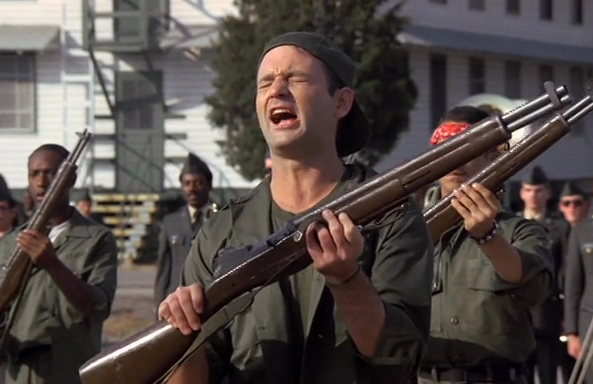
Is it too much to hope for a brisk March?
We’ll put the early spring into our step, this afternoon on The Classical Network, and enliven your Friday with a program in 4/4 time.
An all-march afternoon? That’s the fact, Jack!
Marches for band. Symphonic marches. Light music marches. Marches for piano. Marches for string quartet. Funeral marches. Coronation marches. Circus marches.
Fear not, it won’t be all march-or-die, an incessant barrage of three-minute quick marches in 4/4 time. Some of the marches will be embedded in larger works. Some of the works will merely suggest marches.
There will be plenty of time for you to do your warm-ups, during today’s Noontime Concert, as Lenape Chamber Ensemble will perform works by Beethoven (the String Quartet, Op. 18, No. 4), Charles Ives (the Violin Sonata No. 2), and Camille Saint-Saëns (the Piano Trio No. 2).
The next Lenape program will take place this weekend, presented on two concerts, tonight at 8:15 p.m. at Upper Tinicum Lutheran Church in Upper Black Eddy, PA, and Sunday at 3 p.m. at Delaware Valley University in Doylestown. Lenape musicians will perform Franz Schubert’s “Rosamunde” Quartet, Carl Reinecke’s “Undine” Sonata,” and Gabriel Fauré’s Piano Quartet in C minor. For more information, look online at http://www.lenapechamberensemble.org.
Then join me for Beethoven, Ives, and Saint-Saëns, followed by an afternoon of March madness, this Friday from 12 to 6 p.m. EST, on WWFM – The Classical Network and wwfm.org.

by
Rounding off my series on Montsalvatge/Montsalvatje bookplates (previous installments posted on February 23 & 27), this one looks as if it may have actually belonged to the composer. At any rate, I feel like I am getting awfully close.
Xavier Montsalvatge was born in 1912. Note also the prevalence of currency and coin. The February 27 plate, designed for one Jordi Montsalvatje I Fossa, bears a humorous image of a musician whose pockets are overflowing with money, yet his music-making frightens the cat.
That plate’s inscription reads “Music pagat, no fa mal sò,” apparently a recognized expression in Catalonia, since a Google search turns up multiple links. The translation is, roughly, “Music paid for makes bad sound,” meaning, as far as I can make out, that when one is paid for one’s work, one doesn’t do it well, or doesn’t do it at all. Perhaps the tag “Banquer” (or banker) is meant to be ironic?
According to the composer’s nephew, there is only one family with the surname Montsalvatge, and its roots are in Catalonia, though an offshoot appeared in the United States in the 19th century. On either side of the Atlantic, the tree hangs heavy with the fruit of both artists and bibliophiles.
Here’s some more music by Xavier Montsalvatge:
Aaron Copland (93) Beethoven (95) Composer (114) Film Music (145) Film Score (143) Film Scores (255) Halloween (94) John Williams (195) KWAX (229) Leonard Bernstein (104) Marlboro Music Festival (125) Movie Music (160) Mozart (91) Opera (213) Philadelphia Orchestra (89) Picture Perfect (174) Princeton Symphony Orchestra (109) Radio (88) Ross Amico (244) Roy's Tie-Dye Sci-Fi Corner (290) The Classical Network (101) The Lost Chord (269) Vaughan Williams (105) WPRB (397) WWFM (881)
4 responses