• Mendelssohn & Janáček: Youth & Music from Marlboro

    Mendelssohn & Janáček: Youth & Music from Marlboro

    by 

    in
    6 responses

    Ah! Sweet bird of youth!

    We’ll be casting fists full of seed and suet on this week’s “Music from Marlboro.”

    Felix Mendelssohn’s Octet for Strings is still regarded as one of the most amazing feats by one the great composer prodigies in all of music. Mendelssohn completed the work in the fall of 1825, when he was 16 years-old. He cemented his reputation the very next year, in 1826, with his spritely overture to “A Midsummer Night’s Dream.”

    Around the time of the overture – as a matter of fact, written just before – Mendelssohn produced a String Quintet in A major. The Octet had been conceived as a birthday gift for the composer’s friend and violin teacher Eduard Rietz. Rietz would have an unwitting influence on the Quintet, as well, as Mendelssohn replaced the slow movement six years later, following Rietz’s death, with a new one composed in his memory. It was in this form that the Quintet would be published in Beethoven’s home town of Bonn, Germany, in 1832.

    We’ll hear it performed in a spin-off recording from the 1978 Marlboro Music Festival, featuring violinists Jaime Laredo and Ani Kavafian, violists Heiichiro Ohyama and Kim Kashkashian, and cellist Sharon Robinson.

    Leoš Janáček was actually 70 by the time he came to write “Mladi,” or “Youth,” in 1924. The Czech master was at the height of his belated fame, having struck paydirt with a series of operas, including “Jenůfa,” “Káťa Kabanová ,” and “The Cunning Little Vixen.” The Sinfonietta, the “Glagolitic Mass,” and the String Quartet No. 2 “Intimate Letters” were yet to come.

    “Mladi” was the outgrowth of a trip down memory lane, reflections on his younger days, which he was in the process of sharing for a projected biography. The work is a kind of musical reminiscence of his life as a schoolboy at the Augustinian monastery of St. Thomas in Old Brno, where he received his earliest education.

    We’ll hear it performed by Marlboro wind players in 1997, including flutist Paula Robison, oboist Jennifer Kuhns, clarinetist Igor Begelman, clarinetist and bass clarinetist Michael Rusinek, bassoonist Daniel Matsukawa, and hornist Radovan Vlatković.

    It’s an hour of youth, age, loss, gain, and reflection. Two composers exercise their burgeoning and undiminished creativity, at either end of their careers. Birds of a feather flock together, on the next “Music from Marlboro,” this Wednesday evening at 6:00 EST, on WWFM – The Classical Network and wwfm.org.


    BTW – Marlboro musicians will be in Philadelphia, at the American Philosophical Society, to perform works by Schubert, Handel, Brahms, and Kate Soper, tonight at 7:30 p.m. The concert is part of a Marlboro tour, with further stops in DC (on Thursday), Chicago (on Friday), and Boston (on Sunday). To learn more, visit marlboromusic.org.

    Marlboro School of Music and Festival: Official Page

  • Vivaldi Bach & More Classical Music Today

    Vivaldi Bach & More Classical Music Today

    by 

    in
    2 responses

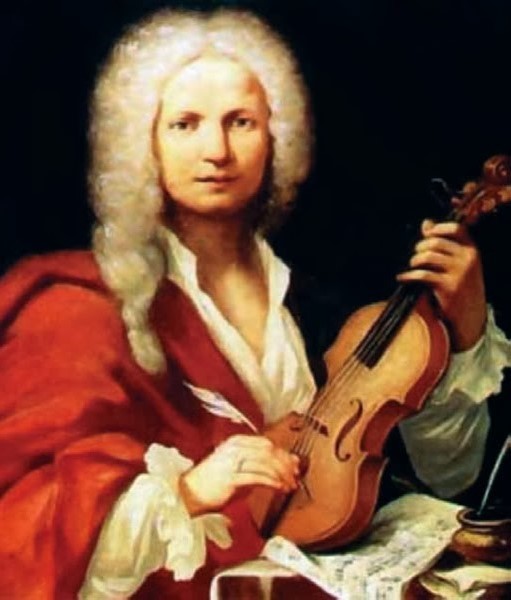
    It’s Antonio Vivaldi’s birthday! I hope you’ll join me today in celebrating “The Red Priest,” alongside Bernard Haitink, Carlos Surinach, and Alexander Goedicke.

    We’ll also enjoy chamber music by Felix Mendelssohn and Leoš Janáček, on this week’s “Music from Marlboro” tonight at 6.

    Of course, we’re celebrating Bach all month long. Tune in this afternoon to hear Bach’s reimagining of a Vivaldi concerto, and some of his own music transcribed most ingeniously by Johannes Brahms.

    Have you become one of the Bach 500 yet? Call us now, and help us cancel fundraising on March 21st, Bach’s birthday. The number is 1-888-232-1212. Or join us online at wwfm.org. 500 donations in any amount will result in our being able to listen to just Bach’s music on his birthday.

    Do it now! Then enjoy the programming you’ve made possible, from 4 to 7 p.m. EST. Thank you for your support of WWFM – The Classical Network and wwfm.org.


  • Vikings & Wales Webcasts Now Available

    Vikings & Wales Webcasts Now Available

    by 

    in
    7 responses

    This weekend’s installments of “Picture Perfect” (“Vikings!”) and “The Lost Chord” (“And God Created Great Wales”) are now posted as webcasts.

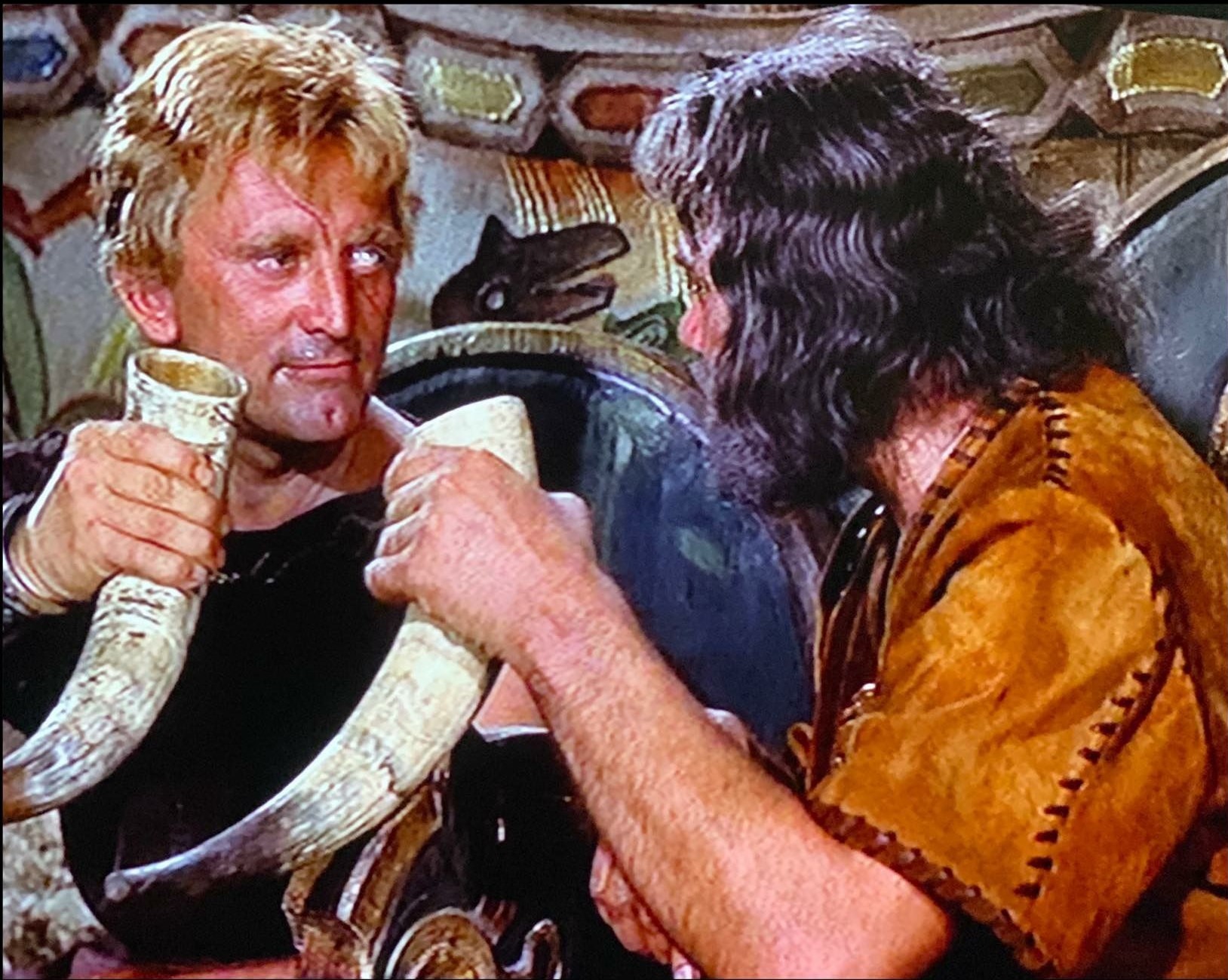
    Click here for mead and horned helmets:

    https://www.wwfm.org/post/picture-perfect-february-28-vikings

    Click here for St. David, harps, and daffodils:

    https://www.wwfm.org/post/lost-chord-march-1-and-god-created-great-wales

    That about covers it, I should think.


  • Bach 500 Drive Celebrate Bach Month!

    Bach 500 Drive Celebrate Bach Month!

    by 

    in
    8 responses

    Drivers, start your engines!

    If you haven’t heard yet, the Bach 500 is underway.

    March is “Bach Month” on The Classical Network. In celebration of the anniversary of the birth of Johann Sebastian Bach (on March 21st, 1685), we’re looking for 500 listeners to step up and make a donation IN ANY AMOUNT. You set the level. When we reach 500 donations, we’ll tally in the funds from our Bach Pot – contributions solicited in advance from some especially ardent supporters – and, best of all, we’ll be able to cancel fundraising on Bach’s birthday and enjoy just his music.

    You can do your part to make that happen by calling us during business hours at 1-888-232-1212, or by donating online anytime at wwfm.org. While you’re over there, at the website, you can monitor our progress by consulting our Bach 500 membership thermometer. You don’t have to worry about blowing our engines. Your donation is like a blast of nitrous oxide, but we’re definitely built for speed.

    PLEASE NOTE: This year, the Big Day actually falls on a Saturday, so we will celebrate with a full day of Bach on Friday, March 20.

    To keep us mindful, this afternoon I’ll be offering hourly reminders, harnessed to a short work of Bach; then another work in some way related – for example, one of the Preludes and Fugues of Dmitri Shostakovich (influenced by the “Well-Tempered Klavier”) – followed by something related to the related material, which ideally will have nothing at all to do with Bach, like a Glazunov symphony (Glazunov was a Shostakovich mentor). That will keep it varied, while still getting the message out there.

    First, it’s another Noontime Concert, today featuring Tableau Vivant. The ensemble will present a program titled “Telemann in Paris.” Two of Georg Philipp Telemann’s “Paris” Quartets will flank a sonata by Michel Blavet.

    The concert is another brought to us by Gotham Early Music Scene, or GEMS. GEMS is a non-profit corporation that supports and promotes artists and organizations in New York City devoted to Early Music. Free lunchtime concerts are held at the chapel of St. Bartholomew’s Church, 325 Park Avenue, in Midtown Manhattan, every Thursday at 1:15 p.m. To learn more about these and other GEMS events, look online at gemsny.org.

    It’s music by Bach, from the time of Bach, inspired by Bach, and totally unrelated to Bach.

    Please support it, and help us to cancel fundraising on March 20, by joining the Bach 500. We’re looking for your contribution in any amount at 1-888-232-1212 or wwfm.org.

    Then enjoy the music. It’s Bach’s world; we just live in it, from 12 to 4 p.m. EST, on WWFM – The Classical Network.


  • Smetana’s Heroic Life & Music on WWFM

    Smetana’s Heroic Life & Music on WWFM

    by 

    in
    6 responses

    In the latter half of the 19th century, music became a focal point for nations struggling to assert their own identity following centuries of imperial control. Bedřich Smetana mined the history, landscape, and lore of the Czech people for the raw materials from which he would forge a distinctive national sound.

    Unfortunately, Smetana’s life was also marred by tragedy. Political upheavals, professional intrigue, and the deaths of three children and a wife all weighed heavily up him. A second marriage was unhappy. Syphilis robbed him of his hearing, his sanity, and eventually his life.

    Yet he completed some of his greatest works under what should have been cripplingly dispiriting circumstances. By the time he composed “Má vlast” – including the ubiquitous “Vltava” (or “The Moldau”) – he was stone deaf and living in domestic purgatory. (He believed that his second wife hated him, as she was always hounding him about money.) This period also yielded another of his most enduring works, the String Quartet No. 2 “From My Life.”

    Further vindication came when his opera “Libuše” received its belated premiere and was rapturously received. In all, Smetana composed eight operas, but of these only “The Bartered Bride” is still performed regularly outside the Czech Republic.

    Smetana is everlasting in the hearts of the Czech people. We’ll celebrate his independent spirit this afternoon on The Classical Network, on his birthday, alongside composers Marc Blitzstein, John Gardner, George Alexander Macfarren, and Robert Simpson, violinist and composer Eugène Ysaÿe, guitarist and composer Celedonio Romero, and conductor and composer Leif Segerstam.

    The music-making will be positively heroic, from 4 to 7 p.m. EST, on WWFM – The Classical Network and wwfm.org.


    To tide you over, here’s Smetana’s Sonata for Two Pianos, Eight Hands:


    The chicks dig Czech: “Bedřich Smetana and His Friends in 1865,” by Franz Dvořák (no relation to the composer)


Tag Cloud

Aaron Copland (93) Beethoven (95) Composer (114) Film Music (145) Film Score (143) Film Scores (255) Halloween (94) John Williams (195) KWAX (229) Leonard Bernstein (104) Marlboro Music Festival (125) Movie Music (160) Mozart (91) Opera (213) Philadelphia Orchestra (89) Picture Perfect (174) Princeton Symphony Orchestra (109) Radio (88) Ross Amico (244) Roy's Tie-Dye Sci-Fi Corner (290) The Classical Network (101) The Lost Chord (269) Vaughan Williams (105) WPRB (397) WWFM (881)

DON’T MISS A BEAT

Receive a weekly digest every Sunday at noon by signing up here


RECENT POSTS