• Labor Day Movie Music on Picture Perfect

    Labor Day Movie Music on Picture Perfect

    by 

    in
    3 responses

    It’s nice to be able to look forward to a three-day weekend, when nobody expects you to get your butt in gear. Unless you’re Charlie Chaplin, that is.

    This week on “Picture Perfect,” we’ll have music from films about the working stiff, for Labor Day.

    “The Molly Maguires” (1970), set in and around the anthracite mines of Pennsylvania, illustrates the unfair labor practices imposed on immigrant workers there, which led to violent strikes and acts of sabotage. Sean Connery is the ringleader and Richard Harris the Pinkerton detective brought on to infiltrate the gang.

    The film was directed by Martin Ritt, a number of whose projects deal with labor, intimidation, and corruption, and his own experiences living through the era of the Hollywood blacklist – among these, “Edge of the City,” “The Front,” and “Norma Rae.”

    The music is by Henry Mancini, a far cry from his work on “The Pink Panther,” “Peter Gunn,” and “Breakfast at Tiffany’s,” with a decidedly Celtic lilt.

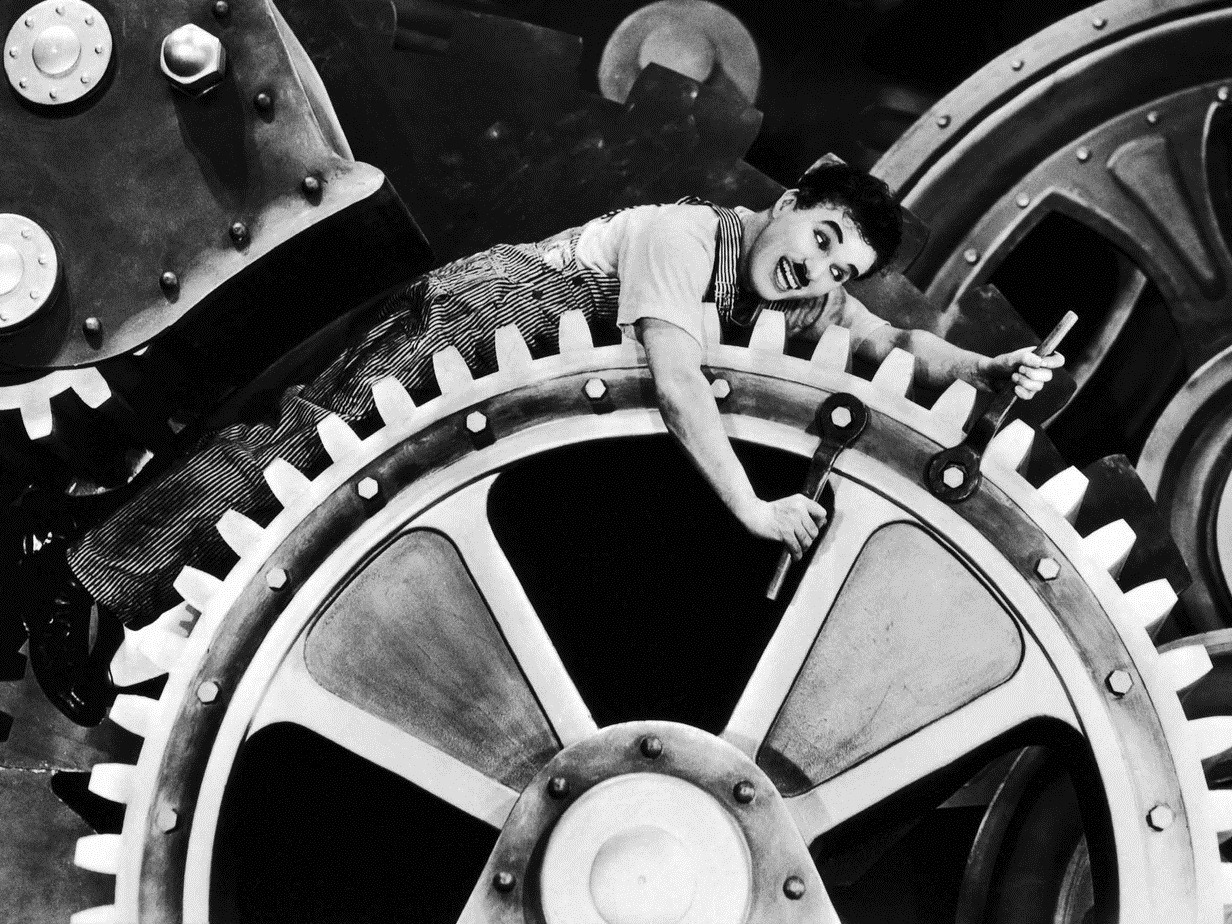
    Charlie Chaplin was a brilliant comedian, of course, but his perfectionism could manifest itself in uncomfortably close supervision over every aspect of his films. The young David Raksin found this out the hard way, when he accepted the job of assisting Chaplin in the writing of the score to “Modern Times” (1936).

    Chaplin, a violinist and cellist himself, would whistle tunes and then stand over Raksin’s shoulder as he figured out how to make them fit the action. Alfred Newman, a much more seasoned hand, stormed out of the recording sessions. Raksin was actually fired once, after only a week and a half, though he was quickly rehired. Despite the creative friction, the two men became friends, and Raksin recollected his work on “Modern Times” as some of the happiest days of his life.

    The film begins with an iconic factory scene, with Chaplin working an assembly line at an increasingly hectic pace, finally being put through the gears of the machinery. He suffers a breakdown, goes berserk, and throws the entire mechanized dystopia into chaos.

    Speaking of dystopias, few can match the OSHA-flouting nightmare of Fritz Lang’s “Metropolis” (1927). One of the landmarks of silent cinema, “Metropolis,” unfortunately, is eerily prescient of a world divided between the haves and the have-nots. Once seen, the subterranean hell of the workers’ hive is not soon to be forgotten.

    Lang’s vision continues to resonate in more ways than one, with its iconography shamelessly recycled by dew-eyed fans and film students down the generations. Similarly, Gottfried Huppertz’s influential, Straussian score led the way for the opulent symphonic canvases of Max Steiner, Erich Wolfgang Korngold, and John Williams.

    Finally, we’ll accept a helping hand – as well as claw, tail, beak, and tongue – from the benevolent woodland creatures of “Snow White and the Seven Dwarfs” (1937). Frank Churchill and Larry Morey’s songs are justifiably immortal.

    Whistle while you work, even as you look forward to a long weekend, on “Picture Perfect” – music for the movies – this Friday evening at 6:00 EDT, on WWFM – The Classical Network and wwfm.org.
  • Susie’s Fella A Hitchcock Throwback

    Susie’s Fella A Hitchcock Throwback

    by 

    in
    4 responses

    Throwback Thursday: I just want to be known as Susie’s fella!

    https://www.youtube.com/watch?v=8cbCh_CMWOk

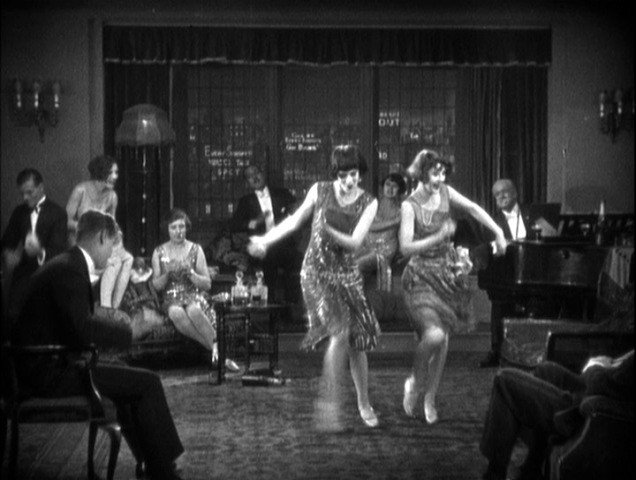
    IMAGE: Alfred Hitchcock’s “The Ring” (1927)


  • Debussy, Ravel & Mallarmé at Marlboro

    Debussy, Ravel & Mallarmé at Marlboro

    by 

    in
    4 responses

    It’s a Mallarmé marmalade, served up on French toast, on the next “Music from Marlboro.”

    While, for the most part, Claude Debussy and Maurice Ravel maintained a certain degree of respect for one another, both men were very possessive of Stéphane Mallarmé.

    Debussy had changed the course of music history with his dreamy translation into sound of Mallarmé’s poem, “L’après-midi d’un faune.” Musicians at the fin de siècle all sat up and took notice – aligning themselves into factions pro and con – but reportedly Mallarmé himself was not all that thrilled, believing the music inherent in his verse to be sufficient. Once he actually attended a performance of the work, however, you might say he changed his tune.

    It’s understandable, then, that Debussy would feel a certain sense of ownership when it came to setting Mallarmé to music.

    Debussy’s “Prélude à l’après-midi d’un faune” appeared in 1894. Mallarmé died in 1898. The first complete edition of Mallarmé’s poems did not appear until 1913. 1913, you’ll recall, was a revolutionary year in the arts, with controversies stirred by the Armory Show in New York City, Schoenberg’s Skandalkonzert in Vienna, and the premiere of “The Rite of Spring” in Paris.

    It was against this backdrop that the Debussy-Ravel rivalry would intensify. Ravel, proclaiming that Mallarmé was the greatest of all French poets, determined to secure the rights to set two of his poems, beating Debussy, who had applied for the same, to the punch. Though publicly Ravel remained good-humored about the coincidence, Stravinsky observed that the two composers did not speak to one another for a year.

    In the event, both set Mallarmé’s “Soupir” (“Sigh”) and “Placet futile” (“Futile Petition”). Opinion was divided as to their success. Stravinsky thought Ravel’s settings his favorites among all the composer’s works. (Of course, Ravel had dedicated the first of the songs to him.) Stravinsky even referenced “Placet futile” when he came to write “A Soldier’s Tale.” On the debit side, Charles Koechlin complained that if you didn’t already know Mallarmé’s poems, you couldn’t possibly understand the texts.

    The two songs had originally been planned as a balanced set, but then Ravel decided to add a third, “Surgi de la croupe et du bond” (“Rising from the Crupper and Leap”), which he described as the strangest and most hermetic. That, he dedicated to Erik Satie.

    Though Ravel had not heard Schoenberg’s “Pierrot Lunaire,” composed the previous year, there must have been something in the air. Ravel was eager to explore the coloristic possibilities of a chamber ensemble in supporting Mallarmé’s symbolist texts. For the final song, he would stretch his harmonic syntax beyond the bounds of tonality.

    Graciously, Debussy ended their estrangement by complimenting Ravel for possessing “the most refined [musical ear] there ever has been.”

    We’ll hear Ravel’s “Trois poèmes de Mallarmé,” performed by mezzo-soprano Mary Westbrook-Geha and an ensemble of eleven instrumentalists at the 1989 Marlboro Music Festival. Then we’ll give Debussy his due, with a performance of his revolutionary String Quartet in G minor, performed by violinists Joseph Lin and Judy Kang, violist Richard O’Neill, and cellist David Soyer, on tour at the Isabella Stewart Gardner Museum in Boston in 2002.

    I hope you’ll pardon my French, on this week’s “Music from Marlboro,” Wednesday evening at 6:00 EDT, on WWFM – The Classical Network and wwfm.org.

    Marlboro School of Music and Festival: Official Page


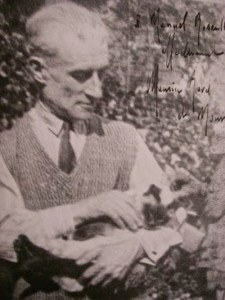
    PHOTOS: Gentlemen, choose your weapons!


  • Mario Davidovsky Pulitzer-Winning Composer Dies at 85

    Mario Davidovsky Pulitzer-Winning Composer Dies at 85

    by 

    in
    5 responses

    It was announced by the American Academy of Arts and Letters earlier today that the composer Mario Davidovsky has died. Davidovsky, who was born in Argentina, studied with Aaron Copland and Milton Babbitt. He was a former member of the composition faculty at Columbia University and a past director of the Columbia-Princeton Electronic Music Center.

    Davidovsky emigrated to the United States in 1960. His work, “Synchronisms No. 6,” for piano and electroacoustic sounds played from tape, was honored with the Pulitzer Prize for Music in 1971. At the time of his death, on Friday, Davidovsky was 85 years-old.


    Synchronisms No. 6:


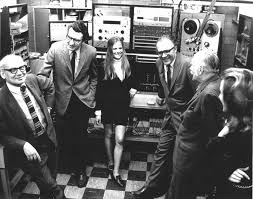
    PHOTO (left to right): CPEMC personnel Milton Babbitt, Mario Davidovsky, Pril Smiley, Vladimir Ussachevsky, Otto Luening, and Alice Shields, circa 1970


  • NYC Early Music Concert & American Road Trip

    NYC Early Music Concert & American Road Trip

    by 

    in
    7 responses

    New Amsterdam was established by the Dutch in the 17th century at the southern tip of Manhattan. Today’s Noontime Concert on The Classical Network comes to us from contemporary New York City.

    The New Amsterdam Consort will present music by composers whose lives coincided with the infancy of the island’s European settlement, including Antonio Bertali (1605-1669), Heinrich Ignaz Franz Biber (1644-1704), Ricardo Rognoni (c.1550-1620), and Georg Muffat (1553-1704).

    The program was recorded at St. Bartholomew’s Church, 325 Park Avenue, on October 18, 2018. Free midtown concerts are presented at the Chapel at St. Bart’s on Thursdays at 1:15 p.m. during the regular season. This year, that season commences on September 5 with The Vivaldi Project performing classical string trios.

    These concerts are made possible in part by Gotham Early Music Scene, or GEMS. GEMS is a non-profit corporation that supports artists and organizations in New York City devoted to Early Music. Learn more and check out the events calendar at gemsny.org.

    Then stick around: with Labor Day weekend ahead, we’ll hit the road with an afternoon of American music evocative of some of our country’s natural and man-made wonders. It’s a journey that will encompass a number of our cities, states, and favorite vacation spots.

    Among our featured works will be “Yellowstone,” for violin and orchestra, by Jett Hitt, Composer. Hitt, who holds a doctorate in composition, conducts guided horseback tours at the national park.

    The RV is all gassed up and ready to go. We’ll hit the pike, from 12 to 4 p.m. EDT, on WWFM – The Classical Network and wwfm.org.


Tag Cloud

Aaron Copland (93) Beethoven (95) Composer (114) Film Music (145) Film Score (143) Film Scores (255) Halloween (94) John Williams (195) KWAX (229) Leonard Bernstein (104) Marlboro Music Festival (125) Movie Music (160) Mozart (91) Opera (213) Philadelphia Orchestra (89) Picture Perfect (174) Princeton Symphony Orchestra (109) Radio (88) Ross Amico (244) Roy's Tie-Dye Sci-Fi Corner (290) The Classical Network (101) The Lost Chord (269) Vaughan Williams (105) WPRB (397) WWFM (881)

DON’T MISS A BEAT

Receive a weekly digest every Sunday at noon by signing up here


RECENT POSTS