• Remembering Wolfgang Sawallisch & Philadelphia

    Remembering Wolfgang Sawallisch & Philadelphia

    by 

    in
    5 responses

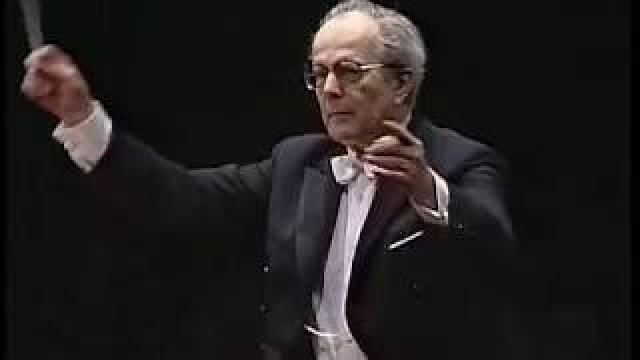
    I remember being told by a friend over coffee, back in the early ‘90s – still a few years away from the brushfire circulation of news on the internet – that Wolfgang Sawallisch was to be the next music director of the Philadelphia Orchestra.

    Sawallisch?!!

    It was a name I associated with Old World integrity and classic (mono) recordings of Richard Strauss. Also, a fabulous, underrated recording of “Ma Vlast” I had discovered while doing college radio, with the Suisse Romande Orchestra, of all things.

    Had he ever even been to the United States? How old was he? I guess at the time he must have been around 70. In the event, he died in 2013, only six months shy of his 90th birthday. Philadelphia would prove to be the high-profile capstone of a very respectable, indeed enviable, if not exactly glamorous career.

    Still, after the intensity and flash of Riccardo Muti, it would be a nice corrective. And I offer that as a Muti fan. This was Philadelphia, after all, where Ormandy roosted for 40 years.

    While Sawallisch was not the most thrilling music director (the word
    “kapellmeister” was bandied a lot), he provided solid leadership and proved on more than one occasion that on a good day he could still surprise.

    I remember a concert on which he programmed works by Kodály and Miklós Rózsa (the rarely-heard Viola Concerto), which were interspersed with performances by a traditional Hungarian band, complete with cimbalom. He may have to some degree drained Einojuhani Rautavaara’s Symphony No. 8 of some of its Finnishness, but at least he secured its premiere. When a severe snowstorm meant the orchestra couldn’t make it in for a scheduled concert of scenes from Wagner’s “Tannhäuser” and “Die Walküre” (including all of Act I), he made the impromptu decision to throw open the doors of the Academy of Music and play the accompaniment himself at the keyboard, with Deborah Voigt, Heikki Suikola, and chorus, for the enjoyment of anyone who cared to show up.

    He was generally all about Beethoven and Bruckner and, yes, Strauss – a concert performance of “Ariadne auf Naxos” was a highlight of his tenure (with Werner Klemperer, Colonel Klink, as the Majordomo!) – but he could also turn around and play the tar out of something like Bohuslav Martinu’s Symphony No. 4. All in all, not a bad legacy.

    I hope you’ll join me – once again over coffee – as I remember Wolfgang Sawallisch, with a selection of his recordings, as conductor and pianist. They’ll be among my featured highlights on this, his birthday, this afternoon from 4 to 7 p.m. EDT, on WWFM – The Classical Network and wwfm.org.

  • Bernstein Blitzstein Airborne Symphony

    Bernstein Blitzstein Airborne Symphony

    by 

    in
    3 responses

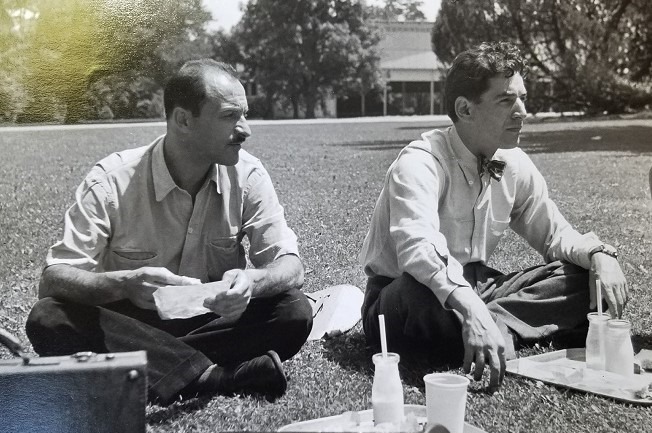
    This Sunday night on “The Lost Chord,” to coincide with what would have been the 101st birthday of Leonard Bernstein, we’ll do our part in helping to wrap up the two-year, worldwide celebration of the Lenny centenary with, if not the most profound of his recordings, then surely one of the more unusual.

    Bernstein was a lifelong admirer of the Philadelphia-born composer Marc Blitzstein. He mounted a performance of Blitzstein’s notorious pro-labor musical, “The Cradle Will Rock,” while still at student at Harvard. He also dedicated his own opera, “Trouble in Tahiti” to him.

    Blitzstein’s “Airborne Symphony” was written on a commission from the U.S. Army while the composer was serving in its Air Force. The work traces the evolution of flight from its conception in theory to its use in modern warfare. The piece was envisaged by him as a big symphony on the theme of “the sacred struggle of airborne free men of the world… to crush the monstrous fascist obstructionist in their path.”

    Blitzstein began the work in 1943, at the height of World War II. It would not be completed until after the war, in 1946. Bernstein conducted the premiere virtually while the ink was still wet on the page. He recorded the piece twice. We’ll hear the second of the two recordings, from 1966, with Orson Welles as narrator, vocal soloists, the New York Philharmonic, and the men of the Choral Arts Society.

    I hope you’ll join me in celebrating Bernstein and Blitzstein – wrapping up the Bernstein centenary – on “Flight of Fancy,” this Sunday night at 10:00 EDT, on WWFM – The Classical Network and wwfm.org.

    Bernstein sings Blitzstein’s “Zipperfly”

    https://www.youtube.com/watch?v=VixrUZOppdI


  • Artist Biopics Soundtracks Picture Perfect

    Artist Biopics Soundtracks Picture Perfect

    by 

    in
    7 responses

    How to translate visual art to the big screen? Generally, by focusing on the drama in the artists’ lives, that’s how.

    And what drama!

    This week on “Picture Perfect,” expand your palette with music from movies about the great artists.

    “The Agony and the Ecstasy” (1965), based on the novel of Irving Stone, dramatizes the friction between Michelangelo (Charlton Heston) and his benefactor, Pope Julius II (Rex Harrison), over the painting of the ceiling of the Sistine Chapel. For his part, Michelangelo would have been perfectly content to stick to sculpture. Alex North’s score is an Early Music banquet, with allusions to – and sometimes outright quotations of – music of the Renaissance.

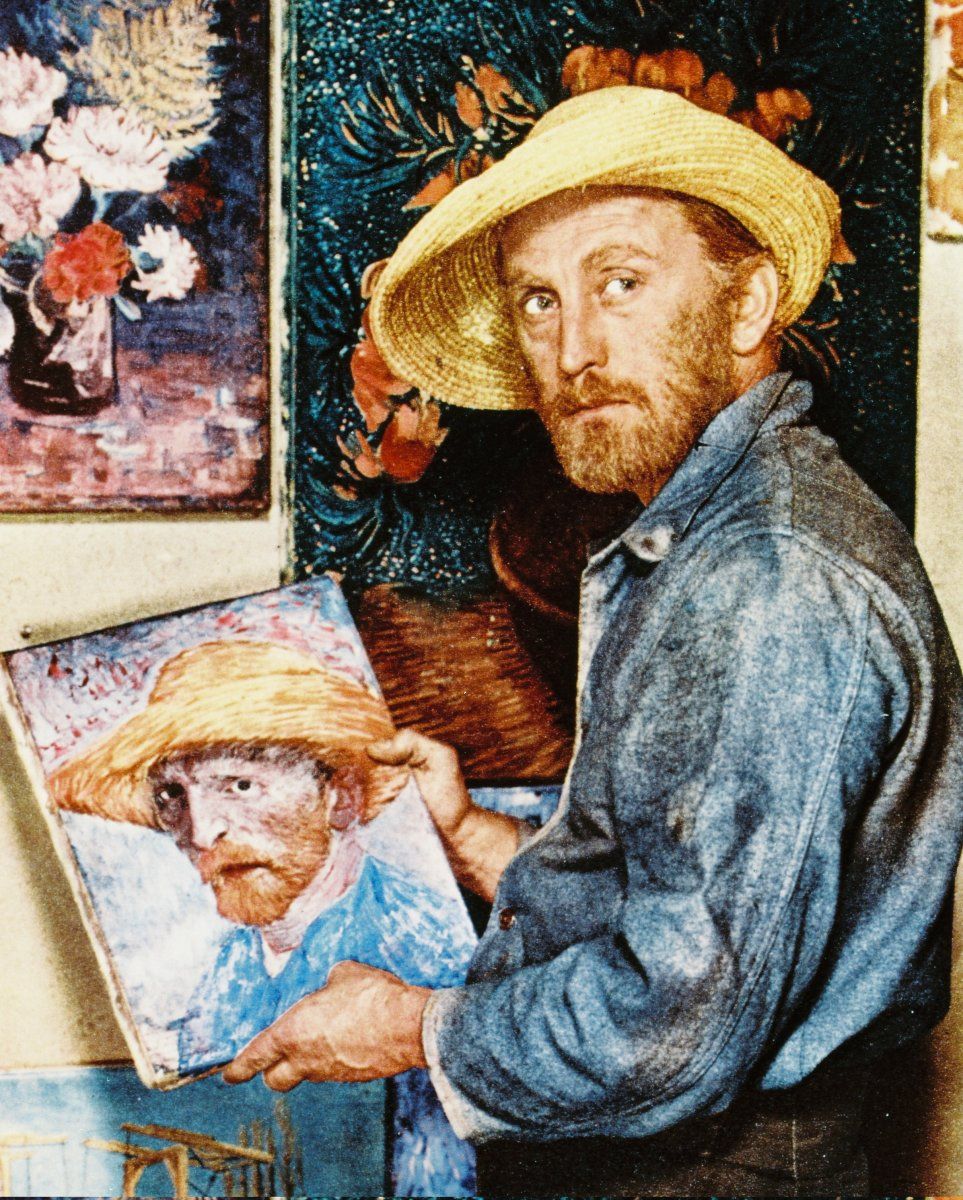
    Stone had another bestseller in “Lust for Life” (1956), about the tormented Vincent van Gogh. This time Kirk Douglas plays one of his most sympathetic roles – and looks remarkably like the artist. Anthony Quinn turns up as his “frenemy,” the painter Paul Gaugin, and earns an Academy Award for Best Supporting Actor. The great Miklós Rózsa wrote the music, softening up the edges of his brawny Hungarian sound with the softer palette of the French Impressionists.

    John Huston brought Pierre La Mure’s novel about Henri de Toulouse-Lautrec to the big screen as “Moulin Rouge” (1952) – not to be confused with the more recent Baz Luhrmann spectacle starring Nicole Kidman and Ewan McGregor, which relegated the artist to a supporting role. José Ferrer dominates the earlier version, spending most of the film walking through off-camera trenches and shuffling along on his knees. Georges Auric, one of the composers of Les Six (which also included Francis Poulenc and Darius Milhaud), captures the spirit of the titular cabaret. The score became one of Auric’s best-known, thanks to the waltz becoming a popular hit, “Where is Your Heart.”

    “The Picasso Summer” (1969) is a departure from the usual formula of focusing on the artist himself. Instead, a young couple (Albert Finney and Yvette Mimieux), admirers of Picasso’s work, take off on a European adventure in an attempt to track him down. Originally Picasso himself had agreed to appear, but some off-screen drama involving a matador friend and Yul Brynner’s wife drove him off. The film was based on a short story by Ray Bradbury. Bradbury hated the adaptation, as did the studio, and “The Picasso Summer,” after being heavily cut and patched with new footage, was never released theatrically in the United States. The film is striking for its extended animation sequences inspired by Picasso’s paintings, and for its score by Michel Legrand.

    Join me for a brush with greatness – music from movies about the great artists – on “Picture Perfect,” this Friday evening at 6:00 EDT, on WWFM – The Classical Network and wwfm.org.


  • Debussy’s La Mer Das Merde Szell Fails?

    Debussy’s La Mer Das Merde Szell Fails?

    by 

    in
    3 responses

    One wag commented on a performance of Debussy’s impressionistic magnum opus conducted by George Szell, “He tried Debussy’s ‘La Mer’ once. It came out as ‘Das Merde.’”

    Great conductor. Great composer. But not all marriages are meant to be (as Debussy well knew).

    Happy birthday, Claude Debussy!

    Debussy in the W.C.?


  • Haydn, Rochberg & Marlboro’s Musical Rebellion

    Haydn, Rochberg & Marlboro’s Musical Rebellion

    by 

    in
    2 responses

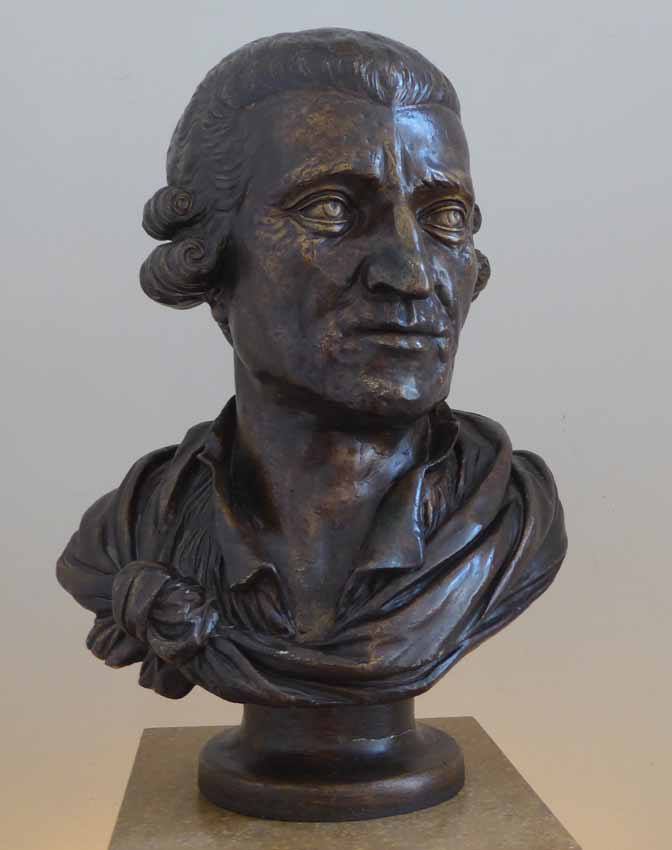
    On this week’s “Music from Marlboro,” you may be good at Haydn, but there’s no escaping the Roch. And I don’t mean Alcatraz.

    George Rochberg’s big claim to fame – or, in some circles, notoriety – is that he was one of the first composers to emerge from the predominant serialism of the 1960s to embrace a new tonality, a shift brought on, it is said, by the untimely death of his son.

    Rochberg found the brand of expressionism he had been exploring at mid-career inadequate to convey the strong emotional upheaval he felt. The reintroduction of tonal passages into his works acted as a kind of balm, even as it lit a slow fuse that would blow wide open the future for up-and-coming composers. At the time, this would have been viewed by some as a criminal offense.

    Rochberg is often credited with having ushered in the Age of Pluralism. Now a composer can write any way he or she wants and still be taken seriously. It’s easy to forget that that was not always the case.

    Rochberg’s desire to communicate must have been a latent one, since his Trio for Clarinet, Horn, and Piano, from 1947 (predating his “twelve tone” period), is direct and, in its second movement adagio, introspective and full of feeling. We’ll hear it performed at the 2007 Marlboro Music Festival by clarinetist Charles Neidich, hornist José Vicente Castelló, and pianist Igor Levit.

    The trio will be bookended by two works associated with Franz Joseph Haydn – the String Quartet in B flat major, Op. 33, No. 4, by turns puckish and transporting, and Johannes Brahms’ “Variations on a Theme of Haydn.”

    Who cares that the theme that inspired Brahms to write his variations isn’t by Haydn at all? The “Saint Anthony Chorale” that forms the basis of the slow movement of Haydn’s Divertimento No. 1 in B flat major, Hob. II: 46, is a preexisting melody. In fact, the composer of the divertimento itself has been disputed. A clear case of forgery?

    A lenient judge would understand that none of that really matters in music this well-crafted, especially when performed at the 1976 Marlboro Music Festival by pianists Stephanie Brown and Cynthia Raim.

    Haydn’s Op. 33, No. 4, will open the hour. We’ll hear it played by a band on the run, from 1990, made up of violinists Chee-Yun Kim and Felix Galimir, violist Caroline Levine, and cellist Jean-Guihen Queyras.

    Haydn and Rochberg get busted on this week’s “Music from Marlboro,” Wednesday evening at 6:00 EDT, on WWFM – The Classical Network and wwfm.org.

    Marlboro School of Music and Festival: Official Page


Tag Cloud

Aaron Copland (93) Beethoven (95) Composer (114) Film Music (145) Film Score (143) Film Scores (255) Halloween (94) John Williams (195) KWAX (229) Leonard Bernstein (104) Marlboro Music Festival (125) Movie Music (160) Mozart (91) Opera (213) Philadelphia Orchestra (89) Picture Perfect (174) Princeton Symphony Orchestra (109) Radio (88) Ross Amico (244) Roy's Tie-Dye Sci-Fi Corner (290) The Classical Network (101) The Lost Chord (269) Vaughan Williams (105) WPRB (397) WWFM (881)

DON’T MISS A BEAT

Receive a weekly digest every Sunday at noon by signing up here


RECENT POSTS