Tag: American Composer

  • Adolphus Hailstork An American Composer

    Adolphus Hailstork An American Composer

    I’ve been a fan of Adolphus Hailstork since the 1980s. That’s when I first heard “Done Made My Vow,” as part of a concert broadcast over the radio.

    “Done Made My Vow” (1985) is often described as a gospel oratorio, inspired in part by speeches of Martin Luther King, Jr. So uplifting is the marriage of words and music, I hoped for years that it would be recorded. Then one day I stumbled across a copy in the Baltimore Symphony Orchestra gift shop.

    Hailstork has been part of the fabric of American music since at least the 1970s. Born in Rochester, New York, in 1941, he earned his BA from Howard University, his MA from the Manhattan School of Music – where his teachers included Vittorio Giannini and David Diamond – and his doctorate from Michigan State, where his studied with H. Owen Reed. Then he was off, like so many of his great American forebears, to study at Fontainebleau with Nadia Boulanger.

    For many years, Hailstork was composer-in-residence at Old Dominion University in Norfolk, Virginia, where he taught. He is perhaps best known for his choral music, though it was the wistful slow movement of his Symphony No. 1, composed for a summer music festival in Ocean Grove, New Jersey, that next caught my ear.

    I was elated to finally hear “Done Made My Vow” live with the New York Philharmonic last season, with the composer in attendance. A week later, I actually got to meet him at the premiere of his Symphony No. 4 at Alice Tully Hall. As succinctly as I could, I tried to express how much I admired his music and for how long. He listened graciously and as he signed a few of my CD booklets admitted that it’s good to be appreciated. It seems his music has always been performed, but in recent years, with arts organizations increasing their efforts to be more inclusive in their programming, Hailstork, now 82, is finally receiving some much-deserved high-profile recognition.

    The text for “Done Made My Vow” was tweaked for the New York Philharmonic performance, but to my knowledge that version has yet to be recorded. Enjoy the Baltimore Symphony Orchestra recording at the link. The music is hale, but the sentiments are King.


    A Hailstork miscellany:

    Symphony No. 1 (1988): Mov’t II, Lento ma non troppo

    “Sonata da Chiesa” (1992), inspired by the composer’s love of cathedrals (especially the one he sang in as a boy in Albany, New York)

    “Motherless Child” (2002)

    “Celebration!” (1974)

    “Epitaph for a Man Who Dreamed: In Memoriam Martin Luther King, Jr.” (1979)
  • David Del Tredici: A Life in Music Remembered

    David Del Tredici: A Life in Music Remembered

    How quickly time passes.

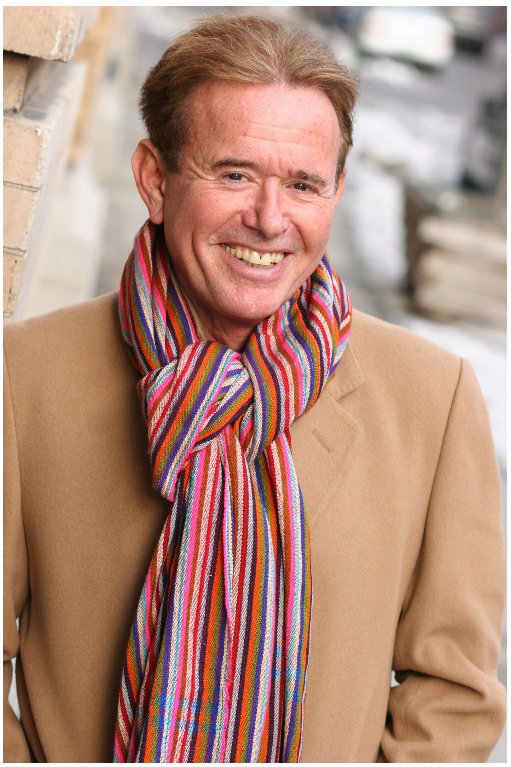
    It seems only yesterday that David Del Tredici was one of America’s brightest young composers. Now I learn that he has died at the age of 86.

    Del Tredici began his studies as a pianist. (He said if he hadn’t become one, he would have become a florist.) He was mentored by Bernhard Abramovitch and Robert Helps at the University of California, Berkeley. At the same time, he began to venture into composition. He performed his work, “Opus 1,” for a favorably-disposed Darius Milhaud.

    Subsequently, Del Tredici attended Princeton University, where his teachers included Roger Sessions, Earl Kim, and Seymour Shifrin. At Princeton, he received a grounding in serialism. Later, he gravitated back toward tonality and became a pioneer of the Neo-Romantic movement.

    He achieved considerable recognition for a cycle of works inspired by the writings of Lewis Carroll. One of these, “Child Alice,” was awarded the Pulitzer Prize for Music in 1980. “Child Alice” was inspired by two prefatory poems from Carroll’s “Through the Looking Glass, and What Alice Found There” and “Alice’s Adventures in Wonderland.” If Carroll and Gustav Mahler had had a love-child, it would probably have come out sounding something like this.

    Here’s an excerpt from Part One, “In Memory of a Summer Day,” conducted Gil Rose. If you like what you hear, I highly recommend Rose’s recording of “Child Alice” with Boston Modern Orchestra Project (BMOP).

    One day, back in 1990, when I was in my early 20s and living in a cramped efficiency in Philadelphia, I opened my apartment door, and who happened to be standing there in the hall, but Del Tredeci. This was just a few years after Bernstein recorded his orchestral work, “Tattoo,” for release on Deutsche Grammophon. What a surreal experience that was. It turns out he was an acquaintance of my landlord, who lived upstairs. It’s sobering to think, at the time, Del Tredici was younger than I am now.

    Del Tredici taught at Harvard, Yale, Boston University, Juilliard, the University of Buffalo, and City College of New York. He was composer-in-residence with the New York Philharmonic from 1988 to 1990.

    He also composed a lot of song settings, many of them on “gay” themes.

    Del Tredici is the subject of this “Capricorn Conversation,” hosted by my friend, the documentarian H. Paul Moon.

    An earlier interview with Bruce Duffie

    https://www.bruceduffie.com/tredici.html

    “Del Tredici is that rare find among composers – a creator with a truly original gift. I venture to say that his music is certain to make a lasting impression on the American musical scene. I know of no other composer of his generation who composes music of greater freshness and daring, or with more personality.” – Aaron Copland

    R.I.P.

  • Remembering Ned Rorem: A Centennial Tribute

    Remembering Ned Rorem: A Centennial Tribute

    I’m up to my ears in housecleaning, digging through stacks of old boxes, exhuming all sorts of interesting concert programs and program guides, theater schedules, and personal writings, documents, and artwork, some of them dating back 40 years. The chain I’ve forged in life!

    Leave it to me not to throw anything away…

    But more on that in another post.

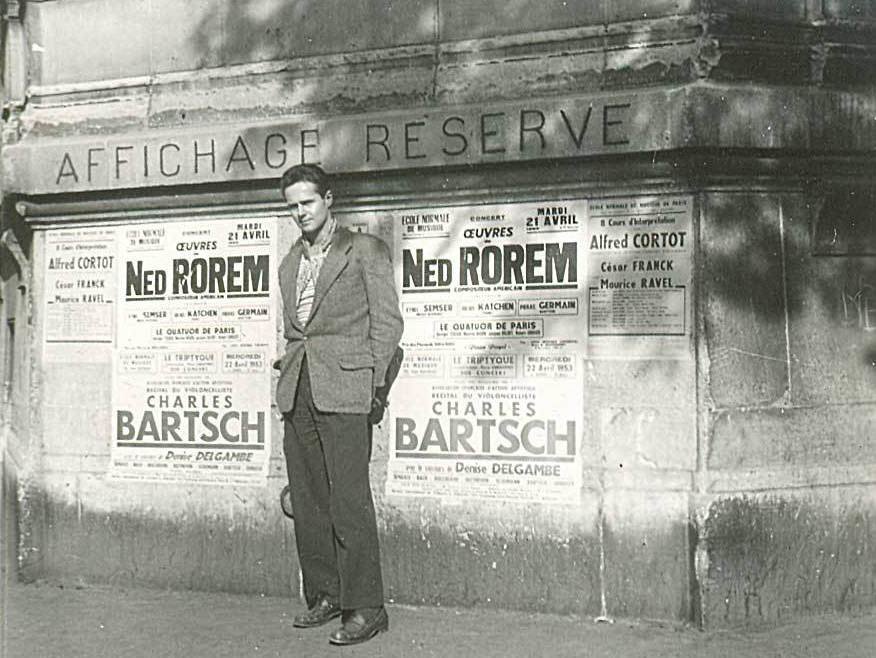
    For now, I wanted to quickly acknowledge American composer Ned Rorem, who would have been 100 today. Rorem died last year on November 18.

    I hope you’ll pardon me for stacking up a few links from last year.

    My 99th birthday post from 10/23/22

    Rorem’s obituary, on 11/18

    https://www.facebook.com/photo/?fbid=983194375932959&set=a.883855802533484

    Further reflections on 11/19

    https://www.facebook.com/photo/?fbid=983864249199305&set=a.883855802533484

    Rorem, Virgil Thomson, and William Flanagan for Thanksgiving

    https://www.facebook.com/photo/?fbid=988021188783611&set=a.883855802533484

    The posts include links to samples of Rorem’s music.

    Sorry, Ned, but the house is a wreck!


    PHOTO: Rorem in Paris in 1953

  • Joan Tower Celebrates 85th Birthday

    Joan Tower Celebrates 85th Birthday

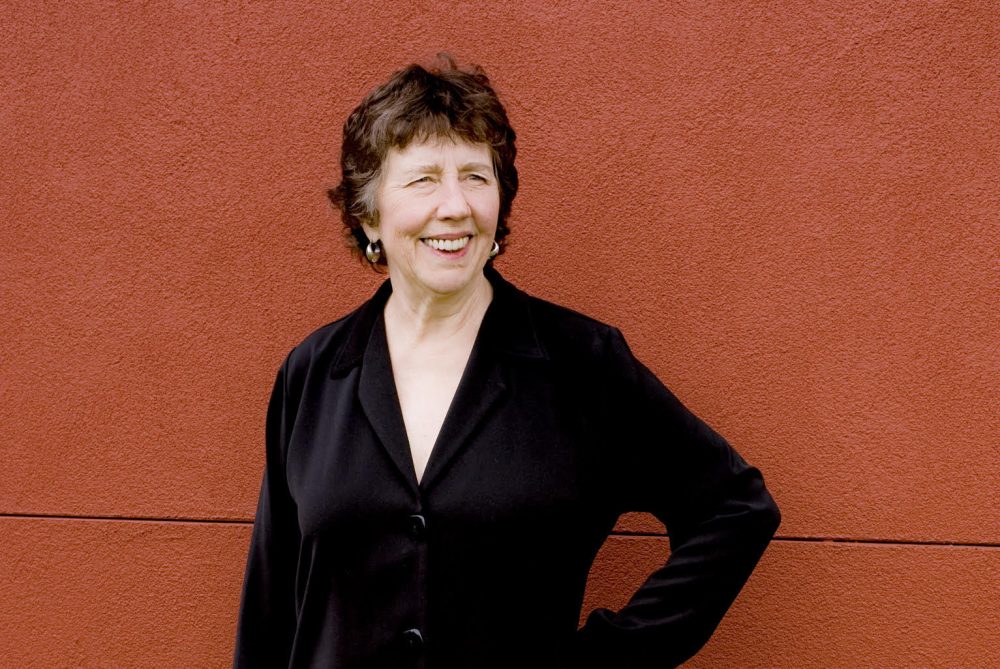
    Joan Tower is 85 today!

    I saw her at intermission during one of the concerts at the Bard Music Festival devoted to Ralph Vaughan Williams, but I didn’t ask her for a picture, because I’d never interviewed her or worked with her in any way, and I didn’t want to come across as a trophy hunter!

    And now, well, here we are.

    Tower, widely regarded as one of America’s foremost living composers, is also one of the most successful women in the field. I have to say, she looks great for 85. I wouldn’t have guessed it.

    Treat yourself to a Tower of power. Happy birthday, J.T.!


    “Petroushskates” (1980), combining Tower’s loves of Stravinsky – and figure skating! Either start or end with this one, because it’s a treat.

    “Made in America” (2004), a musical appreciation of the United States by a composer who spent many of her formative years in Bolivia (where her father managed the tin mines). Listen to how she weaves “America the Beautiful” into the orchestral fabric.

    “Island Prelude” (1988), an atmospheric landscape employing solo oboe

    “Fifth Fanfare for the Uncommon Woman” (1993). The first five in this loose collection of fanfares were composed between 1986 and 1993. A sixth followed two decades later. The works were conceived as tributes to “women who are adventurous and take risks.”

    Tower speaks on the importance of new music. She’s been refining some of these observations for at least the past three decades. There has been some improvement in terms of the development of new music groups, powered by some preternaturally talented young musicians. Still, a lot of the points remain pertinent and many of them sadly unaddressed.

    An earlier expression of these concerns in an interview conducted by Bruce Duffie in 1987

    http://www.bruceduffie.com/tower.html

    Tower has been on the faculty of Bard College since 1972.

  • Gloria Coates American Composer Dies at 89

    Gloria Coates American Composer Dies at 89

    American composer Gloria Coates has died. Coates displayed an unconventional, though highly-developed sense of texture, grasping the power of microtones and clusters from an early age. But these were often tied to comprehensible forms: canons, palindromes, simple structures. A prolific artist, she composed 16 symphonies, 11 string quartets, orchestral works, song cycles, and a chamber opera.

    Hers was a unique voice. I often programmed her String Quartet No. 8 – with its three movements “On Wings of Sound,” “In Falling Timbers Buried,” and “Prayer” – during my broadcast memorials of 9/11. In the context, her sinking glissandi were especially effective, both visceral and chilling.

    Coates was also an abstract expressionist painter. Some of her artwork has graced the covers of her albums. For much of her life, she made her living solely from her compositions. Allegedly, she was the most prolific female symphonist.

    Born in Wisconsin in 1933, Coates largely made her home in Munich since 1969. At the time of her death, she was 89 years-old.


    String Quartet No. 8 (2001/02)

    Symphony No. 1 “Music on Open Strings” (1972)

    “Holographic Universe” for violin and orchestra (1975)

    “Cette blanche agonie” (1988), after Stephane Mallarmé

    In English:

    The virgin, vivid and beautiful today
    Will it tear for us with a blow of its drunken wing
    This hard, forgotten lake that haunts beneath the frost
    The transparent glacier of flights that have not fled!
    A swan of other times remembers that it is he
    Magnificent but without hope of freeing himself
    For not having sung the region where to live
    When of the sterile winter glistened the tediousness.
    His whole neck will shake off this white agony
    By space inflicted on the bird which denies it
    But not the horror of the soil in which his plumage is caught.
    Phantom that to this place his pure brightness assigns,
    It immobilizes itself in the cold dream of scorn
    That clothes during the useless exile of the Swan.

    Symphony No. 8 “Indian Sounds” (1990/91)

    Symphony No. 15 “Homage to Mozart” (2004/05)

    A conversation with Bruce Duffie

    http://www.bruceduffie.com/coates4.html

Tag Cloud

Aaron Copland (92) Beethoven (95) Composer (114) Film Music (123) Film Score (143) Film Scores (255) Halloween (94) John Williams (187) KWAX (229) Leonard Bernstein (101) Marlboro Music Festival (125) Movie Music (138) Opera (202) Philadelphia Orchestra (89) Picture Perfect (174) Princeton Symphony Orchestra (106) Radio (87) Ralph Vaughan Williams (85) Ross Amico (244) Roy's Tie-Dye Sci-Fi Corner (290) The Classical Network (101) The Lost Chord (268) Vaughan Williams (103) WPRB (396) WWFM (881)

DON’T MISS A BEAT

Receive a weekly digest every Sunday at noon by signing up here


RECENT POSTS