Forget Balanchine’s “The Nutcracker,” with its insipid candy cane hula hoops. This is the one to beat!
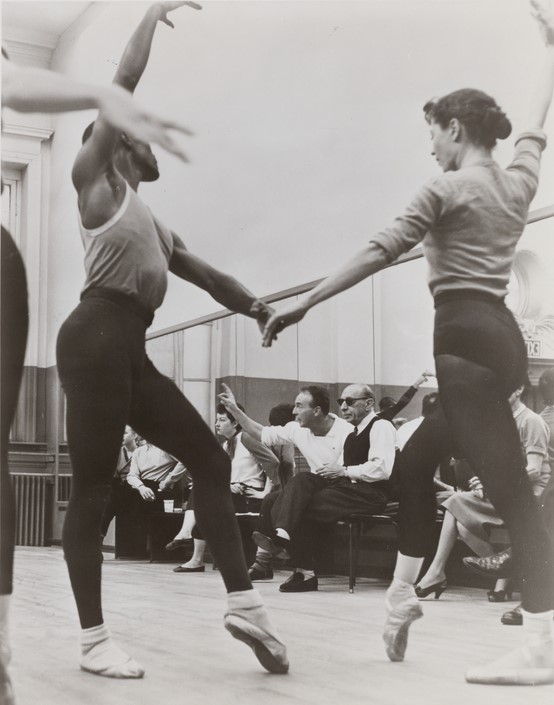
Stravinsky’s “Agon” was first staged by Balanchine’s New York City Ballet (co-founded with Lincoln Kirstein) on this date in 1957. The first performance of the music alone took place at UCLA’s Royce Hall earlier in the year, on June 17th, on a 75th birthday concert for the composer, less than two months after Stravinsky completed the work. Stravinsky’s assistant, Robert Craft, conducted. The next day, the composer himself led the sessions for the work’s first recording.
“Agon” is Greek for “contest,” but it also implies “anguish” or “struggle.” The ballet has no story, but consists of a series of dance movements. Groupings of dancers interact in pairs, trios, quartets, etc. A number of the movements are based on 17th-century French court dances – sarabande, galliard, bransle – but Stravinsky reinterprets them in his own distinctive up-to-date manner. The twelve-tone music is as flirty as anything displayed in the choreography.
I’m no balletomane, but the first time I saw it danced, I knew it was genius.
Stravinsky conducts an excerpt from “Agon”
Some danced selections
Maria Kowroski shares her insights
The complete ballet, seen from a fixed position. Suzanne Farrell, a Balanchine muse, founded her own company at the Kennedy Center in 2000.
A 1960 performance with the New York City Ballet
Of course, watching it on video is not the same as experiencing it in the theater.
I love “The Nutcracker,” but I can’t stand this: it takes a lot to spoil the “Russian Dance,” but Balanchine found a way!
PHOTO: Balanchine and Stravinsky, center, during rehearsals for “Agon”
I would venture to guess that most admirers of Aaron Copland are unaware that, as a young man in Paris, he wrote a vampire ballet.
That’s right, the composer of “Billy the Kid” and “Rodeo,” who basically codified the sound of the American West, first tipped a toe into the world of dance by way of the undead.
It was Copland’s teacher, Nadia Boulanger, who suggested he undertake a ballet to cash in on the success – or notoriety – of recent Ballets Russes premieres like the riot-inducing “The Rite of Spring.”
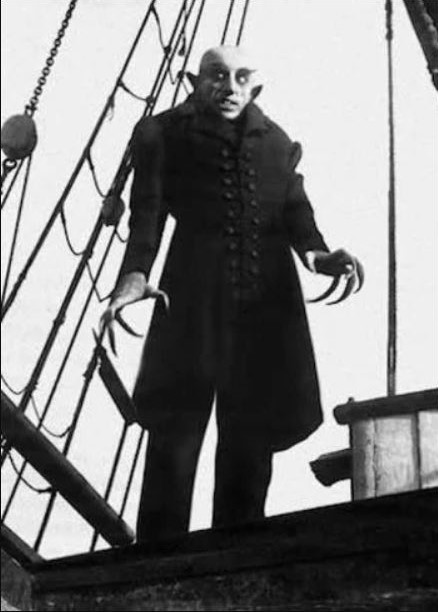
It was F.W. Murnau’s new film, “Nosferatu,” freely based on Bram Stoker’s “Dracula,” that provided just the inspiration he was looking for. Just as Murnau tweaked Stoker’s novel – enough, he thought, to skirt the possibility of a lawsuit from the author’s estate (he was wrong) – Copland and his scenarist, Harold Clurman, jettisoned most of Murnau, but hung on to the Expressionist elements and some of the Gothic iconography.
It’s been observed that the ballet’s narrative shares more in common with another German Expressionist classic, “The Cabinet of Dr. Caligari.” Either way, Copland’s first ballet is very far away from high-kicking buckaroos and Appalachian springs.
Copland and Clurman created as their antihero Grohg, a necromancer, a “sorcerer who loves the dead and vainly seeks affection among them. He can make them dance in so far as he does not touch them.”
Like Nosferatu, he bears a hooked nose and bulging eyes. He is a figure of desperate yearning. The four dead he calls forth to dance for him are an adolescent, an opium-eater, a streetwalker, and a beautiful young girl.
When he loses control and gently kisses the latter, she awakens from her trance and repulses him, and he’s set upon by his servitors. Grohg hurls the streetwalker into the mob and then wanders into the shadows gloomily. It seems like a scenario that Béla Bartók would have loved. (Bartók was already at work on “The Miraculous Mandarin,” but his ballet would not receive its premiere until 1926.)
Copland’s ballet, composed between 1922 and 1925, was never produced. He and Boulanger played through the score at the piano, and he cannibalized portions of the music for other works (including the even more obscure ballet “Hear Ye! Hear Ye!”).
Eventually, the score was lost, and the only bits that could be heard were those recycled in Copland’s concert pieces “Cortège macabre” (1923), which the composer withdrew, and the “Dance Symphony” (1929). “Grohg” was finally rediscovered, miscatalogued at the Library of Congress, and given its first performance in 1992, two years after the composer’s death.
The original title of the piece was “Le Nécromancien.” According to Copland, the spelling “Grohg,” with the peculiar inclusion of an “h,” was “to avoid an alcoholic connotation.”
So the first orchestral work by a figure who came to be known as the “Dean of American Composers” was inspired by a vampire movie released 100 years ago.
This year, for its centennial, special showings of “Nosferatu” abound. This weekend, organist Brett Miller will accompany a screening at The Colonial Theatre in Phoenixville, Pennsylvania.
The Colonial gained notoriety for its use in the 1958 film “The Blob,” when the title menace oozes into the theater, setting off a panic, which is reenacted every summer during Phoenixville’s Blobfest. (FUN FACT: the film-within-a-film, shown during that sequence, is “Daughter of Horror,” also known as “Dementia,” which features a demented film score by Trenton’s own George Antheil.)
The Phoenixville showing of “Nosferatu” will take place this Sunday at 2 p.m. On Saturday, Miller will accompany a showing of the film at the United Palace, 4140 Broadway, in Washington Heights, New York City, at 5:56 p.m. (sundown!).
Wow! Here’s a neat discovery. An actual performance of Jerome Moross’ ballet, “Frankie and Johnny.”
You probably know the bluesy song, inspired by one or more sensational crimes of passion, in which a betrayed woman shoots her lover. (“He was her man, but he done her wrong.”) There are now so many variants that it’s taken on the quality of a folk song. Elvis sang it. Johnny Cash sang it. It’s been covered by innumerable jazz artists.
Moross uses it as a kind of Greek chorus (sung by a trio Salvation Army sisters) in his brash and jazzy dance piece, which created a sensation at its premiere in 1938. The work predated Leonard Bernstein’s “Fancy Free” by six years and sent the censors into a moral panic.
Though Moross was adept at writing music in many forms – including concert pieces (a symphony for Beecham), musical theater (the cult classic “The Golden Apple,” including the evergreen “Lazy Afternoon”), and opera (“Sorry, Wrong Number”) – he is best known for his classic film scores. He spent much of his career ping-ponging back and forth between New York and Hollywood.
When “Porgy and Bess” concluded its New York run in 1935, George Gershwin invited Moross to join the show, on tour, as a pianist. It was while on a bus trip to Los Angeles to participate in “Porgy’s” west coast premiere that the 23 year-old made a stop in Albuquerque.
“[A]s we hit the Plains I got so excited,” Moross recollected. “. . . [T]he next day I got to the edge of town and then walked out onto the flat land with a marvelous feeling of being alone in the vastness, with the mountains cutting off the horizon. The whole thing was just too much for me . . . it was marvelous, and I just fell in love with it.”
The experience served him well. Moross drew on the memory of that trip in the writing of some of his most famous music, the Academy Award-nominated score for “The Big Country,” with its sense of wide-open excitement in the face of sweeping vistas. Western high-spirits and American jazz color most of Moross’ output.
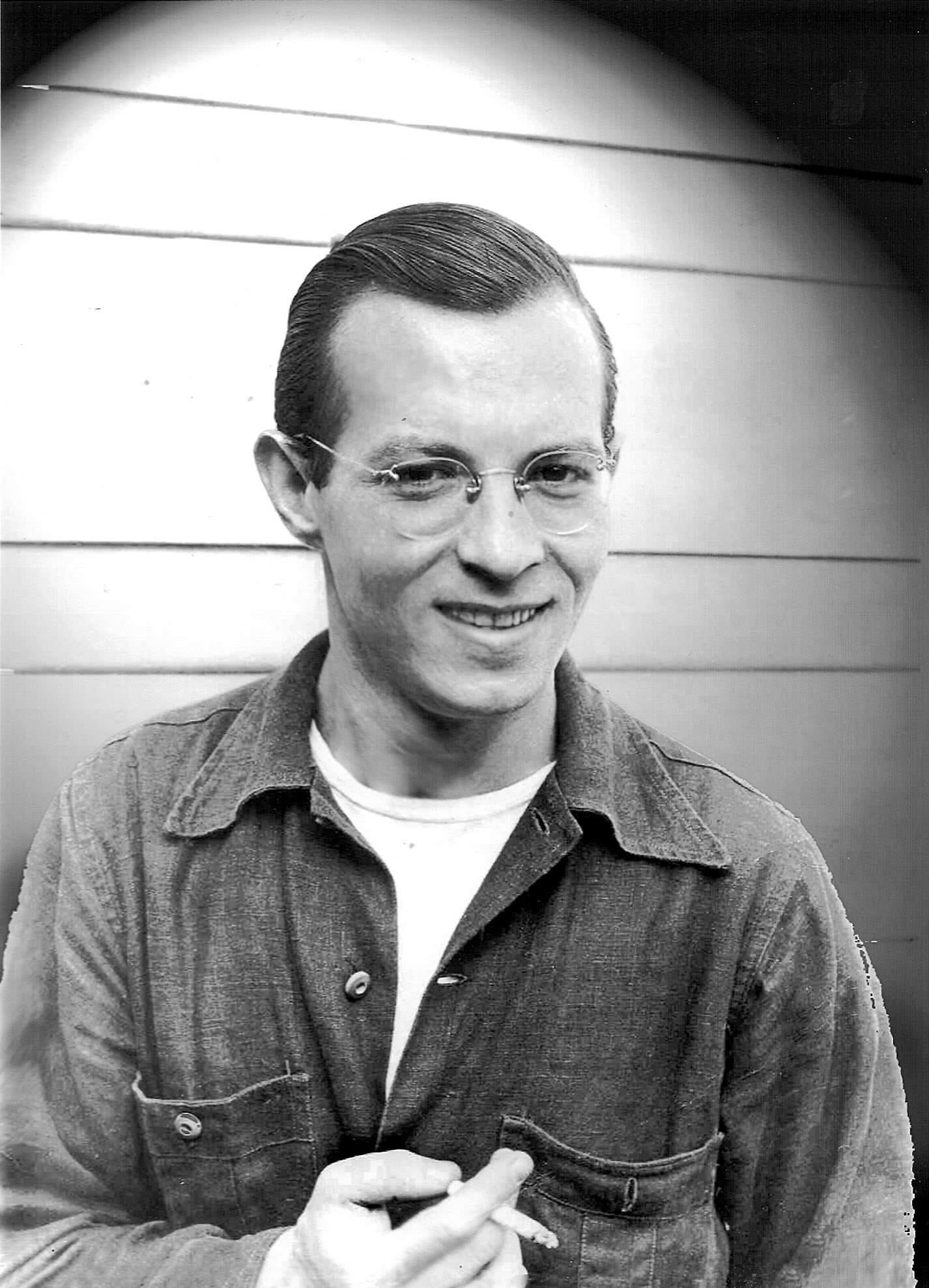
Happy birthday, Jerome Moross. You tackled everything with exuberance and vitality.
One of the most thrilling credits sequences of all time?
Surely one of the greatest film scores ever written
Rare historic radio broadcast of the Symphony No. 1, with Moross himself at the piano
“Lazy Afternoon” from “The Golden Apple,” sung by Kaye Ballard from the 1954 original cast recording
Theme to “Wagon Train”
Sonata in G major for Piano Duet and String Quartet
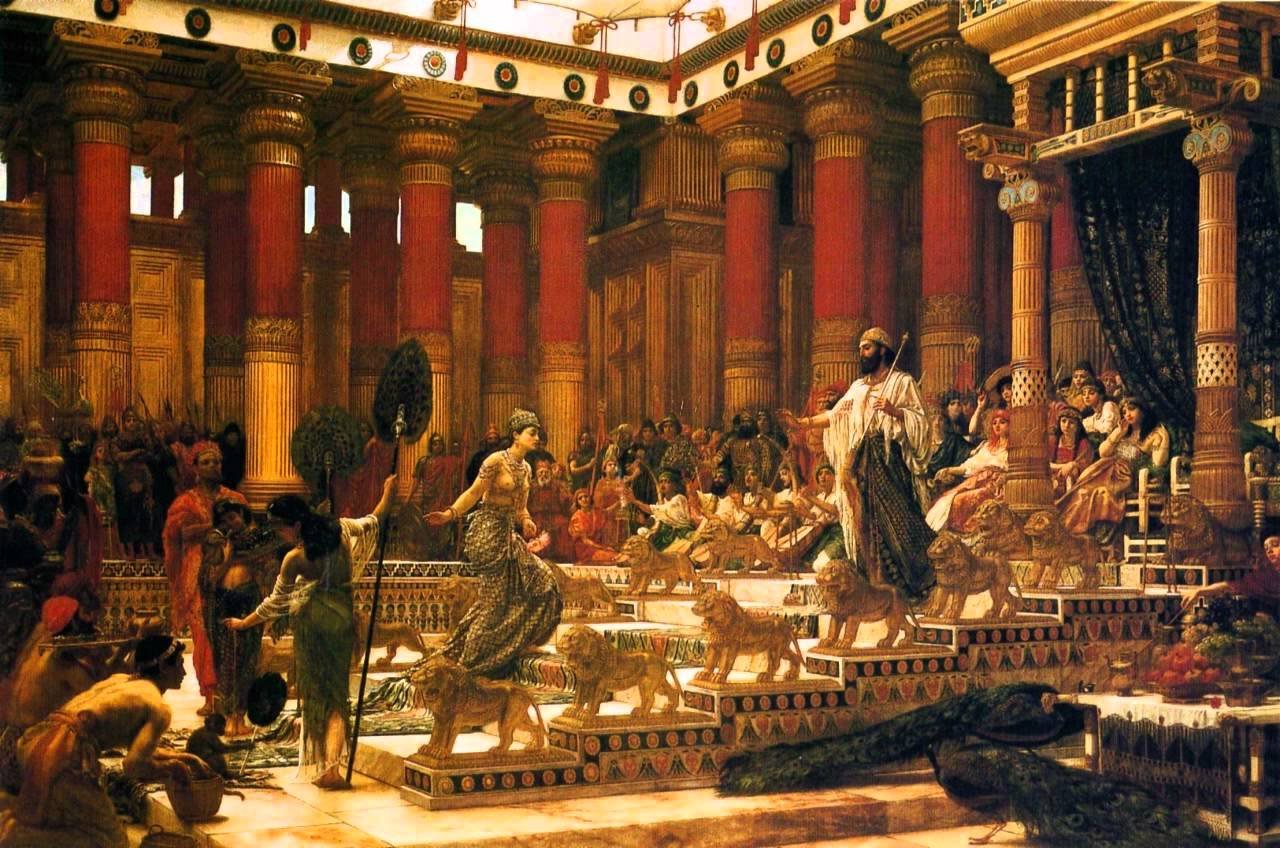
It’s music that’s so over-the-top, Cecil B. DeMille would have blushed. Ottorino Respighi gets all quasi-biblical in this suite from “Belkis, Queen of Sheba.” The ballet spectacle, set at the court of King Solomon, was given its first performance at La Scala in 1932. The finale featured over a thousand performers, which likely accounts for the work’s subsequent neglect. Grandiose even by Respighi standards, the concluding orgiastic dance whipped the opening night audience into a frenzy.
Think big, and aim high! Happy birthday, Ottorino Respighi!