Tag: Ballet

  • Diaghilev’s Ballets Russes 12 Tapping Tunes

    Diaghilev’s Ballets Russes 12 Tapping Tunes

    Today is the birthday of ballet impresario Sergei Diaghilev. Get your toes tapping with 12 works written or adapted for the Ballets Russes. You know you need the exercise.


    MAURICE RAVEL, “DAPHNIS ET CHLOE”
    Shepherds, pirates, and Pan!

    NIKOLAI TCHEREPNIN, “NARCISSE ET ECHO”
    Tcherepnin was actually Diaghilev’s first choice to compose “The Firebird.”

    https://www.youtube.com/watch?v=h5DwOXhO7YM

    IGOR STRAVINSKY, “PULCINELLA”
    Diaghilev produced Stravinsky’s three breakthrough ballets, “The Firebird,” “Petrouchka,” and “The Rite of Spring,” but this one is the most unremittingly joyous.

    RICHARD STRAUSS, “JOSEPHSLEGENDE”
    Poor Richard Strauss never got paid for his opulent biblical ballet on account of WWI.

    MANUEL DE FALLA, “THE THREE-CORNERED HAT”
    Ballet meets flamenco.

    PETER ILYCH TCHAIKOVSKY, “AURORA’S WEDDING”
    Stokowski conducting, at the age of 95!

    LORD BERNERS, “THE TRIUMPH OF NEPTUNE”
    Sailor Tom Tug’s adventures in Fairy Land (alas, these excerpts comprise but a third of the ballet).

    CONSTANT LAMBERT, “ROMEO AND JULIET”
    Not really an adaptation of Shakespeare’s tragedy, but a backstage romantic comedy. Just a clip, with set and costume designs by Max Ernst and Joan Miro.

    OTTORINO RESPIGHI, “LA BOUTIQUE FANTASQUE”
    “The Fantastic Toybox,” after melodies of Rossini.

    SERGEI PROKOFIEV, “THE PRODIGAL SON”
    Bad boys get the best music.

    https://www.youtube.com/watch?v=eNC-Bz19Mcs

    ERIK SATIE, “PARADE”
    Selections, choreography by Massine and designs by Picasso.

    FRANCIS POULENC, “LES BICHES”
    Before you get any smart ideas, the title means “The Does,” slang for coquettish young women. With Nijinska’s choreography. (BONUSES: Diaghilev’s “Prelude to the Afternoon of a Faun” and “Scheherazade”).

    https://www.youtube.com/watch?v=W5_iYhXAFa4


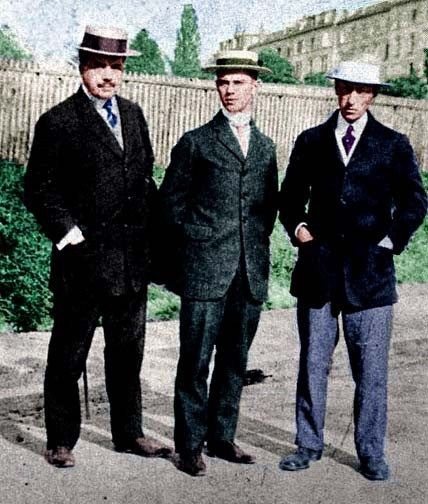
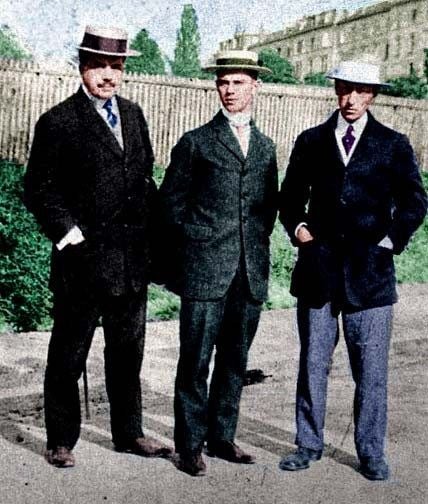
    PHOTO: Diaghilev, Vaslav Nijinsky, and Igor Stravinsky
  • Ballet Ambivalence Balanchine Stravinsky & More

    Ballet Ambivalence Balanchine Stravinsky & More

    I have always had been ambivalent about the ballet. On the one hand, I am quite enthusiastic about attending live performances of works written specifically for the stage, especially those by 20th century masters (Stravinsky, Prokofiev, Hindemith). On the other, I am generally put off, at least in theory, by choreographers employing in their programs pre-existing works that have nothing at all to do with the dance. When I look at an advertisement for the ballet, and I see a triple bill featuring “George Balanchine’s Piano Concerto,” and there is no indication anywhere of who the actual composer is, I have less than no interest in attending and even feel inclined to fury. But I guess that’s what happens when you’re someone who puts the music first.

    I understand, if I am to be objective (which I seldom am), that that’s not what dance is about. It’s also certainly not about story. How many evening-length ballets have I endured in which the “plot,” such that it is, has run its course by the end of the second act? There really is no purpose for Act III, except to have everyone leap about in a series of interminable divertissements. I learned this lesson early, at my first “Nutcracker” (mercifully a two-acter), when I discovered that most of the famous music underscored the less-than-thrilling-for-children-everywhere second part. Don’t get me wrong, I have grown to love “The Nutcracker,” but I love it most when imaginative choreographers find ways to tie the events of Act II into the narrative set up in Act I. As a boy, I was all about the Mouse King. It was only later, after I hit puberty, that the Act II pas de deux became indispensible. After all, there is no love like doomed love. But why is this music for the Sugar Plum Fairy and her consort so ardent? Doesn’t it make more sense to tie it back in to Clara (as some choreographers thankfully have)?

    But I digress.

    I admit, dogma is a dangerous thing, and there have been notable exceptions to my aversion to ballet set to music not intended for the dance. I was very pleasantly surprised, for instance – especially after having endured his horrible “Nutcracker,” with its stupid candy cane hula hoops – by Balanchine’s “A Midsummer Night’s Dream,” which I recall as compelling and often brilliant. In the end, however, I admit I am not really qualified to assess dance. So I’ll just shut up and play the music.

    Today is Balanchine’s birthday, so I thought I’d spend the bulk of the afternoon spinning records of some of the works he introduced and/or choreographed. My heart is with the commissions, of course, so we’ll hear Stravinsky’s “Apollo,” Prokofiev’s “The Prodigal Son,” and Hindemith’s “The Four Temperaments,” alongside splashy arrangements by Hershy Kay (which I am less enthusiastic about) after works of Gottschalk and Sousa. I also have a vintage recording of Antal Dorati conducting Vittorio Rieti’s arrangement of “Cotillon,” after Chabrier, if I can lay my hands on it, which Balanchine choreographed for the Ballets Russes de Monte-Carlo.

    First, it’s another Noontime Concert from Gotham Early Music Scene, or GEMS. Concordian Dawn will present a program titled “Fortuna Antiqua et Ultra,” medieval music illustrative of the ever-turning Wheel of Fortune and the consolation of hope.

    We’ll be wheeling and pirouetting from 12 to 4 p.m. EST, on WWFM – The Classical Network and wwfm.org.


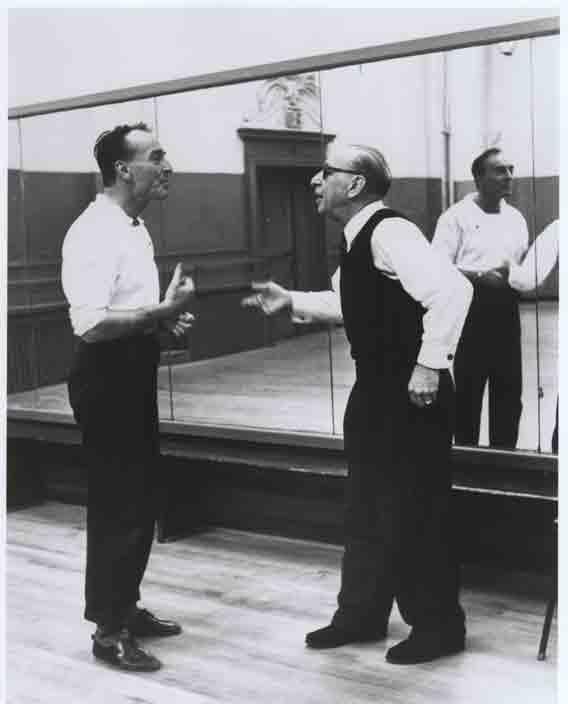
    PHOTO: Balanchine and Stravinsky

  • Riisager’s Fool’s Paradise: Slaraffenland Ballet

    Riisager’s Fool’s Paradise: Slaraffenland Ballet

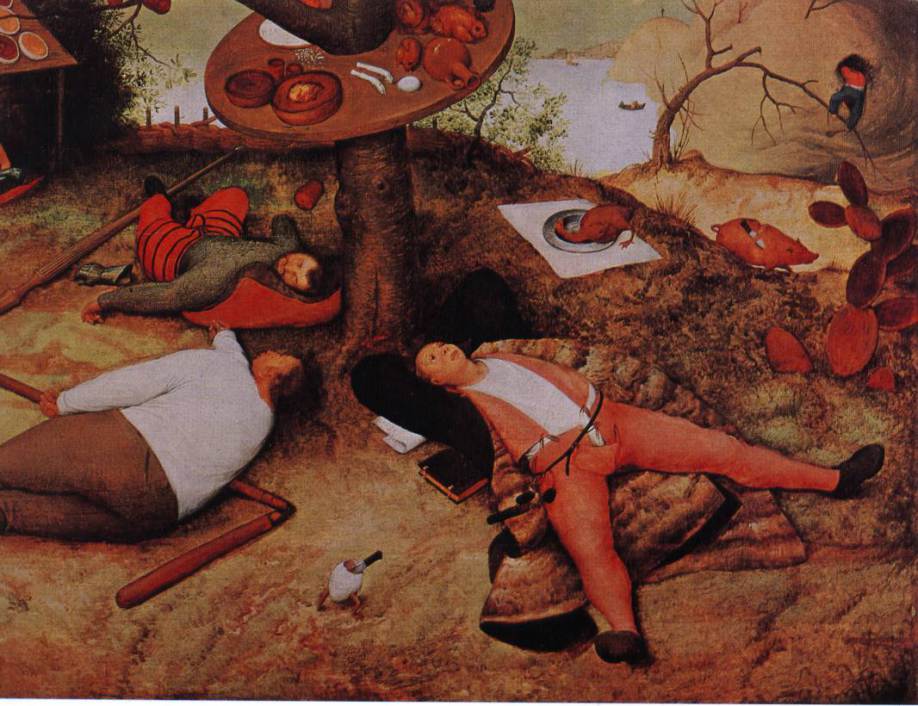
    This Sunday night on “The Lost Chord,” we conclude the long, gluttonous holiday weekend with Knudage Riisager’s ballet “Slaraffenland” (usually translated as “Fool’s Paradise”).

    Inspired by Bruegel’s painting “The Land of Cockaigne,” the scenario imagines a Promised Land “where roasted pigeons fly around in the air with knives and forks in their backs, and the streets are paved with marzipan and chocolate.” The plot concerns a silly boy who wanders into the country of King Sauce and becomes ill from overindulgence. Along the way, he encounters Robin Hood, the Three Musketeers, Captain Fear, Fountains of Liqueur, Cigarettes, and the Candy Princess.

    Riisager was born in 1897 to Danish parents living in Estonia. He studied music at Copenhagen University and then in Paris with Albert Roussel. Though he was a prolific composer, with some 400 works to his name, including symphonies, concertos, chamber music and songs, he is probably best known, if at all, for his ballet works.

    Rouse yourself for a dose of musical tryptophan. Join me for “Fool’s Paradise” – Knudage Riisager’s “Slaraffenland” – this Sunday night at 10:00 EST, on WWFM – The Classical Network and wwfm.org.


    IMAGE: A very Bruegel Thanksgiving

  • Prodigal Son Ballet A Father’s Day Dance

    Prodigal Son Ballet A Father’s Day Dance

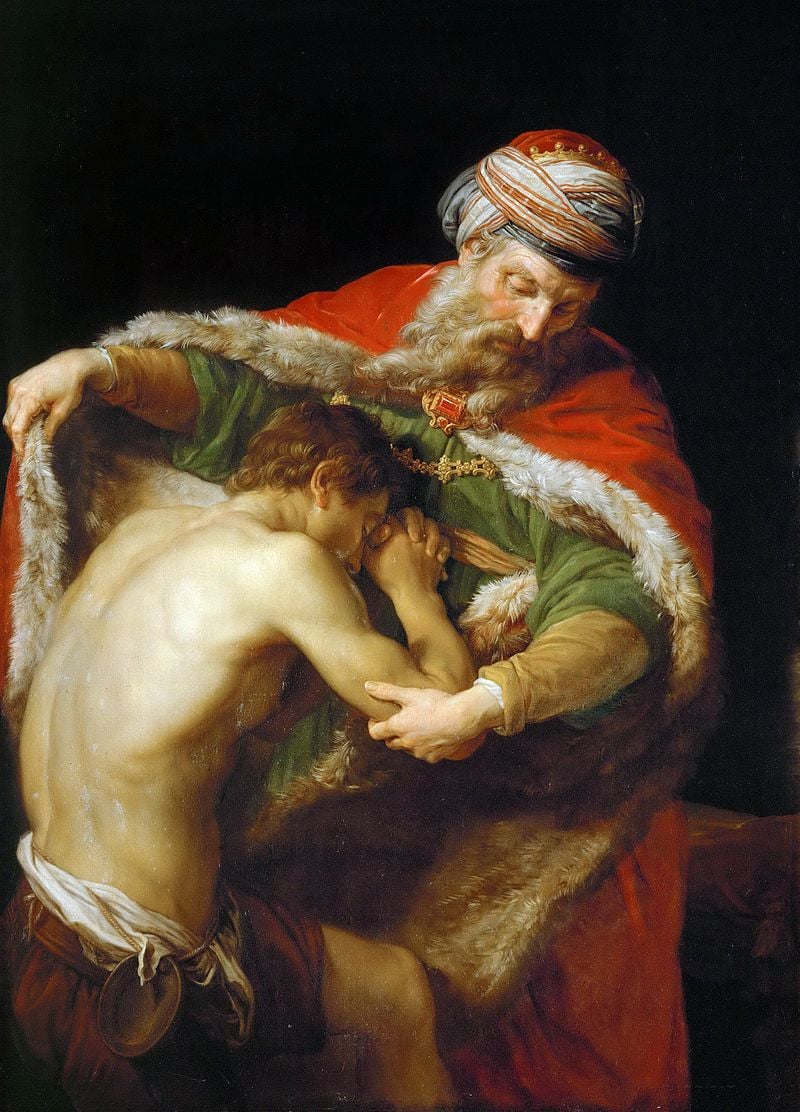
    As related in the Gospel of Luke, a young wastrel burns through his family fortune, then returns home to the arms of his forgiving father. The son’s more responsible, elder brother is none too happy, but the father explains that since the younger son has repented and returned, as if from the dead – in essence, was lost, and is now found – there is cause for celebration.

    This Sunday night on “The Lost Chord,” it’s an off-center Father’s Day tribute, as we listen to ballet music inspired by the Parable of the Prodigal Son.

    We’ll hear a late, folk-inspired score by the Swedish composer Hugo Alfvén, staged in honor of his 85th birthday in 1957, and Sergei Prokofiev’s alternately pungent and transcendentally lyrical opus, written for the Ballets Russes in 1928. The latter was developed simultaneously with Prokofiev’s Symphony No. 4 and shares much of the same thematic material.

    Father knows best. I hope you’ll join me for “Son Dance,” ballet music inspired by the Prodigal Son for Father’s Day, this Sunday night at 10:00 EDT, on WWFM – The Classical Network and wwfm.org.

  • Pride and Prejudice Ballet Princeton 2023

    Pride and Prejudice Ballet Princeton 2023

    In the WPRB studio this morning with Douglas Martin, artistic director of American Repertory Ballet, and Marc Uys, executive director of the Princeton Symphony Orchestra. They dropped by to talk about their collaboration on “Pride and Prejudice,” a new ballet to be presented at McCarter Theatre Center on April 21 & 22. That guy on the left looks like he could really use a cup of coffee. (Photo by Dan Bauer)

Tag Cloud

Aaron Copland (92) Beethoven (95) Composer (114) Film Music (123) Film Score (143) Film Scores (255) Halloween (94) John Williams (187) KWAX (229) Leonard Bernstein (101) Marlboro Music Festival (125) Movie Music (138) Opera (202) Philadelphia Orchestra (89) Picture Perfect (174) Princeton Symphony Orchestra (106) Radio (87) Ralph Vaughan Williams (85) Ross Amico (244) Roy's Tie-Dye Sci-Fi Corner (290) The Classical Network (101) The Lost Chord (268) Vaughan Williams (103) WPRB (396) WWFM (881)

DON’T MISS A BEAT

Receive a weekly digest every Sunday at noon by signing up here


RECENT POSTS