Tag: Brahms

  • Remembering Christoph von Dohnányi

    Remembering Christoph von Dohnányi

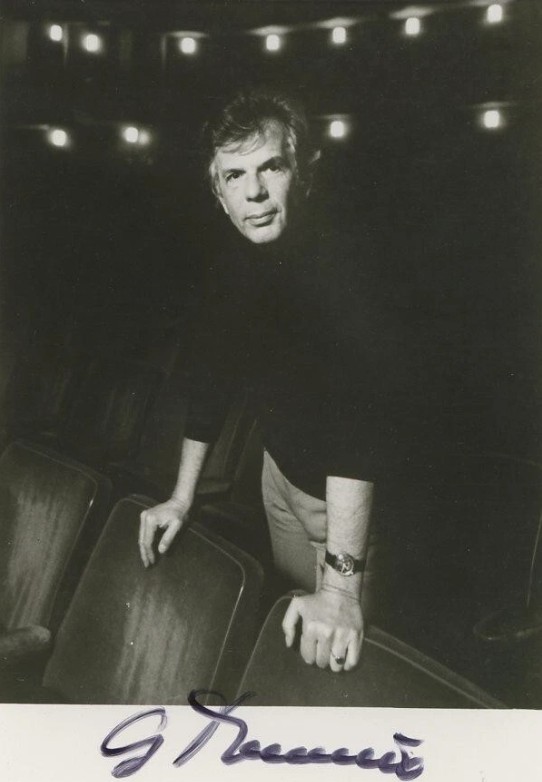
    For some reason, Christoph von Dohnányi didn’t come to Philadelphia much. I can recall he came through on tour once, probably with the Cleveland Orchestra. I’m sure he must have come through more than that, but if he did, I never heard him live. He was music director in Cleveland from 1984 to 2002 (having conducted the orchestra for the first time in 1981) – enough to keep anyone’s hands full, I suppose. But I knew him from his recordings, naturally.

    He had an interesting lineage. His grandfather was the eminent Hungarian composer, pianist, conductor, and educator Ernst von Dohnányi (born Ernő). His uncle, on his mother’s side (also his godfather), was the theologian and anti-Nazi dissident Dietrich Bonhoeffer. A number of his family members were part of the German Resistance movement during World War II. Several, including his father and uncle, were detained in concentration camps and executed when Dohnanyi was 15.

    The young Dohnányi set out on an academic career with an intention to study law, but in common with so many musicians who pursued that course, in the end succumbed to the siren lure of music.

    In 1951, he first came to the United States to study with his repatriated grandfather at Florida State University. The elder Dohnányi had actually met and played with Brahms.

    Christoph is now being widely lauded for having “restored” to the Cleveland Orchestra to its former excellence, following the lackluster tenure of Lorin Maazel, who succeeded George Szell (who of course made the orchestra). Maazel was appointed music director over the voluble protests of its musicians. Be that as it may (or may not; was the orchestra ever bad?), Dohnányi learned firsthand how difficult it was to emerge from the shadow of a legend. He once quipped, “We give a great concert, and George Szell gets a great review.”

    Dohnányi defined the difference between them: Szell, a notorious martinet (my words, not his), drilled the musicians mercilessly and drove them with a palpable sense of inner intensity. Dohnányi, on the other hand, assimilated the lessons he learned in the opera house, beginning as an assistant to Georg Solti in Frankfurt, not worrying so much about bar-lines, but following the example of singers in allowing the music to breathe.

    Eventually, he would become music director in Frankfurt. He also held posts at the opera houses of Lübeck and Hamburg. Later, he brought staged opera to Cleveland.

    Among his orchestra positions, he was chief conductor of the Staatsorchester Kassel and the WDR Symphony Orchestra Cologne. Following Cleveland, he was principal guest conductor, and then principal conductor, of London’s Philharmonia Orchestra. In 2004, he became chief conductor of the North German Radio Symphony Orchestra, a position he held until 2010.

    Of course, he guest conducted all the great orchestras of the United States (including Cleveland), as well as most of them in Europe, and also the Israel Philharmonic. Throughout, he remained active in opera.

    Although wholly devoted to music, he was not a flashy conductor and preferred to keep a low profile. He acknowledged that he was a strong leader, but he was never one for razzle dazzle.

    Dohnányi died on Saturday. Today would have been his 96th birthday. R.I.P.


    Interestingly, I note that I don’t have all that many of Dohnányi’s recordings in my own collection, although I have had dealings with many of them over the course of my career in radio. Of the ones I do own, I have great affection for his first recording of Mendelssohn’s “Die erste Walpurgisnacht,” with the Vienna Philharmonic Orchestra and Chorus. He’s the conductor on favorite recordings of the Busoni Piano Concerto (with Garrick Ohlsson) and the Philip Glass Violin Concerto (with Gidon Kremer). I also have the recording of Alban Berg’s “Wozzeck” he made with his wife, Anja Silja. I’m sure there are more, but not many. The comparative neglect is attributable to my deficiency and not his.

    Dohnányi made a number of recordings of the works of Antonin Dvořák (including the Symphonies Nos. 6, 7, 8 & 9, the Piano Concerto, and the “Slavonic Dances”). These received heavy air play for decades, especially by a certain host who shall remain nameless, during my years at the local classical music radio station. Since today is also Dvořák’s birthday anniversary, here’s a link to his recording of the Symphony No. 7.

    He was also a champion of Hans Werner Henze. Thanks to Mather Pfeiffenberger for directing me to this link to orchestral fragments (Adagio, Fugue and Maenads’ Dance) from “The Bassarids.” In 1965, Dohnányi conducted the premiere of Henze’s “Der junge Lord” (which he also recorded).

    https://www.youtube.com/watch?v=lJd8EQZc7XY

    Of course, he was widely acclaimed for his Brahms. Here’s a live performance of Brahms’ 1st in Hamburg, from 2007:
  • Baroque Remixed: Handel, Brahms & More

    Baroque Remixed: Handel, Brahms & More

    Prior to the authenticity movement, musicians basically did whatever they wanted, employing works of the masters as so much grist for the mill. Bach and Handel were played by a hundred instruments, swooning portamenti applied, and trombones and bass drums added if it was felt the music required a good punch.

    Hamilton Harty’s arrangement of Handel’s “Water Music” was one of the saner applications, though it has come to sound somewhat strange to our ears today. At the other end of the scale was freewheeling Thomas Beecham, who was not at all bashful about lending cymbal crashes to “Messiah.”

    But you’ve got to remember, Sir Thomas was also crafting orchestral canapés and bonbons from Handel operas at a time when they were basically unknown outside of musicological circles.

    A sample of Beecham’s arrangements for the 1932 “Handel” ballet “The Origin of Design” will cap this morning’s “Sweetness and Light.” The climactic battle music is an amalgam of selections from Handel’s “Giulio Cesare,” “Rinaldo,” and “Ariodante” – and we’ll hear Beecham conduct it hell-for-leather!

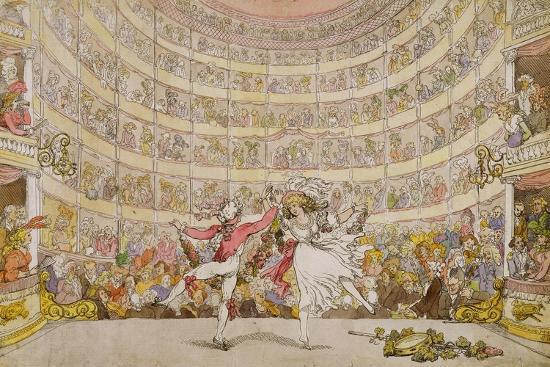
    “The Origin of Design” was choreographed by Ninette de Valois, who also devised the scenario and choreography for Constant Lambert’s ballet “The Prospect Before Us (or, Pity the Poor Dancers).” Here, Lambert dips heavily into works of 18th century English composer William Boyce, whose eight delectable symphonies we still hear from time to time. Unsurprisingly, selections from some of these find their way into Lambert’s 1940 score, which he introduced with the Sadler’s Wells Ballet. Valois was inspired by a collection of drawings and prints by Thomas Rowlandson. (A reproduction of one is included with this post.)

    In between, we’ll admire the handiwork of a quite reputable, 19th century intermediary. It was no less than Johannes Brahms who lifted a portion of a harpsichord suite as the basis for his “Variations and Fugue on a Theme by Handel,” a piece conceived for solo piano in 1861. In 1938, English composer Edmund Rubbra orchestrated the work. We’ll hear it, given the luxury treatment, in a 1960 recording with Eugene Ormandy and the Philadelphia Orchestra.

    Yes, that’s right. Back in the day, the prevailing philosophy was “If It’s Baroque, Fix It.” 18th century inspirations will be polished up by 20th century hands on “Sweetness and Light,” this Saturday morning at 11:00 EDT/8:00 PDT, exclusively on KWAX, the radio station of the University of Oregon!

    Stream it wherever you are at the link:

    https://kwax.uoregon.edu/

  • Beethoven’s 9th: A Symphony of Brotherhood and Influence

    Beethoven’s 9th: A Symphony of Brotherhood and Influence

    In the past, May 7 was a day for frenemies, as I’ve always been fond of emphasizing the uneasy friendship of Brahms and Tchaikovsky on their birthday anniversaries – artists repelled by one another’s creations, who were pleasantly surprised by how well they got along once they met in person (though they still disliked one another’s music). The alcohol they consumed certainly could not have hurt.

    However, today, we put all that frenemy business aside, as all men are brothers, when the birthdays of Brahms and Tchaikovsky coincide with the 200th anniversary of the premiere of Beethoven’s Symphony No. 9. The Ninth, of course, is the visionary symphony that climaxes with an ecstatic setting of Schiller’s “Ode to Joy.” Everyone knows the melody, even if they think they don’t. The text proclaims, depending on the translation, “All mankind will become as brothers!”

    The tune is demonstrated here by Schroeder, insistently joyous even in the face of Lucy’s hostility:

    Beethoven’s revolutionary masterwork, striking for both its scale (oversized orchestra with a quartet of vocal soloists and chorus) and length (running to well over an hour), cast a forbidding shadow. Much ink has been spilled about the struggles of composers throughout the 19th century to come to terms with the Ninth. In fact, I remember reading a book by conductor Felix Weingartner, a renowned Beethoven interpreter (he was the first to record all nine symphonies), titled “On the Performance of Beethoven’s Symphonies and Other Essays,” in which he addresses the successes and failures of all the major symphonic composers that followed.

    The story of the legendary first performance of the work, on May 7, 1824, is well-known, but bears repeating. The auditorium of Vienna’s Theater am Kärntnertor (Carinthian Gate Theater) was packed – Schubert was in attendance, and so was Czerny – and the orchestra was staffed by many of the great musicians of the day. No complete roster of performers survives, but as was the case with the all-star team that played in the premiere of Beethoven’s 7th, many of Vienna’s most elite musicians participated.

    It was Beethoven’s first public appearance in 12 years. By that time, of course, the composer was almost completely deaf. But that didn’t keep him from air-conducting as the ideal interpretation unfurled in his head. The official conductor was the theater’s kapellmeister, Michael Umlauf, and he instructed the musicians to watch him, not the composer, as he had witnessed an earlier disaster with Beethoven in the pit for a dress rehearsal for “Fidelio.”

    According to one of the violinists, Beethoven “stood in front of a conductor’s stand and threw himself back and forth like a madman. At one moment he stretched to his full height, at the next he crouched down to the floor, he flailed about with his hands and feet as though he wanted to play all the instruments and sing all the chorus parts.”

    When the piece concluded, the hall resounded with applause, but Beethoven was still conducting. The contralto soloist, Karoline Unger, approached the composer and gently turned him around to acknowledge the cheers. Members of the audience, who recognized they could not be heard, waved their handkerchiefs, hats, and hands, so that even in his isolation, the composer knew he had scored a hit.

    Mankind never does seem to get its act together, but even as the world teeters on the brink of disaster, the Ninth continues to resonate. Concert halls fill wherever it is programmed. When the compact disc was developed, technicians standardized the length at 74 minutes, so that the format could accommodate a complete recording of the work. (In the days of LP, I recall some rather awkward breaks in the middle of the third movement.) Used as the prototype was Wilhelm Furtwängler’s 1951 recording.

    In the history of music, the Ninth stands like the monolith in Stanley Kubrick’s “2001: A Space Odyssey.” (Interesting that Kubrick would use the work to such ironic effect a few years later in “A Clockwork Orange.”) There was music before the Ninth and there was music after the Ninth. From a certain point of view, everything seemed to culminate in its creation, and afterward, all was decadence. It is the Continental Divide of classical music.

    For the Romantics, the Ninth changed everything. Every composer for a hundred years had to grapple with its influence. For the rest of the century, experiments with orchestra and chorus became larger and larger, setting all manner of aspirational texts. Mahler pushed 74 minutes to 90 with his Third Symphony. His Eighth is so large, it was dubbed “The Symphony of a Thousand.” In the 20th century, there was nowhere to go but down. Even as composers embraced the leaner textures of neoclassicism they continued to labor in the shadow of Beethoven, whether assimilating his lessons or rejecting them.

    The inclusion of the chorus is the most obvious innovation, but Beethoven wouldn’t be Beethoven if there weren’t plenty else to reward a closer look, and musicians and scholars have been dissecting the work and studying its secrets for the past two centuries.

    Brahms, who lived from 1833 to 1897, and Tchaikovsky, who lived from 1840 to 1893, were no different from their contemporaries in feeling the heat of the 9th. It is well-known that Brahms experienced enormous pressure in his own mastery of symphonic form, postponing his first symphony for many years, as he continued to hone his skills on works such as the orchestral Serenades and the Piano Concerto No. 1, the latter conceived on a suspiciously symphonic scale. It took him over twenty years to own up to an actual symphony.

    At its debut, conductor Hans von Bülow dubbed it “Beethoven’s Tenth,” no doubt because of its excellence, but also because of the perceptible influence of the earlier composer. It was Bülow who also formulated “the three B’s,” grouping Bach, Beethoven, and Brahms in a spontaneously-erected pantheon that music-lovers still invoke. Brahms was surely relieved that the work was so rapturously received, but (being Brahms) he was also annoyed when it was pointed out that the chorale theme that forms the basis of the last movement bears an uncanny resemblance to Beethoven’s “Ode to Joy.” To this, Brahms gruffly responded, “Any ass can see that!”

    I’ve cued the theme up for you at the link, but nothing’s stopping you from going back to listen to the entire symphony:

    After the First, things came easier for Brahms. The ice broken, he composed his Symphony No. 2, with confidence, in a single summer.

    In Tchaikovsky’s case, his own predilection gravitated more toward Mozart. This is evident, of course, in his Orchestral Suite No.4, subtitled “Mozartiana,” but also in the “Variations on a Rococo Theme” for cello and orchestra. He confided to his diary, “I do bow before the greatness of some of his works, but I do not love Beethoven.” That’s not to say he did not respect, or even revere him. His remarks are more nuanced than I make them out to be. You’ll find his complete thoughts here, including the diary entry from which I excerpt, at the bottom of the page:

    https://en.tchaikovsky-research.net/pages/Ludwig_van_Beethoven#:~:text=I%20bow%20before%20the%20greatness,the%20same%20time%20also%20fear.

    Fascinating, then, that Tchaikovsky would exhibit such youthful bravado in setting Schiller’s text himself for his graduation examinations at the St. Petersburg Conservatory! This is a stunning display of self-assurance for a composer who frequently struggled with insecurity. He later dismissed the work as immature, but it is certainly worth hearing:

    In Beethoven, as in all things, it seems, Brahms and Tchaikovsky were divided. Fortunately, they were united in the brotherhood of drink.

    Happy birthday to the Felix and Oscar of classical music, and raise a glass to the most important symphony ever written, with a thought for the brotherhood of man, now to be desired as much as ever.


    This brisk performance from 1958 is one of my favorites. Not for every day, perhaps, but thrilling.

    Weingartner conducts in 1935

    Furtwängler sets the standard length of the CD in 1951

    Bernstein celebrates the fall of the Berlin Wall with a multinational ensemble in 1989, substituting “Freiheit” (Freedom) for Schiller’s “Freude” (Joy)

  • Herzogenberg Friend of Brahms and Forgotten Composer

    Herzogenberg Friend of Brahms and Forgotten Composer

    The composer Heinrich von Herzogenberg (1843-1900), born in Graz, studied in Vienna, where he became a lifelong friend of Johannes Brahms. Of course, being friends with Brahms was a complicated matter. In particular, the older composer was not very diplomatic in his assessment of Herzogenberg’s music. However, toward the end of his life, he grudgingly offered, “Herzogenberg is able to do more than any of the others.”

    This week on “The Lost Chord,” we’ll have music by Brahms’ faintly-praised confidant.

    In 1874, Herzogenberg co-founded the Leipzig Bach-Verein, which dedicated itself to the revival of all the Bach cantatas. He served as its music director for ten years. Following the death of his wife in 1892, he turned increasingly to the writing of sacred music. In particular, he composed music for services of a Lutheran church in Strasbourg, though he himself remained a Roman Catholic. His models for these pieces were, naturally, the oratorios and passions of Bach.

    Three large-scale works of the period call for members of the congregation to participate in the singing of the chorales.

    “Die Geburt Christi,” or “The Birth of Christ,” written in 1894, betrays the influence of composers admired by Herzogenberg. However, the work is not always as “Brahmsian” as one might expect. A prominent role is given to church hymns, with the inclusion of folk material and some familiar Christmas melodies.

    We’ll hear selections from Parts One and Two – “The Promise” and “The Fulfillment” – and then, after a break, the whole of Part Three, “The Adoration.”

    I hope you’ll join me for “German Shepherds,” Herzogenberg’s musical telling of the Nativity story, on “The Lost Chord,” now in syndication on KWAX, the radio station of the University of Oregon!


    Remember, KWAX is on the West Coast, so there’s a three-hour difference for those of you listening in the East. Here are the respective air-times for all three of my recorded shows (with East Coast conversions in parentheses):

    PICTURE PERFECT, the movie music show – Friday on KWAX at 5:00 PM PACIFIC TIME (8:00 PM EST)

    SWEETNESS AND LIGHT, the light music program – ALL NEW, DEBUTING TODAY!! – Saturday on KWAX at 8:00 AM PACIFIC TIME (11:00 AM EST)

    THE LOST CHORD, unusual and neglected rep – Saturday on KWAX at 4:00 PM PACIFIC TIME (7:00 PM EST)

    Stream all three, at the times indicated, by following the link!

    https://kwax.uoregon.edu/

  • Lars Vogt, Pianist & Conductor, Dies at 51

    Lars Vogt, Pianist & Conductor, Dies at 51

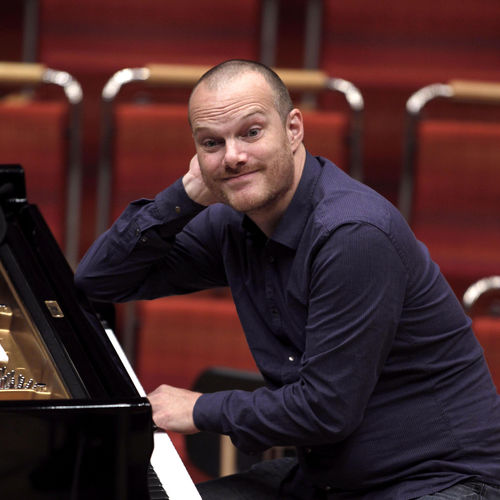
    Cancer has claimed the pianist Lars Vogt.

    At what should have been middle age, Vogt was also in the process of branching out into conducting. He served as music director of the Royal Northern Sinfonia from 2015. In 2020, he took up the directorship of the Paris Chamber Orchestra. In June, his contract there was extended through 2025.

    Vogt received his diagnosis in February 2021. Sad enough for such a talented musician to be cut down in the prime of life – he was only 51 years-old – but he also leaves behind a wife and three children.

    The courage and optimism he conveyed in interviews over the past 18 months is to be admired. R.I.P.


    Vogt plays Beethoven, beautifully

    With a poignant Brahms encore

    Vogt singles out the solace to be found in Brahms, following his diagnosis, here

    The Time Remaining

Tag Cloud

Aaron Copland (92) Beethoven (95) Composer (114) Film Music (123) Film Score (143) Film Scores (255) Halloween (94) John Williams (187) KWAX (229) Leonard Bernstein (101) Marlboro Music Festival (125) Movie Music (138) Opera (202) Philadelphia Orchestra (89) Picture Perfect (174) Princeton Symphony Orchestra (106) Radio (87) Ralph Vaughan Williams (85) Ross Amico (244) Roy's Tie-Dye Sci-Fi Corner (290) The Classical Network (101) The Lost Chord (268) Vaughan Williams (103) WPRB (396) WWFM (881)

DON’T MISS A BEAT

Receive a weekly digest every Sunday at noon by signing up here


RECENT POSTS