Tag: Brahms

  • A Brahms Christmas at Marlboro Music

    A Brahms Christmas at Marlboro Music

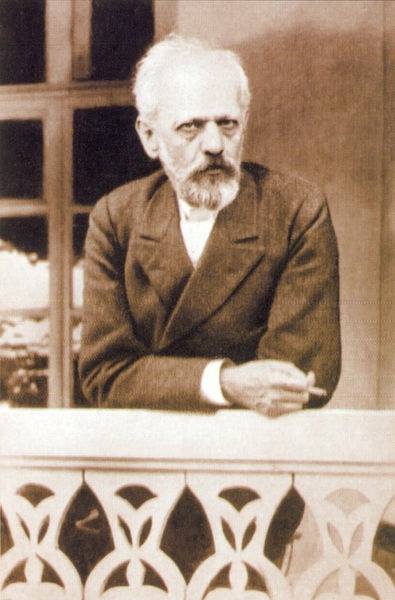
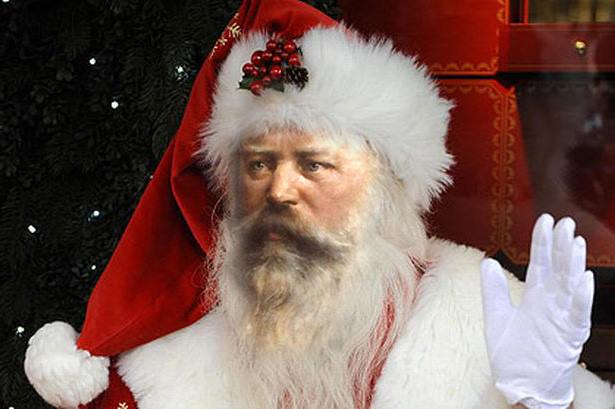
    Despite his remarkable resemblance to a certain Mr. Claus, Brahms is probably about the last composer you’d think of cozying up to on Christmas. This is the man who infamously left a party, after all, with one of the all-time great exit lines: “If there’s anyone here I’ve failed to insult, I apologize!”

    This week on “Music from Marlboro,” it’s a Brahms Christmas.

    Actually, Johannes Brahms had a very generous spirit. He did not shoot cats with a homemade bow-and-arrow and work the sounds of their pain into his music, as his enemies suggested. What he did enjoy was Christmas shopping! On one occasion he gifted the Schumann boys some rather pricey toy soldiers. On another, he surprised his housekeeper’s sons with a Christmas tree. Sure, Brahms could be a bit of a hard nut sometimes, but he retained a certain child-like demeanor at Christmas throughout his life.

    The second of his “Zwei Gesänge” (“Two Songs”) for voice, viola and piano, Op. 91, was written in 1863 for his friend, the violinist Joseph Joachim, and Joachim’s wife, Amalie. It had originally been intended as a wedding present, but Brahms resubmitted it the following year for the baptism of the couple’s son (who was named after him). Joseph was also well-versed on the viola, and Amalie was a contralto.

    The work, “Geistliches Wiegenlied” (“Sacred Lullaby”), after a text by Emanuel Geibel, is a cradle song sung by Mary, mother of Jesus, who addresses the holy angels, requesting that they silence the rustling palms because her Child is sleeping. The viola quotes the Christmas melody “Joseph, lieber Joseph mein,” a sly reference on the part of the composer, who incorporates the carol’s text in order to include Joachim’s given name.

    We’ll hear a performance from the 2011 Marlboro Music Festival, featuring mezzo-soprano Jennifer Johnson Cano, violist Hélène Clément, and, at the keyboard, Marlboro co-director Mitsuko Uchida.

    The adult Brahms had no family of his own. He divided Christmas Day between his favorite tavern and coffee shop, but Christmas Eve was another matter. In his later years, he greatly enjoyed passing the night with friends – once he was done shopping, that is – as part of a kind of extended family.

    Though he rarely spent Christmas with his longtime crush, Clara Schumann, Brahms thought of her every year, on at least one occasion writing her a nice Christmas letter in which he imagines sitting beside her at her breakfast table, conversing with her, and delighting in all of her last-minute holiday preparations.

    Clara joined Brahms for the first performance of his “Variations on a Theme by Haydn,” in its original version for two pianos, at a private gathering in Bonn, in August of 1873. The first performance of the orchestral version took place three months later, with the Vienna Philharmonic conducted by the composer.

    Brahms owed much of his interest in Haydn, who died 60 years earlier and whose music had pretty much fallen out of fashion, to his friend Karl Ferdinand Pohl, scholar-librarian of the Vienna Philharmonic. The theme that had so captivated Brahms is the famous “St. Anthony Chorale,” employed in the Wind Partita in B-flat, which at the time was attributed to Haydn.

    This evening, we’ll have an opportunity to compare both versions of Brahms’ celebrated variations. First, we’ll hear them performed in 1976 by pianists Stephanie Brown and Cynthia Raim; then the great Pablo Casals will conduct the Marlboro Festival Orchestra, from 1969.

    Of course, the theme is probably not by Haydn at all, but who are you going to believe, scholarship or Brahms? It is the Christmas season, after all. I’m willing to take it on faith. I hope you’ll join me for the next “Music from Marlboro,” this Wednesday evening at 6:00 EST, on WWFM – The Classical Network and wwfm.org.


    In the meantime, feel free to enjoy this profile of Pablo Casals by Marlboro’s Frank Salomon:

    https://mailchi.mp/marlboromusic/from-the-archives-pablo-casals?fbclid=IwAR1JlaAnoqYGZYZqzaUQtEjCU5NouYF_QzWw5-rDrIb9vWfryIt43xbYppE

    Marlboro School of Music and Festival: Official Page
  • Haydn Strauss Brahms on WWFM Today

    Haydn Strauss Brahms on WWFM Today

    I don’t what it is, but for some reason I’ve really been on a Haydn kick recently. How fortuitous, then, that a Haydn string quartet would be at the heart of today’s Noontime Concert.

    Members of the Manhattan Chamber Players will perform music for various combinations of strings by Richard Strauss, Haydn, and Brahms.

    We’ll hear the Sextet from Strauss’ final opera, “Capriccio” (1942). The extended movement is not an arrangement, by rather an intimate introduction to an opera which poses the question: which is the greater art, poetry or music? In the opera, the composer Flamand rehearses his new composition at the chateau of Countess Madeleine, who is divided in her affections between Flamand and his rival, the poet Olivier.

    Haydn’s String Quartet No. 19 in C minor, Op. 17, No. 4 (c. 1770), mingles agitation with pathos. You can feel the composer teetering into his “sturm und drang” phase.

    On the other hand, Brahms’ String Quintet No. 1 in F Major, Op. 88 (1882), couldn’t be more different. Brahms doubles the violas for the piece, which he described to Clara Schumann as “one of my finest works.” He also intimated to his publisher, Simrock, “You have never heard such a beautiful work from me.” This was no idle boast. The work is occasionally referred to as the “Spring” Quintet. Brahms completed the piece at a spa in Upper Austria, and the work exudes warmth, contentment, and even joy.

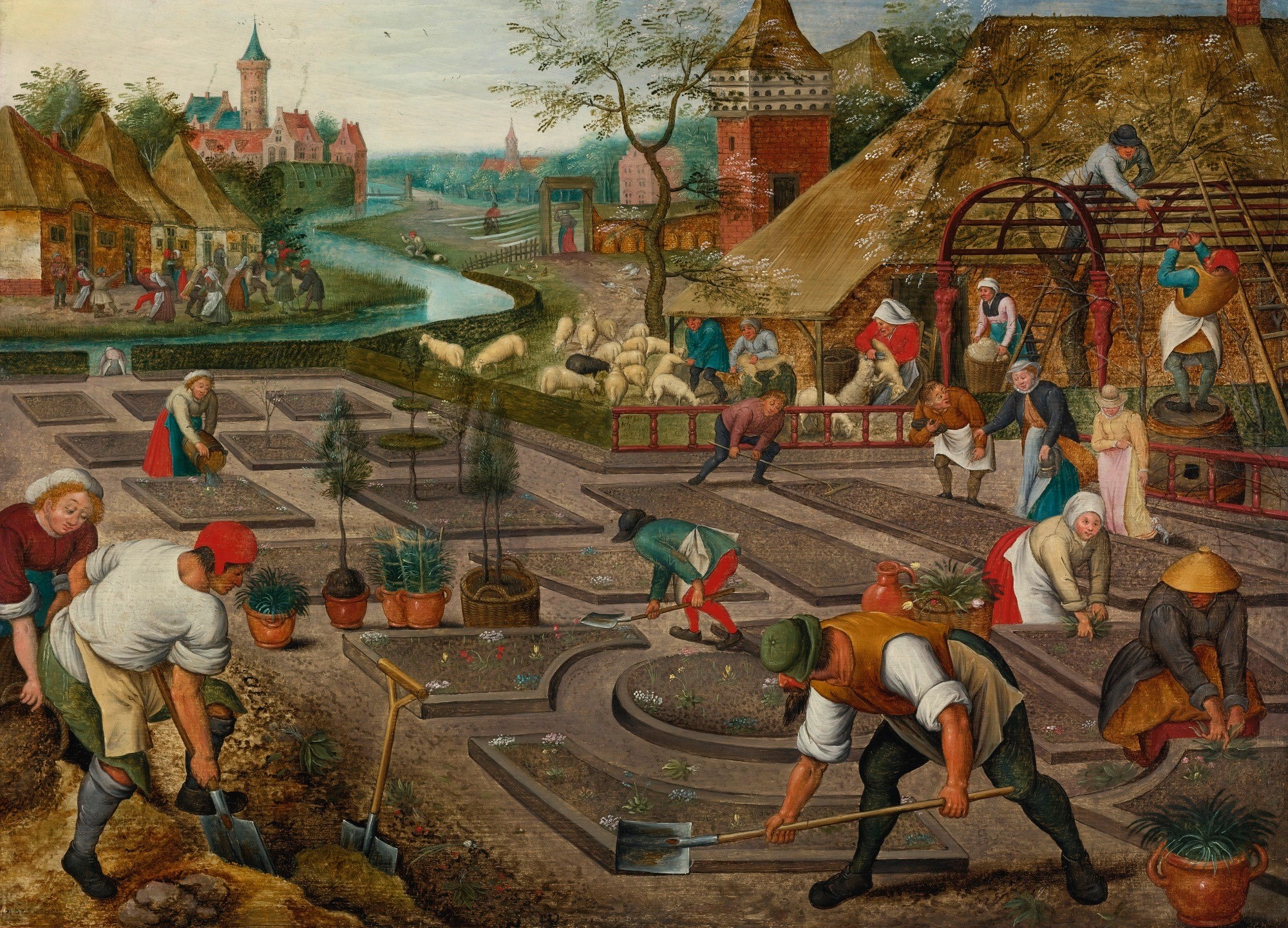
    Then stick around – I will further indulge my Haydn fancy with his magnificent oratorio, “The Seasons,” in advance of the composer’s birthday, which is coming up this Saturday. This is music that truly never goes out of season.

    Strings are the thing on today’s Noontime Concert, and then soloists and chorus sing the praises of spring, courtesy of Haydn, from 12 to 4 p.m. EDT, on WWFM – The Classical Network and wwfm.org.

  • Haydn to Rochberg: Marlboro’s Musical Journey

    Haydn to Rochberg: Marlboro’s Musical Journey

    Where has this music been Haydn?

    Discover music of George Rochberg on this week’s “Music from Marlboro.”

    Rochberg, born in Paterson, NJ, in 1918, studied at the Mannes College of Music and the Curtis Institute in Philadelphia. He later served as chairman of the music department at the University of Pennsylvania.

    His big claim to fame – or, in some circles, notoriety – is that he was one of the first composers to emerge from the predominant serialism of the 1960s to embrace a new tonality, a shift brought on, it is said, by the untimely death of his son. Rochberg found his particular brand of expressionism inadequate to convey his strong emotional upheaval. The inclusion of tonal passages in his works acted as a balm, even as it lit a slow fuse that would blow wide open the future for up-and-coming composers. He is often credited with having ushered in the Age of Pluralism. Now a composer can write any way he or she wants and still be taken seriously. It’s easy to forget that that was not always the case.

    Rochberg’s desire to communicate must have been a latent one, since his Trio for Clarinet, Horn, and Piano, from 1947 (predating his “twelve tone” period), is direct and, in its second movement adagio, introspective and full of feeling. We’ll hear it performed at the 2007 Marlboro Music Festival by clarinetist Charles Neidich, hornist José Vicente Castelló, and pianist Igor Levit.

    The trio will be bookended by two works associated with Franz Joseph Haydn – the String Quartet in B flat major, Op. 33, No. 4, by turns puckish and transporting, and Johannes Brahms’ “Variations on a Theme of Haydn.”

    Who cares that the theme that inspired Brahms to write his variations isn’t by Haydn at all? The “Saint Anthony Chorale” that forms the basis of the slow movement of Haydn’s Divertimento No. 1 in B flat major, Hob. II: 46, is a preexisting melody. In fact, the composer of the divertimento itself has been disputed. None of that really matters in music this well-crafted, especially when performed at the 1976 Marlboro Music Festival by pianists Stephanie Brown and Cynthia Raim.

    Haydn’s Op. 33, No. 4, will open the hour. We’ll hear it played in 1990 by violinists Chee-Yun Kim and Felix Galimir, violist Caroline Levine, and cellist Jean-Guihen Queyras.

    Listen in, as Rochberg emerges from Haydn, on this week’s “Music from Marlboro,” Wednesday evening at 6:00 EST, on WWFM – The Classical Network and wwfm.org.

    Marlboro School of Music and Festival: Official Page
  • Tchaikovsky & Brahms Best Frenemies

    Tchaikovsky & Brahms Best Frenemies

    They were totally B.F.F. – Best Frenemies Forever.

    Prior to their unexpected meeting, Tchaikovsky had confided to his diary, “I have played over the music of that scoundrel Brahms. What a giftless bastard!” Brahms reciprocated by falling asleep during Tchaikovsky’s Fifth Symphony, in the presence of the composer.

    Here’s a first-hand account of the introduction of the fastidious Tchaikovsky to the acerbic Brahms, with a special appearance by Edvard Grieg and his wife, Nina – making this almost as incident-packed as the latest installment of “The Avengers.”

    http://www.cmuse.org/tchaikovsky-and-brahms-it-is-fun-to-l…/

    Surprise! They actually delighted in one another’s company. In fact, they liked one another so well, they decided to do it again. However, the two never could reconcile themselves to one another’s music. When asked what he thought of the piano trio Brahms had been rehearsing, Tchaikovsky intimated, “Don’t be angry with me, my dear friend, but I did not like it.”

    Happy birthday, boys.

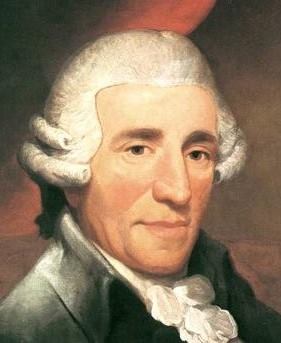
    Johannes Brahms (1833-1897)

    Peter Ilych Tchaikovsky (1840-1893)

  • Herzogenberg Brahms’ Confidant Rediscovered

    Herzogenberg Brahms’ Confidant Rediscovered

    The composer Heinrich von Herzogenberg (1843-1900), born in Graz, studied in Vienna, where he became a lifelong friend of Johannes Brahms. Of course, being friends with Brahms was a complicated matter. In particular, the older composer was not very diplomatic in his assessment of Herzogenberg’s music. However, toward the end of his life, he grudgingly offered, “Herzogenberg is able to do more than any of the others.”

    This Sunday night on “The Lost Chord,” we’ll have music by Brahms’ faintly-praised confidant.

    In 1874, Herzogenberg co-founded the Leipzig Bach-Verein, which dedicated itself to the revival of all the Bach cantatas. He served as its music director for ten years. Following the death of his wife in 1892, he turned increasingly to the writing of sacred music. In particular, he composed music for services of a Lutheran church in Strasbourg, though he himself remained a Roman Catholic. His models for these pieces were, naturally, the oratorios and passions of Bach.

    Three large-scale works of the period call for members of the congregation to participate in the singing of the chorales.

    “Die Geburt Christi,” or “The Birth of Christ,” written in 1894, betrays the influence of composers admired by Herzogenberg. However, the work is not always as “Brahmsian” as one might expect. A prominent role is given to church hymns, with the inclusion of folk material and some familiar Christmas melodies.

    We’ll hear selections from Parts One and Two – “The Promise” and “The Fulfillment” – and then, after a break, the whole of Part Three, “The Adoration.”

    I hope you’ll join me for “German Shepherds,” Herzogenberg’s musical telling of the Nativity story, this Sunday night at 10:00 EST, on WWFM – The Classical Network and at wwfm.org.

Tag Cloud

Aaron Copland (92) Beethoven (95) Composer (114) Film Music (123) Film Score (143) Film Scores (255) Halloween (94) John Williams (187) KWAX (229) Leonard Bernstein (101) Marlboro Music Festival (125) Movie Music (138) Opera (202) Philadelphia Orchestra (89) Picture Perfect (174) Princeton Symphony Orchestra (106) Radio (87) Ralph Vaughan Williams (85) Ross Amico (244) Roy's Tie-Dye Sci-Fi Corner (290) The Classical Network (101) The Lost Chord (268) Vaughan Williams (103) WPRB (396) WWFM (881)

DON’T MISS A BEAT

Receive a weekly digest every Sunday at noon by signing up here


RECENT POSTS