Tag: Brahms

  • Brahms’ American Sextet at Marlboro

    Brahms’ American Sextet at Marlboro

    Brahms, the American composer?

    Brahms’ String Sextet No. 2 in G major was given its first performance in Boston in 1866. Actually, Brahms composed most of the work in the bucolic setting of Lichtental, near Baden-Baden, in 1864-65. This transatlantic sextet will be my featured work on this week’s “Music from Marlboro.”

    Brahms, ever in love, concealed the name of his most recent crush, Agathe von Siebold, in the first movement. She’s represented by the notes A-G-A-H-E. (In German, “H” is B-flat.) The move may have been a little tacky, since at the time he happened to be staying with his other crush, Clara Schumann. But he was, after all, 33 years-old. Brahms being Brahms, nothing came of either infatuation – at least that we know of.

    Brahms’ Sextet received its European premiere the next month in Zurich, but I’m claiming it as American music.

    We’ll hear it performed at the 1967 Marlboro Music Festival by violinists Pina Carmirelli and John Toth, violists Philipp Naegele and Caroline Levine, and cellists Fortunato Arico and Dorothy Reichenberger.

    Brahms puts the “sex” in “sextet,” on this week’s “Music from Marlboro,” this Wednesday evening at 6:00 EDT, on WWFM – The Classical Network and wwfm.org.

    Marlboro School of Music and Festival: Official Page


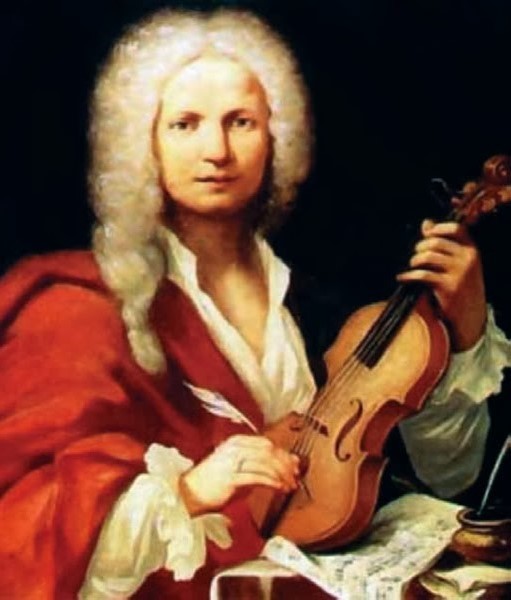
    PHOTO: Brahms, rocking a widow’s peak, in 1866

  • Vivaldi Bach & More Classical Music Today

    Vivaldi Bach & More Classical Music Today

    It’s Antonio Vivaldi’s birthday! I hope you’ll join me today in celebrating “The Red Priest,” alongside Bernard Haitink, Carlos Surinach, and Alexander Goedicke.

    We’ll also enjoy chamber music by Felix Mendelssohn and Leoš Janáček, on this week’s “Music from Marlboro” tonight at 6.

    Of course, we’re celebrating Bach all month long. Tune in this afternoon to hear Bach’s reimagining of a Vivaldi concerto, and some of his own music transcribed most ingeniously by Johannes Brahms.

    Have you become one of the Bach 500 yet? Call us now, and help us cancel fundraising on March 21st, Bach’s birthday. The number is 1-888-232-1212. Or join us online at wwfm.org. 500 donations in any amount will result in our being able to listen to just Bach’s music on his birthday.

    Do it now! Then enjoy the programming you’ve made possible, from 4 to 7 p.m. EST. Thank you for your support of WWFM – The Classical Network and wwfm.org.

  • Wagner, Brahms: A Christmas Truce

    Wagner, Brahms: A Christmas Truce

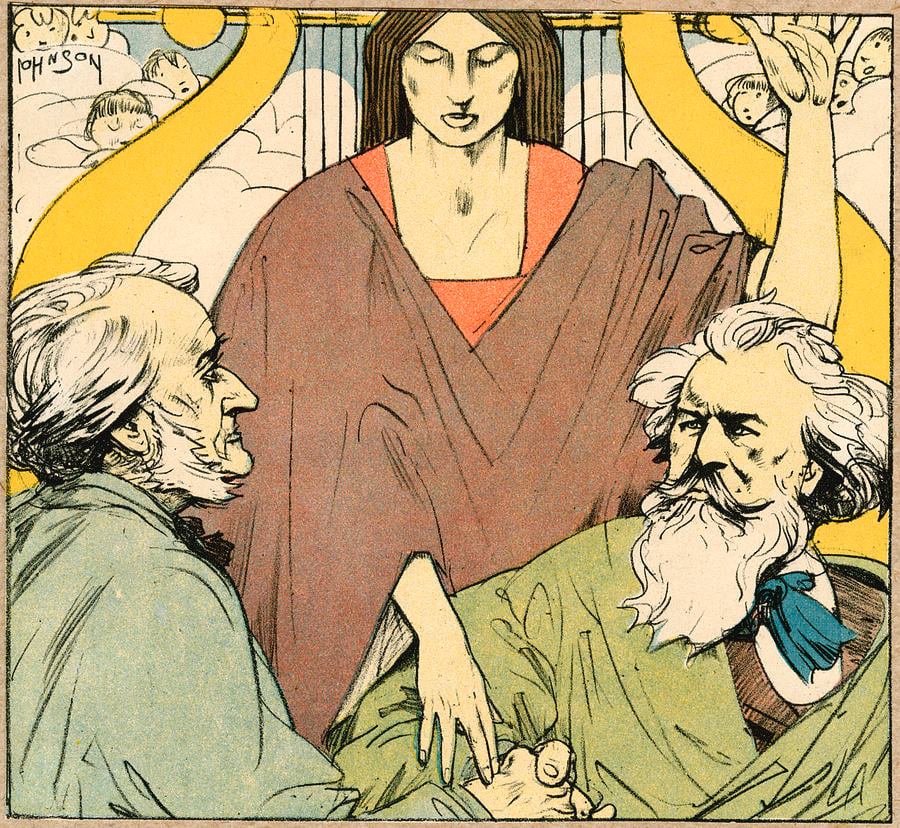
    Brahms and Wagner may have been pitted against one another as exemplars of two conflicting schools of music at the height of the Romantic era, but Christmas is the season of peace on earth and goodwill toward men. With this in mind, we call a ceasefire on the War of the Romantics, if only for the next “Music from Marlboro.”

    Though Wagner could be counted on to behave badly on just about any occasion, he did manage to pull off one of the most romantic gestures in all of classical music.

    On Christmas morning, 1870, Wagner’s wife, Cosima – with whom he had become involved while she was very much married to conductor (and devoted Wagner advocate) Hans von Bülow – awoke to the tender strains of a new serenade.

    Wagner had arranged to have 13 musicians seated along the stairs of their Swiss villa for the first performance of “Triebschen Idyll, with Fidi’s birdsong and the orange sunrise, a symphonic birthday greeting.”

    Cosima was born on December 24, but she always celebrated on Christmas. Fidi was the nickname of the Wagners’ newly-arrived son, Siegfried. Of course, today we recognize the piece more simply as the “Siegfried Idyll.”

    The work had been intended to remain in the Wagner family – from its original title, it’s obvious that it’s loaded with personal significance – but when Wagner ran short of cash, as he often did, he decided that maybe he had better have it published, after all. Some of the material later found its way into the third of the “Ring” operas (also known as “Siegfried”).

    We’ll hear Wagner’s Christmas serenade performed at the 1971 Marlboro Music Festival. In the first chair will be Alexander Schneider, a violinist long associated with the Budapest String Quartet.

    It’s all-too-easy to dismiss Brahms as crusty and gruff. This is the man, remember, who once notoriously wrecked a party by declaring, “If there’s anyone here I’ve failed to insult, I apologize!”

    But Brahms could also be an old softy, with a very generous heart. He retained as especially childlike demeanor around Christmas. He always saw to it that the Schumanns were well-gifted and that his housekeeper’s family had their own tree.

    Brahms’ “Zwei Gesänge” (“Two Songs”) for voice, viola and piano, Op. 91, from 1863, was originally intended as a wedding present for his friend, violinist Joseph Joachim (who also played the viola), and Joachim’s bride, Amalie (who was a contralto).

    The second of the songs , “Geistliches Wiegenlied” (“Sacred Lullaby”), is a setting of Emanuel Geibel’s text, a cradle song sung by Mary, who requests that the angels silence the rustling palms because her Child is asleep. The viola quotes the Christmas melody “Joseph, lieber Joseph mein,” a sly reference on the part of the composer, who incorporates the carol’s text, so as to include Joachim’s given name.

    We’ll hear a performance from 2011, featuring mezzo-soprano Jennifer Johnson Cano, violist Hélène Clément, and, at the keyboard, Marlboro co-director Mitsuko Uchida.

    The balance of the hour will be devoted to a work by the long-lived Carl Reinecke, who became friendly with Brahms while an instructor at the Cologne Music School in the 1850s. Like Brahms, Reinecke was a frequent guest in the Schumann home. A prolific composer himself, Reinecke served as kapellmeister of the Leipzig Gewandhaus Orchestra from 1860 to 1895.

    We’ll hear his charming Octet for Winds, Op. 216, which was published in 1892. It was performed at Marlboro in 2010 by oboist Nathan Hughes; clarinetists Anthony McGill and Moran Katz; hornists Rodovan Vlatkovic and Jill Bartles; and bassoonist William Winstead.

    It’s a Christmas truce, on this week’s “Music from Marlboro.” The Marquess of Queensberry Rules need not apply, this Wednesday evening at 6, on WWFM – The Classical Network and wwfm.org.

    Marlboro School of Music and Festival: Official Page


    WAGNER AND BRAHMS: Gods and sinners reconciled

  • Brahms’ “A German Requiem” on The Classical Network

    Brahms’ “A German Requiem” on The Classical Network

    Johannes Brahms had suffered a fair amount of loss at the time he embarked on his Requiem in 1865. His mother died in February of that year, and the death of his friend, Robert Schumann in 1856 also continued to resonate.

    On today’s Noontime Concert on The Classical Network, we’ll hear a performance of Brahms’ “Ein deutsches Requiem” by the New Jersey Master Chorale under the direction of William P. Gorton. Soprano Andrea Lauren Brown and baritone Timothy Renner will join organist Matt Smith and members of The Philadelphia Orchestra. The concert took place at Haddonfield United Methodist Church this past April.

    Brahms assembled the texts of the Requiem himself, eschewing the standardized Latin of the Roman Catholic Requiem Mass in favor of the vernacular German of the Luther Bible. He forgoes anything suggestive of terror, wrath, and hellfire, or even redemption through the sacrifice of Christ, to arrive at something more tender and humane. The modifications promote an atmosphere of solace and hope.

    Brahms may have titled his work “Ein deutsches Requiem” – “A German Requiem” – but there was nothing nationalistic intended by the designation. Rather he was suggesting something more direct and at the same time universal. In fact, he commented on one occasion that he would just as happily have called it “A Human Requiem.” The work is as much for the living, those who mourn, as it is for those who have passed.

    The second movement incorporates material composed as early as 1854, the year of Robert Schumann’s mental collapse and attempted suicide, when Brahms moved to Düsseldorf to be with Clara Schumann and her children. Brahms presented Clara with a four-hand piano version of the Requiem in 1866.

    Friday marks the 200th anniversary of Clara’s birth. We’ve been sampling some of her music during the course of my air shifts this month and celebrating the legacy of women composers in general. We’ll certainly continue in that vein this afternoon. Among today’s featured works will be the Piano Quintet No. 1 by Grazyna Bacewicz and the Violin Concerto of Margaret Brouwer.

    First, following close on the heels of the Requiem broadcast, we’ll enjoy a symphony dedicated to Brahms by his friend, Schumann student Albert Dietrich.

    I hope you’ll join me for “Ein deutsches Requiem” and more. In the end is our beginning, from 12 to 4 p.m. EDT, on WWFM – The Classical Network and wwfm.org.


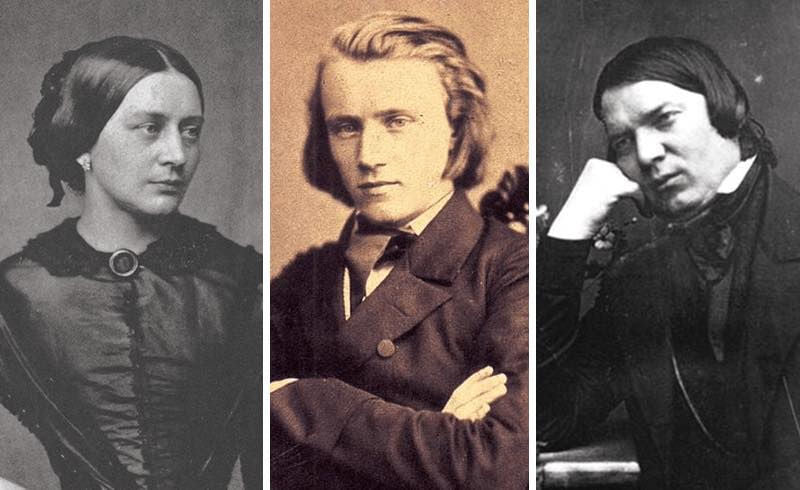
    MÉNAGE À TRIPTYCH: Shoehorned between two Schumanns

  • Brahms’ Intense Piano Quintet at Marlboro Music

    Brahms’ Intense Piano Quintet at Marlboro Music

    Don’t expect anything too drowsy on this week’s “Music from Marlboro,” when the focus will be on Johannes Brahms’ unusually intense Piano Quintet in F minor.

    This is not music of wistful reflection. The quintet is often tempestuous and even tragic, fueled by all the passion and earnestness of an excitable young man. Brahms began his quintet in 1862. He was 29 years-old.

    That’s not to say the composer ever teeters over into sentiment or excess of a kind common to his fin-de-siècle successors. Even in his 20s, Brahms was too much himself ever to allow that to happen.

    Instead he takes the prototype of the piano quintet – established by his friend and mentor, Robert Schumann – and fashions it into something unsettled and at times downright sublime. We are in the presence of something great, but also perhaps a little terrifying.

    This masterpiece of Brahms’ early maturity began life as a string quintet, written under the spell of Schubert’s famous Quintet in C. Brahms showed the work in this form to Clara Schumann and his friend, the violinist Joseph Joachim. Both were full of praise, at least at first, but gradually their compliments became outpaced by their suggestions. Joachim, in particular, admired the work’s power, but confessed he found little in it to charm.

    Undaunted, Brahms took the piece and arranged it for two pianos in 1863-64, consigning the original version, for strings alone, to flames of woe. This two-piano reworking was more politely than enthusiastically received, and Clara, thinking it sounded more like a transcription now than an original composition, begged him to recast it once more.

    The third time proved to be a charm. The resulting quintet, which achieved its final state in the summer of 1864, was met with resounding acclaim. At last, the piece had arrived at a perfect marriage of expression and form.

    While Brahms retains the classical poise for which is so well known, he stiffens the sinews and conjures the blood, so to speak. In fact, there are times when he ratchets up the tension so effectively it seems the music might just fly off the rails.

    We’ll hear an exciting performance from the 2007 Marlboro Music Festival, featuring pianist Richard Goode, violinists Augustin Hadelich and Benjamin Beilman, violist Samuel Rhodes, and cellist Amir Eldan.

    Proceed at your own risk. Safety gear will not be provided, on this week’s “Music from Marlboro,” this Wednesday evening at 6:00 EDT, on WWFM – The Classical Network and wwfm.org.

    Marlboro School of Music and Festival: Official Page

Tag Cloud

Aaron Copland (92) Beethoven (95) Composer (114) Film Music (123) Film Score (143) Film Scores (255) Halloween (94) John Williams (187) KWAX (229) Leonard Bernstein (101) Marlboro Music Festival (125) Movie Music (138) Opera (202) Philadelphia Orchestra (89) Picture Perfect (174) Princeton Symphony Orchestra (106) Radio (87) Ralph Vaughan Williams (85) Ross Amico (244) Roy's Tie-Dye Sci-Fi Corner (290) The Classical Network (101) The Lost Chord (268) Vaughan Williams (103) WPRB (396) WWFM (881)

DON’T MISS A BEAT

Receive a weekly digest every Sunday at noon by signing up here


RECENT POSTS