Tag: Composer

  • Madeleine Dring A Centenary Celebration

    Madeleine Dring A Centenary Celebration

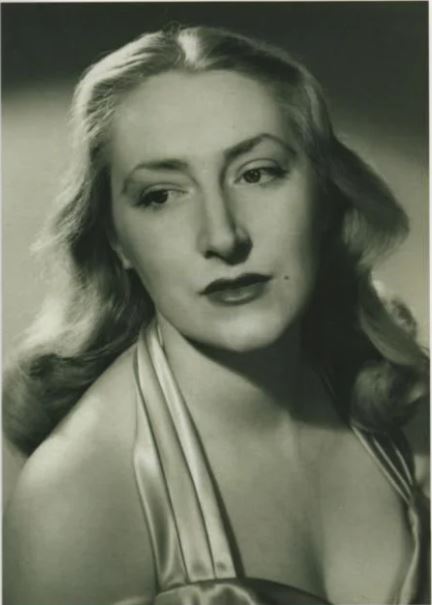
    Madeleine Dring was born 100 years ago today.

    A precocious musician, she entered the junior department of the Royal College of Music on a scholarship at the age of 10. At first, violin was her primary instrument, but she also studied piano. At 14, she began composition lessons. Herbert Howells supervised her senior-level studies. She also took lessons with Ralph Vaughan Williams. She dropped the violin following the death of her teacher W.H. Reed, friend of Elgar. Reed was concertmaster of the London Symphony Orchestra for 23 years. She continued to study piano with Lilian Gaskell.

    Dring was also very fond of the theater. She studied mime, drama, and singing, later combining her enthusiasms by supplying music for stage, radio, and television. Her dance drama, “The Fair Queen of Wu,” was broadcast on BBC TV in the 1950s. She was also involved in several other television productions, as actor and/or composer, for “Waiting for ITMA,” “ITV Television Playhouse,” and ITV Play of the Week.”

    In 1947, she married Roger Lord, the London Symphony Orchestra’s principal oboist, and wrote of number of works for him. In general, she eschewed large-scale works in favor of shorter pieces. This allowed her to raise a child, and frankly, with all her interests, she was busy! She did compose a one-act opera, “Cupboard Love.”

    Dring died of a cerebral hemorrhage in 1977 at the age of 53. Some of her cartoons were included in a book, “Madeleine Dring: Her Music, Her Life,” published in 2000. It was partially funded by her husband to bring more attention to her music.

    Dring had a vivacious spirit and brought a lot personality to everything she touched. Once, when asked to supply some biographical information for a program note, she jotted, “Madeleine Dring was born on the moon and can therefore claim to be a pure-bred lunatic. Arriving on a speck of cosmic dust she came face to face with the human race and has never really recovered.”

    Happy birthday, Madeleine Dring!


    Trio for Flute, Oboe and Piano

    7 Shakespeare Songs: Take, O Take Those Lips Away

    Italian Dance

    Toccata

    Caribbean Dance
  • William Kraft A Centennial Celebration

    William Kraft A Centennial Celebration

    Whether as a composer, a performer, or a conductor, he was all Kraft.

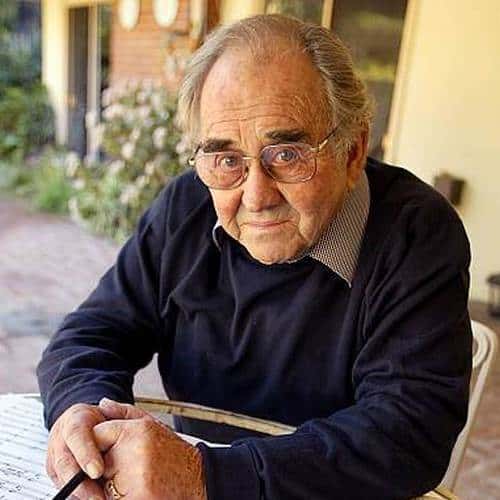
    William Kraft, a triple threat, was born 100 years ago today.

    Born in Chicago in 1923, he was raised in Santa Barbara, and it was on the West Coast that he made his greatest mark for over 40 years.

    Already as a young man and freelance musician in Manhattan, he was rubbing shoulders with some of the most remarkable musicians of his day.

    He studied composition at Columbia with Otto Luening, Vladimir Ussachevsky, and Jack Beeson. Closer to home, he also took lessons with Henry Cowell. He learned orchestration from Henry Brant, percussion with Morris Goldenberg, and timpani with Saul Goodman, for 50 years principal timpanist of the New York Philharmonic. He also studied conducting with Rudolph Thomas and Fritz Zweig.

    After a brief stint with the Dallas Symphony Orchestra, he returned to California, where from 1955 to 1985, he served as percussionist with the Los Angeles Philharmonic. He later became its first composer-in-residence. For several seasons, he also served as regular guest conductor and assistant conductor. In 1991, he began teaching at the University of California.

    He organized and directed the Los Angeles Percussion Ensemble, a group that gave first performances and made first recordings of works by Alberto Ginastera, Lou Harrison, Ernst Krenek, Igor Stravinsky, and Edgard Varèse.

    Kraft was in charge of all percussion activities for Stravinsky in Los Angeles and appeared on some of the composer’s own recordings, including “L’Histoire du soldat.” As a soloist, Kraft performed in the American premieres of Karlheinz Stockhausen’s “Zyklus” and Pierre Boulez’ “Le marteau sans maître.”

    Also, as one of the more unlikely composers to score a success with the Boston Pops, Kraft was enlisted alongside Sir Peter Maxwell Davies, Oliver Knussen, Joseph Schwantner, and John Adams to write works to be premiered under the baton of John Williams. Come to think of it, these Boston Pops commissions would make a terrific album! (To my knowledge only Maxwell Davies’ “An Orkney Wedding with Sunrise” was ever recorded by them and issued commercially.)

    Kraft composed “Vintage Renaissance” for the Pops in 1989. The work incorporates two Renaissance melodies: “Danza” by Francesco de la Torre, and an anonymous “bransle” (pronounced “brawl”).

    Like Williams, Kraft sometimes worked in film, although his projects as composer tended to be a little less prestigious. He wrote music for the slasher flick “Psychic Killer” (1975), the risible “Avalanche” (1978), and Ralph Bakshi’s “Fire and Ice.”

    However, was also active in the music departments on more reputable fare, appearing as a percussionist on the soundtracks to “North by Northwest,” “None But the Brave” (scored by Williams), “Inside Daisy Clover,” “The War Wagon,” “A Man Called Horse,” “The Life and Times of Judge Roy Bean,” and “The Great Santini.” As a conductor, he led studio orchestras in recording the music for “Dead Again,” “Indochine,” and “Carlito’s Way.”

    Kraft was chair of the composition department at USC. He retired in 2002. He died as recently as February of last year at the age of 98!


    “Vintage Renaissance”

    Concerto for Four Percussion Soloists and Orchestra

    “French Suite”

    Bakshi’s “Fire and Ice”

    Kraft on percussion in Stravinsky’s “The Soldier’s Tale”

    An interview with Bruce Duffie

    http://www.bruceduffie.com/wm-kraft.html

  • Kile Smith Composer Curator Photographer

    Kile Smith Composer Curator Photographer

    He’s a Smith whose forge is seldom dark.

    With so many talents, his hammer rings like Siegfried’s on Mime’s anvil.

    In addition to being a fine composer, Kile Smith (pictured, left) was, for many years, curator of the Fleisher Collection at the Free Library of Philadelphia. Scores housed in the collection continue to form the basis for his monthly podcast, “Fleisher Discoveries,” which is more or less a continuation of “Discoveries from the Fleisher Collection,” a show he produced back during his days at WRTI.

    He’s also a fairly prolific writer, with intelligent articles on arts and culture appearing in publications like the Broad Street Review. His liner notes include those for the Naxos release of music by 19th century Philadelphia composer William Henry Fry (which, if you haven’t “discovered” it yet, I urge you to do so).

    But it is through radio that I primarily know Kile, as a frequent presence on WRTI, and once, as a guest on my weekly program “The Lost Chord.” In addition, I’ve broadcast his music many times over the years during my regular live air shifts. I’m particularly fond of the recording of his “Vespers,” with The Crossing and Piffaro, The Renaissance Band, a flat-out masterpiece. I’ve programmed it several times at both WWFM and WPRB.

    It was actually through Kile that I got my foot in the door at WRTI. Unfortunately, I couldn’t do my own classical programming there, and most of my air time was spent on jazz overnights. I would have loved to have been able to select more of my own music during the classical shifts. Certainly, Kile’s recordings would have been included in the rotation.

    Wouldn’t you know, it turns out his eye is as fine as his ear. If you haven’t already been doing so, check out Kile’s wildlife photography. He shares a lot of it on his Facebook page. And in case I forgot to mention, he has a wry, understated sense of humor, which comes through in most of his posts.

    His blog entries and podcasts can be accessed at his website, kilesmith.com. There’s also a schedule of performances and premieres, a list of Grammy nominations, music publications, and compositions, and more wildlife photos.

    Happy birthday, Kile. Long may your hammer ring true!


    From “Vespers”

    The latest installment of “Fleisher Discoveries,” featuring the music of Leo Sowerby

    Fleisher Discoveries: Leo Sowerby and the Sense of the Joy


    PHOTO: Kile Smith with yours truly at a Princeton Festival concert last year at Trinity Church. Yes, that’s Kenneth Hutchins on the right.

  • George Szell Composer Conductor?

    George Szell Composer Conductor?

    Did you know that one of the most revered – and feared – conductors of the 20th century was also a composer? Or at least he was, at one time.

    George Szell, the musical martinet who built the Cleveland Orchestra into one of the world’s finest – even as he drove 40 percent of its musicians to seek psychiatric help, according to clarinetist Murray Khouri, who wasn’t joking – at 11 toured Europe as “the next Mozart.”

    By 17, Szell added conducting to his precocious skills as a pianist-composer and soon determined the latter discipline was where his future lay.

    If his own music reminds you of Richard Strauss, Szell was very much from that world. At 18, Szell was appointed to Berlin’s Royal Court Opera, where Strauss was music director. He quickly earned the older composer’s admiration and friendship. Strauss once said that he could die a happy man knowing that there was someone who could perform his music so perfectly.

    It’s good that he felt that way, because Szell wound up having to conduct the first half of the world premiere recording of Strauss’ “Don Juan,” when the composer overslept. Since a 78-rpm record could only accommodate four minutes of music per side, the session was planned in four parts. Strauss walked in just as Szell was completing the second and thought it so good, he allowed it stand. The complete performance was issued under Strauss’ name.

    Szell credited Strauss as being a major influence on his conducting style. For Strauss’ part, he continued to keep track of his protégé even after Szell settled in the United States.

    By then, for Szell, there would be no more composing. He did, however, keep up with his pianism, which came in handy during rehearsals. Occasionally, he also played and recorded chamber music.

    He brought all his experience to bear on his quest for artistic excellence on the podium. That he was a triple-threat was like gilding the lily for one already as threatening as George Szell.


    One of Szell’s early compositions, “Variations on an Original Theme”

    World premiere recording of “Don Juan” (1917), with Szell and Strauss conducting

    Szell as a Mozart pianist

    Szell’s benchmark modern orchestra Haydn

    While on tour with the Cleveland Orchestra in Tokyo, and with only two months to live (he was terminally ill with cancer), Szell conducted what may very well be the most thrilling performance of Sibelius’ Symphony No. 2 I have ever heard, certainly on a par with the classic Barbirolli account with the Royal Philharmonic Orchestra

    Szell speaks!

    Szell on “The Bell Telephone Hour” on NBC. These days, you won’t even find something like this on PBS.

    Szell rehearses Beethoven

    Szell conducts Beethoven and Bruckner in Vienna

    https://www.youtube.com/watch?v=vuXODojyfME

    Happy birthday, G.S.!

  • Princeton’s Unknown Composer You Know

    Princeton’s Unknown Composer You Know

    Here’s my editor, after I just squandered another day of my life pounding out a 1700-word piece against a 1200-word quota. I won’t spill the beans about it just yet, but it has something to do with a composer who lived in Princeton for about a quarter century, beginning in 1856. You may not know his name, but if you’re at all connected to the university, you know his music. I’m hopeful the article will run in next week’s U.S. 1 newspaper – out on Wednesday – unless it’s waylaid by vampires, extraterrestrials, or Jack the Ripper!

Tag Cloud

Aaron Copland (92) Beethoven (95) Composer (114) Film Music (123) Film Score (143) Film Scores (255) Halloween (94) John Williams (187) KWAX (229) Leonard Bernstein (101) Marlboro Music Festival (125) Movie Music (138) Opera (202) Philadelphia Orchestra (89) Picture Perfect (174) Princeton Symphony Orchestra (106) Radio (87) Ralph Vaughan Williams (85) Ross Amico (244) Roy's Tie-Dye Sci-Fi Corner (290) The Classical Network (101) The Lost Chord (268) Vaughan Williams (103) WPRB (396) WWFM (881)

DON’T MISS A BEAT

Receive a weekly digest every Sunday at noon by signing up here


RECENT POSTS