Tag: Father’s Day

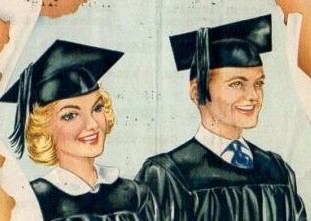
  • Father’s Day Graduation Crossword Puzzle

    Father’s Day Graduation Crossword Puzzle

    ‘Tis the season for ties and diplomas!

    There’s much to celebrate, as Father’s Day meets graduation season in this week’s Classic Ross Amico crossword.

    To fill out the puzzle, follow the link and select “solve online” at the bottom of the page. You’ll then be able to type directly into the squares. Once you feel you’ve exhausted the puzzle, you’ll find the solutions by clicking on “Answer Key PDF.”

    Honor our dads and grads here:

    https://www.armoredpenguin.com/crossword/Data/2020.06/2106/21064957.169.html

  • Meteor Disaster Avoided! Father’s Day Music

    Meteor Disaster Avoided! Father’s Day Music

    Wait? John Williams was supposed to write the music for “Meteor?” Well, I suppose it makes sense, following on his association with “The Poseidon Adventure,” “Earthquake,” and “The Towering Inferno.” Thankfully, this was one disaster he was able to avoid.

    Share that sense of relief, as we enter the weekend with another Classic Ross Amico double-feature.

    First, it’s all about Father’s Day – with music from “The Godfather” (Nino Rota), “Field of Dreams” (James Horner), “Life with Father” (Max Steiner), and “To Kill a Mockingbird (Elmer Bernstein) – on “Picture Perfect,” music for the movies, at 6 p.m. EDT, on WWFM – The Classical Network and wwfm.org.

    Then Roy Bjellquist and I will take on The Mother of All Asteroids, as we dissect “Meteor,” on the Facebook live-stream “Roy’s Tie-Dye Sci-Fi Corner” at 7.

    https://www.facebook.com/roytiediescificorner/

    Getting ready to rock your world (literally). Mom and Dad would be so proud.

  • Movie Dads Father’s Day Special on WWFM

    Movie Dads Father’s Day Special on WWFM

    This week on “Picture Perfect,” we anticipate Father’s Day with an hour of music celebrating movie dads.

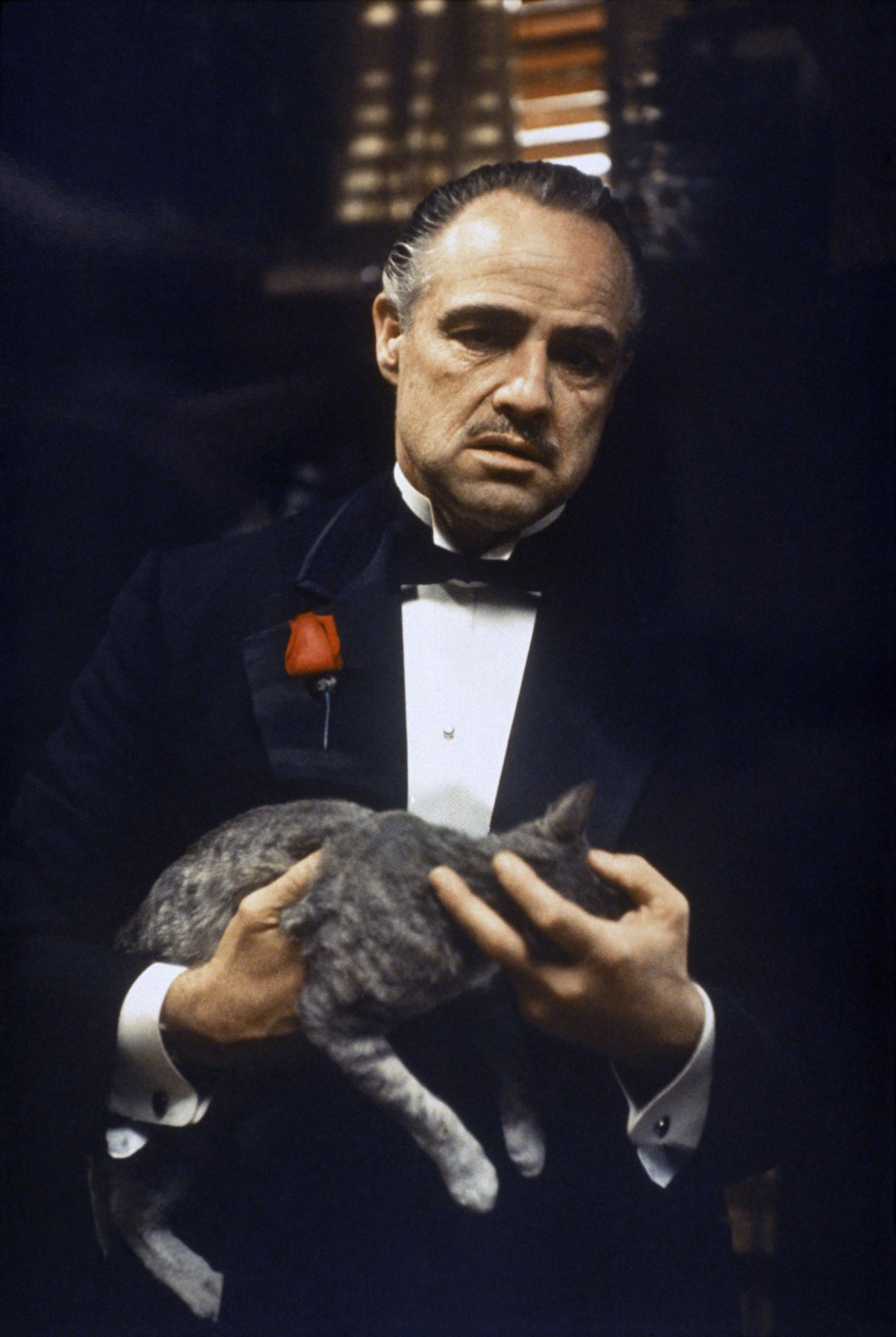
    Vito Corleone may not exactly have been a model father, though he did adhere to a particular code of ethics. Besides, what father doesn’t love “The Godfather” (1972)? “The Godfather” was recognized with 11 Academy Award nominations – of which it won three, including Best Picture. However, the awards were not without controversy.

    Of course, Brando sent Sacheen Littlefeather to the ceremony to decline his Oscar, in protest over Hollywood’s portrayal of Native Americans in television and film. Then there was the matter of the score, by Nino Rota. Rota was nominated, but the nomination was withdrawn when it was discovered that he had used one of the themes in a 1958 film called “Fortunella,” which starred Giulietta Masina and Alberto Sordi. In the end, the Academy turned around and gave Rota the award anyway, two years later, for “The Godfather Part II.”

    “Field of Dreams” (1989) is one of those rare films that has the ability to reduce manly men – even those without father issues – to a pool of tears. Phil Alden Robinson’s superior adaptation of W.P. Kinsella’s novel, “Shoeless Joe,” is a male wish-fulfillment fantasy, in which a man finds redemption, and a new understanding of his father, in the enchanted cornfields of America’s heartland. And it’s all brought about courtesy of America’s pastime, baseball. The evocative score is by James Horner, who rides on the shoulders of Aaron Copland. The composer seems particularly smitten with Copland’s “Our Town.”

    William Powell plays Clarence Day, the irascible paterfamilias of an upper class family of redheads, in the comedy “Life with Father” (1947), for which Max Steiner wrote the music.

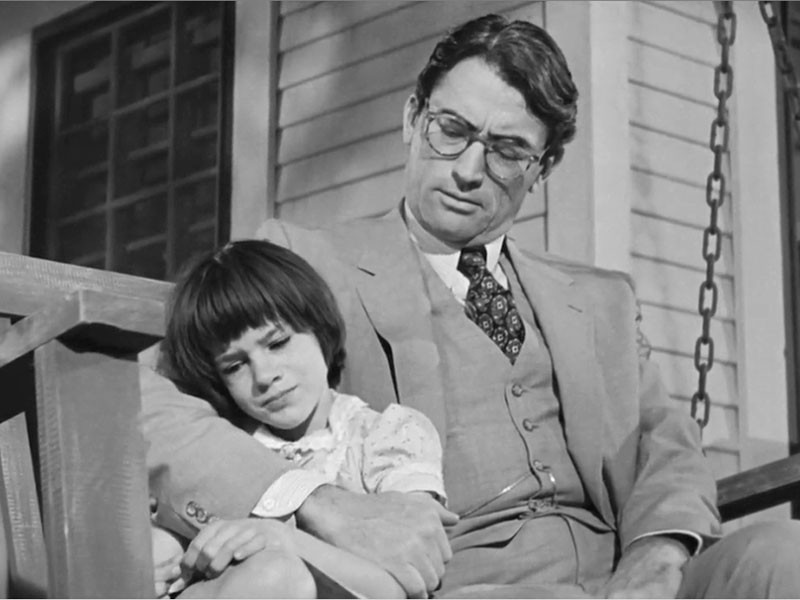
    And Gregory Peck plays one of his most memorable roles as defense attorney – and model father – Atticus Finch, in “To Kill a Mockingbird” (1962), based on Harper Lee’s beautiful “coming of age” novel. The book was awarded the Pulitzer Prize for Fiction in 1961. Peck won the Academy Award for Best Actor a year later. The score is one of the best-loved of Elmer Bernstein.

    You can try to rank the music, but Father’s Day generally yields a tie. (Yes, it’s a pun. Dads love puns.) Spare a thought for dear old Dad, this Friday evening at 6:00 EDT, on WWFM – The Classical Network and wwfm.org.

  • Father’s Day Reflections Loss & Legacy

    Father’s Day Reflections Loss & Legacy

    It’s Father’s Day. Both my folks are gone, and I had a rather complex relationship with my biological father, who died of cancer a little over a year ago. Still, toward the end, I visited him a lot, and we kind of became friends. At least I developed a better, or more rounded, understanding of him, though we still had a few adventures that reminded me of why it was probably a good thing that my mother herded us out of the nest when she did.

    My old man could be an amusing personality if he were a work of fiction, or if he could be taken in at a safe remove. Also, in his way, he had a kind heart. His circle included a remarkable number of outsiders and societal cast-offs, and he managed to take care of many of them, after his fashion. But he was not one to be bound by rules or, more strictly speaking, the law. At best, he could be considered a bit of a scapegrace; at worst, he was an ardent hellraiser, especially in his prime.

    But spending time with him later in life, it was fascinating to discover that, whether he knew it or not, he did live by a kind of code. Also, given his nature, I learned that a lot of what the rest of us had resented all these years was probably not entirely his fault. He just wasn’t cut out to raise a family. You can’t really fault a striped hyena for not being able to fly.

    I could tell you stories about my dad that would make you howl with laughter or make your blood curdle, but instead I’ll just tie this in with my program tonight on “The Lost Chord,” which will consist of two pieces by American composers, written in loving memory of their fathers – with perhaps just a transitional bit of advice to get to know your parents, for better or worse, while there’s still time.

    In 1999, composer Eric Ewazen was commissioned by an oboist-friend, Linda Strommen, who had recently lost her father, to write a new work as a kind of memorial tribute. Having recently experienced the death of his own father, the composer embarked on the project with a special sense of poignancy. He recollected that the day his father passed – Christmas Day, 1997 – an essay had appeared in the Cleveland Plain Dealer, by Richard Feagler. It consisted of funny, heartfelt stories of relatives and parents, long since departed. Near the end of the essay, titled “Christmas Past Comes Alive at Aunt Ida’s,” Feagler describes those beloved souls, “moving, though they can’t feel the current, down a river of time.”

    Ewazen borrowed this image for the title of his concerto, “Down a River of Time,” a contemplation of that inexorable, rushing river – the first movement influenced by its ebbs and flows, hopes and dreams; the second attempting to convey emotions felt during times of loss, sorrow, resignation, tenderness, and peace in remembrance of happier, distant times. In the final movement, happier memories prevail, and feelings of strength and determination dominate.

    Ewazen studied at, among other places, the Eastman School of Music. Howard Hanson had been director there for some 40 years. Along with the opera “Merry Mount,” Hanson came to regard his Symphony No. 4 as a personal favorite, a purely orchestral requiem, dedicated to the memory of his father. It falls into four movements, each bearing a Latin subtitle – “Kyrie,” “Requiescat,” “Dies Irae,” and “Lux Aeterna.” The work was given its first performance in 1943, with the composer conducting the Boston Symphony. It was awarded the Pulitzer Prize for Music in 1944.

    It sure as hell beats another necktie. Spare a thought for the Old Man, and then join me for “Day of the Dad,” this Sunday night at 10:00 EDT, on WWFM – The Classical Network and wwfm.org.
  • Spaghetti Western Music for Father’s Day

    Spaghetti Western Music for Father’s Day

    This week on “Picture Perfect,” with Father’s Day right around the corner, I thought it would be a good time to revisit the spaghetti western. After all, whose Dad doesn’t like spaghetti?

    We’ll hear an hour of distinctive scores written for these ultra-cool, hyper-stylized westerns that were originally released in Italy, with their multinational casts heavily dubbed in post-production.

    Spaghetti westerns frequently turned the conventions of American westerns on their heads. At any rate, the morality of the traditional western was made much murkier, with antiheroes cast as protagonists, usually motivated by greed and revenge. Especially greed.

    As with the American film industry, only more so, when the Italians found something that worked, they went into overdrive, churning out literally dozens of knock-offs and imitations a year, until a given genre had run its financially lucrative course.

    To this end, over 600 European westerns were produced between 1960 and 1980. The most influential of these were those directed by Sergio Leone, especially those of the so-called “Dollars” Trilogy – “A Fistful of Dollars,” “For a Few Dollars More,” and “The Good, the Bad and the Ugly.”

    These, of course, featured then-rising star Clint Eastwood. His co-star in the second and third films was Lee Van Cleef, who in American westerns like “High Noon” and “The Man Who Shot Liberty Valance” had bit parts as one of the villain’s henchmen, but became an international superstar as the spaghetti western’s most reliable – and bankable – heavy.

    We’ll sample from music for the “Dollars” Trilogy, composed by Ennio Morricone, and the “Sabata” Trilogy (which also starred Van Cleef), composed by Marcello Giombini.

    Tell Dad it’s all-you-can-eat. I’ll be piling the plates high with music from spaghetti westerns, on “Picture Perfect,” this Friday evening at 6:00 EDT, on WWFM – The Classical Network and wwfm.org.
Tag Cloud

Aaron Copland (93) Beethoven (95) Composer (114) Film Music (129) Film Score (143) Film Scores (255) Halloween (94) John Williams (192) KWAX (229) Leonard Bernstein (103) Marlboro Music Festival (125) Movie Music (144) Mozart (88) Opera (206) Philadelphia Orchestra (89) Picture Perfect (174) Princeton Symphony Orchestra (108) Radio (88) Ross Amico (244) Roy's Tie-Dye Sci-Fi Corner (290) The Classical Network (101) The Lost Chord (268) Vaughan Williams (103) WPRB (396) WWFM (881)

DON’T MISS A BEAT

Receive a weekly digest every Sunday at noon by signing up here


RECENT POSTS