Tag: Film Scores

  • Restoration Era Film Scores & Charles II

    Restoration Era Film Scores & Charles II

    Get out the pancake makeup, and don’t skimp on the beauty marks. This week on “Picture Perfect,” the focus will be on Charles II and the Restoration.

    The film “Restoration” (1995) featured quite a cast, with a pre-“Iron Man” Robert Downey, Jr., as a young doctor torn between duty and debauchery. He succumbs to the latter at the court of Charles II, played by Sam Neill, before finding redemption as he battles the Great Plague and braves the Fire of London. The film also stars David Thewlis, Polly Walker, Meg Ryan, Ian McKellan and Hugh Grant.

    The main title of James Newtown Howard’s score takes its impetus from Henry Purcell’s “The Fairy Queen.” And indeed there are baroque inflections throughout.

    George Sanders plays Charles in “The King’s Thief” (1955). Edmund Purdom is a highwayman who pilfers an incriminating book from David Niven. An aristocratic schemer, Niven will stop at nothing to get it back. The swashbuckling score is by Miklós Rózsa.

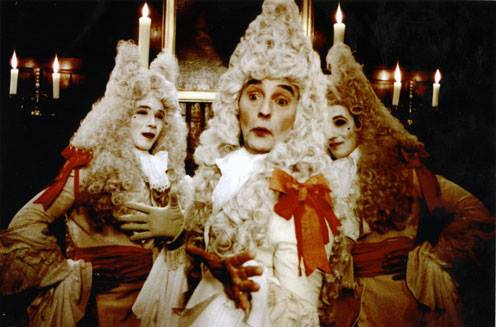
    I don’t recall Charles making an appearance in “The Draughtsman’s Contract” (1982), Peter Greenaway’s saucy though strangely aloof Restoration opus. However, there is plenty of licentiousness and an abundance of outlandish wigs. And, it being a Greenaway film, it is certainly strange in more ways than one. Michael Nyman’s score puts a minimalist spin on baroque sources.

    Finally, “Forever Amber” (1947) is based on a then-scandalous novel by Kathleen Winsor, about an ambitious young woman’s rise through the bedchambers of the Royal Court. The film was directed by Otto Preminger. Linda Darnell is Amber. Once again, George Sanders plays Charles, eight years before reprising the role for “The King’s Thief.” Cornel Wilde, Richard Greene and Jessica Tandy are also in the cast. Philadelphia-born composer David Raksin, of “Laura” fame, plays fast and loose with music of the era.

    Bwoo-hoo-hoo-hoo! It’s so naughty! Join me for music from movies set during the Restoration, on “Picture Perfect,” this Friday evening at 6, on WWFM – The Classical Network and wwfm.org.
  • Sea Captains & Film Scores on the Radio

    Sea Captains & Film Scores on the Radio

    Taste the lash, and prepare to be keelhauled!

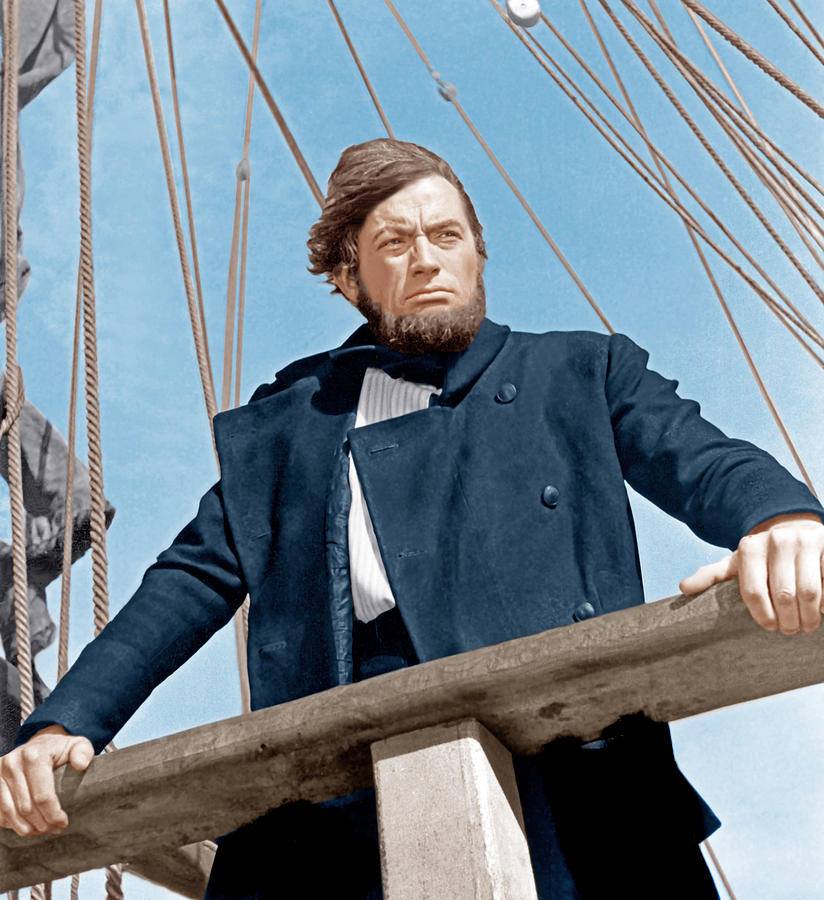
    This week on “Picture Perfect,” we stand tall against tyrannical sea captains, with music from “The Sea Wolf” (by Erich Wolfgang Korngold), “Moby Dick” (Philip Sainton), “The Caine Mutiny” (Max Steiner), and “Mutiny on the Bounty” (Bronislau Kaper). Strawberries will be pilfered and arms distributed among the crew, this Friday evening at 6:00 EDT, on WWFM – The Classical Network and wwfm.org.

    CAPTAINS OUTRAGEOUS (clockwise from left): Gregory Peck as Captain Ahab, Edward G. Robinson as Wolf Larsen, Humphrey Bogart as Captain Queeg, and Trevor Howard as Captain Bligh

  • Hitchcock & Herrmann: The Torn Curtain Fall

    Hitchcock & Herrmann: The Torn Curtain Fall

    Composer Bernard Herrmann produced three indisputable masterpieces with Alfred Hitchcock: “Vertigo,” “North by Northwest,” and “Psycho” (the biggest success of them all).

    However, Hitchcock became increasingly insecure as things began to change within the studio system. The emphasis shifted more and more to the bottom line, and the pressure exerted extended to every aspect of his subsequent films.

    Following “The Birds” and “Marnie,” Hitchcock became desperate for another hit. It was the studio’s thinking that its music scores should forthwith be attuned to a younger sensibility. In particular, they were interested in a hit single which would help promote their films. Herrmann’s reliance on a symphony orchestra was deemed old fashioned.

    By the time Hitchcock and Herrmann began work on “Torn Curtain,” in 1966, the tension between director and composer was at a breaking point. When Herrmann didn’t produce what Hitchcock requested, the composer was fired halfway through the first day’s recording sessions.

    Herrmann’s replacement was John Addison, who was a hot commodity, having won the Academy Award in 1963 for his music for Tony Richardson’s freewheeling adaptation of “Tom Jones.” Ironically, instead of going “popular,” as the studio wanted, save for one incongruous, Mancini-esque song at the end, Addison did what all of Hitch’s subsequent composers did – he emulated Herrmann. “Torn Curtain” failed to gain traction with younger audiences, and the film was not a success.

    Herrmann and Hitchcock would never work together again. The “Torn Curtain” debacle spelled the end of one of the greatest artistic partnerships in all of cinema.

    Join me for selections from Herrmann’s original, rejected score, alongside jettisoned music for “2001: A Space Odyssey” (by Alex North), “Edge of Darkness” (John Corigliano) and “The Battle of Britain” (Sir William Walton), this Friday evening at 6:00 EDT. It’s an hour of rejected scores on “Picture Perfect,” music for the movies, on WWFM – The Classical Network and wwfm.org.
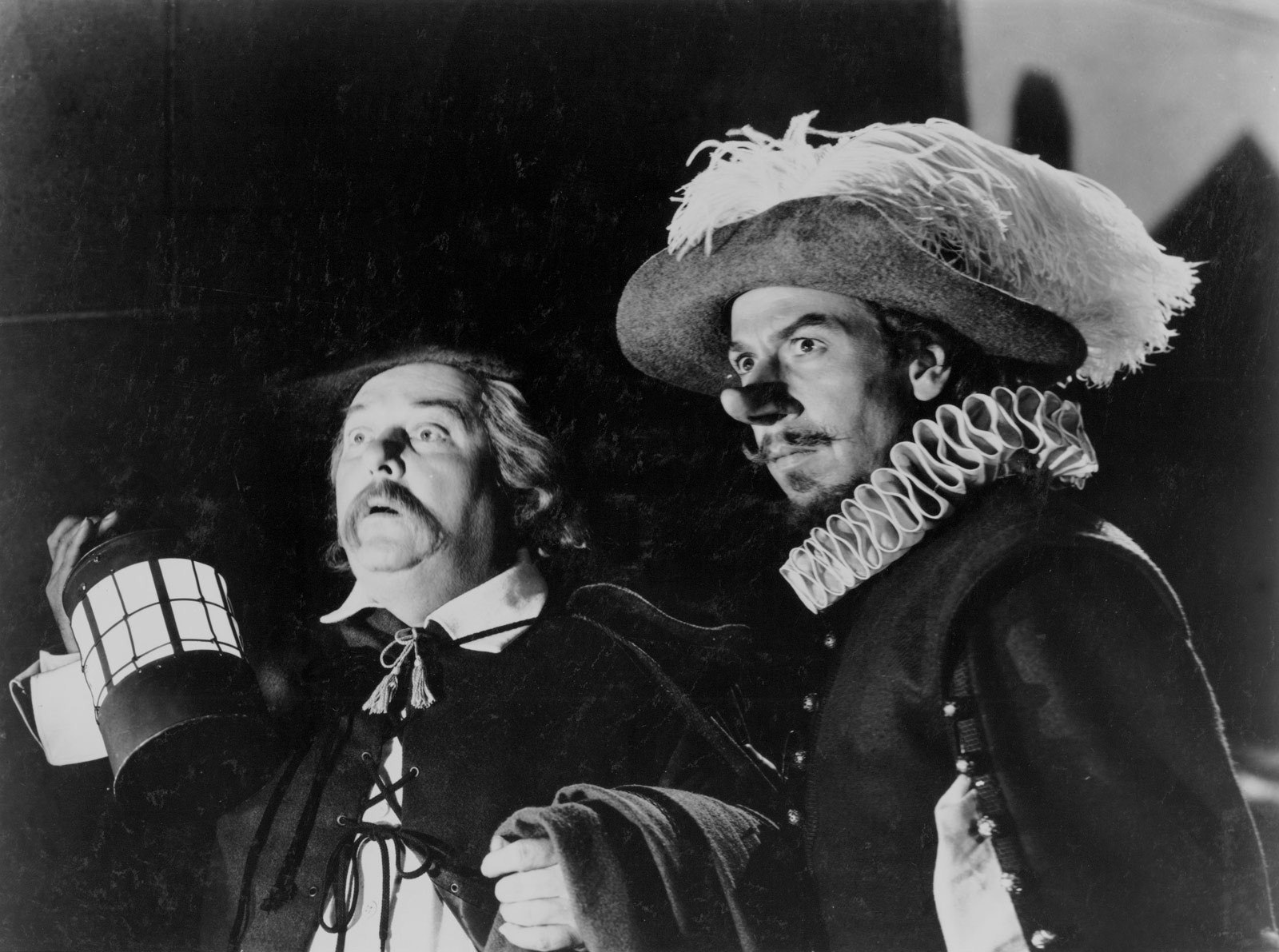

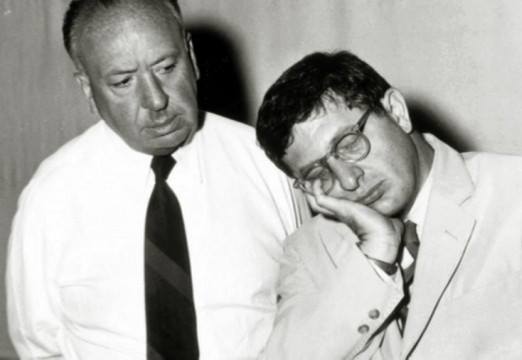
    PHOTO: Hitch and Herrmann – who’d have predicted anything could have gone wrong?

  • Godzilla Kurosawa Mother’s Day Music

    Godzilla Kurosawa Mother’s Day Music

    Nothing says Mother’s Day like samurai warriors and radiation-induced thunder-lizards.

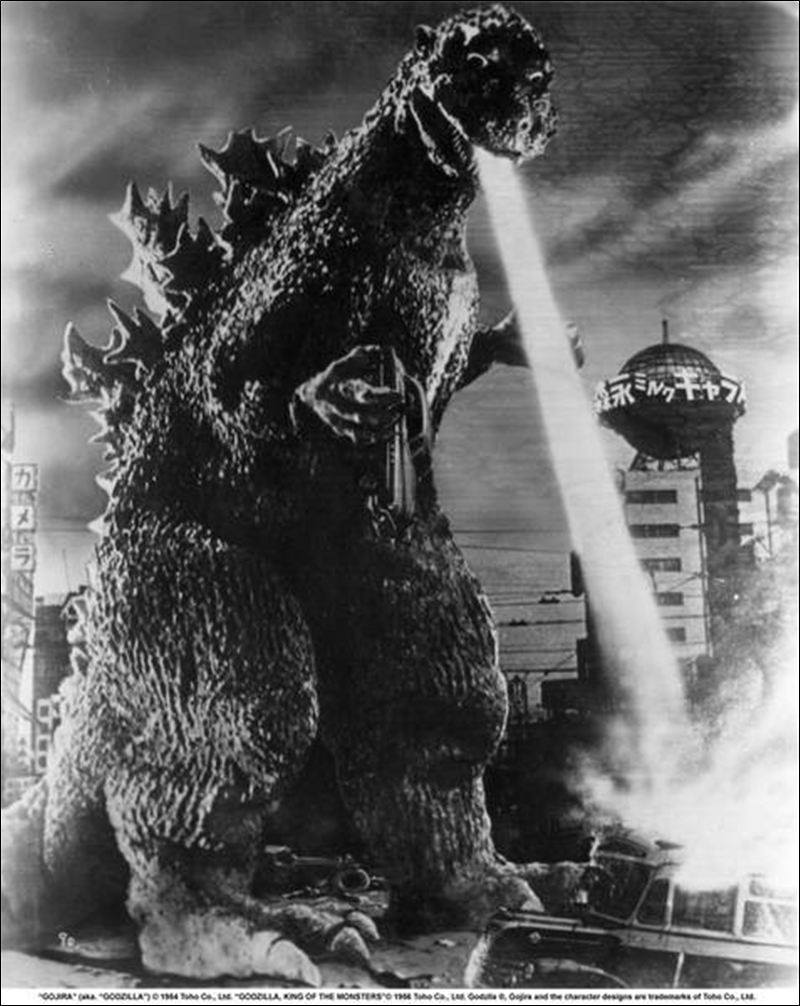
    This Sunday night on “The Lost Chord,” we’ll hear concert music by two Japanese composers – both close friends – who were best recognized internationally for their work in film. Akira Ifukube studied with Alexander Tcherepnin. Though his “Japanese Rhapsody” of 1935 won first prize in an international contest judged by Albert Roussel, Jacques Ibert, and Arthur Honegger, among others, financial considerations led him to write 250 film scores. Undoubtedly, he is best known for his music for Godzilla.

    Humiwo Hayasaka was Akira Kurosawa’s composer of choice, writing music for classic films such as “Rashomon” and “The Seven Samurai.” He wrote over 100 film scores in all, before his early death from tuberculosis at the age of 41. Prominent Japanese composer Toru Takemitsu (who later scored Kurosawa’s “Dodes’kaden”) claimed Hayasaka as a formative influence. We’ll hear Hayasaka’s Piano Concerto, composed in 1948. The first movement is a massive elegy for the composer’s brother and all the dead of the Second World War; and the second, a contrasting movement of conspicuous playfulness.

    Incidentally, Ifukube was also responsible for creating Godzilla’s trademark roar, which was produced by running a resin-covered leather glove along the loosened strings of a double bass. He emulated Godzilla’s footsteps by striking an amplifier box. Hear his distinctive roar tonight, as part of “Godzilla vs. Kurosawa,” Sunday at 10:00 EDT, on WWFM – The Classical Network and wwfm.org.

  • Poets on Film Movie Soundtracks & Scores

    Poets on Film Movie Soundtracks & Scores

    Time to invest in some quills and some laudanum. This week on “Picture Perfect,” the focus will be on poets in the movies.

    We’ll have music from “Dead Poets Society” (1989), Peter Weir’s beautiful-but-vacuous take on the transformative powers of poetry, its “Goodbye, Mr. Chips” story arc made all the more poignant (and less cheap) by the passing of its beloved star, Robin Williams. Maurice Jarre, a long, long way from his Oscar-winning work on “Lawrence of Arabia,” wrote the music, which blends dulcimer and bagpipes (!) with electronics.

    At least “Dead Poets Society” found a place in the hearts of the public. “Lady Caroline Lamb” (1973) did not. Sarah Miles plays Byron’s jilted lover, the wife of future prime minister William Lamb. Despite an impressive cast, which includes Jon Finch, Laurence Olivier, Ralph Richardson and Richard Chamberlain (as Lord Byron, no less), and direction by venerable playwright and screenwriter Robert Bolt (“A Man for All Seasons”), the film received mixed reviews and tanked at the box office. The always fine Richard Rodney Bennett provided the atmospheric score.

    “Il Postino” (1994) tells the story of a simple postman whose prosaic life is transformed through the power of metaphor. His model is the exiled Chilean poet Pablo Neruda, played in the film by Philippe Noiret. The film’s writer and star, Massimo Troisi, died of a heart attack twelve hours after shooting was completed, having postponed surgery until he finished work. He was 41 years-old. Argentinian-Italian composer Luis Bacalov’s bandoneon-tinged score was honored with an Academy Award for Best Music.

    Finally, we put a point on things with the rapier wit of “Cyrano de Bergerac” (1950). José Ferrer struts his stuff as the warrior-poet with the prominent proboscis, who never wants for words, save in the presence of his beautiful cousin Roxane. Ferrer elocuted – and fenced – his way to an Academy Award for Best Actor. The score is one of Dimitri Tiomkin’s finest, and we’ll hear a recording taken from the film’s original elements, under the crisp direction of the composer.

    It’s poetry in motion this week, on “Picture Perfect,” music for the movies, this Friday evening at 6:00 EDT, on WWFM – The Classical Network and wwfm.org.

Tag Cloud

Aaron Copland (92) Beethoven (95) Composer (114) Film Music (123) Film Score (143) Film Scores (255) Halloween (94) John Williams (187) KWAX (229) Leonard Bernstein (101) Marlboro Music Festival (125) Movie Music (138) Opera (202) Philadelphia Orchestra (89) Picture Perfect (174) Princeton Symphony Orchestra (106) Radio (87) Ralph Vaughan Williams (85) Ross Amico (244) Roy's Tie-Dye Sci-Fi Corner (290) The Classical Network (101) The Lost Chord (268) Vaughan Williams (103) WPRB (396) WWFM (881)

DON’T MISS A BEAT

Receive a weekly digest every Sunday at noon by signing up here


RECENT POSTS