Tag: Film Scores

  • Soviet Cinema Scores A Winter Escape

    Soviet Cinema Scores A Winter Escape

    In the wake of yesterday’s “bomb cyclone,” we turn our thoughts to someplace you really don’t want to be in the winter – Russia.

    This week on “Picture Perfect,” we’ll have an hour of music from classic Soviet cinema. Alfred Schnittke, a name usually associated with the avant-garde, actually composed over 60 film scores. One of these was for “Agony” (1974) about Rasputin, his influence over the Tsar, and the conspiracy to murder him.

    Georgy Sviridov, a pupil of Shostakovich, wrote the music for “Time, Forward!” (1962), based on the novel of Valentin Kataev. Set in the 1930s, the film describes a day in the construction work of Magnitogorsk Iron and Steel Works. Some of the music was used during the opening ceremonies of the 2014 Winter Olympics in Sochi.

    Shostakovich, of course, is celebrated for his symphonies and string quartets, which are regarded as some of the most important of the 20th century. He also happened to write some 30 film scores, beginning all the way back in the silent era. Far and away his “greatest hit” composed for film, at least in the West, is the romance from “The Gadfly” (1955), based on the novel of Ethel Lillian Voynich.

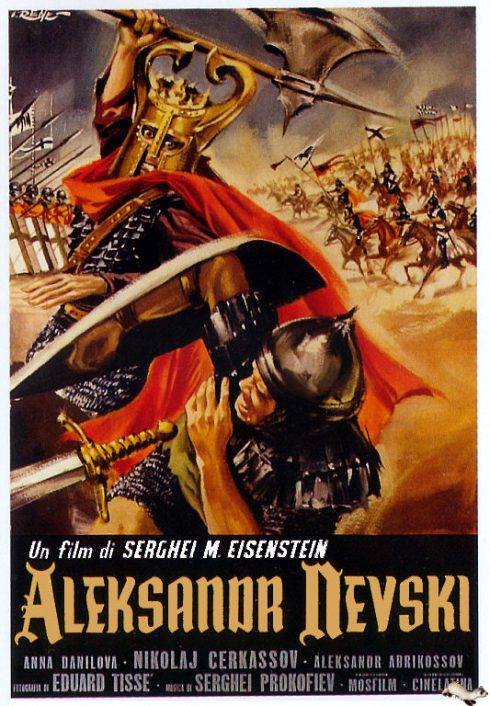
    Sergei Eisenstein’s “Alexander Nevsky” (1938) invariably turns up on lists of the greatest films ever made. Nevsky, the 13th century Russian prince, military leader and saint, thwarts the attempted invasion of Novgorod by Teutonic Knights of the Holy Roman Empire.

    Sergei Prokofiev arranged his masterful score into a concert piece, a cantata. However, these days, orchestras seem to be performing it more and more as it was originally heard, with the film. It’s a powerful piece of work. The marriage of music and visuals for the famous Battle on the Ice is one of the film’s great highlights.

    If you think we’ve got it bad, try facing down a patriotic Nevsky on a frozen lake! I hope you’ll join me for music from these classics of Soviet cinema, this Friday evening at 6:00 EST, on WWFM – The Classical Network and wwfm.org.

  • Friendly Aliens in Film Scores Close Encounters ET

    Friendly Aliens in Film Scores Close Encounters ET

    People of Earth! We come in peace!

    This week on “Picture Perfect,” in honor of the 40th anniversary of the release of “Close Encounters of the Third Kind” (November 16, 1977) and the 35th anniversary of “E.T. The Extra-Terrestrial” (June 11, 1982), we listen to music from films about benevolent visitors from other worlds.

    Friendly E.T.’s have been out of fashion now for quite some time. We seem to be mired in some neo-‘50s zeitgeist, as far as paranoia and invaders are concerned. But that certainly wasn’t the case back in 1982, when Steven Spielberg’s “E.T. The Extra-Terrestrial” almost singlehandedly turned everything on its head.

    No more invaders from Mars. Spielberg would get to that a couple of decades later, when he remade H.G. Wells’ “The War of the Worlds.” No, during the Reagan Era, with the Cold War winding down and terrorism not yet so much in the news, cinematic E.T.’s were benevolent at best, or at worst, just trying to do their thing. They were there to be misunderstood and even imperiled by man until the warm, fuzzy, often poignant finale.

    Spielberg had already explored the concept of the benevolent visitor from space, of course, with 1977’s “Close Encounters of the Third Kind.” But there was an ambiguity for much of the film as to what exactly the aliens’ intentions were. In fact, there is at least one sequence that would have given a child nightmares. Whatever tension is generated dissolves in the euphoric finale, centered on the communicative power of music. Like so many films back then and so few now, “Close Encounters” doesn’t so much exhaust the viewer as leave him or her with a feeling of hope.

    John Williams wrote the music for both “Close Encounters” and “E.T.,” and the two scores couldn’t be more different. For “CE3K,” the avant garde syntax of the early, eerier sequences dissolves into unabashed lyricism for the transcendent finale. “E.T” takes a much more intimate approach. The moving story of a friendship between a boy and a stranded space botanist is rendered in music that is by turns tender, buoyant, and touching. The score earned Williams a much-deserved fourth Academy Award. “E.T.” may very well be Williams’ masterpiece, and Spielberg’s too.

    The “friendly” alien of “The Day the Earth Stood Still” (1951), Klaatu, may come in peace, but it is a message delivered with tough love. If mankind refuses to abide, his giant robot, Gort, will destroy the planet. At a time when Martians invariably meant trouble, this was actually progressive. Bernard Herrmann’s score is one of his best, and certainly one of his most interesting. Always an eccentric orchestrator, Herrmann’s concept of extra-terrestrial music incorporates violin, cello, electric bass, two theremins, two Hammond organs, a large studio electric organ, three vibraphones, two glockenspiels, two pianos, two harps, three trumpets, three trombones and four tubas. Overdubbing and tape-reversal techniques were also employed.

    Finally, Ron Howard’s “Cocoon” (1985) is one of the more worthwhile of the seemingly endless procession of extra-terrestrial films to be released in the wake of “E.T.” At least this one took a different approach by bringing alien forces into contact with a Florida retirement community with the unexpected result of rejuvenating its inhabitants. A modern take on the fabled Fountain of Youth, the film is a showcase for veteran actors Hume Cronyn, Jessica Tandy, Jack Gilford and Don Ameche (who won an Academy Award). James Horner’s score is much sought after by collectors.

    Klaatu barada nikto! Join me for the touchdown of friendly alien films, on “Picture Perfect” – music for the movies – this Friday evening at 6:00 EDT, on WWFM – The Classical Network and wwfm.org.

  • Wizard Movie Music: Lord of the Rings to Harry Potter

    Wizard Movie Music: Lord of the Rings to Harry Potter

    This week on “Picture Perfect,” you’ll be spellbound (I hope), as I present an hour of musical selections from movies about wizards and sorcerers.

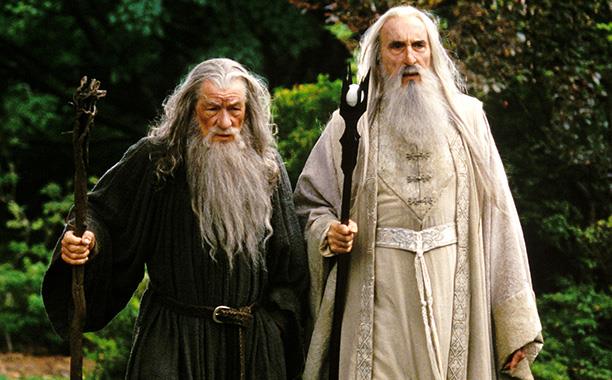
    Gandalf and Saruman duke it out in Peter Jackson’s frenetic, yet somehow ponderous adaptations of J.R.R. Tolkien’s “The Lord of the Rings,” films so bloated and poorly paced that anyone who had not read the books probably wondered what all the fuss was about. Its abundant defects didn’t keep the screen trilogy from making over a billion dollars and garnering 30 Academy Award nominations. Three of those were bestowed upon composer Howard Shore. We’ll be sampling from his music to “The Fellowship of the Ring” (2001).

    Made for a fraction of the budget, much less self-serious, and arguably way more fun is “The Sword and the Sorcerer” (1982), which holds no pretense to be anything beyond what it is: a schlocky B-movie sword and sandal swashbuckler. However, the composer, David Whitaker, aspired for something greater. Against tremendous time pressures, he turned in a marvelous score, which sounds like Erich Wolfgang Korngold on a shoestring. If this film had been made by George Lucas, Whitaker would be world famous.

    After creating one of his greatest scores for Stanley Kubrick’s “Spartacus,” Alex North had his music for Kubrick’s “2001: A Space Odyssey” rejected – and not in a nice way. (North didn’t find out about it until the lights went down at the film’s premiere.) Fortunately, the composer was able to salvage the best material for “Dragonslayer” (1981). The plot, about a bumbling sorcerer’s apprentice who faces a seemingly impossible challenge, is serviceable at best, but the dragon may yet be the most amazing committed to film. Also, the score is terrific.

    Finally, John Williams kicks off another billion dollar franchise with “Harry Potter and the Sorcerer’s Stone” (2001), which in England was released (as was the book) as “Harry Potter and the Philosopher’s Stone.” Who ever heard of a sorcerer’s stone? I guess the publishers were afraid Americans would be put off by any association with philosophy.

    I hope you’ll join me for wizards and sorcerers this week, on “Picture Perfect,” this Friday evening at 6 EDT, on WWFM – The Classical Network and wwfm.org.
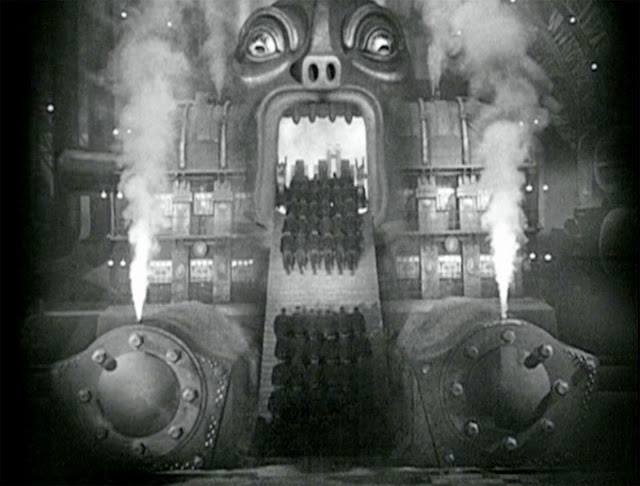

    PHOTO: Saruman vexes Gandalf with the exquisite whiteness of his beard

  • English Documentary Music: Vaughan Williams & More

    English Documentary Music: Vaughan Williams & More

    It’s not that I don’t have any commercial sense; I just don’t care. If I were in it for the money, I’d be in another line of work. Anyway, if it moves me or interests me, I am pretty sure it will interest some of you. After all, what could be more engaging than an hour of… ENGLISH DOCUMENTARY MUSIC?

    This week on “Picture Perfect,” though perhaps not exactly by popular demand, we’ll listen to four examples of such scores.

    In England, unlike in the United States, there is no demarcation between “film composer” and “concert composer.” What is often regarded here as “hack work,” is seen there as just another aspect of what it means to be a working artist. There is no disgrace in a composer earning a living, and some of the nation’s greatest musicians – including those in the employ of the Royal Family – have contributed finely-crafted works to its body of cinema.

    With this in mind, we’ll hear music by Ralph Vaughan Williams, from “The People’s Land” (1942), Benjamin Britten, from “The King’s Stamp” (1935), William Alwyn, from “The Green Girdle” (1941), and Sir Arthur Bliss, from “The Royal Palaces of Britain” (1966). All four films are patriotic utterances on distinctly English themes.

    You may not have seen any of the movies, but the music is beautiful. I hope you’ll join me for selections from English documentaries, this Friday evening at 6 EDT, on WWFM – The Classical Network and wwfm.org.

    The complete documentary short, “The People’s Land,” is posted on YouTube:

    https://www.youtube.com/watch?v=jpRtM8FcBb4

    As is “The Green Girdle:”

    And “The King’s Stamp”:

    https://www.youtube.com/watch?v=6gSsJHlLFg4

    Thank you, Internet!


    PHOTO: It’s not about what you think

  • Dystopian Film Scores on WWFM This Week

    Dystopian Film Scores on WWFM This Week

    This week on “Picture Perfect,” it’s an hour of dystopian visions – glimpses of a bleak future rendered hopeful, in large part, by the music. We’ll hear selections from “Fahrenheit 451” (Bernard Herrmann), “WALL-E” (Thomas Newman), “A.I. Artificial Intelligence” (John Williams), and “Metropolis” (Gottfried Huppertz).

    Join the fight against totalitarian government, corporate control, and technology gone awry, this Friday evening at 6 EDT, on WWFM – The Classical Network and wwfm.org.

Tag Cloud

Aaron Copland (92) Beethoven (95) Composer (114) Film Music (123) Film Score (143) Film Scores (255) Halloween (94) John Williams (187) KWAX (229) Leonard Bernstein (101) Marlboro Music Festival (125) Movie Music (138) Opera (202) Philadelphia Orchestra (89) Picture Perfect (174) Princeton Symphony Orchestra (106) Radio (87) Ralph Vaughan Williams (85) Ross Amico (244) Roy's Tie-Dye Sci-Fi Corner (290) The Classical Network (101) The Lost Chord (268) Vaughan Williams (103) WPRB (396) WWFM (881)

DON’T MISS A BEAT

Receive a weekly digest every Sunday at noon by signing up here


RECENT POSTS