Tag: Film Scores

  • Horse Racing Movie Music Kentucky Derby Special

    Horse Racing Movie Music Kentucky Derby Special

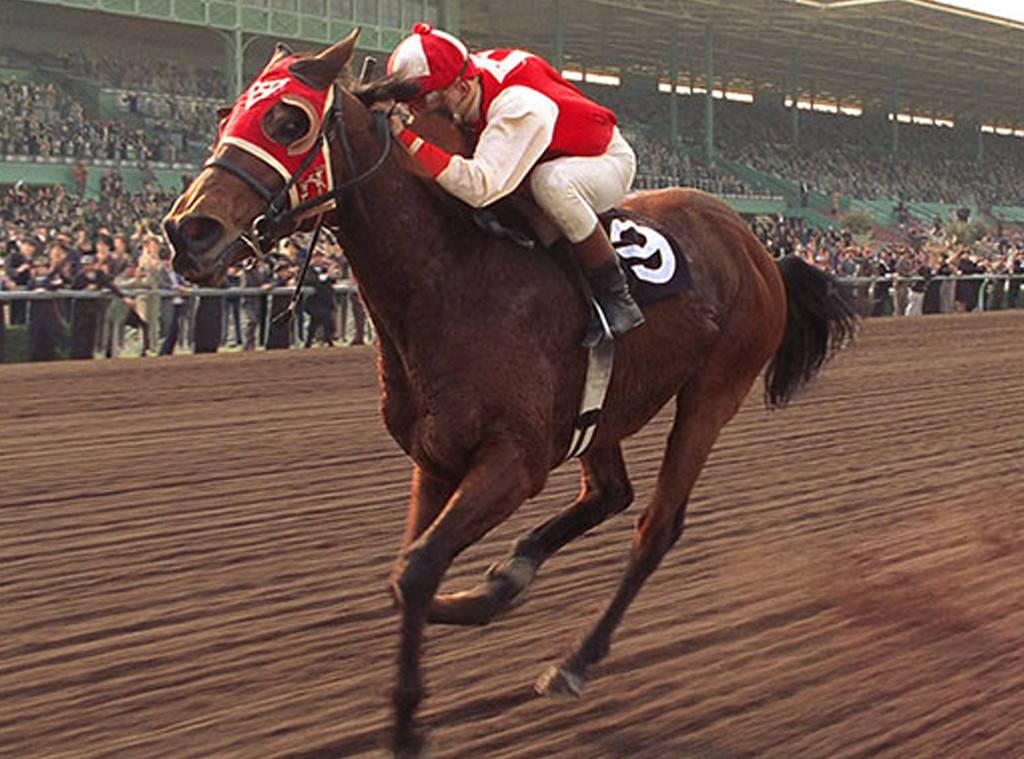
    And they’re off! On the eve of the 143rd running of the Kentucky Derby, “Picture Perfect” will focus on music from movies about horse racing.

    “The Black Stallion” (1979), based on the classic novel by Walter Farley, depicts the bonding of a shipwrecked boy and an Arabian stallion, whose shared destiny takes them to the race track. Mickey Rooney’s uncharacteristically subdued performance as the former trainer who finds a new lease on life earned him an Academy Award nomination for Best Supporting Actor.

    Francis Ford Coppola executive produced the film, and his father, Carmine Coppola, wrote the music. Reportedly the unsung Shirley Walker, who had been hired as an orchestrator, wound up contributing a fair amount to it, when the composer was put off by requests from director Carroll Ballard that portions of the music be rewritten.

    “The Reivers” (1969), after William Faulkner’s Pulitzer Prize winning novel, is a coming-of-age story about a boy swept into automobile theft and illicit horse racing in the American south. Mark Rydell directed, and Steve McQueen starred as the rakish Boon Hogganbeck. The narration was by Burgess Meredith, who reprises his role in the recording we’ll hear, with John Williams conducting his own music.

    For the film, Williams provided an alternately wistful and carefree Americana score. It’s said that the music for “The Reivers” is what moved Steven Spielberg to hire him to write the music for his first theatrical feature, “The Sugarland Express.” The Spielberg association brought Williams to “Jaws,” and the first of his truly iconic film scores. He also worked with Mark Rydell again, on “The Cowboys” (1972), “Cinderella Liberty” (1973), and “The River” (1984).

    It was inevitable that the nonfiction bestseller “Seabiscuit: An American Legend” would be given the big Hollywood treatment. The miraculous ascent of the real-life dark horse who became a symbol of hope during the Great Depression seemed tailor-made for dramatization.

    Though it presses all the right buttons, “Seabiscuit” (2003) is not to be confused with a superior documentary that was shown on PBS around the same time. Nonetheless, the film, which starred Tobey McGuire, Jeff Bridges and Chris Cooper, was nominated for seven Academy Awards, including Best Picture. Randy Newman wrote the music.

    Finally, we turn to “Hidalgo” (2004), also allegedly based on a true story, though the source material – the memoir of distance rider Frank T. Hopkins – has also inspired a fair degree of skepticism. In 1890, Hopkins became the first American invited to compete in a centuries-old 3000-mile survival race across the Arabian Desert.

    Viggo Mortensen plays Hopkins, and Omar Sharif is the sheik who asks him to put up or shut up, over the claim made by Buffalo Bill’s Wild West Show that he and his horse are the greatest distance runners in the world. The music is by James Newton Howard.

    It’s a rare horse race in which everyone comes out a winner. Start your weekend with a mint julep on “Picture Perfect,” music for the movies, this Friday evening at 6:00 EDT, on WWFM – The Classical Network and wwfm.org.
  • Tudor Music From the Movies

    Tudor Music From the Movies

    This week on “Picture Perfect,” we’ll conclude Early Music Month with a cinematic tour of the Tudors.

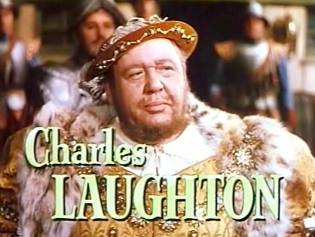
    We’ll hear selections from “Young Bess” (1953), which stars Jean Simmons as the future Elizabeth I. The colorful and entertaining cast includes Stewart Granger, Deborah Kerr and most notably Charles Laughton, who reprises his memorable turn as Henry VIII. Laughton was honored with an Academy Award for Best Actor for playing Henry in the 1933 film, “The Private Lives of Henry VIII.” Miklós Rózsa’s score conjures the era of the great MGM Technicolor spectacles.

    By the time of the events portrayed in “Mary, Queen of Scots” (1971), Elizabeth already wears the crown, though uneasy with the existence of her first cousin once removed, who had previously claimed Elizabeth’s throne as her own. Vanessa Redgrave is Mary and Glenda Jackson is Elizabeth, with a supporting cast that includes Timothy Dalton, Nigel Davenport, Patrick McGoohan, Trevor Howard and Ian Holm. As seems to be the custom in dramatic interpretations of the historical events, the film features several fictional meetings between the queens, even though in reality the two never met. The poignant score is by John Barry.

    “Anne of the Thousand Days” (1969) tells the story of Henry’s doomed second wife, Anne Boleyn. This time Richard Burton plays the king. Anne is played by Genevieve Bujold. Despite mixed reviews, the film was nominated for ten Academy Awards and recognized for its exceptional costumes. Among the other nominees was Georges Delerue for his period-flavored music.

    Finally, in a lighthearted change of pace from all the intrigue and execution, we turn to a big screen adaptation of Mark Twain’s “The Prince and the Pauper” (1937). Set in the time of Prince Edward (later Edward VI), Twain’s novel plays on the conceit that the heir apparent at some point had become mixed up with a commoner who bore a remarkable resemblance to him.

    Top-billed Errol Flynn is really a supporting player as the devil-may-care Miles Hendon, who throws himself in with the scraggly-looking prince, though he hardly believes his claims. Though it would still be a year until the release of “The Adventures of Robin Hood,” Flynn was already well on his way to becoming the screen’s quintessential swashbuckler, thanks to his turn in “Captain Blood” (1935). He easily dominates the film, and it’s a treat to see him duel with his old pal Alan Hale.

    Montagu Love plays Henry VIII, though he’s upstaged by the scheming Claude Rains as Edward Seymour, the Earl of Hertford. Composer Erich Wolfgang Korngold follows Flynn all the way, his music full of swagger and fun.

    I hope you’ll join me for music from movies about the Tudors, on “Picture Perfect,” this Friday evening at 6:00 EDT, on WWFM – The Classical Network WWFM and wwfm.org.

  • Western Heroes The Evolution of the Genre

    Western Heroes The Evolution of the Genre

    The American western must be the most adaptable of cinematic genres. As times have changed, so has the western, to reflect the world around it – which seems funny, in a way, since the figures at its core are so resolute.

    This week on “Picture Perfect,” we reflect on the evolution of the western hero with music from four films.

    “Shane” (1953) depicts a classic western archetype, the reluctant gunfighter, a drifter with a past, who pauses on his way to nowhere to defend a family of homesteaders against injustice at the hands of a greedy cattle baron. Mysterious, laconic, but with an unshakeable moral compass, Shane can be counted on always to do the right thing, resorting to violence only when he’s out of options. Alan Ladd’s mythic turn is supported by one of Victor Young’s best-loved scores.

    Dimitri Tiomkin was once asked how a composer of Ukrainian origin could write such convincing western music. He responded, in accented English, “A steppe is a steppe is a steppe.”

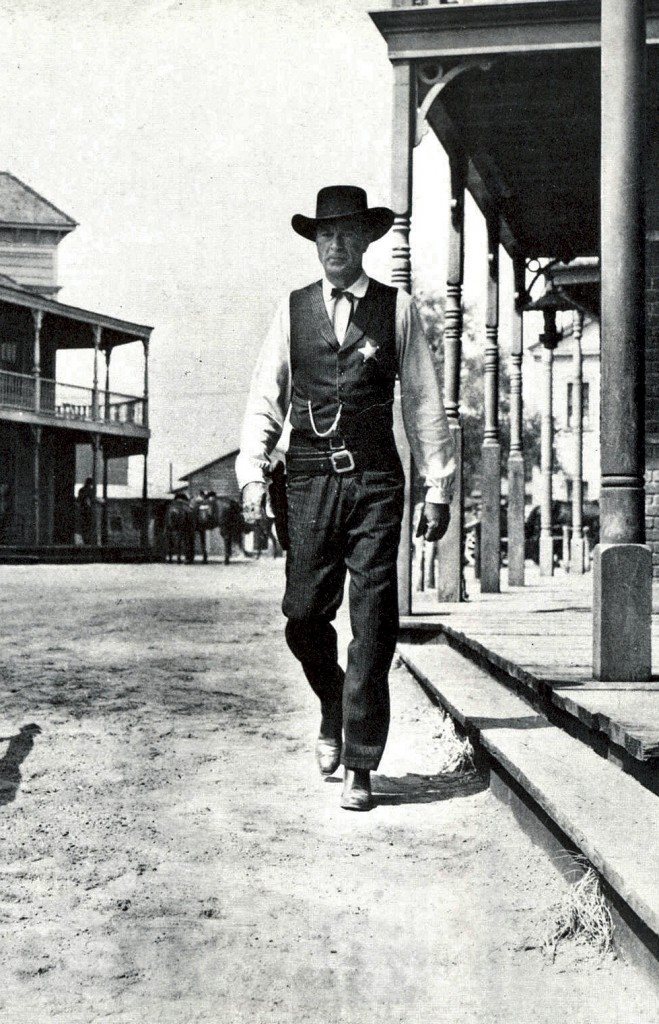
    Tiomkin would become the composer of choice for the American western throughout the 1950s, due to his distinctive handling of “High Noon” (1952). The success of its title song, “The Ballad of High Noon” (otherwise known as “Do Not Forsake Me, Oh My Darlin’”) – with its melody integrated into the orchestral score – provided a western blueprint for well over a decade. Tiomkin was honored with two Academy Awards, for Best Song and Best Scoring of a Dramatic Motion Picture.

    In “High Noon,” we are presented with a very different hero from that of the “Shane” archetype, a hero allowed to show uncertainty. Gary Cooper’s Marshal Will Kane seeks help for the final showdown, but winds up having to stand alone. As Mark Twain observed, “Courage is not the absence of fear. It’s acting in spite of that fear.”

    Clint Eastwood’s The Man With No Name, the anti-hero of Sergio Leone’s “Dollars Trilogy” of spaghetti westerns, is very much a product of the 1960s – cynical and self-serving, with his own moral code, lots of grays clouding up the black and white. The character was introduced in 1964’s “A Fistful of Dollars” (1964), a western remake of Akira Kurosawa’s “Yojimbo,” with a wandering gun-for-hire standing in for Kurosawa’s ronin, or masterless samurai.

    The Man With No Name assumes a mercenary pose, his allegiance shifting with the most profitable wind. However, he is revealed to have his own sense of justice, unorthodox as it may be.

    Ennio Morricone brought a fresh sound to this new kind of hero and earned international attention, which would intensify a few years later with his iconic score for “The Good, the Bad and the Ugly.”

    By the late ‘70s, the western as a genre appeared to be in its death-throes. But never underestimate the durability of a good myth. Even as galloping horses and dusty plains grew increasingly scarce on movie screens, the tropes and iconography of the western endured, transferred to the final frontier of space.

    Following the success of “Star Wars,” in 1977, with its cantinas and space cowboys, shoot-‘em-ups and showdowns were, increasingly, set in distant galaxies, though, regrettably, often without much of the former “western” moral gravitas.

    “Outland” (1981) is a gritty update of “High Noon,” transferred to a mining colony on one of the moons of Jupiter. This time Sean Connery plays the marshal, like Gary Cooper’s Will Kane, determined to do the right thing, even as he is left to stand alone against hired gunman. The score is by Jerry Goldsmith, who, earlier in his career, had written music for a fair number of true westerns, on both big screen and small.

    I hope you’ll join me for four faces of the western hero, on “Picture Perfect” – music for the movies – this Friday evening at 6:00 EDT, on WWFM – The Classical Network and at wwfm.org.

  • Giant Monster Movie Music King Kong Godzilla

    Giant Monster Movie Music King Kong Godzilla

    Super size me!

    With King Kong back in theaters, in “Kong: Skull Island,” we’re thinking big this week, on “Picture Perfect,” with outsized thrills from movies featuring gargantuan creatures.

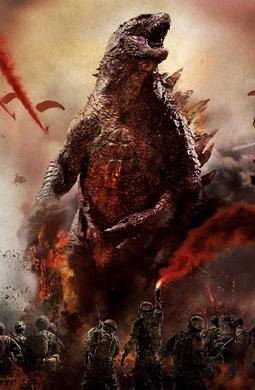
    We’ll begin with “Godzilla” (2014), the most recent incarnation of the pop-cultural icon, originally a metaphor for the destructive power of nuclear weapons, but now seemingly more of a jack-of-all-trades restorer of natural balance. Either way, it’s generally man’s overweening pride that brings on the destruction. The composer for this latest version was Alexandre Desplat.

    Then we’ll take a storm-swept hot air balloon to “Mysterious Island” (1961). Jules Verne’s novel becomes the framework for a series of battles between a band of castaways and giant creatures at an uncharted locale in the South Pacific. The great Ray Harryhausen provided the special effects – including giant bees, birds and crabs – and Bernard Herrmann underscored the outlandish situations to perfection.

    Henry Mancini gained world-fame for his breezy melodies for “Breakfast at Tiffany’s” and the “Pink Panther” films, but he got his start writing for B-movies of the 1950s. In “Tarantula” (1955), scientists conduct experiments on animals in order to develop a super food nutrient, as a preemptive strike against future overpopulation and world hunger. However, as the countryside becomes littered with cattle carcasses and pools of arachnid venom, clearly something has gone awry. Mancini collaborated on the score with 1950s science fiction maestro Herman Stein. Don’t go into it expecting “Moon River.”

    Finally, we’ll hear selections from literally the 800-pound gorilla of giant monster movies, “King Kong” (1933). Oscar Levant memorably described “Kong” as “a symphony accompanied by a movie.” The music was certainly a great part of the film’s initial – and enduring – success.

    Max Steiner’s concept and execution of the music for “Kong” was really the first of their kind. Thanks to “Kong” and other early efforts by Franz Waxman and Erich Wolfgang Korngold, a prototype of the Hollywood sound was formed, and the spectacular images onscreen, especially those characteristic of the fantasy and adventure genres, were expected to be accompanied by equally lavish and outlandish orchestras.

    No doubt, Hollywood would have figured it out eventually, yet it’s very gratifying to say, if it weren’t for “Kong,” there would be no “Ben-Hur,” there would be no “Star Wars,” there would be no “The Lord of the Rings.” At any rate, “Kong” got there first.

    I hope you’ll join me for these outsized musical adventures this week, on “Picture Perfect,” this Friday evening at 6:00 EST, on WWFM – The Classical Network and wwfm.org.
  • Remembering Robert Osborne TCM Host

    Remembering Robert Osborne TCM Host

    I don’t know about you, but I’m still reeling from the death of Robert Osborne, primary host of Turner Classic Movies: TCM since the network’s inception in 1994. Osborne died earlier this week at the age of 84. As someone who has had his television set welded to one channel for the better part of two decades, I feel as if I’ve lost a personal friend.

    I hope you’ll join me on Thursday morning on WPRB, as I pay tribute to Osborne with a program of music by composers associated with the kinds of films we both loved. The morning will be made up of scores written for the silver screen and concert works by Miklós Rózsa, Franz Waxman, and Erich Wolfgang Korngold, among others.

    Included will be selections from some of the films Osborne acknowledged as personal favorites – films like “Laura,” “A Place in the Sun,” and “Hobson’s Choice.” There will be ample symphonies, concertos, and chamber music, as well.

    We’ll roll the credits for Bob tomorrow, from 6 to 11 a.m. EST, on WPRB 103.3 FM and at wprb.com. The music will all be in black and white, on Classic Ross Amico.

Tag Cloud

Aaron Copland (92) Beethoven (95) Composer (114) Film Music (123) Film Score (143) Film Scores (255) Halloween (94) John Williams (187) KWAX (229) Leonard Bernstein (101) Marlboro Music Festival (125) Movie Music (138) Opera (202) Philadelphia Orchestra (89) Picture Perfect (174) Princeton Symphony Orchestra (106) Radio (87) Ralph Vaughan Williams (85) Ross Amico (244) Roy's Tie-Dye Sci-Fi Corner (290) The Classical Network (101) The Lost Chord (268) Vaughan Williams (103) WPRB (396) WWFM (881)

DON’T MISS A BEAT

Receive a weekly digest every Sunday at noon by signing up here


RECENT POSTS