Tag: Film Scores

  • Kirk Douglas at 100: A Musical Tribute

    Kirk Douglas at 100: A Musical Tribute

    Now that he’s 100, he may no longer be able to knock your block off, but many of films still can.

    This week on “Picture Perfect,” we will honor Kirk Douglas, who was born on December 9, 1916. We’ll hear music from four of his most memorable movies.

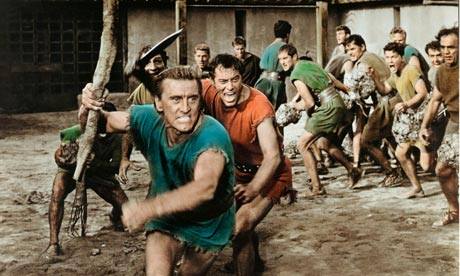
    We’ll begin with “Spartacus” (1960). Douglas plays the 1st century leader of a slave revolt. His co-stars include Laurence Olivier, Jean Simmons, and Tony Curtis. The music was by Alex North (born in Chester, PA, outside of Philadelphia). The love theme, one of North’s best-known melodies, lends a sense of human connection amidst the martial fanfares and gladiatorial violence.

    Douglas is often credited with having broken the back of the “Hollywood blacklist” by openly acknowledging Dalton Trumbo as the screenwriter on “Spartacus.” Trumbo had been forced underground as a ghostwriter for refusing to testify before the House Un-American Activities Committee. The film became the biggest money-maker in the history of Universal Studios, up to that time.

    Vincente Minnelli’s cynical exposé of behind-the-scenes Hollywood, “The Bad and the Beautiful” (1952), stars Douglas as a ruthless mogul, who uses and abuses everyone around him. It’s one of his great “bad boy” characterizations. The film, which also featured Lana Turner, Walter Pigeon, Dick Powell, and Gloria Graham, won a whole slew of Oscars. Graham was recognized as Best Supporting Actress.

    The music is by Philadelphia-born David Raksin, who is best-remembered for his theme to the all-time noir classic “Laura.” It doesn’t seem possible, but here he really surpasses himself. If you love the sound of Golden Age Hollywood, complete with haunting saxophone, then this one’s for you!

    Minnelli directed Douglas in another one of his standout roles, a much more sympathetic portrayal of the tortured artist Vincent Van Gogh, in “Lust for Life” (1956). Douglas turns in one of the great performances of his career. Furthermore, his physical resemblance to the painter is uncanny.

    Anthony Quinn won an Oscar for Best Supporting Actor as Van Gogh’s sometimes friend, the artist Paul Gaugin. The powerful score was by one of the all-time great film composers, Miklós Rózsa, who here marries his Hungarian-inflected signature sound to an evocative sort of French impressionism.

    Finally, when Kirk isn’t fighting giant squid, he’s singing “A Whale of Tale,” as Ned Land, in Walt Disney’s “20,000 Leagues Under the Sea” (1954). The otherwise moody score is a real showcase for Paul J. Smith, who had earlier provided incidental music for Disney’s animated features “Snow White and the Seven Dwarfs,” “Bambi,” and “Pinocchio.”

    As actor, director, producer, and author Douglas is a whale of a talent. He himself has included these four titles among the top ten of his films.

    Join me for a musical salute to Kirk Douglas, for his 100th birthday, on “Picture Perfect” – music for the movies – this Friday evening at 6 EST, on WWFM – The Classical Network and at wwfm.org.


    PHOTOS: Douglas in “Spartacus,” “The Bad and the Beautiful,” “Lust for Life,” and “20,000 Leagues”
  • Fairy Tale Films Music Picture Perfect

    Fairy Tale Films Music Picture Perfect

    To lend magic to the holidays, we delve into the world of fairy tales this week on “Picture Perfect.”

    George Pal’s “The Wonderful World of the Brothers Grimm” (1962) was filmed in Cinerama and features the producer-director’s trademark stop motion effects. Its all-star cast includes Laurence Harvey, Claire Bloom, Barbara Eden, Russ Tamblyn, and Buddy Hackett. The narrative incorporates a number of familiar Grimm tales, while dealing with the brothers’ real-life struggles.

    The music is by Leigh Harline. Harline was an integral part of the Disney team that scored an earlier fairy tale adaptation, “Snow White and the Seven Dwarfs.” He would win two Academy Awards for his work on “Pinocchio,” including one for Best Original Song, for “When You Wish Upon a Star.”

    “The Company of Wolves” (1984), one of Neil Jordan’s earlier films, explores the psychological underpinnings of the tale of “Little Red Riding Hood,” which is presented as an allegory of adolescence and the loss of innocence. Angela Carter co-wrote the screenplay, based upon a selection of her original short stories. The film features Angela Lansbury, any number of werewolves, and Terence Stamp as the Devil. The music is by George Fenton.

    With the advent of computer animation, a snarkier, post-modern take on the fairy tale predominates, most notably with the “Shrek” series, beginning in 2001. The “Shrek” films were so successful, they led to a spin-off, centered on the character of “Puss in Boots” (2011).

    Voiced by Antonio Banderas, Puss provides ample opportunity to vamp on the actor’s swashbuckler image, especially as depicted in “The Mask of Zorro.” Likewise, the composer, Henry Jackman, chooses to rib James Horners’ “Zorro” score.

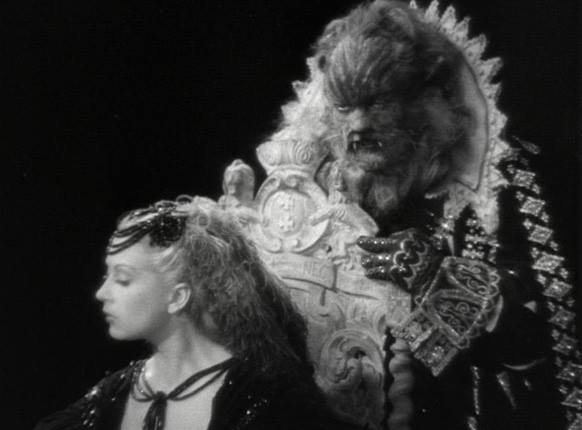
    Finally, we’ll hear selections from perhaps the finest fairy tale ever committed to film, Jean Cocteau’s “La Belle et la Bête” (“Beauty and the Beast”), from 1946. Moody, atmospheric, dreamy, clever, hypnotic, funny and romantic, sporting production design that looks like something Gustav Doré might have conceived while smoking Dutch Masters cigars, Cocteau’s masterpiece stars Jean Marais and Josette Day.

    The alternately mysterious and majestic score is by Georges Auric. Cocteau, you’ll recall, was the one-man publicity machine that propelled Auric and his composer-colleagues, Francis Poulenc, Darius Milhaud, Arthur Honegger, Germaine Tailleferre, and Louis Durey, to fame in Paris circa 1920, dubbing them “Les Six.”

    I hope you’ll join me for an hour of once-upon-a-time and happily-ever-after, on “Picture Perfect,” music for the movies, this Friday evening at 6:00 EST, on WWFM – The Classical Network and at wwfm.org.

  • Sherlock Holmes Movie Music on WWFM

    Sherlock Holmes Movie Music on WWFM

    The game’s afoot! It’s an afternoon of mystery and imagination.

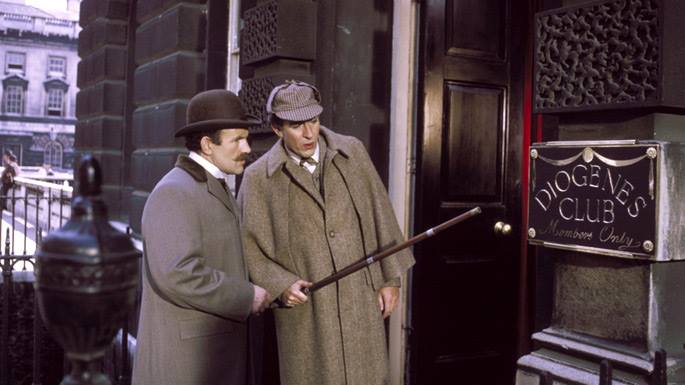
    This week on “Picture Perfect,” the focus will be on films inspired by the world’s greatest detective, including “Sherlock Holmes” (2009), with music by Hans Zimmer, “The Private Life of Sherlock Holmes” (1970), with music by Miklos Rozsa, “Without a Clue” (1988), with music by Henry Mancini, and “Young Sherlock Holmes” (1985), with music by Bruce Broughton. That’s all coming up at 6:00 EDT.

    To get you in the mood, I’ll be playing Rozsa’s Violin Concerto in the 4:00 hour, a work director Billy Wilder listened to incessantly while writing his screenplay for “The Private Life” and upon which he requested the composer base his film score.

    Then in the 5:00 hour, we’ll have the Sherlock Holmes ballet, in all-but-name, “The Great Detective,” by English composer Richard Arnell.

    In the words of Holmes himself, “Once you eliminate the impossible, whatever remains, no matter how improbable, must be the truth.” Join me for an afternoon of improbably good music, from 4 to 7:00 EDT, on WWFM – The Classical Network and at wwfm.org.

  • Theremin in Film Spooky Sounds for Halloween

    Theremin in Film Spooky Sounds for Halloween

    You all know the sound. That crazy, trilled electronic whistle that dips into a whoop. Or it starts in a trough and shoots up into the super stratosphere. It’s the sound of UFOs and mad science. It’s the sound of the theremin.

    The electronic instrument, invented by Leon Theremin in 1928, is played without physical contact. The proximity of the hands to two antennae determines volume and pitch.

    This week on “Picture Perfect,” we’ll hear music from four films which feature the instrument’s distinctive, extraterrestrial timbre.

    “The Thing from Another World” was one of two seminal science fiction scores written in 1951. (The other was Bernard Herrmann’s “The Day the Earth Stood Still.”) On the soundtrack, the theremin acts as a musical counterpart to James Arness’ rampaging humanoid carrot. This was unquestionably composer Dimitri Tiomkin’s wildest hour; he never wrote anything like it again.

    “The Thing” and “The Day the Earth Stood Still” may have been the most influential, but “Rocketship X-M” was the first. The film was rushed into production in 1950 to beat George Pal’s “Destination Moon” to theaters. It was shot in just 18 days! The unlikely plot has the crew of a moon expedition blown off course to Mars. Interestingly, the composer was none other than Ferde Grofé – he of the “Grand Canyon Suite” fame.

    Far more reputable, but still not wholly comfortable with its science, is Alfred Hitchcock’s “Spellbound,” from 1945. Gregory Peck plays an amnesiac, who may or may not have committed murder, and Ingrid Bergman plays the psychoanalyst who falls in love with him. The film is of greatest interest for its production design, which features dream sequences conceived by Salvador Dali, and for its music, by Miklós Rózsa.

    Hitchcock disliked the score – he thought it got in the way of his direction – but the Academy disagreed, and the music earned Rózsa the first of his three Academy Awards.

    Closer to our own time, Howard Shore incorporated the theremin into his Mancini-esque score to “Ed Wood,” released in 1991, Tim Burton’s love letter to the grade-Z director of “Plan 9 from Outer Space,” which is widely regarded as the worst movie ever made (worse even than “Rocketship X-M”).

    Join me for an hour of theremins for Hallowe’en this week, on “Picture Perfect,” music for the movies – this Friday evening at 6 EDT, on WWFM – The Classical Network and at wwfm.org.

    FUN FACT: On three of the four movies from which scores we’ll be sampling (“Spellbound,” “Rocketship X-M,” and “The Thing”), the original thereminist was Samuel Hoffman. Hoffman played in dozens of Hollywood films in the 1940s and ‘50s. By day, he worked as a podiatrist!


    PHOTO: Hoffman (right) looks on as Cary Grant tries his hand at the theremin

  • De Palma’s Thrilling Scores Perfect Music

    De Palma’s Thrilling Scores Perfect Music

    Brian De Palma is an extraordinarily adept filmmaker, who has been criticized for his adherence to what has been perceived in some circles as genre trash. He has always been attracted to suspense and crime thrillers, usually of a particularly violent nature, many of them tinged with horror.

    This week on “Picture Perfect,” with Hallowe’en right around the corner, we’ll hear music from four of De Palma’s films.

    It’s hardly surprising that such an admirer of Alfred Hitchcock would also hire Hitchcock’s signature composer. Bernard Herrmann scored two films for De Palma – the first, “Sisters,” in 1973, and the second, “Obsession,” in 1976.

    “Obsession” is a spin on Hitchcock’s “Vertigo,” with a botched rescue attempt resulting in the death of a businessman’s kidnapped wife, and a seemingly chance encounter, years later, with a woman who is her doppelganger. The film stars Genevieve Bujold, John Lithgow, and a very tan Cliff Roberston.

    “The Fury,” from 1978, based on the novel by John Farris, is a supernatural thriller about two teenagers, endowed with the powers of telekinesis and extra-sensory perception, and the researchers who plan to use them for their own nefarious ends. For a time, Kirk Douglas has fun as a former CIA agent, and John Cassavetes is a particularly slimy villain. Cassavetes’ comeuppance makes for one of the most memorable movie endings of its era – and we’ll leave it at that!

    Critic Pauline Kael praised the music, which is by none other than John Williams – hot off his third Academy Award, for “Star Wars” – characterizing it as “as elegant and delicately varied a score as any horror film has ever had.”

    Of course, “The Fury” was not the first De Palma film to deal with telekinesis. His adaptation of Stephen King’s “Carrie,” from 1976, became one the decade’s landmark horror films. It broadened the popularity of King, whose first novel “Carrie” was, and propelled De Palma into the A-list of Hollywood directors. It also essentially launched the careers of Amy Irving, John Travolta, and Nancy Allen, among others. Sissy Spacek was nominated for an Academy Award for her performance in the title role, as was Piper Laurie as Carrie’s fundamentalist mother.

    The music was by Pino Donaggio. The director had wanted to continue his collaboration with Herrmann, but the composer died before the film could be completed. Donaggio, though classically trained, made his fortune writing popular songs. His biggest hit was “You Don’t Have to Say You Love Me,” as it is known in English. It was recorded by Dusty Springfield, with a well-known cover by Elvis Presley. Donnagio went on to become a regular De Palma collaborator, providing the music for seven of his films.

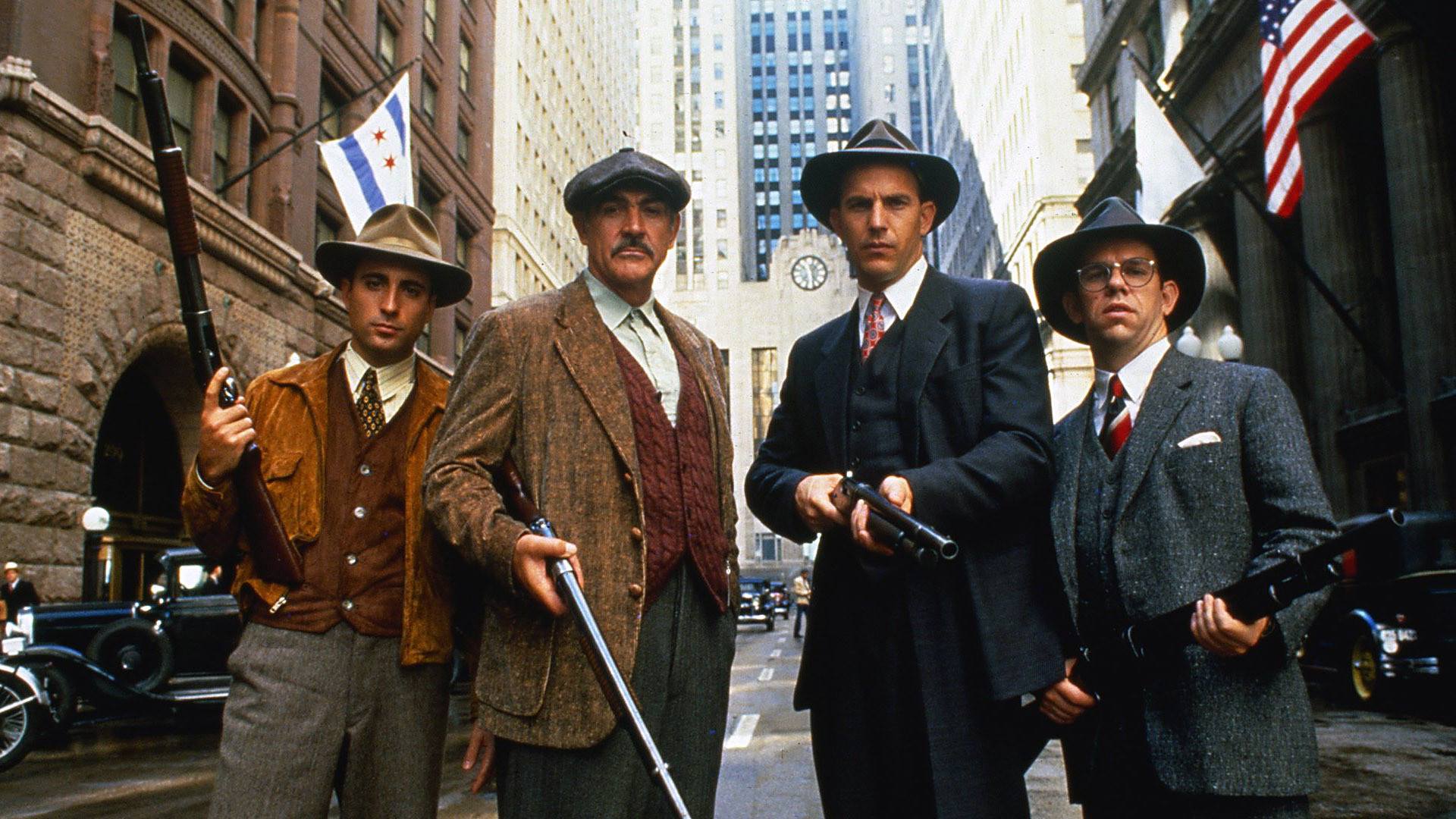
    Finally, we’ll turn our back on horror, to listen to music from a successful period crime thriller, loosely based on the real-life exploits of Eliot Ness and his fellow prohibition agents, “The Untouchables,” from 1987. Kevin Costner plays the by-the-book FBI agent who is given a valuable lesson in street smarts by an Irish beat cop played by Academy Award winning Sean Connery. (“He pulls a knife, you pull a gun. He sends one of yours to the hospital, you send one of his to the morgue. That’s the Chicago way, and that’s how you get Capone.”) Capone is played, incidentally, by a baseball bat wielding Robert De Niro.

    The score is by Ennio Morricone. Morricone, of course, was propelled to fame through his work on Sergio Leone’s spaghetti westerns. He applies some of that same mythmaking skill to this big screen adaptation, which had previously been published as a memoir and developed into a popular television series starring Robert Stack. The high point of the film must be the director’s nail-biting homage to Sergei Eisenstein, a slow motion shoot-out around a baby carriage as it teeters down the steps of Chicago Union Station.

    I hope you’ll join me for music from the films of Brian De Palma, on “Picture Perfect,” this Friday evening at 6:00 EDT, on WWFM – The Classical Network and at wwfm.org.

Tag Cloud

Aaron Copland (92) Beethoven (95) Composer (114) Film Music (123) Film Score (143) Film Scores (255) Halloween (94) John Williams (187) KWAX (229) Leonard Bernstein (101) Marlboro Music Festival (125) Movie Music (138) Opera (202) Philadelphia Orchestra (89) Picture Perfect (174) Princeton Symphony Orchestra (106) Radio (87) Ralph Vaughan Williams (85) Ross Amico (244) Roy's Tie-Dye Sci-Fi Corner (290) The Classical Network (101) The Lost Chord (268) Vaughan Williams (103) WPRB (396) WWFM (881)

DON’T MISS A BEAT

Receive a weekly digest every Sunday at noon by signing up here


RECENT POSTS