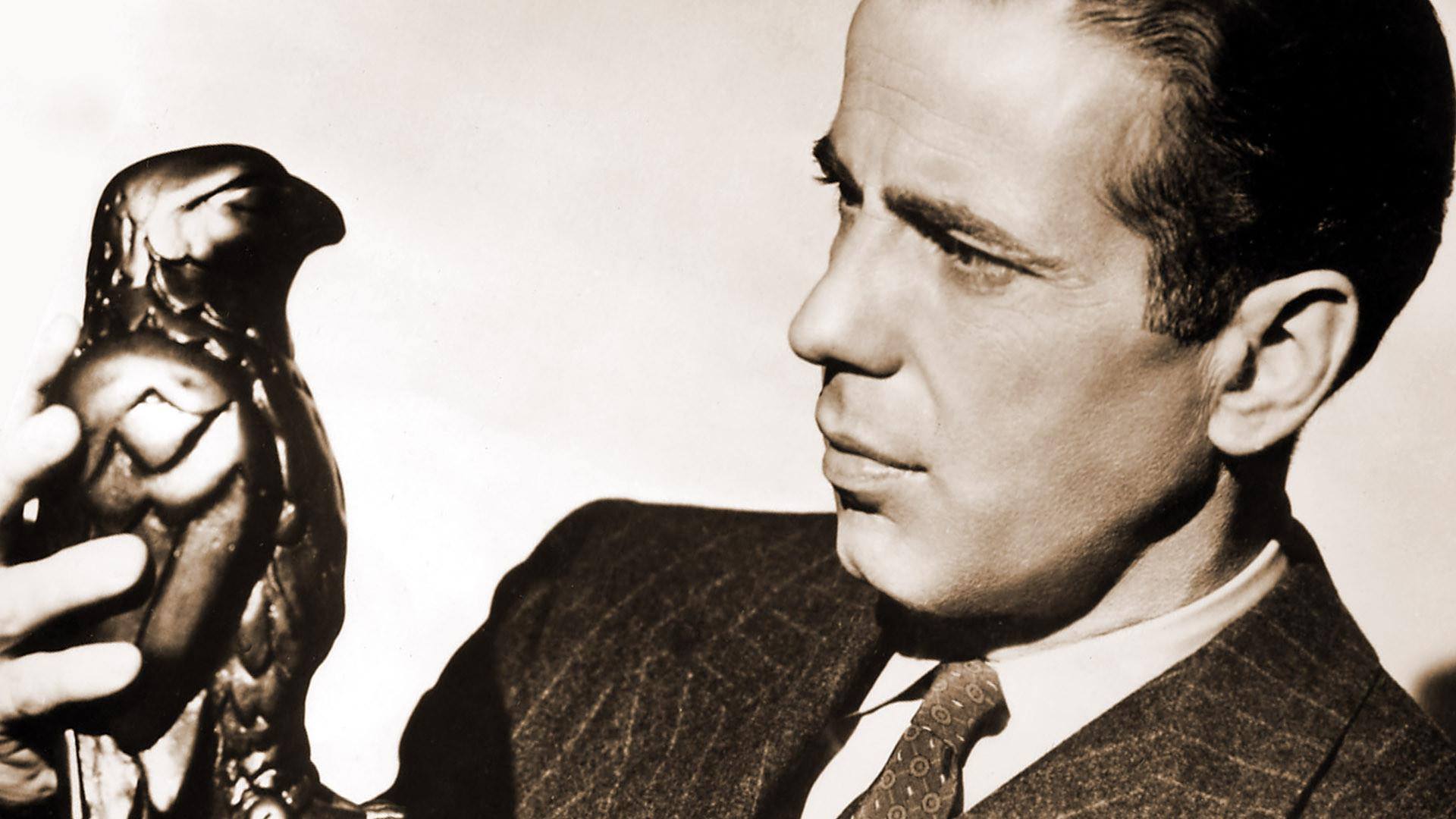
This week on “Picture Perfect,” it’s an hour of entitled birds, with music from “The Maltese Falcon” (1941) by Adolph Deutsch, “To Kill a Mockingbird” (1962) by Elmer Bernstein, “Jonathan Livingston Seagull” (1973) by Lee Holdridge, and “The Sea Hawk” (1940) by Erich Wolfgang Korngold.
With my computer gone fowl, it’s the flightiest show I could have hatched. Atticus Finch meets “The Albatross,” this Friday evening at 6 EDT, with a repeat Saturday morning at 6, on WWFM – The Classical Network; or listen to it later as a webcast at wwfm.org.
This week on “Picture Perfect,” prepare to get “lost.” We’ll have an hour of music from fantasy films set in lost worlds.
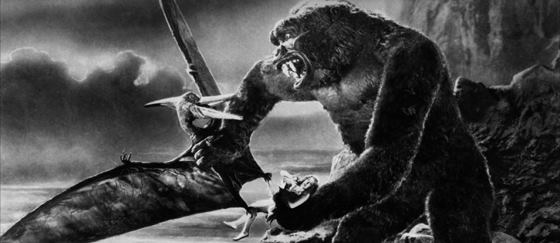
In “King Kong” (1933), filmmaker and entrepreneur Carl Denham hires a ship to an uncharted island, known only from a secret map in his possession. There the crew discovers the titular gorilla and other outsized and should-be-extinct creatures. Kong is abducted from his natural habitat – and you know the rest. The composer, Max Steiner, pulls out all the stops. “Kong” was one of the first films to demonstrate how truly powerful an orchestral soundtrack could be.
Then we travel to the earth’s core, courtesy of Jules Verne, and “Journey to the Center of the Earth” (1959). James Mason is the professor who leads the expedition. The film sports one of Bernard Herrmann’s most outlandish soundscapes, the orchestra consisting of winds, brass and percussion, but also cathedral organ, four electric organs, and an obsolete Renaissance instrument called the serpent. Watch out for that giant chameleon!
“One Million Years B.C.” (1966) is a guilty pleasure if ever there was one. Produced by Hammer, the studio that gave us all those repugnant yet somehow delicious Peter Cushing-Christopher Lee horror team-ups, the film features special effects by the legendary Ray Harryhausen and an equally legendary fur bikini, worn by Raquel Welch. The music is by Mario Nascimbene, who wrote one of my favorite scores for Kirk Douglas, for “The Vikings.” We’ll be listening to the film’s climactic volcano sequence.
As he did with the Indiana Jones films, director Steven Spielberg turned to B-movie source material for his visual inspiration for “Jurassic Park” (1993), based on the novel by Michael Crichton. The herky-jerky dinosaur effects of yore are replaced by state of the art computer-generated effects, in the story of a safari park on a remote island gone wrong.
Sure, we’ve come a long way from Raquel Welch getting carried off by a pteranodon, but admit it, we all still want to see people fight dinosaurs. Instead of fudging history, now we can feel superior by fudging science. “Jurassic Park” plays on the most recent scientific thinking, with DNA extracted from mosquitoes trapped in amber, cloning, and the theory that dinosaurs were not lizards, after all, but rather birds. The music is by long-time Spielberg-collaborator, John Williams.
I hope you’ll join me for music for these “Lands That Time Forgot,” this Friday evening at 6 EDT, with a repeat Saturday morning at 6; or that you’ll listen to it later as a webcast at wwfm.org.
I suppose everyone is familiar with the basic story of Joan of Arc, the peasant girl who believed God chose her to lead the French against English forces during the Hundred Years’ War. She managed to convince the Dauphin, Charles de Valois (soon King Charles VII), to entrust her with an army, which she led to the besieged city of Orléans. There, without military training, she succeeded in achieving a momentous victory against Anglo-Burgundian forces. She was later captured, tried for heresy, and burned at the stake at the age of 19. Nearly 30 years later, the case was reopened and she was declared innocent. Revered for nearly 600 years, she was elevated to a national symbol by Napoleon in 1803 and finally canonized in 1920.
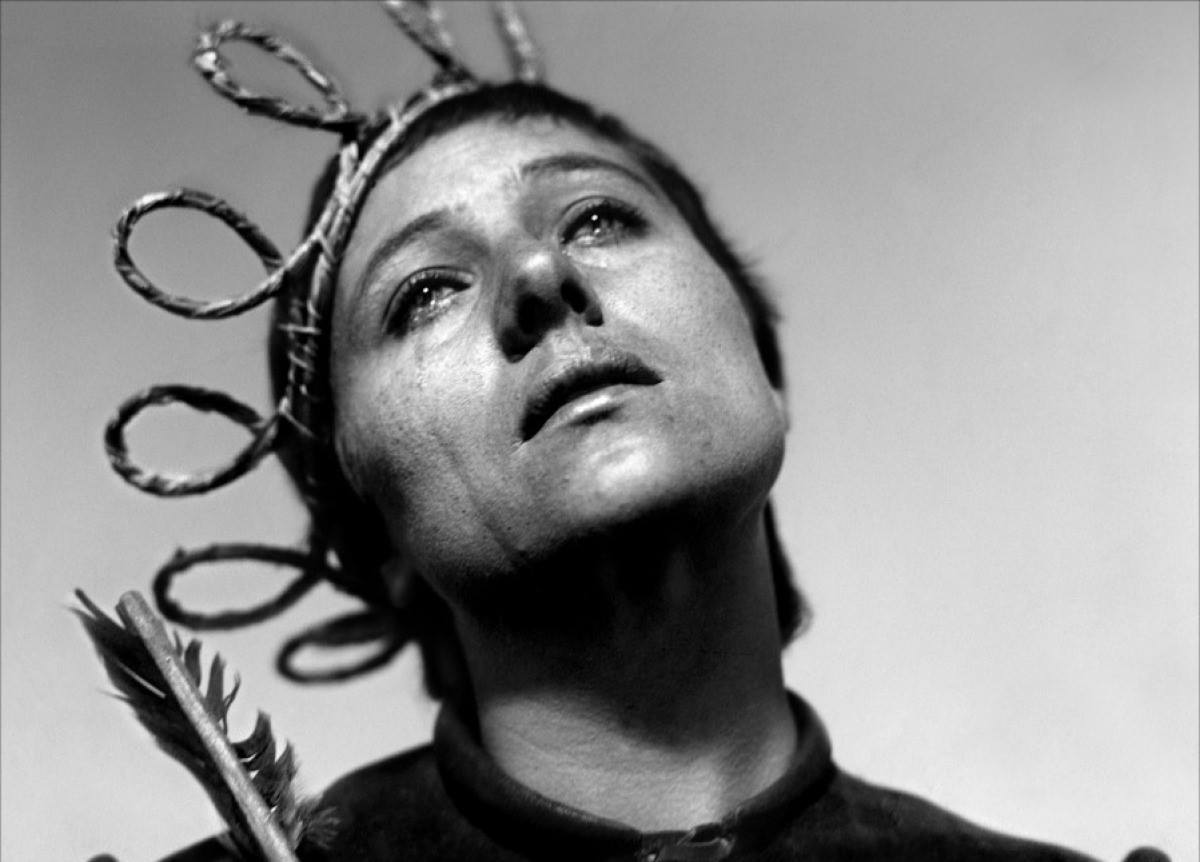
This week on “Picture Perfect,” we’ll be listening to music for films inspired by Joan’s historical exploits, with two scores written in response to Carl Theodor Dreyer’s 1928 classic, “The Passion of Joan of Arc.” “The Passion of Joan of Arc” will be screened as part of this year’s The Princeton Festival. Soloists of Notre Dame Vocale will join the Princeton Festival Chorus and Princeton Symphony Orchestra to perform, with the film, “Voices of Light” by Richard Einhorn. That event will take place at Princeton University Chapel on June 9 at 8:30 p.m. Einhorn himself will give a free pre-performance talk at the Princeton Garden Theatre at 5 p.m. More information is available at princetonfestival.org.
We’ll be sampling from Einhorn’s score, written in 1994, as well as one commissioned from Danish composer and conductor Ole Schmidt, also written to accompany the film, in 1983.
In 1999, Luc Besson directed the “The Messenger: The Story of Joan of Arc,” with his then wife, Milla Jovovich, as the Maid of Orléans, and a starry supporting cast, including John Malkovich, Faye Dunaway and Dustin Hoffman (donning an Obi-Wan robe). The composer was Éric Serra. The score is primarily orchestral, but incorporates synthesized effects.
Finally, we’ll turn to Otto Preminger’s “Saint Joan,” based on the play by George Bernard Shaw. Graham Greene wrote the screenplay for the 1957 film. Newcomer Jean Seberg was Joan, somewhat out of her league alongside veteran actors John Gielgud, Anton Walbrook and Felix Aylmer. Also, would you believe Richard Widmark as Charles VII? Unfortunately, “Saint Joan” was immolated by the critics. Mischa Spoliansky composed the lovely score. Here’s the film’s main title sequence, designed by the legendary Saul Bass:
I hope you’ll join me for these scores written for films about Joan of Arc, on WWFM – The Classical Network, this Friday evening at 6 EDT, with a repeat Saturday morning at 6; or that you’ll listen to them later as a webcast at wwfm.org.
There are only so many days in a year, so it shouldn’t come as a surprise that two giants in a particular field would share a birthday anniversary. Hence, we have Rachmaninoff and Busoni on April 1, and Heifetz and Kreisler on February 2. May 10 marks the birthdays of Max Steiner and Dimitri Tiomkin.
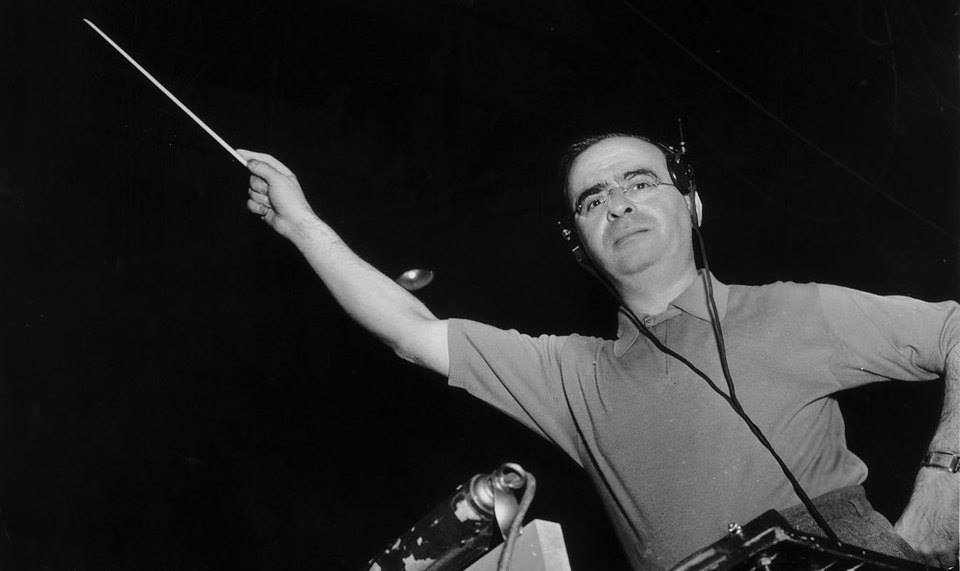
Steiner (1888-1971), the literal godson of Richard Strauss, helped transplant the sound of fin de siècle Vienna to the realm of cinematic dreams. He composed over 300 film scores for RKO and Warner Brothers, earning 24 Academy Award nominations and winning three – for “The Informer,” “Now, Voyager” and “Since You Went Away” – though he is unquestionably better remembered today for his work on “King Kong,” “Gone with the Wind” and “Casablanca.”
Tiomkin (1894-1979), a pupil of Alexander Glazunov, was born in Ukraine. He settled in the United States, where he composed music for films in all genres, though in the 1950s he enjoyed particular success writing for Westerns, including the Academy Award-winning “High Noon.” When asked why this would be the case, that a composer born half a world away would have such a command of this distinctly American idiom, Tiomkin replied, “A steppe is a steppe is a steppe.”
Tiomkin was honored with four Academy Awards – three for Best Original Score (for “High Noon,” “The High and the Mighty” and “The Old Man and the Sea”) and one for Best Original Song (“The Ballad of High Noon”).
Here’s a transcript of his reception speech, when winning the Oscar for “The High and the Mighty” in 1955:
“Lady and gentlemen, because I working in this town for twenty-five years, I like to make some kind of appreciation to very important factor what make me successful to lots of my colleagues in this town. I’d like to thank Johannes Brahms, Johann Strauss, Richard Strauss, Beethoven, Mozart, George Gershwin, Jerome Kern, Wagner, Tchaikovsky, Rimsky-Korsakov. Thank you.”
You can watch here:
Steiner’s “Now, Voyager”:
Tiomkin’s “Land of the Pharoahs”:
If you have an interest in Hollywood composers and what they achieved on screen and in the concert hall, you might want to set aside your Thursday morning this week to join me on WPRB 103.3 FM and at wprb.com. I’ll tell you a little more about it tomorrow.
April fools! No, not the holiday (such that it is); I’m talking about the performers.
This week on “Picture Perfect,” we’ll have musical selections from big screen comedies. For whatever reason, it’s seldom that we get a chance to sample from comedy scores. The emphasis is usually on drama or action. The more I think about it, it seems very few scores for comedies tend to achieve classic status – proportionately speaking, of course.
Henry Mancini never seemed to have a problem with that, thanks in no small part to his long association with director Blake Edwards. We’ll hear music from my three favorite installments in “The Pink Panther” series – the original (1963), “A Shot in the Dark” (1964), and “The Pink Panther Strikes Again” (1976). That’s right, the one where Chief Inspector Dreyfus goes stark raving mad and determines to destroy the world with a doomsday ray, as the franchise hilariously jumps the shark.
Imagine how difficult it must be to write music for comedy, without it coming across as sounding like cartoon music. Which isn’t always necessarily a bad thing. With Pee-Wee Herman back on Netflix, we’ll hear some of Danny Elfman’s music for “Pee-Wee’s Big Adventure” (1985). The film marked the feature debut of director Tim Burton. It was Burton’s first teaming with composer Danny Elfman, who would become a regular collaborator. Elfman is obviously a big fan of Nino Rota.
If you ever wanted to see Alastair Sim in drag, then I’ve got the film for you. Sim, you’ll recall, played Ebenezer Scrooge in the classic 1951 film version of “A Christmas Carol.” A few years later, he appeared in “The Belles of St. Trinian’s” (1954) in two roles – as the headmistress of a girl’s school and her criminal brother. None other than Malcolm Arnold provided the music hall-style score.
“It’s a Mad Mad Mad Mad World” (1963) is a relic from the “more is more” school of comedy, with Milton Berle, Sid Caesar, Ethel Merman, Mickey Rooney, Phil Silvers, Terry-Thomas, Jonathan Winters, Jimmy Durante, and a tired Spencer Tracy. Ernest Gold’s approach to the music is defined by a manic waltz.
Before John Williams became a household name, with music for blockbusters like “Jaws” and “Star Wars,” he was known as Johnny Williams, when writing for television shows like “Lost and Space” and “Gilligan’s Island,” and for a string of mostly forgettable movie comedies.
“A Guide for the Married Man” (1967) starred Walter Matthau and Robert Morse. Interestingly, the film was directed by Gene Kelly, and a number of cast members from “It’s a Mad Mad Mad Mad World” have cameos. (It seems you couldn’t make a film of this kind without Terry-Thomas.) Looking back on the score is fascinating, in that there are already hints of the Williams we know in the thick of very period-specific music.
Elmer Bernstein, who wrote music for such classics as “The Ten Commandments,” “The Magnificent Seven” and “To Kill a Mockingbird,” received a second wind in the late ‘70s, when he was offered the chance to score “National Lampoon’s Animal House,” produced by Ivan Reitman and directed by John Landis. This led to opportunities to work on “The Blues Brothers” and “Ghostbusters,” among others. We’ll wrap things up with some of Bernstein’s music for the Reitman service comedy, “Stripes,” which teamed Bill Murray and Harold Ramis. The key to Bernstein’s big success as a comedy composer during the era is that, musically, he mostly played it straight.
I hope you’ll join me tonight at 6 EDT, with a repeat tomorrow morning at 6, as we unscrew the tops on the salt shakers and swap out the hard-boiled eggs, on “Picture Perfect: Music for the Movies.” Or that you’ll listen to it later, from a safe distance, as a webcast, at wwfm.org.