Tag: Film Scores

  • Classic Film Scores for Academy Awards Weekend

    Classic Film Scores for Academy Awards Weekend

    We’re heading into Academy Awards weekend. This week on “Picture Perfect” we’ll do our best to get you in the mood, with a baker’s dozen of classic film themes. We’ll hear music from “Gone With the Wind,” “Ben-Hur,” “The Lord of the Rings,” “Out of Africa,” “Exodus,” “Schindler’s List,” “The Adventures of Robin Hood,” “Around the World in 80 Days,” “The Godfather Part II,” “Tom Jones,” “Lawrence of Arabia,” “Titanic” and “E.T. The Extra-Terrestrial.”

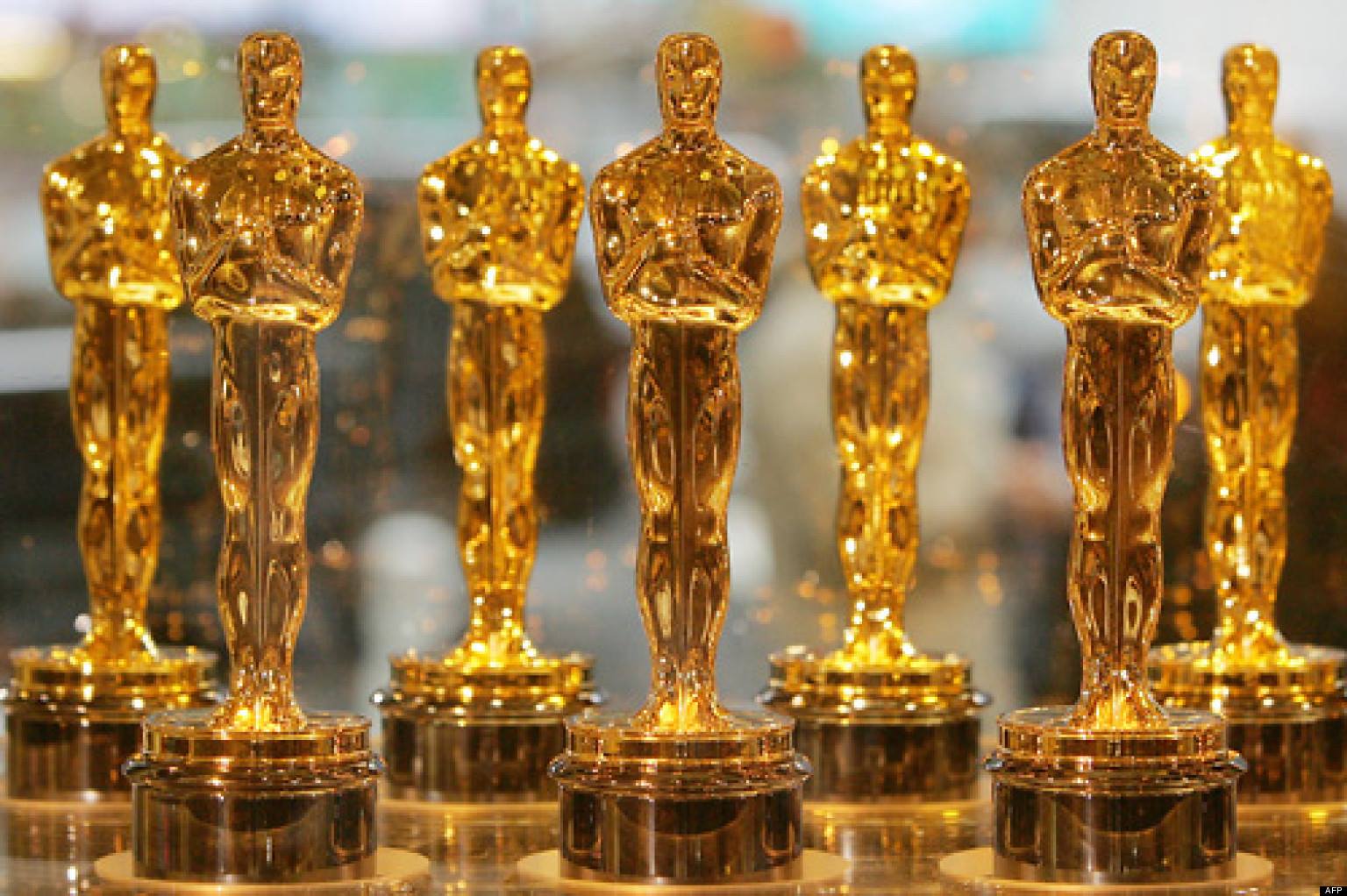
    The 88th Academy Awards, need I say, will take place on Sunday night.

    Join me this evening at 6:00 ET, with a repeat tomorrow morning at 6; or listen to it later as webcast at wwfm.org. I’ll try to exert my influence to get the sound file posted by Sunday, if you’d like to call up the stream for a little pre-Oscar fun. Last week’s show, devoted to this year’s nominees, has already been posted.

    #AcademyAwards #Oscars #FilmMusic #FilmScores

  • Remembering Jerry Goldsmith Film Music Legend

    Remembering Jerry Goldsmith Film Music Legend

    Poor Jerry Goldsmith. He wrote some of the great film scores of his time, including those for “The Sand Pebbles” (1966), “The Blue Max” (1966), “The Flim-Flam Man” (1967), “Planet of the Apes” (1968), “Patton” (1970), “Papillon” (1973), “Chinatown” (1974), “The Wind and the Lion” (1975), “MacArthur” (1977), “The Boys from Brazil” (1978), “The Great Train Robbery” (1979), “Alien” (1979, butchered in the sound editing), and “Star Trek: The Motion Picture” (1979).

    For television, he wrote for “Dr. Kildare,” “The Twilight Zone,” “Gunsmoke,” “The Man from U.N.C.L.E.” and “The Waltons.”

    By the 1980s, the films began to get weaker. It seemed like Goldsmith was always getting tossed the projects John Williams passed on, or cheap knockoffs of Williams’ successes. By his final decade, he was stuck writing for such garbage as “The Mummy” (1999), “The Haunting” (1999), and “Looney Tunes: Back in Action” (2003). A notable exception was “L.A. Confidential” (1997), but rarely were his later projects up to his talent.

    Goldsmith had a reputation for being able to compose at white heat, so he was frequently called upon to write replacement scores for films like “The River Wild” (1994), “Air Force One” (1997) and “The 13th Warrior” (1999). He composed and recorded the score to “Chinatown,” one of the best of the 1970s, in only ten days.

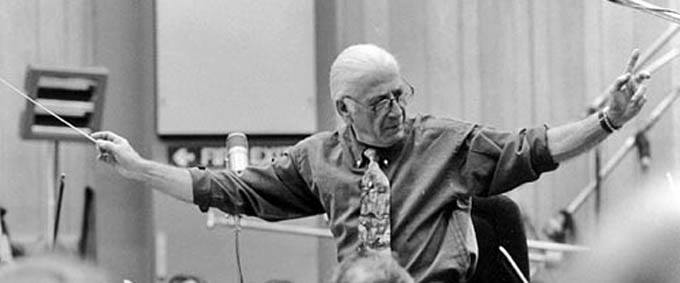
    Incredibly, he was honored with only a single Academy Award, for his influential score to “The Omen” (1976). Goldsmith died in 2004, at the age of 75. If he were to come back today, he would mop the joint with all the Hans Zimmer clones of the world.

    Happy birthday, Jerry Goldsmith. I sure does miss you.

    #JerryGoldsmith


    The Man from U.N.C.L.E.:

    Planet of the Apes:

    Patton:

    https://www.youtube.com/watch?v=vdEy4GneZfw

    Chinatown:

    The Wind and the Lion:

    The Omen (perfect for Lent):

    Star Trek: The Motion Picture:

  • Soviet Cinema Soundtracks Russian Winter

    Soviet Cinema Soundtracks Russian Winter

    With Winter Storm Jonas shaking out his big white beard all up the East Coast, we turn our thoughts to someplace you really don’t want to be in the winter – Russia.

    This week on “Picture Perfect,” we’ll have an hour of music from classic Soviet cinema. Alfred Schnittke, a name usually associated with the avant-garde, actually composed over 60 film scores. One of these was for “Agony” (1974) about Rasputin, his influence over the Tsar, and the conspiracy to murder him.

    Georgy Sviridov, a pupil of Shostakovich, wrote the music for “Time, Forward!” (1962), based on the novel of Valentin Kataev. Set in the 1930s, the film describes a day in the construction work of Magnitogorsk Iron and Steel Works. Some of the music was used during the opening ceremonies of the 2014 Winter Olympics in Sochi.

    Shostakovich, of course, is celebrated for his symphonies and string quartets, which are regarded as some of the most important of the 20th century. He also happened to write some 30 film scores, beginning all the way back in the silent era. Far and away his “greatest hit” composed for film, at least in the West, is the romance from “The Gadfly” (1955), based on the novel of Ethel Lillian Voynich.

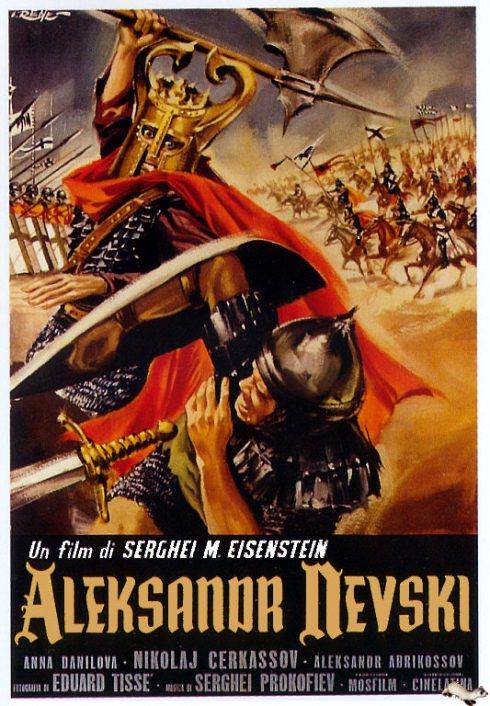
    Sergei Eisenstein’s “Alexander Nevsky” (1938) invariably turns up on lists of the greatest films ever made. Nevsky, the 13th century Russian prince, military leader and saint, thwarts the attempted invasion of Novgorod by Teutonic Knights of the Holy Roman Empire.

    Sergei Prokofiev arranged his masterful score into a concert piece, a cantata. However, these days, orchestras seem to be performing it more and more as it was originally heard, with the film. It’s a powerful piece of work. The marriage of music and visuals for the famous Battle on the Ice is one of the film’s great highlights.

    If you think you’ve got it bad, try facing down a patriotic Nevsky on a frozen lake! I hope you’ll join me for music from these classics of Soviet cinema, tonight at 6 ET, or tomorrow morning at 6; or that you’ll listen to it later as a webcast at wwfm.org.

  • New England Movies Music & Thanksgiving

    New England Movies Music & Thanksgiving

    The inclusion of “The Cummington Story” (1945) on this week’s “Picture Perfect” made me reflect on current events. The short semi-documentary, made for the Office of War Information, relates the gradual acceptance of European war refugees into a cautious but fundamentally decent New England community. I try to stay off politics if I can help it, but I couldn’t help but notice a parallel with what’s going on in the news today, with everyone concerned about Syrian refugees.

    My first thought was to put together a Thanksgiving show of music from films that highlight generosity and the gradual acceptance of strangers from different backgrounds. However, it would have required some finesse so as not to come across as preachy, and I was too overburdened this week to guarantee that lightness of touch. So I opted for an easier topic and one less likely to stir controversy.

    Therefore, we have four films set in New England. I open with the aforementioned short, with music by Aaron Copland, which is far less well-known than his other New England film, “Our Town.” The score is pure Americana, with some of the material later finding its way into the composer’s Clarinet Concerto and “Down a Country Lane.”

    Then we take a decidedly un-Thanksgiving turn (unless we count Jabez Stone’s eventual thanks for salvation), with “The Devil and Daniel Webster” (1941). An expanded treatment of Stephen Vincent Benet’s popular short story, it starred Edward Arnold as Webster, and Walter Huston in one of his most memorable roles as the diabolical Mr. Scratch. The film also features Bernard Herrmann’s second film score, written hot on the heels of “Citizen Kane.” It would earn the composer his only Academy Award.

    “The Devil and Daniel Webster” was originally issued as “All That Money Can Buy,” in an attempt to avoid confusion with the contemporaneous “The Devil and Miss Jones.” I remember being disappointed with the adaptation the first time I saw it, having been such a fan of the original short story. Now I recognize its brilliance. Huston’s scenery-chewing (and pie-eating) performance aside, the director, William Dieterle, applies some nice Expressionistic touches. It’s an ingenious blend of eerie diabolism and homespun Americana.

    I can’t find anything particularly “Thanksgiving” about “Peyton Place” (1957), about a fictional New England town whose residents have more than their share of skeletons in the closet. But Franz Waxman’s music sure is nice.

    Finally, we’ll hear some of Miklós Rózsa’s score for “Plymouth Adventure” (1952). Spencer Tracy plays the cynical captain of The Mayflower. Gene Tierney is his forbidden love. Van Johnson appears as John Alden, and Lloyd Bridges is the first mate.

    Rózsa, already at this stage of his career, was MGM’s go-to composer for historical drama. Seven years later, he would take home his third Academy Award for his classic score to “Ben-Hur.”

    Curiously, this film about the Pilgrims sidesteps the actual first Thanksgiving. It does, however, include among its characters William Bradford, John Alden and Priscilla Mullins.

    I hope you’ll join me for music from movies set in New England this week, on “Picture Perfect,” tonight at 6 ET, with a repeat tomorrow morning at 6; or that you’ll enjoy it later as a webcast at wwfm.org.


    NOTE: Turner Classic Movies: TCM will air “Plymouth Adventure” this Sunday at 6 p.m. ET

    You can watch “The Cummington Story” here:

  • Labor Day Film Scores Working Class Heroes

    Labor Day Film Scores Working Class Heroes

    It’s nice to be able to look forward to a three-day weekend, when nobody expects you to get your butt in gear. Unless you’re Charlie Chaplin.

    This week on “Picture Perfect,” we’ll have music from films about working class heroes, for Labor Day.

    “The Molly Maguires” (1970), set in and around the anthracite mines of Pennsylvania, details the unfair labor practices imposed on immigrant workers there, which led to violent strikes and acts of sabotage. Sean Connery is the ringleader, and Richard Harris the Pinkerton detective brought on to infiltrate the gang.

    The film was directed by Martin Ritt, a number of whose projects deal with labor, intimidation, and corruption, and his own experiences living through the era of the Hollywood blacklist. Among these: “Edge of the City,” “The Front,” and “Norma Rae.”

    The music is by Henry Mancini, a far cry from his work on “The Pink Panther,” “Peter Gunn,” and “Breakfast at Tiffany’s,” with a decidedly Celtic lilt.

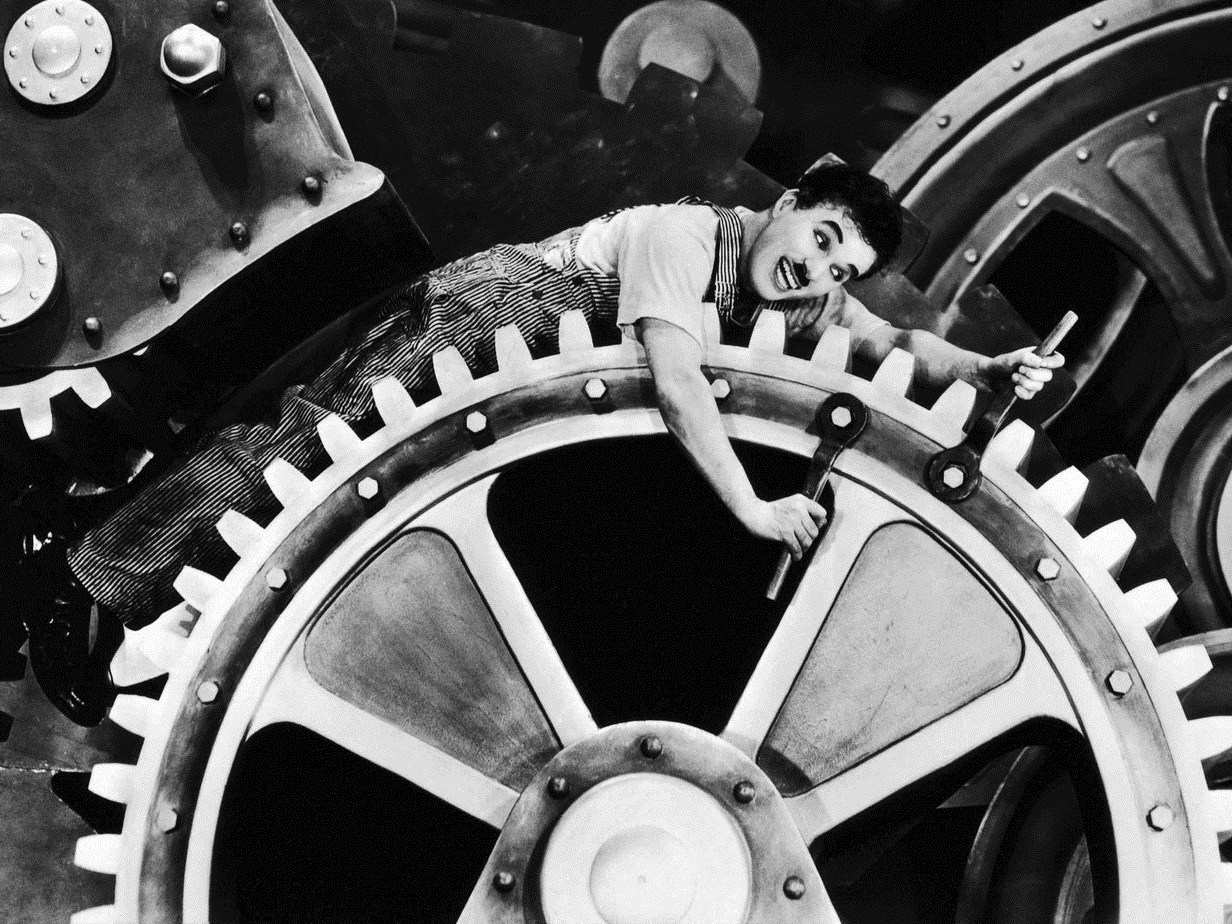
    Charlie Chaplin was a brilliant comedian, of course, but his perfectionism could lead to uncomfortably close supervision at times on every aspect of his films. The young David Raksin found this out the hard way, when he accepted the job of assisting Chaplin in the writing of the score to “Modern Times” (1936).

    Chaplin, a violinist and cellist himself, would whistle tunes and then stand over Raksin’s shoulder as he figured out how to make them fit the action. Alfred Newman, a much more seasoned hand, stormed out of the recording sessions. Raksin was actually fired once, after only a week and a half, though quickly rehired. Despite the creative friction, the two men became friends, and Raksin recollected his work on “Modern Times” as some of the happiest days of his life.

    The film begins with an iconic scene in a factory, with Chaplin working an assembly line, at an increasingly hectic pace, and then being put through the gears of the machinery. He suffers a breakdown, goes berserk, and throws the entire mechanized dystopia into chaos.

    At the time Aaron Copland wrote the music for “Of Mice and Men” (1939), John Steinbeck’s tragic tale of two migrant ranch workers, he was at the height of his populist period. He had just written “El Salon Mexico” and “Billy the Kid,” and most of his best-loved music – “Fanfare for the Common Man,” “A Lincoln Portrait,” “Rodeo” and “Appalachian Spring” – would be composed within the next few years.

    Copland would only write music for five films in all. That for one of them, “The Heiress,” was honored with an Academy Award. So a complete recording of this, his first film score, would seem to be an important venture. Unfortunately, due to copyright entanglements, it was made available for only a very brief time, and that as a download. Catch it while you can, because it’s as scarce as hair on a mole rat.

    Rarer still, until last year, were the original recording sessions for “On the Waterfront” (1954). Long believed lost, the acetate discs were rediscovered during the restoration process in preparation for the film’s release on Blu-ray. Recognizing the importance of the find, the enterprising Intrada label issued the music on compact disc.

    Leonard Bernstein’s concert suite is fairly well-known, but the suite doesn’t tell the whole story. The Intrada release features moving music written for the famous cab scene, when Brando as Terry Malloy pours out his heart to his brother (“I coulda been a contender”), and the dead pigeon scene. On the film’s soundtrack, Morris Stoloff conducts the Columbia Pictures Studio Orchestra.

    “On the Waterfront” would be Bernstein’s only original film score (as distinguished from film adaptations made by other hands of his musical theater works). He found the experience somewhat dispiriting, in that his music was edited and dialed down to suit the overall needs of the film. What remains is a powerful statement, and one of the great film scores.

    I hope you’ll join me for music from films featuring working class heroes for Labor Day this week. Listen Friday evening at 6 ET, Saturday morning at 6, or later, at your leisure, as a webcast, at wwfm.org
Tag Cloud

Aaron Copland (92) Beethoven (95) Composer (114) Film Music (123) Film Score (143) Film Scores (255) Halloween (94) John Williams (187) KWAX (229) Leonard Bernstein (101) Marlboro Music Festival (125) Movie Music (138) Opera (202) Philadelphia Orchestra (89) Picture Perfect (174) Princeton Symphony Orchestra (106) Radio (87) Ralph Vaughan Williams (85) Ross Amico (244) Roy's Tie-Dye Sci-Fi Corner (290) The Classical Network (101) The Lost Chord (268) Vaughan Williams (103) WPRB (396) WWFM (881)

DON’T MISS A BEAT

Receive a weekly digest every Sunday at noon by signing up here


RECENT POSTS