Tag: Film Scores

  • Orientalism in Film: A Musical Journey

    Orientalism in Film: A Musical Journey

    Orientalism is a term used to reflect evocations of the East by Western writers, artists and designers. This week on “Picture Perfect,” we’ll take a look at Orientalism in the movies, with musical selections from four films set in faraway lands.

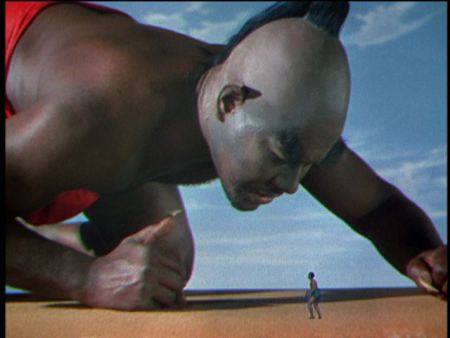
    Two of them are loosely based on tales from “The Arabian Nights,” depicting the East as a kind of fairy world. The Alexander Korda production of “The Thief of Bagdad” (1940) features Sabu as the thief, Conrad Veidt as a slippery vizir, and a scene-stealing Rex Ingram as the djinn. The score is one of the earliest and most charming of Miklós Rózsa.

    “The Seventh Voyage of Sinbad” (1958) is really a showcase for the special effects of Ray Harryhausen. In particular, it contains a kind of rehearsal, in the skeleton duel, for the classic sequence in “Jason and the Argonauts.” The alternately sinuous and percussive music, by Bernard Herrmann, fits the images like a Persian slipper.

    Director David Lean turned to the historical exploits of T.E. Lawrence for “Lawrence of Arabia” (1962). The film won seven Academy Awards and made international superstars of Peter O’Toole and Omar Sharif. Maurice Jarre won the first of his three Oscars for his music. Jarre himself conducted on the film’s soundtrack, even though, for contractual reasons, Sir Adrian Boult received the screen credit.

    Finally, Sean Connery is Mulay Ahmed Muhamed Raisuli the Magnificent, sherif of the Riffian Berbers, in John Milius’ “The Wind and the Lion” (1975). The score represents composer Jerry Goldsmith at his finest. In fact, so happy was he with the effort that he was convinced that he finally had a lock on the Oscar – then he went to see “Jaws.” Goldsmith would finally be honored the next year for his music to “The Omen.”

    I hope you’ll join me for these examples of Orientalism at the movies – a theme that’s really an excuse for me to play some of my favorite scores – this Friday evening at 6 ET, with a repeat Saturday morning at 6; or that you’ll listen to it later as a webcast at wwfm.org.


    The skeleton duel from “The Seventh Voyage of Sinbad”:

    PHOTOS: Ingram in “The Thief of Bagdad” (top), with, left to right, Connery and Candice Bergen in “The Wind and the Lion,” Kerwin Matthews fighting the skeleton in “The Seventh Voyage of Sinbad,” and Peter O’Toole with Omar Sharif in “Lawrence of Arabia”
  • Alfred Newman Tyrone Power Film Scores on Radio

    Alfred Newman Tyrone Power Film Scores on Radio

    Enjoy music from Tyrone Power swashbucklers scored by Alfred Newman this week, on “Picture Perfect.” The show begins at 6 ET, with a repeat tomorrow morning at 6. You can also catch it later as a webcast at wwfm.org.

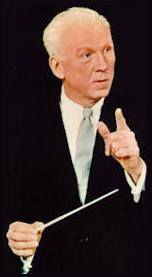
    Here’s a fun reminiscence of Newman (“the best conductor who ever picked up a baton in Hollywood”) by composer David Raksin:

    http://www.americancomposers.org/raksin_newman.htm

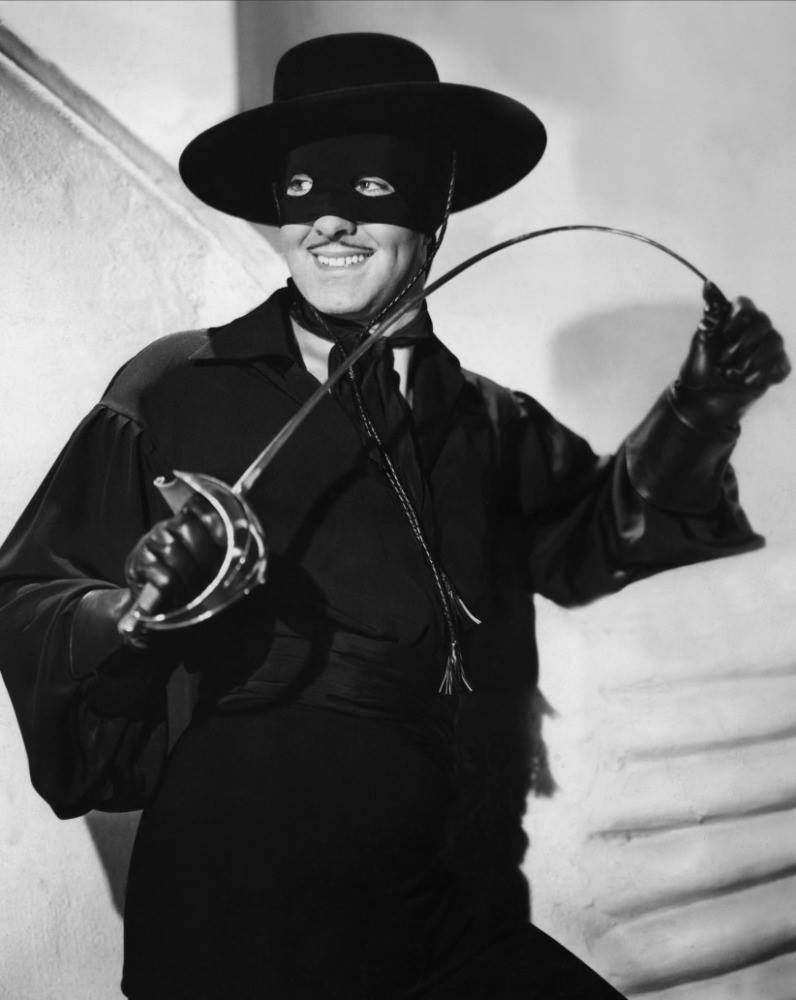
    Newman certainly conducts the stuffing out of “Captain from Castile.” Tune in also for “The Black Swan,” “Prince of Foxes,” and “The Mark of Zorro.”

    PHOTO: Catch some z’s with Ty and Al this week on “Picture Perfect”

  • Beat the Heat with Wintry Film Scores

    Beat the Heat with Wintry Film Scores

    Though the weather is uncharacteristically lovely today in the Trenton-Princeton area, I wholly expect to be sweating it out again in front of the air conditioner sometime soon. (It will be back to 90 by the weekend.) In that glass-half-empty frame of mind, this week on “Picture Perfect,” we’ll have an hour of aural escapes from the grim heat of summer.

    “The Snow Storm” (1964) is an adaptation of Pushkin’s “The Tales of the Late Ivan Petrovich Belkan.” This year marks the centenary of the birth of the composer, Georgy Sviridov. The Waltz and Romance from “The Snow Storm” enjoyed particular popularity, bringing Sviridov two of his greatest hits.

    Then Arthur Honegger will take us to higher altitudes with his music for “The Demon of the Himalayas” (1935), complete with the eerie electronic timbre of the ondes Martenot.

    Ralph Vaughan Williams will guide us to the South Pole with selections from his score for “Scott of the Antarctic” (1948). The music perfectly reflects the sublime, austere beauty of a hostile environment. The score became the basis for Vaughan Williams’ Symphony No. 7, “Sinfonia Antarctica.”

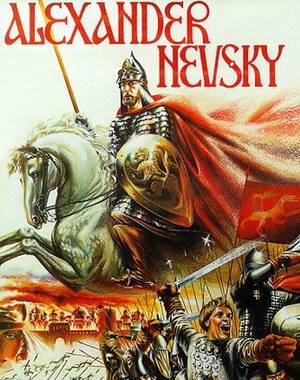
    Finally, the “Battle on the Ice” sequence from “Alexander Nevsky” (1938) provides a textbook marriage of music and film. Director Sergei Eisenstein granted the composer, Sergei Prokofiev, the unusual luxury of cutting the images to suit his music, as opposed to the usual practice, which is the other way around. The result is not only one of the great films, but also one of the great film scores.

    Chill out with wintry scenes from world cinema this week, on “Picture Perfect” – music from the movies – this Friday evening at 6, with a repeat Saturday morning at 6; or listen to it later as a webcast at wwfm.org.

    PHOTO: Very cool

  • Remembering James Horner’s Iconic Film Scores

    Remembering James Horner’s Iconic Film Scores

    The prolific film composer James Horner died on June 22, when his single-turboprop plane went down in Los Padres National Forest in Southern California. He was 61 years-old.

    This week on “Picture Perfect,” we honor his memory, with music from but a handful of his over 100 scores. Horner was the recipient of two Academy Awards – for Best Original Score and Best Original Song (“My Heart Will Go On”) – for his work on “Titanic” (1997). “Titanic” went on to become the bestselling soundtrack of all time.

    Horner received eight additional Academy Award nominations. We’ll hear music from at least two of the scores so recognized: “A Beautiful Mind” (2001) and “Braveheart” (1995). “A Beautiful Mind,” of course, dramatized the life of late Nobel Laureate (formerly of Princeton University) John Nash, who died in a car accident in May.

    We’ll also have music from Horner’s breakout success, “Star Trek II: The Wrath of Khan” (1982).

    I hope you’ll join me, as we honor James Horner this week, on “Picture Perfect,” music for the movies, this Friday evening at 6 ET, with a repeat Saturday morning at 6; or that you’ll listen to it later as a webcast at http://www.wwfm.org.


    Horner’s obituary in the New York Times:

    http://www.nytimes.com/2015/06/24/us/james-horner-whose-soaring-film-scores-included-titanic-dies-at-61.html?_r=0

    PHOTO: His heart will go on

  • Anderson & Herrmann American Music Legends

    Anderson & Herrmann American Music Legends

    Today marks the birthday anniversaries of two composers who, in their own individual ways, gained fame through their invaluable contributions to American popular culture. Interestingly, both died 40 years ago.

    Leroy Anderson (1908-1975), whose fluency in foreign languages (especially those of Scandinavia) made him an asset to the U.S. Army during the Second World War, was more or less staff composer for the Boston Pops.

    His early work for the Pops was as an arranger. It was Arthur Fiedler who recognized his talent and began requesting original work. Good call. Anderson turned out to be the Irving Berlin of American light orchestral music, producing hit after hit after hit: “Blue Tango,” “The Typewriter,” and “Plink! Plank! Plunk!” among them. Johnny Mathis scored a gargantuan success with his vocal rendition of “Sleigh-Ride,” for over half a century a holiday staple. Anderson’s “The Syncopated Clock,” a favorite from the start, became further entrenched in the popular consciousness as the theme music for “The Late Show,” the late night movie, shown on CBS.

    Bernard Herrmann (1911-1975) was staff conductor on CBS radio. In this role, he introduced American audiences to an impressive array of comparatively arcane music for the era, including works by Charles Ives, Nikolai Myaskovsky, Gian Francesco Malipiero, Edmund Rubbra, and Richard Arnell (Classical Discoveries’ Marvin Rosen!).

    He fell in with Orson Welles, with whom he worked on radio shows like “Mercury Theatre on the Air.” When Welles went to Hollywood, he brought Herrmann with him to write the music for “Citizen Kane.” This led to decades of finely-crafted film scores, always orchestrated by Herrmann himself (an unusual practice in Hollywood) and always perfectly suited to the images on screen, or their psychological underpinnings.

    Of course, Herrmann is best-known for his collaborations with Alfred Hitchcock, but he also wrote top-notch, ear-opening scores for producer Charles Schneer and special effects artist Ray Harryhausen (including that for “Jason and the Argonauts”). Amazingly, he won only a single Oscar, for his work on “The Devil and Daniel Webster,” in 1941. Herrmann died of a heart attack shortly after conducting the recording sessions for Martin Scorsese’s “Taxi Driver,” in 1975.

    Happy birthday, gentlemen! Thanks for the music.

Tag Cloud

Aaron Copland (92) Beethoven (95) Composer (114) Film Music (123) Film Score (143) Film Scores (255) Halloween (94) John Williams (187) KWAX (229) Leonard Bernstein (101) Marlboro Music Festival (125) Movie Music (138) Opera (202) Philadelphia Orchestra (89) Picture Perfect (174) Princeton Symphony Orchestra (106) Radio (87) Ralph Vaughan Williams (85) Ross Amico (244) Roy's Tie-Dye Sci-Fi Corner (290) The Classical Network (101) The Lost Chord (268) Vaughan Williams (103) WPRB (396) WWFM (881)

DON’T MISS A BEAT

Receive a weekly digest every Sunday at noon by signing up here


RECENT POSTS