Tag: Film Scores

  • Mars Movies: War of the Worlds & John Carter

    Mars Movies: War of the Worlds & John Carter

    This week on “Picture Perfect,” it’s an interplanetary exchange program (though, granted, not always a peaceful one), with music from movies about visitors to and from Mars.

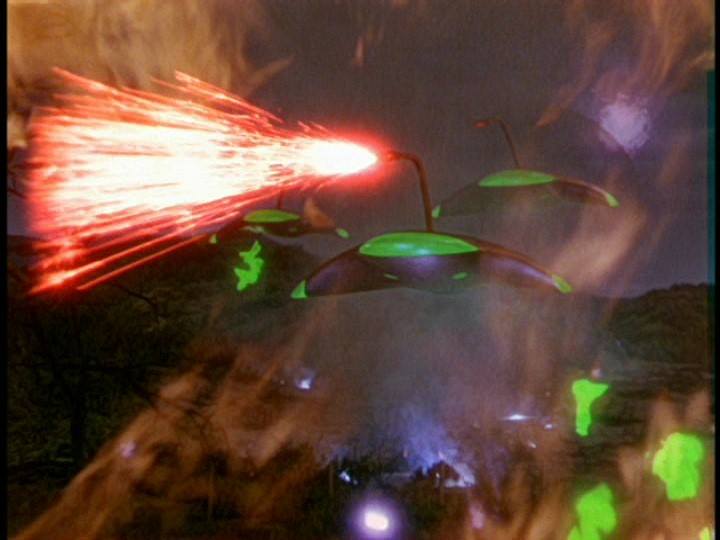
    The first half of the show will compare and contrast selections from two film adaptations of H.G. Wells’ Martian invasion novel, “The War of the Worlds” – the classic 1953 version, produced by George Pal, with music by Leith Stevens, and the Steven Spielberg blockbuster, from 2005 (titled, simply, “War of the Worlds”), with music by John Williams.

    Then we’ll take it to the Red Planet, when an American astronaut is stranded with his test monkey, in 1964’s “Robinson Crusoe on Mars,” with music by Van Cleave.

    And finally, Edgar Rice Burroughs’ John Carter gets the big screen treatment, in 2012, a hundred years after the fact, in… well, “John Carter.” (Why Disney dropped “of Mars” from the title – something that would have actually said something about the subject matter – is anybody’s guess.)

    Unfortunately the intervening decades robbed Burroughs’ creation of much of its freshness, with dozens, if not hundreds, of science fiction novels and movies having raided the author’s pulp treasure trove, making “John Carter” less striking than it might have been.

    And I’m sure you already know where I stand on CGI. I would have loved this film had it been made in the ‘70s or ‘80s, using miniatures and matte paintings. Don’t get me wrong, I still enjoyed it, but it didn’t give me a lift, as few movies do these days. That said, it certainly wasn’t the train wreck the press made it out to be.

    The music was by Michael Giacchino, who thankfully uses an orchestra and employs leitmotif, though perhaps doesn’t weave so rich a tapestry as might have some of his forebearers. It certainly ends the hour on a romantic note, a welcome relief after dodging so many Martian heat rays.

    I hope you’ll accompany me to and from Mars, on “Picture Perfect,” music for the movies, this Friday evening at 6 ET, with a repeat Saturday morning at 6, or that you’ll partake of the webcast (once it’s posted), at http://www.wwfm.org.

    PHOTO: Pal’s enemies
  • Latin Swashbuckler Music to Heat Up Winter

    Latin Swashbuckler Music to Heat Up Winter

    Frigid temperatures got you down? Put some swagger back into your step with an hour of music from Latin swashbucklers.

    Alfred Newman gets the blood pumping with his virile soundtrack for “Captain from Castile” (1947), in which Tyrone Power flees persecution at the hands of the Inquisition to join Cortés’ expedition to conquer Mexico. The film was shot on location with one sequence set against the backdrop of an erupting volcano!

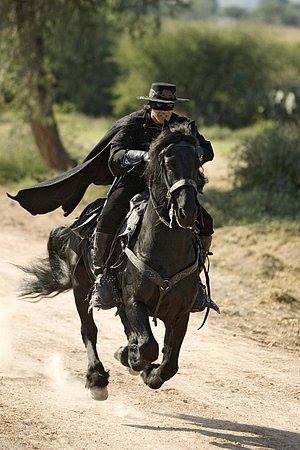
    Power, of course, was one of the screen’s great Zorros. However, with “The Mask of Zorro” (1998), Antonio Banderas becomes the Zorro for our time. He’s aided and abetted by Anthony Hopkins, as the elder Zorro who mentors him. (TWO Zorros in one film! I could expire of joy.) Catherine Zeta-Jones is radiant, and the music by James Horner literally hits all the right notes.

    This film was already a throw-back upon release, with plenty of real-life, real-time swordplay and stunts galore, with the barest minimum of computer-generated bells and whistles. I wish to God popcorn entertainment could still be like this. As it was, “The Mask of Zorro” was like a belated last gasp of the 1980s. It was easily the best swashbuckler of the ‘90s – though, really, was there much competition?

    Banderas got a chance to send-up his image in the Dreamworks’ computer-animated feature, “Puss in Boots” (2011), a spin-off from the Shrek series, which actually turned out to be a better sequel than “The Legend of Zorro” (2005).

    The film sports plenty of Zorro in-jokes, which extend even to Henry Jackman’s entertaining score. How is it that animated movies are just about the only movies these days that seem to keep up the great symphonic tradition of classic film scoring?

    Finally, Errol Flynn has one last swash left in his buckle for “The Adventures of Don Juan” (1948), his last wholly satisfying period adventure. Equally, Max Steiner rises to the occasion and provides one of his best scores, just about on the same level as those of the master of the genre, Erich Wolfgang Korngold.

    I hope you’ll join me for an hour of Latin swords, on “Picture Perfect,” this Friday evening at 6 ET, with a repeat Saturday morning at 6, or that you’ll listen to it later as a webcast, at http://www.wwfm.org.

  • Literary Christmas Movie Music Guide

    Literary Christmas Movie Music Guide

    ADVENT CALENDAR – DAY 19

    Remember when movies used to be inspired by books, as opposed to toys and video games?

    This week on “Picture Perfect,” we’ll have an hour of music from movies adapted from novels and short stories on Christmas themes, or with memorable Christmas moments.

    We’ll begin with Alfred Newman’s score for “O. Henry’s Full House,” a 1952 anthology based on five separate stories of O. Henry, each adapted by a different screenwriter and directed by a separate director. The film is doubly literary in that each of its segments is introduced by none other than John Steinbeck. We’ll be listening to music from the final portion, based on the classic Christmas story, “The Gift of the Magi.”

    Louisa May Alcott’s “Little Women” features a memorable Christmas chapter, in which the Marches help out a neighbor in need by donating their Christmas breakfast – only to be rewarded later in the day with a feast of their own. “Little Women” has been adapted to film at least five times (reportedly with another on the way). Thomas Newman – son of Alfred – wrote the Academy Award-nominated score for the 1994 version, the one with Winona Ryder and Susan Sarandon.

    Miklós Rózsa won his third Academy Award for “Ben-Hur” (filmed three times), in 1959. We’ll be listening to music from the prologue and Nativity scene. General Lew Wallace’s novel, published in 1880, became the bestselling work of American fiction for the next 50 years. Its streak was broken in 1936 by Margaret Mitchell’s “Gone with the Wind.”

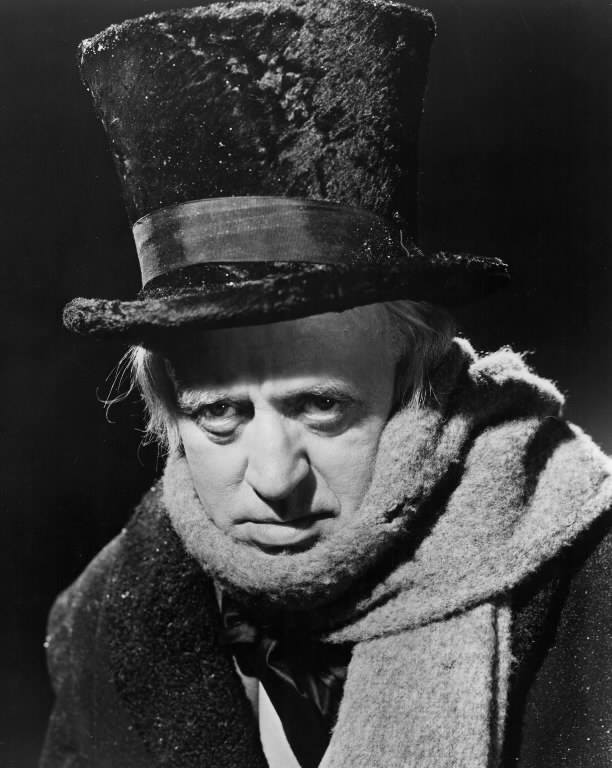
    Finally, we’ll have a suite from the 1951 adaptation of Charles Dickens’ “A Christmas Carol.” I can’t even count how many times that one’s been filmed. This particular version stars Alastair Sim as Scrooge. The music was composed by Richard Addinsell – he of the “Warsaw Concerto” fame – and the performance is conducted by David Newman, Alfred Newman’s OTHER musical son.

    I hope you’ll join me for a literary Christmas, this Friday evening at 6 ET, with a repeat Saturday morning at 6; or that you’ll listen to it later as a webcast at http://www.wwfm.org.

  • Gone With The Wind 75th Anniversary

    Gone With The Wind 75th Anniversary

    Frankly, my dear, an awful lot of people have given a damn.

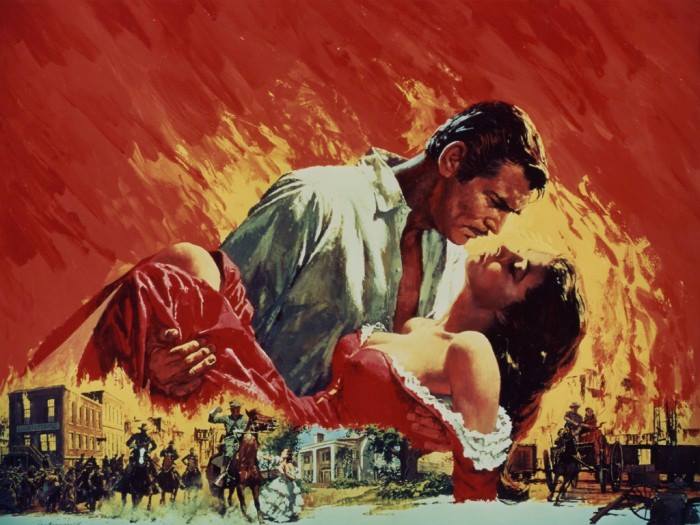
    “Gone with the Wind,” which opened on December 15, 1939, is one of the most beloved films ever made. It was also one of the most successful. Adjusting for inflation, GWTW is still the highest grossing film of all time. At 21st century ticket prices, its global gross is estimated to be in the neighborhood of 3.3 and 3.8 billion dollars. That’s roughly a billion dollars more than “Avatar,” “Star Wars,” and “Titanic.” Quite an achievement for a 3 ½ hour movie from 1939!

    This Friday evening, we’ll celebrate the 75th anniversary of this landmark film with an extended suite from Max Steiner’s score. Steiner wrote over three hours of music for GWTW, of which 2 hours and 36 minutes were used. Incredibly, he accomplished this in twelve weeks, while at the same time writing scores for three other movies. GWTW was one of 13 films the composer scored that year. By 1939, he had already been in Hollywood for ten years and had provided music for 100 movies.

    There will be just enough time at the end of the hour to sample music from Steiner’s “Four Wives,” written concurrently with his score for GWTW. “Four Wives” is a sequel to “Four Daughters.” It was followed by a third film, “Four Mothers.” The series is mostly forgotten, save by classic movie buffs, but it has the distinction of having introduced John Garfield as a cynical pianist from the wrong side of the tracks.

    The series also starred the three Lane sisters – the singing trio Priscilla, Rosemary, and Lola – and Gale Page, as the musical daughters of Claude Rains, who plays a Schubert-loving music professor, befuddled by popular trends.

    We’ll hear Earl Wild, the pianist, in the “Symphonie moderne,” drawn from Steiner’s score.

    Join me, as we celebrate 75 years of “Gone with the Wind,” on “Picture Perfect,” music for the movies, this Friday evening at 6 ET, with a repeat Saturday morning at 6; or listen to it later as a webcast at http://www.wwfm.org.

  • Madness and Piano Movie Music

    Madness and Piano Movie Music

    This week on “Picture Perfect,” practice makes psychotic, as we listen to music from movies about madness and the piano.

    Laird Cregar plays an unhinged pianist-composer, who, whenever he hears a loud, discordant sound, is compelled to commit murder, in the 1945 film “Hangover Square.” Bernard Herrmann wrote the moody, romantic score, which includes a piano concerto, played by Cregar’s character during the film’s conflagration finale.

    Peter Lorre is an unstable musicologist who is haunted by the disembodied hand of a murdered pianist with a penchant for Brahms’ arrangement of Bach’s Chaconne, in “The Beast with Five Fingers,” from 1946. Max Steiner wrote the music. The piano is played on the film’s soundtrack by Victor Aller, the brother-in-law of Felix Slatkin, and therefore Leonard Slatkin’s uncle.

    Alan Alda plays a frustrated pianist who falls in with a ring of Satanists, in “The Mephisto Waltz” from 1971. This time, Jerry Goldsmith blends Franz Liszt with amplified instruments and electronics to memorably eerie effect. Five years later, Goldsmith would win his only Academy Award for his music to “The Omen.”

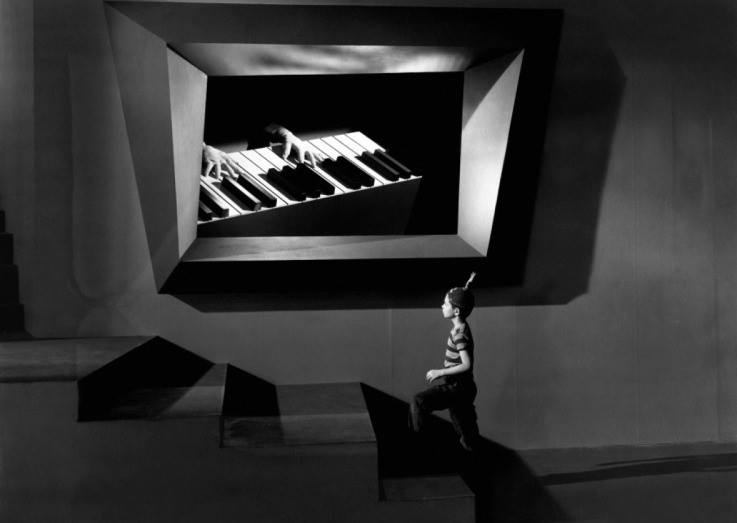
    Finally, Hans Conried plays a dictatorial pedagogue in “The 5000 Fingers of Dr. T,” released in 1953, which holds the distinction of being the only feature film written by Dr. Seuss. The film features outrageous production design (including a gargantuan keyboard for 500 enslaved boys) and whimsical songs.

    The composer was Frederick Hollander, born in London. Hollander came to fame in Germany as Friedrich Hollander. His best-known international success was with “The Blue Angel,” with Marlene Dietrich, who introduced his song, “Falling in Love Again. With the rise of the Nazis, Hollander fled to the United States, where he worked on over 100 films.

    Join me for madness and the piano this week, on “Picture Perfect,” music for the movies, this Friday evening at 6 ET. In case you haven’t heard, the show will now repeat Saturday mornings at 6. (It ought to be a real treat to hear “The Mephisto Waltz” at that hour!) If you’re still not able to listen, you can catch it later as a webcast at http://www.wwfm.org.

Tag Cloud

Aaron Copland (92) Beethoven (95) Composer (114) Film Music (123) Film Score (143) Film Scores (255) Halloween (94) John Williams (187) KWAX (229) Leonard Bernstein (101) Marlboro Music Festival (125) Movie Music (138) Opera (202) Philadelphia Orchestra (89) Picture Perfect (174) Princeton Symphony Orchestra (106) Radio (87) Ralph Vaughan Williams (85) Ross Amico (244) Roy's Tie-Dye Sci-Fi Corner (290) The Classical Network (101) The Lost Chord (268) Vaughan Williams (103) WPRB (396) WWFM (881)

DON’T MISS A BEAT

Receive a weekly digest every Sunday at noon by signing up here


RECENT POSTS