Tag: Film Scores

  • Herrmann’s Halloween Fantasy Film Scores

    Herrmann’s Halloween Fantasy Film Scores

    Hallowe’en is fast approaching. This week on “Picture Perfect,” it’s high time we get the pumpkin rolling, with an hour of fantasy film scores of Bernard Herrmann.

    Just about everyone has some awareness of Herrmann’s fruitful run with Alfred Hitchcock, a collaborative relationship which yielded scores to “Vertigo,” “North by Northwest” and “Psycho,” among others. Concurrently, Herrmann worked with producer Charles H. Schneer to create a series of classic films on fantastic subjects, featuring special effects by stop-motion maestro Ray Harryhausen. We’ll be listening to selections from two of these.

    Jules Vernes’ novel, “Mysterious Island,” was a sequel of sorts to “20,000 Leagues under the Sea. “ During the American Civil War, a ragtag band of Union soldiers escape from a Confederate prison by hot air balloon. A storm sweeps them off to the titular island, where they encounter pirates, a castaway and an orangutan. Indeed Captain Nemo turns up late in the narrative, though no giant creatures, as in the film (made in 1961). Herrmann has a field day characterizing an enormous crab, bee and especially bird, for which he employs a fugue!

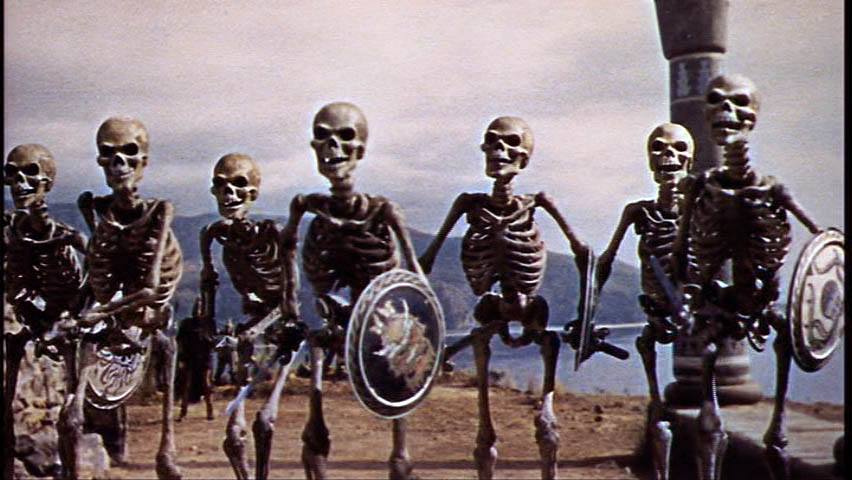
    Harryhausen’s skeleton fight from Schneer’s “Jason and the Argonauts” (1963) stands as one of the all-time classic fantasy sequences, a dream marriage of visuals and music. Herrmann, who always provided his own orchestrations, was well known for putting together unique combinations of instruments the better to illustrate the special character of a given film. In the case of “Jason,” he went in the opposite direction he had taken with “Psycho,” stripping away the strings and concentrating instead on winds, brass and percussion.

    On a somewhat gentler note, Herrmann scored the beautiful spectral romance, “The Ghost and Mrs. Muir” (1947), with Gene Tierney as a young widow who moves with her daughter to a seaside village, where she encounters the ghost of salty Captain Craigg (played by Rex Harrison). Of course, their banter leads to a hopeless attraction developing between them. Herrmann was a master at creating musical evocations of yearning, and his score for “The Ghost and Mrs. Muir” is full of romantic longing.

    Criminally, for a composer whose career spanned over four decades, from “Citizen Kane” to “Taxi Driver,” Herrmann received only a single Oscar, for “The Devil and Daniel Webster” (released in 1941 as “All That Money Can Buy”). Walter Huston makes a meal of his role as Mr. Scratch in Stephen Vincent Benet’s recasting of the Faust legend, transferred to the New England countryside. Director Wlliam Dieterle, who had his roots in German Expressionism, creates some truly eerie visuals, and Herrmann’s score barn-dances deftly back and forth between dread and whimsy.

    Join me for fantasy film scores of Bernard Herrmann this week on “Picture Perfect,” music for the movies, this Friday evening at 6; or catch it later as a webcast at http://www.wwfm.org.
  • Hemingway on Film: Music for Stoic Manliness

    Hemingway on Film: Music for Stoic Manliness

    This week on “Picture Perfect,” we get in touch with our masculine side, with music from movies inspired by the writings of Ernest Hemingway.

    Seemingly at odds with Hemingway’s minimalist, “iceberg” style, big screen adaptations of the writer’s work show what the stories don’t tell. In the case of 1946’s “The Killers,” the screenwriters unapologetically just made stuff up, an entire back story explaining the motivations for the hit of boxer “Swede” Andreson. Fortunately those screenwriters happened to include an uncredited John Huston, who virtually codified noir with “The Maltese Falcon.”

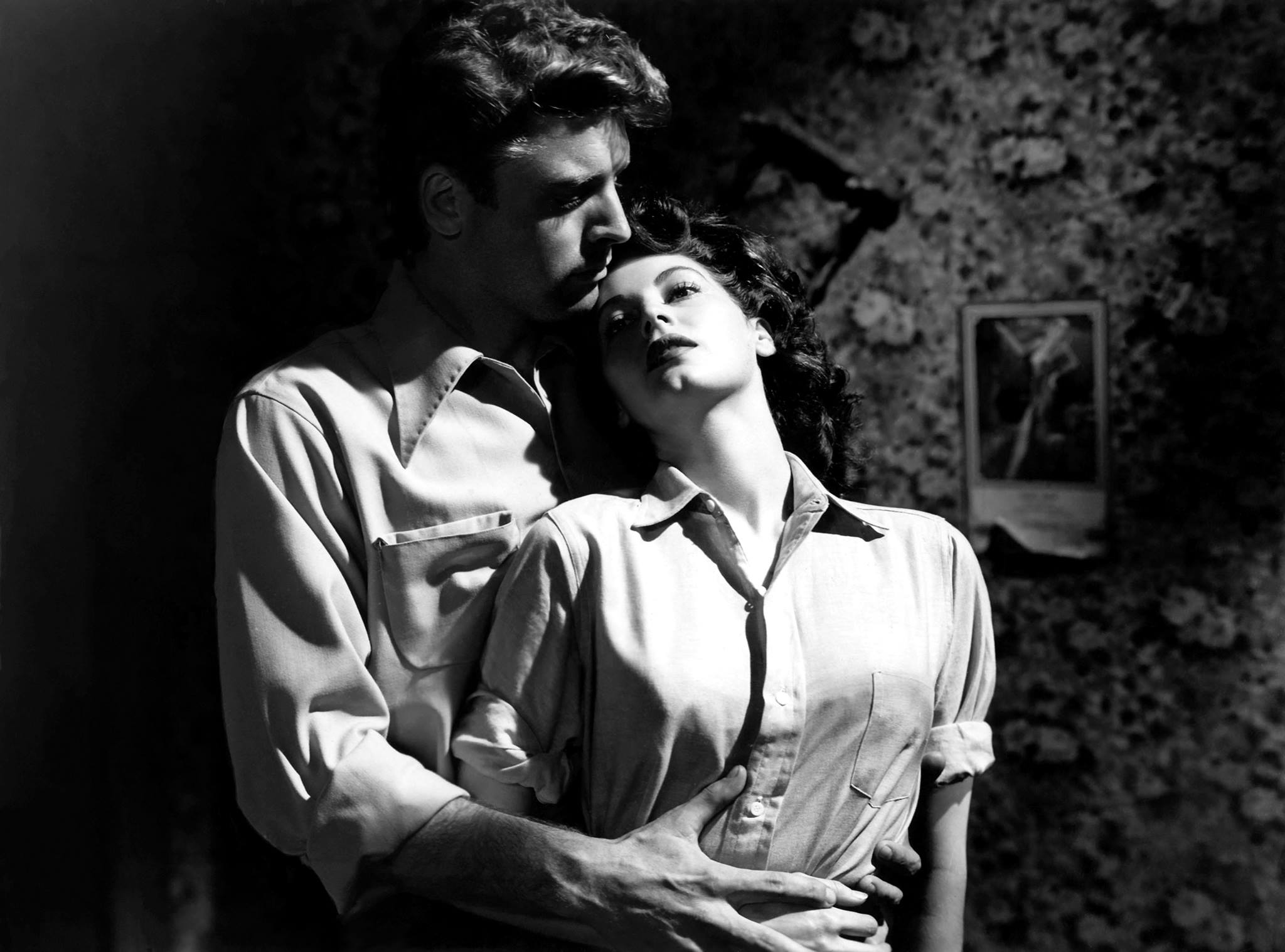
    “The Killers” provided Burt Lancaster with his break-out role. It also features a knock-out score by Miklós Rózsa, in which he uses the dum-dee-dum-dum theme later made famous by the television series “Dragnet.”

    In 1977, George C. Scott reunited with his “Patton” director, Franklin J. Schaffner, for an adaptation of Hemingway’s posthumously published novel, “Islands in the Stream.” Scott gives one of his best performances as a Hemingway-like figure living on a Caribbean island. “Patton” composer Jerry Goldsmith wrote the music. Goldsmith spoke of it often as his favorite score.

    Hemingway himself handpicked the leads for the 1943 adaptation of “For Whom the Bell Tolls,” with Gary Cooper and Ingrid Bergman falling in love against the backdrop of the Spanish Civil War. The music was by the prolific and versatile Victor Young.

    And finally, Spencer Tracy is the whole show, as he faces off against a large marlin, in the 1958 version of “The Old Man and the Sea.” Dimitri Tiomkin’s music earned him his fourth Academy Award.

    Join me for an hour of laconic grace and stoic manliness on “Picture Perfect,” music for the movies, this Friday evening at 6. Or listen to it later as a webcast, at http://www.wwfm.org.

    PHOTO: Burt Lancaster and Ava Gardner killing it in “The Killers”

  • Korngold’s Hollywood Composers

    Korngold’s Hollywood Composers

    Errol Flynn writes a ballet? Charles Boyer composes a tone poem? Claude Rains writes a cello concerto!

    This week on “Picture Perfect,” we’ve got three examples from Hollywood’s Golden Age of movies about fictional composers. These, of course, required music allegedly written by the characters, and this was provided by two-time Academy Award-winner Erich Wolfgang Korngold.

    Korngold is probably best known to movie buffs as the composer for Flynn swashbucklers such as “The Adventures of Robin Hood” and “The Sea Hawk,” but his filmography is more varied than one might at first suspect. No matter what the subject, Korngold could be counted on to bring that opulent fin de siècle gloss, developed in a Vienna steeped in Mahler and Strauss.

    We’ll hear music from “Escape Me Never” (1947), a slightly preposterous melodrama about two composer brothers who become rivals in love; “The Constant Nymph” (1943), about a would-be romantic bond between a composer struggling to find his true voice and an admiring girl on the verge of womanhood who develops deeper feelings for him; and “Deception” (1946), about a cellist reunited with his former love, who had believed him killed during the war, and the vindictive composer who attempts to shatter his psyche through grueling rehearsals of his latest concerto.

    “Deception” was Korngold’s last, wholly original score, though he was lured back to Hollywood for one final project, “Magic Fire” (1955), a biopic of the composer Richard Wagner, for which he adapted selections from Wagner’s operas. Furthermore, Korngold makes an appearance onscreen (!) as conductor Hans Richter. The film was subject to heavy cuts prior to its U.S. release and was not a success.

    Hollywood seldom gets it right when it comes to portraying the process of the composer, but Korngold, true to his name, did his best to spin gold from corn, producing some appropriately grand utterances, albeit condensed to only a few minutes of screen time. Quite a task for this figure who made his greatest mark in opera.

    Join me for these examples of Korngold as ghostwriter, on “Picture Perfect,” this Friday evening at 6 ET, or enjoy it later as a webcast at http://www.wwfm.org.
    Follow the link to hear Korngold improvise on themes from “The Flying Dutchman” (with entertaining stills):

    https://www.youtube.com/watch?v=h4bNEw1nu3I

    PHOTO: Paul Henreid in “Deception.” He wore a special jacket to accommodate the arms of two professional cellists who stood behind him as he emoted. On the film’s soundtrack the concerto was performed by Eleanor Aller Slatkin, the mother of Leonard Slatkin.

  • Artists’ Lives on the Big Screen

    Artists’ Lives on the Big Screen

    How to translate visual art to the big screen? Generally by focusing on the drama in the artists’ lives, that’s how.

    And what drama!

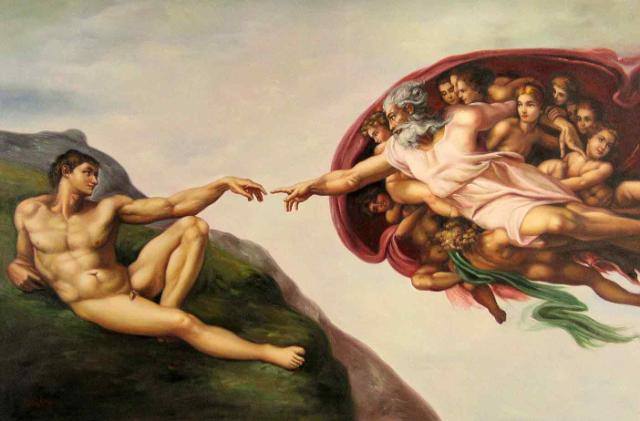
    This week on “Picture Perfect,” we’ll listen to music from movies inspired by the great artists. “The Agony and the Ecstasy,” based on the novel of Irving Stone, dramatizes the friction between Michelangelo (Charlton Heston) and his benefactor, Pope Julius II (Rex Harrison), over the painting of the ceiling of the Sistine Chapel. For his part, Michelangelo would have been perfectly content to stick to sculpture. Alex North’s score is an Early Music banquet, with allusions to – and sometimes outright quotations of – music of the Renaissance.

    Stone had another bestseller in “Lust for Life,” about the tormented Vincent van Gogh. This time Kirk Douglas plays one of his most sympathetic roles – and looks remarkably like the artist. Anthony Quinn turns up as his “frenemy,” the painter Paul Gaugin, and earns an Academy Award for Best Supporting Actor. The great Miklós Rózsa wrote the music, softening up the edges of his brawny Hungarian sound with the softer palette of the French Impressionists.

    John Huston brought Pierre La Mure’s novel about Henri de Toulouse-Lautrec to the big screen as “Moulin Rouge” (not to be confused with the more recent Baz Luhrmann spectacle starring Nicole Kidman and Ewan McGregor, which relegated the artist to a supporting role). José Ferrer dominates the earlier version, spending most of the film walking through off-camera trenches and shuffling along on his knees. Georges Auric, one of the composers of Les Six (which also included Francis Poulenc and Darius Milhaud), captures the spirit of the titular cabaret. The score became one of Auric’s best-known, thanks to the waltz becoming a popular hit, “Where is Your Heart.”

    “The Picasso Summer” is a departure from the usual formula of focusing on the artist himself. Instead, a young couple (played by Albert Finney and Yvette Mimieux), admirers of Picasso’s work, take off on a European adventure in an attempt to track him down. Originally Picasso himself had agreed to appear, but some off-screen drama involving a matador friend and Yul Brynner’s wife drove him off. The film was based on a short story by Ray Bradbury. Bradbury hated the adaptation, as did the studio, and “The Picasso Summer,” after being heavily cut and patched with new footage, was never released theatrically in the United States. The film is striking for its extended animation sequences inspired by Picasso’s paintings, and for its score by Michel Legrand.

    Join me for an hour of music from films about the great artists this week, on “Picture Perfect,” this Friday evening at 6 ET, or listen to it later as a webcast, at http://www.wwfm.org.

  • European Film Music for a Summer Getaway

    European Film Music for a Summer Getaway

    With less than two weeks left in August, summer has nearly run its course, but there’s still time for a quick European vacation. This week on “Picture Perfect,” we glance across the pond for an hour of music from foreign films with summer settings.

    “A Summer Story,” based on a tale of John Galsworthy, tells of young London lawyer and a farm girl who fall profoundly in love at the turn of last century. Georges Delerue provides the poignant score.

    The juxtaposition of “Igmar Bergman” and “comedy” may seem like something of an oxymoron, but the dour Swede’s “Smiles of a Summer Night” proves to be a witty examination of the folly of the human heart. Frequent Bergman collaborator Erik Nordgren wrote the music.

    Director Yves Robert adapted the memoirs of Marcel Pagnol, who spent his childhood summers in the south of France, into two lovely films, “My Father’s Glory” and “My Mother’s Castle.” We’ll hear music composed for both by Vladimir Cosma. Pagnol’s experiences in Provence marked him for life, informing the films and writings of his maturity, including “The Baker’s Wife,” and “Jean de Florette.”

    Finally, we’ll have a generous sampling from one of Ennio Morricone’s most beloved scores, that for “Cinema Paradiso.” “Cinema Paradiso,” set in a post-war Siciy where it seems always to be summer, is a nostalgic paean to the shared experience of film and the significance it holds in our lives. It won a special jury prize at the Cannes Film Festival and was honored with an Academy Award for Best Foreign Film.

    Join me for summer overseas this week, on “Picture Perfect,” this Friday evening at 6 ET, or enjoy it later as a webcast, at http://www.wwfm.org.

Tag Cloud

Aaron Copland (92) Beethoven (95) Composer (114) Film Music (123) Film Score (143) Film Scores (255) Halloween (94) John Williams (187) KWAX (229) Leonard Bernstein (101) Marlboro Music Festival (125) Movie Music (138) Opera (202) Philadelphia Orchestra (89) Picture Perfect (174) Princeton Symphony Orchestra (106) Radio (87) Ralph Vaughan Williams (85) Ross Amico (244) Roy's Tie-Dye Sci-Fi Corner (290) The Classical Network (101) The Lost Chord (268) Vaughan Williams (103) WPRB (396) WWFM (881)

DON’T MISS A BEAT

Receive a weekly digest every Sunday at noon by signing up here


RECENT POSTS