Tag: Film Scores

  • Dragon Movie Music Picture Perfect

    Dragon Movie Music Picture Perfect

    This week on “Picture Perfect,” there be dragons!

    Who doesn’t enjoy a good dragon movie? Unfortunately there are so few of them. Inevitably, the stories fail to live up to the production design, the special effects, and, yes, often the music.

    One score that Universal Pictures definitely took to, like a dragon to its hoard, was that for “DragonHeart,” from 1996. The film starred Dennis Quaid, with Sean Connery supplying the voice of the film’s dragon, Draco. The studio loved the music so much that it was used in its movie trailers for years, so don’t be surprised if you recognize it, even if you never saw the film. The composer was Randy Edelman.

    Alex North wrote one of the finest dragon scores for a film which, for my money, still sports the best dragon ever to appear on screen. That would be “Dragonslayer,” from 1981. “Dragonslayer” caused a bit of stir on its release, since it was an early foray by Disney into more mature territory. The film featured shocking (for the time) onscreen immolations and dismemberment.

    The story is a fairly generic sorcerer’s apprentice tale. However, the dragon, Vermithrax Pejorative, easily carries the movie, which also features a late performance by Sir Ralph Richardson as the master wizard. The composer reused portions of his rejected score for Stanley Kubrick’s “2001: A Space Odyssey.” A number of critics, including Pauline Kael, praised the result.

    The film was nominated for an Academy Award for its outstanding visual effects, but lost out to “Raiders of the Lost Ark.” George Lucas’ Industrial Light and Magic provided the effects for both films. In my humble assessment, Phil Tippett’s “go motion” dragon has yet to be surpassed.

    In 2010, Disney competitor Dreamworks released “How to Train Your Dragon,” a wholly computer-animated film. The story is one of forbidden friendship between a young Viking and a scaly representative of his tribe’s hereditary foes. Despite the Viking characters and setting, the score has an overt Celtic flavor and the actors speak with a Scottish bur. The music was by John Powell.

    Purely animated films are often more successful in creating an organic, believable world than those supposedly “live action” films that place actors in front of green screens and surround them with video game pyrotechnics. Only director Peter Jackson could have devised a way to pad J.R.R. Tolkien’s classic bedtime story, “The Hobbit,” into three bloated installments, darkening the tone, tying it in with lore from Tolkien’s “The Silmarillion,” and self-consciously anticipating the events in the equally self-indulgent film versions of “The Lord of the Rings.”

    Howard Shore supplied the music for all of the Middle Earth films. He was recognized with three Academy Awards – one for “The Fellowship of the Ring,” in 2001, and two for “The Return of the King” in 2003, for which he also provided the Best Original Song. We’ll listen to a selection of his music for the second of the films based on “The Hobbit,” subtitled “The Desolation of Smaug.” The part of the dragon, by the way, was voiced by Benedict Cumberbatch.

    The heartburn you experience may have nothing to do with anything you ate. I hope you’ll join me for music from dragon movies this evening on “Picture Perfect,” coming up at 6:00 EDT, on WWFM – The Classical Network and at wwfm.org.
  • Big Cats & Movie Music Picture Perfect

    Big Cats & Movie Music Picture Perfect

    Any excuse to get “The Wind and the Lion” and “The Leopard” in the same show…

    This week on “Picture Perfect,” the focus will be on metaphorical big cats.

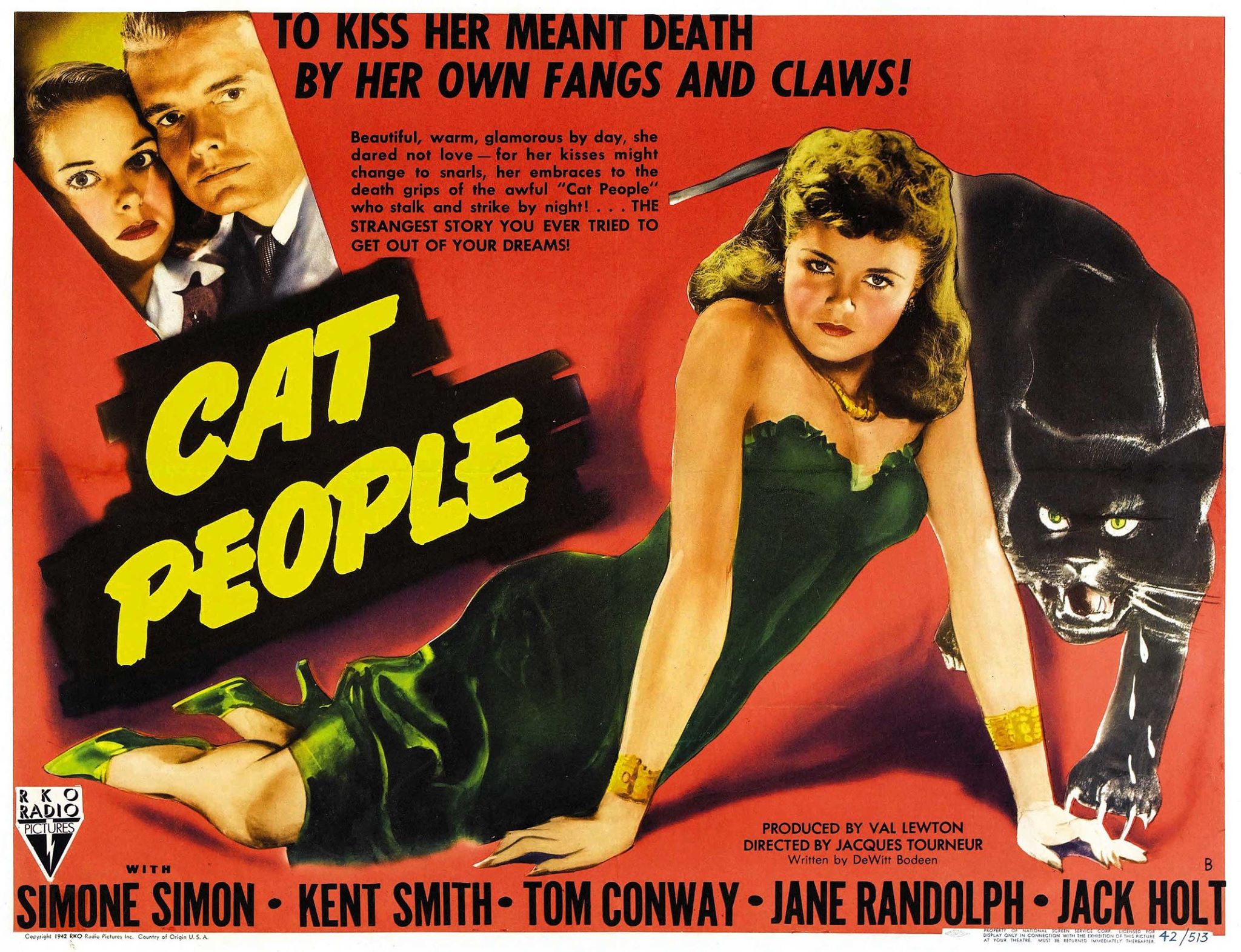
    Simone Simon’s barely repressed desires are made manifest in Val Lewton’s “Cat People” (1942). Lewton was a master of suggestion, with a majority of the horrors in his films imagined, rather than seen. Part of the approach was practical, the result of shoestring budgets imposed by RKO. Whatever the case, the insinuating weirdness undeniably produced psychological chills. In fact, it was only as a concession to the studio that a literal big cat was included at all. The music was by RKO workhorse Roy Webb.

    Sean Connery plays a Berber chieftain who faces off against Teddy Roosevelt in “The Wind and the Lion” (1975). In a letter to Roosevelt (played in the film by Brian Keith), Connery’s character writes, “I, like the lion, must stay in my place, while you, like the wind, will never know yours.” Jerry Goldsmith provided one of his best scores for the Moroccan adventure. In fact, he was fairly confident he finally had a lock on the Oscar. He experienced a harsh reality check when he went to see “Jaws.” (Goldsmith would win his only Academy Award the following year for his music to “The Omen.”)

    Luchino Visconti’s epic telling of Giuseppe Tomasi di Lampedusa’s “The Leopard” (1963) is a melancholy exploration of the fading Sicilian aristocracy. A bewhiskered Burt Lancaster plays Prince Fabrizio, who feels himself slipping into obsolescence. Nino Rota gives the film a full-blooded, operatic soundtrack, full of lyricism and pathos.

    Finally, Lyn Murray provides the breezy accompaniment for Alfred Hitchcock’s “To Catch a Thief” (1955), with Cary Grant a reformed burglar, known as The Cat, who attempts to clear himself of some “copycat” crimes while romancing Grace Kelly on the French Riviera. It was Murray who introduced Hitchcock to Bernard Herrmann, when the director was looking for a composer for “The Trouble with Harry.” He described the meeting as love at first sight. Herrmann and Hitch would work together on seven more films.

    The cat’s out of the bag this week, on “Picture Perfect” – music for the movies – this Friday evening at 6 EDT, on WWFM – The Classical Network and at wwfm.org.
  • Superhero Movie Scores: Bland by Design?

    Superhero Movie Scores: Bland by Design?

    So why are the film scores to blockbuster superhero films so undistinguished? You know something’s got to be wrong when Patrick Doyle, one of the screen’s great melodists (he wrote the music for “Henry V,” “Much Ado About Nothing,” and “Sense and Sensibility”), succumbs to a bludgeoning drum beat for “Thor.” One thing’s for certain, we are a long, long way from John Williams’ “Superman” (1978), which proved, even in its most intimate scenes, how indelible and uplifting a superhero score could be.

    To be fair, there isn’t a lot of room in contemporary superhero films for the music to breathe, the scores often swallowed up by hyperkinetic editing and ear-splitting sound effects. For a composer’s contribution to be heard, he needs to be pounding the biggest drum – even if it’s an electronic drum – in the room.

    If there is melody, it is either cranked out of a noodle press, someone running their fingers mindlessly across a keyboard with no concept of how a true melody is structured, or limited to a recurring motif (as in “The Avengers”), as if the composer is embarrassed to let his score “sing.” Alan Silvestri, composer for “The Avengers,” wrote the music for “Back to the Future,” for crying out loud! His scores since at least “Van Helsing” (2004) have been horrifying assaults. He was given the chance to write a good old-fashioned march for “Captain America,” but the film itself was a self-conscious throwback, directed by Lucas and Spielberg associate Joe Johnston.

    So who decided audiences were fed up with grand, post-romantic, orchestral scores? What film composer has sold more albums than John Williams? What composer is more represented in a list of top-grossing films of all time? Who doesn’t love “Star Wars” and “Raiders of the Lost Ark” and “E.T.” and “Jurassic Park” and “Harry Potter?” I’m not saying every score has to be like those, but the majority of scores these days sound as if they are churned out on a synthesizer – which may very well be the case. Sure, the composer, as the last in the post-production assembly line, has to deliver very quickly, but Jerry Goldsmith churned out plenty of memorable music at white heat.

    The sad fact of the matter is that the bean-counters have figured out that music no longer has to make much of an impression for a film to make a billion dollars worldwide. Also, if a composer no longer requires extensive training, then anyone can sit down and noodle something out on their computer – which is why so many rock musicians are now on the rise as film composers. Think back on the incredibly rich scores by Erich Wolfgang Korngold or Miklós Rózsa or Bernard Herrmann or Andre Previn, and measure their contributions against just about anything being written today. These guys were honest-to-goodness geniuses at their craft.

    Hans Zimmer, who, by his own admission doesn’t have the chops to write on Williams’ level, as far as orchestral scores are concerned, helped sow the seeds of destruction by demonstrating that synthesizers and electronic sampling by a team of composers would be perfectly acceptable to most audiences. When producers have the choice between hiring out to Zimmer’s studio or leasing the London Symphony Orchestra, who are they going to go with? It could take a composer, working with a trusted orchestrator, a good month or more to come up with a polished score. Using electronics, music can be cranked out like sausages, and today’s audiences are only too ready to gobble them down.

    Okay, that’s my rant. Here’s a related piece on how cannibalized temp tracks have helped keep Marvel movies at a level of musical mediocrity.

    http://www.theverge.com/2016/9/12/12893622/hollywood-temp-scores-every-frame-a-painting-film

  • Nadia Boulanger Meets Conan Music Today

    Nadia Boulanger Meets Conan Music Today

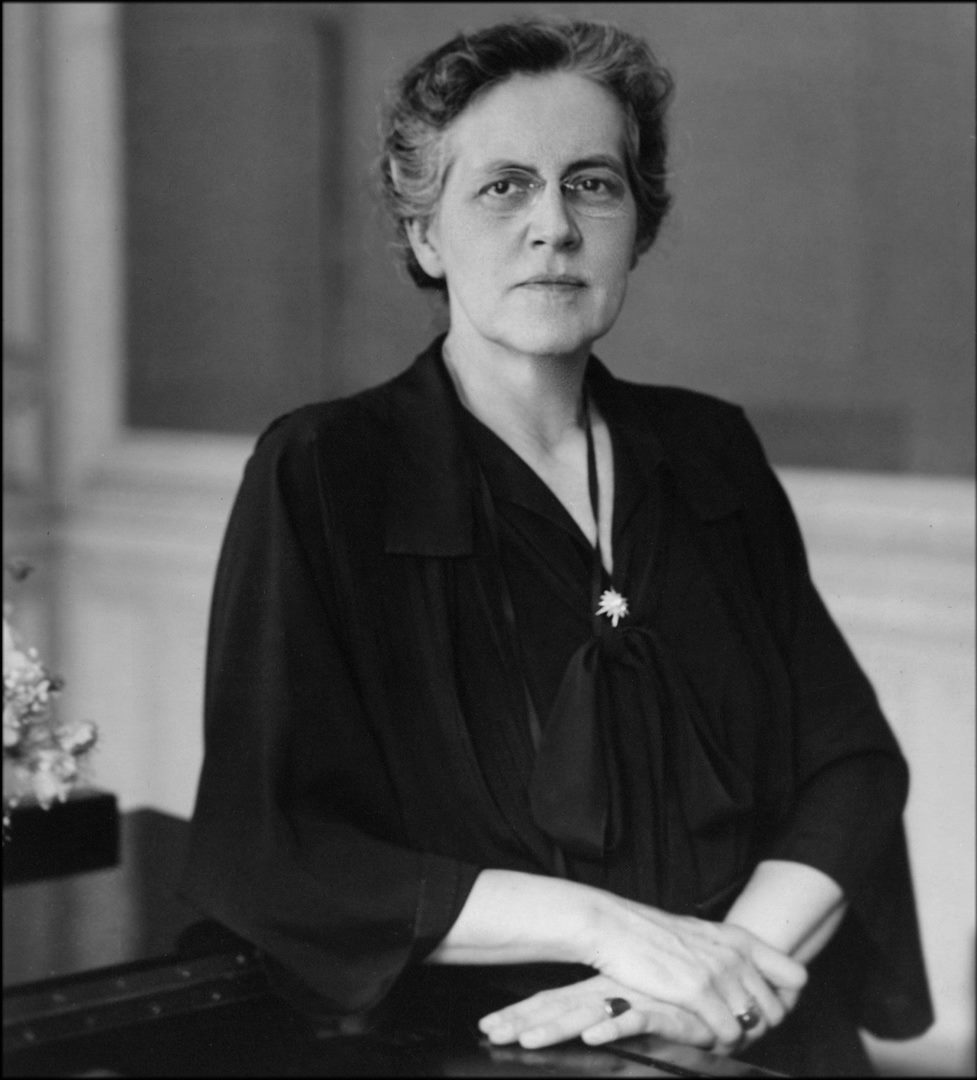
    What did Nadia Boulanger and Conan the Barbarian have in common? A lot, apparently, at least from what may be deduced from anecdotes by her pupils. Boulanger’s strong will, cold objectivity and blunt assessments made her perhaps the greatest – and certainly the most influential – musical pedagogue of the 20th century.

    Her influence on American music, in particular, is incalculable, having taught composers from Aaron Copland and Virgil Thomson through Elliot Carter and Philip Glass. It was Thomson who quipped, “She was a one-woman graduate school, so powerful and so permeating that legend credits every United States town with two things: a five and dime and a Boulanger pupil.”

    Join me this afternoon, beginning at 4 p.m., as I celebrate this remarkable figure on her birthday, with two hours of music and music-making by but a handful of her hundreds of remarkable students, including Copland, Igor Markevitch, Dinu Lipatti and Lili Boulanger.

    Then stick around at 6 p.m. for “Picture Perfect,” as I introduce music from movies inspired by the writings of pulp master Robert E. Howard. Howard is certainly best-known as the creator of Conan. While an hour of scores for barbarian movies may not seem like everyone’s cup of tea, I can guarantee that most of the music is thrilling and inventive, in ways one would be unlikely to encounter at a theater today.

    “Conan the Barbarian” (1982) was released at a time when even the most embarrassing movies could have knockout scores, and composer Basil Poledouris really outdid himself in transcending the violent, silly visuals with a viscerally thrilling soundtrack. I know, I was skeptical myself, until I heard it. “Conan” has long been held by collectors of film music as one of the great scores of the decade, and it’s hard not to be pummeled into submission by its grandeur.

    The hour will also feature music by Ennio Morricone, who has made a career out of spinning gold from garbage. Morricone recently received a much-overdue Academy Award for his work on Quentin Tarantino’s “The Hateful Eight.” We’ll hear some of his score to “Red Sonja” (1985), which also featured Arnold Schwarzenegger, though in a supporting role. In addition, there will be music by Joel Goldsmith, the son of Jerry Goldsmith, for “Kull the Conqueror” (1997).

    It’s a brains-and-brawn double feature today, from 4 to 7 p.m. EDT, on WWFM – The Classical Network and at wwfm.org.
  • Gilded Age Novels in Film: Picture Perfect

    Gilded Age Novels in Film: Picture Perfect

    “The Gilded Age” was a term coined by none other than Mark Twain to describe the era extending roughly from the end of Reconstruction (following the Civil War) to the turn of the 20th century. He didn’t mean it as a compliment. A gilded age is one which conceals serious social problems beneath a veneer of gold. This week on “Picture Perfect,” we have an hour of music from films based on novels of, or about, the period.

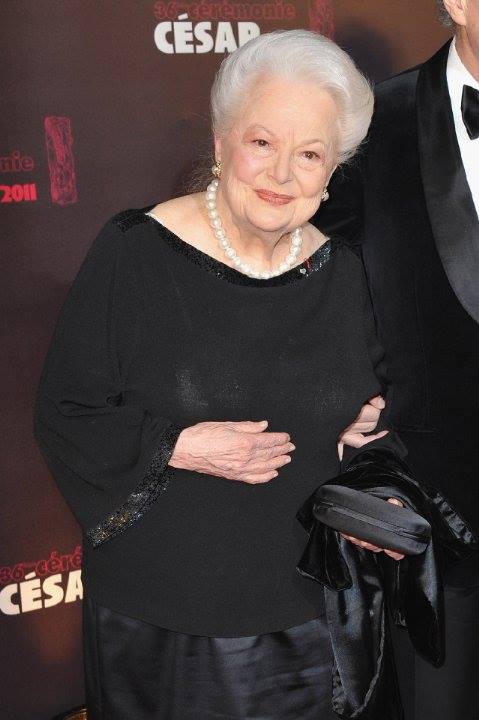
    “The Heiress” (1949) is based on a play by Ruth and Augustus Goetz, which in turn was adapted from Henry James’ novel, “Washington Square.” Olivia De Havilland is the “plain Jane” heiress of the title, Ralph Richardson her overbearing father, and Montgomery Clift, the adventurer who may or may not be out for her fortune. De Havilland (100 years-old today!) won an Oscar for her portrayal, as did the music, by Aaron Copland.

    “The Age of Innocence” (1993) is based on a novel by one-time James correspondent and close friend, Edith Wharton. The book was published in 1920, but looks back to the 1870s, its story dealing with the impending marriage of an upper class couple and the appearance of a disreputable interloper who threatens their happiness. The title is an ironic play on the outward manners of New York society, in contrast to its inward machinations. The novel earned a Pulitzer Prize, the first Pulitzer awarded to a woman.

    The film, which starred Daniel Day-Lewis, Michelle Pfeiffer and Wynona Rider, was something of a curve ball from director Martin Scorsese. Veteran composer Elmer Bernstein provided a lovely, Brahmsian score.

    “The Magnificent Ambersons” (1942) is based on another Pultizer Prize winner, this time by Booth Tarkington, from 1918. The novel is part of trilogy that tells the story of the declining fortunes of three generations of an aristocratic Midwestern family, between the end of the Civil War and the early years of the 20th century. With industrialism on the rise, the Ambersons’ “old money” wealth and prestige wane.

    “Ambersons” became the basis for only the second film directed by Orson Welles. By that time, however, the fall-out from “Citizen Kane” caused the film to be removed from Welles’ control and re-cut by the studio, shaving a full hour off the original running time. It says something about the quality of the film that it yet remains in itself a magnificent achievement.

    The score was by Bernard Herrmann, CBS staff composer from Welles’ radio days. Herrmann had followed Welles to Hollywood to provide the music for “Citizen Kane.” Like the film, the score was drastically edited, with half the music removed. The famously irascible Herrmann, who had just written his Academy Award winning music for “The Devil and Daniel Webster,” was so angry that he threatened legal action if his name was not removed from the credits.

    The action of “Mr. Skeffington” (1944), based on a 1940 novel by Elizabeth van Arnim, begins at a point some consider the end of the Gilded Age, the eve of World War I. Bette Davis stars as a woman so enamored of her own beauty and the suitors it attracts that she fails to value the affections of the man who eventually becomes her husband. Mr. Skeffington, played by Claude Rains, is a Jewish financier, riding high in the ‘teens, but whose fortunes change when he’s caught in Europe during the rise of the Nazis.

    Both Davis and Rains earned Academy Award nominations for their work. The vivid score is by Franz Waxman. Davis was going through a period of emotional turmoil during the filming, so that she was allegedly insufferable to everyone during the entire shoot. Someone finally poisoned her eyewash. When the police questioned the director, Vincent Sherman, he wished them good luck with their investigation. “If you asked everyone on the set who would have committed such a thing, everyone would raise their hand!”

    Clearly all that glitters is not gold. We peel back the veneer of prosperity with “Novels of the Gilded Age,” on “Picture Perfect,” this Friday evening at 6 EDT, on WWFM – The Classical Network; or listen to it later as a webcast at wwfm.org.


    Olivia de Havilland receives her Oscar for “The Heiress,” with the orchestra playing a few bars of Aaron Copland’s score:

    #OliviaDeHavilland 100

    PHOTOS: (Clockwise from left) Olivia de Havilland today; in “The Heiress;” and with her Oscar in 1950

Tag Cloud

Aaron Copland (92) Beethoven (95) Composer (114) Film Music (123) Film Score (143) Film Scores (255) Halloween (94) John Williams (187) KWAX (229) Leonard Bernstein (101) Marlboro Music Festival (125) Movie Music (138) Opera (202) Philadelphia Orchestra (89) Picture Perfect (174) Princeton Symphony Orchestra (106) Radio (87) Ralph Vaughan Williams (85) Ross Amico (244) Roy's Tie-Dye Sci-Fi Corner (290) The Classical Network (101) The Lost Chord (268) Vaughan Williams (103) WPRB (396) WWFM (881)

DON’T MISS A BEAT

Receive a weekly digest every Sunday at noon by signing up here


RECENT POSTS