Tag: Hollywood

  • Golden Age Film Score Titans Steiner and Tiomkin

    Golden Age Film Score Titans Steiner and Tiomkin

    There are only so many days in a year, so it should come as little surprise that two giants in a particular field would share a birthday anniversary. Hence, we have Heifetz and Kreisler on February 2, Rachmaninoff and Busoni on April 1, and of course Brahms and Tchaikovsky on May 7. May 10 marks the birthdays of twinned titans of the Golden Age of film-scoring, Max Steiner and Dimitri Tiomkin.

    Steiner (1888-1971), the literal godson of Richard Strauss, helped transplant the sound of fin de siècle Vienna to the realm of cinematic dreams. He composed over 300 film scores for RKO and Warner Brothers, earning 24 Academy Award nominations and winning three – for “The Informer,” “Now, Voyager” and “Since You Went Away” – though he is unquestionably better remembered today for his work on “King Kong,” “Gone with the Wind” and “Casablanca.”

    Tiomkin (1894-1979), a pupil of Alexander Glazunov, was born in Ukraine. He settled in the United States, where he composed music for films in all genres, though in the 1950s he enjoyed particular success writing for Westerns, including the Academy Award-winning “High Noon.” When asked why this would be the case, that a composer born half a world away would have such a command of this distinctly American idiom, Tiomkin replied, “A steppe is a steppe is a steppe.”

    Tiomkin was honored with four Academy Awards – three for Best Original Score (for “High Noon,” “The High and the Mighty” and “The Old Man and the Sea”) and one for Best Original Song (“The Ballad of High Noon”).

    Here’s a transcript of his acceptance speech, when winning the Oscar for “The High and the Mighty” in 1955:

    “Lady and gentlemen, because I working in this town for twenty-five years, I like to make some kind of appreciation to very important factor what make me successful to lots of my colleagues in this town. I’d like to thank Johannes Brahms, Johann Strauss, Richard Strauss, Beethoven, Mozart, George Gershwin, Jerome Kern, Wagner, Tchaikovsky, Rimsky-Korsakov. Thank you.”

    You can watch here:

    Steiner’s “Now, Voyager”:

    Tiomkin’s “Land of the Pharoahs”:


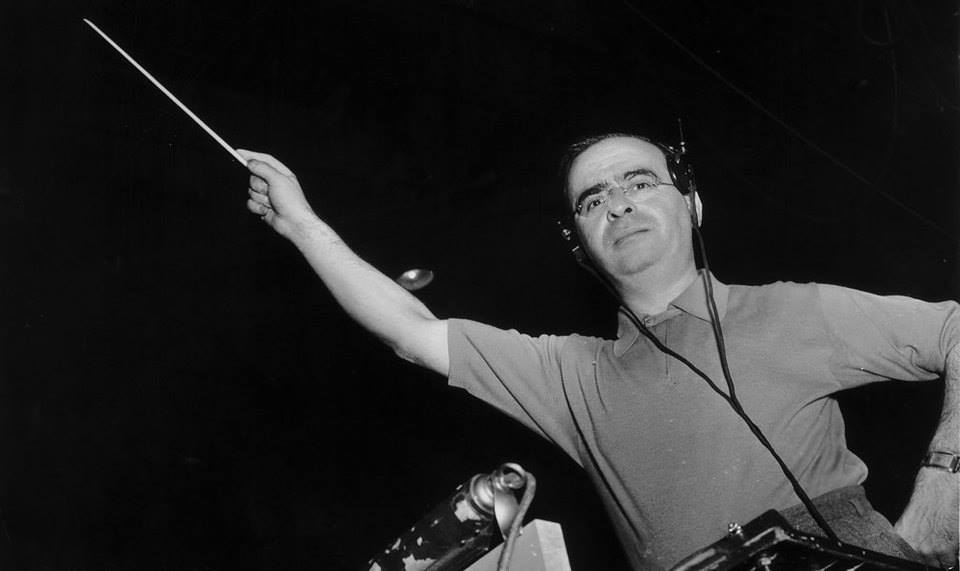
    PHOTOS: Steiner conducts (top); Tiomkin composes
  • Hollywood’s Dark Underbelly Self-Reflexive Films

    Hollywood’s Dark Underbelly Self-Reflexive Films

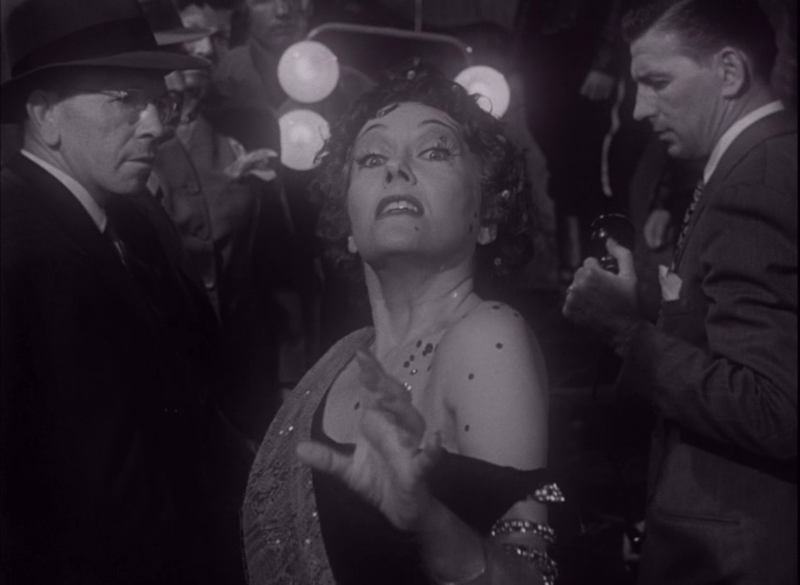
    “All right, Mr. DeMille, I’m ready for my close-up.”

    This week on “Picture Perfect,” we take a look behind the scenes at self-reflexive movies that offer glimpses of the dark underbelly of the film industry.

    We’ll have music from Billy Wilder’s “Sunset Boulevard” (1950), a film that’s been called the greatest movie about Hollywood ever made. Gloria Swanson plays Norma Desmond, a faded silent movie actress who believes she’s still “big; it’s the pictures that got small,” and William Holden is an unsuccessful screenwriter-turned-gigolo. Real life director Erich von Stroheim appears in an interesting role as Desmond’s butler – who was once a director! There are also cameos by Cecile B. DeMille and Hedda Hopper, who play themselves. Franz Waxman wrote the Academy Award winning score.

    Vincent Minelli’s “The Bad and the Beautiful” (1952) stars Kirk Douglas as a ruthless producer, who uses and abuses everyone around him – including Lana Turner, Walter Pigeon, Dick Powell, and Gloria Grahame. Yet everyone’s career seems to blossom from exposure to this S.O.B. The music is by Philadelphia-born David Raksin, who is best-remembered for his theme to the all-time noir classic “Laura.” His theme for “The Bad and the Beautiful” has also become a jazz standard.

    Peter O’Toole dominates “The Stunt Man” (1980) as a tyrannical director who blackmails a fugitive from the law into acting as a stunt man in his current film. The line between fantasy and reality begins to blur. Dominic Frontiere wrote the music. It’s probably not what anyone wants to be remembered for, but I always find it amazing that Frontiere served time for scalping tickets to the Super Bowl! Of course he scalped a half-million dollars worth, and his wife owned the Los Angeles Rams.

    Finally, director Michel Hazanavicius succeeds brilliantly in his virtuosic homage to classic American cinema, “The Artist” (2011). To my knowledge, if we discount Mel Brooks’ “Silent Movie,” from 1976, “The Artist” was the first silent feature to be released since Charlie Chaplin’s “Modern Times,” which was already an anachronism in 1936. The film was the recipient of five Academy Awards – half of its ten nominations – including one for Best Picture.

    The story deals with “A Star is Born”-type dynamic with a fading actor of the silent era gradually eclipsed by the success of rising young actress. Yet Hazanavcius manages to turn it around to come up with an honest-to-goodness, feel-good movie, a real rarity in contemporary film.

    Ludovic Bource’s Oscar-winning score manages to be evocative of time and place, breezy, yet when necessary, poignant, with moments of spectacular action music which could have been written by Alfred Newman or Franz Waxman. This just might be my favorite film of the past decade, maybe two. For a classic movie lover, the first five minutes alone are priceless. And love that Uggie!

    I hope you’ll join me for “Behind-the-Scenes Hollywood,” on “Picture Perfect,” this Friday evening at 6 EDT, with a repeat Saturday morning at 6; or that you’ll listen to it later as a webcast at wwfm.org.


    More about Uggie here.

    https://en.wikipedia.org/wiki/Uggie

  • Happy Birthday John Williams The Greatest Film Composer

    Happy Birthday John Williams The Greatest Film Composer

    In a career which has spanned 60 years, you’ve garnered 50 Academy Award nominations, 5 Academy Awards, 3 Emmys, 22 Grammys, and 7 BAFTA Awards.

    You’re the composer for eight of the top 20 highest-grossing films of all time. You’ve written Olympic fanfares, the theme to NBC News, the theme to PBS’ “Great Performances,” and both themes to “Lost in Space.”

    You’re the last in the line of the great Hollywood composers. You’ve also amassed an impressive body of concert music.

    Thanks for the extended childhood, John. You’ve made life so much more bearable.

    Happy birthday, John Williams, 84 years-old today.

    #johnwilliams


    The cast of “Star Wars: The Force Awakens” joins Jimmy Fallon and The Roots for this “a cappella” salute:

    John Williams records the “Great Performances” theme, in his signature black turtleneck:

    Theme to “Lost in Space” (season three):

    Olympic Fanfare and Theme (Los Angeles games, 1984):


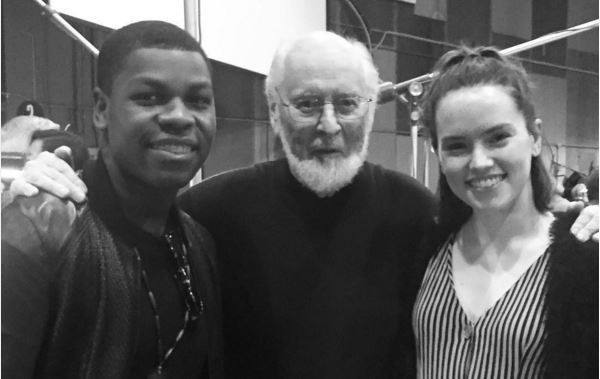
    PHOTO: Williams, with John Boyega and Daisy Ridley of “The Force Awakens”

  • José Iturbi Hollywood’s Piano Star

    José Iturbi Hollywood’s Piano Star

    Once again, you’ve got to love the Golden Age of Hollywood. In terms of music, movies from that era just seemed so… inclusive.

    On the one hand, you could have crooner Rudy Vallée acting in Preston Sturges comedies (and not singing a note); on the other, you could have Leopold Stokowski shaking hands with Mickey Mouse. There seemed to be a wider acceptance of musicians of all stripes as equally valid entertainers, and an assumption that the general public would understand (or at least not be put off by) a line of dialogue about Delius or Sibelius. When the Three Stooges weren’t flipping fruit into opera singers’ mouths, that is.

    This is especially fascinating when viewed from the perspective of the present, when seemingly the bar is set lower and lower all the time, with everyone racing to the lowest common denominator so as not to seem too pointy-headed. Wouldn’t it make sense that people of any era would want to aspire to be more? That they would want to be led, represented and entertained by the most talented, most intelligent people? It’s a very strange world we live in.

    José Iturbi was one of the seemingly unlikely cinematic superstars of the 1940s. Like Oscar Levant, Iturbi was a serious pianist. In the ‘20s, he had made a name for himself as a barnstorming virtuoso who toured Europe, Asia, Africa and South America. He made his North American debut with the Philadelphia Orchestra under Stokowski.

    Eventually, he made the transition to conducting, which had long been his dream. He led the great symphony orchestras of Philadelphia and New York, the London Symphony, the orchestra of La Scala Milan, and the Concertgebouw Orchestra of Amsterdam. He would serve as music director of the Rochester Philharmonic.

    Iturbi generally played himself in Hollywood musicals, including “Thousands Cheer” (1943), “Anchors Away” (1945) and especially “Three Daring Daughters” (1948), in which he was actually the lead.

    For all his talent and charisma, however, Iturbi was always churning up controversy, making provocative remarks and losing his temper. Ironically, for a musician who owed so much of his fame to his absorption into popular culture, he made a big hullabaloo about appearing on concert programs that included both classical and popular music. It wasn’t popular music he objected to, particularly; it was the mixing of the two. This is particularly puzzling from a pianist who studied at the Valencia and Paris Conservatories, yet played jazz and boogie-woogie in innumerable film shorts.

    His private life was equally turbulent, perhaps even more so, with tragic results. His wife died of accidental poisoning. He sued his daughter, claiming she was an unfit mother to his grandchildren. The daughter later committed suicide.

    Iturbi could be a brilliant pianist, though he sometimes drew criticism that he was diluting his talents through his involvement with Hollywood, and a number of his concerto recordings, which he conducted himself from the keyboard, don’t really seem to take flight. Even so, there are gems among his recorded repertoire, and the part he played in keeping classical music in the mainstream is to be lauded.

    It’s a vine that is now severely withered. I wonder if Luciano Pavarotti’s “Yes, Giorgio” (1982) was the last in the line of dubious movies featuring great classical musicians.

    Happy birthday, José Iturbi (1895-1980).


    Iturbi in “Holiday in Mexico” (1946):

    Insane take on Liszt’s “Hungarian Rhapsody No. 2” from “Anchors Aweigh” (1945):

    Iturbi plays Mozart with his sister, while conducting the Rochester Philharmonic, in 1946:

    Iturbi plays Albeniz, Granados and Navarro, from 1933:

    Oscar Levant in “The Barkleys of Broadway” (1949):

    Lauritz Melchior with Esther Williams and Van Johnson in “Thrill of a Romance” (1945):

    The Three Stooges menacing an opera singer in “Pardon my Scotch” (1935):
    https://www.youtube.com/watch?v=95EsngNGpIg

    The pie fight from “Yes, Giorgio”:

    Website of the José Iturbi Foundation:
    http://www.joseiturbifoundation.org/

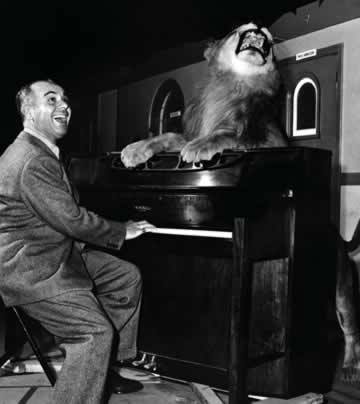
    PHOTO: Iturbi accompanying the MGM lion

  • Korngold Errol Flynn Hollywood Birthday

    Korngold Errol Flynn Hollywood Birthday

    May 29 marks the birthday of one of my favorite composers, Erich Wolfgang Korngold (1897-1957). Thanks to a steady diet of Errol Flynn films, Korngold will forever be a part of the soundtrack to my life.

    Korngold went from being one of Europe’s great musical prodigies, his works admired by Mahler, Strauss and Puccini – and championed by Schnabel, Weingartner and Klemperer – to becoming one of Hollywood’s transformative film composers. He is a link from Old World opulence to New World fantasy, his music gracing a number of Warner Brothers’ classic historical adventures.

    The best ones starred Flynn, and we’ll hear music from “The Sea Hawk” (1940) and “The Adventures of Robin Hood” (1938), as well as the mostly forgotten “Another Dawn” (1937). Flynn stars alongside Kay Francis and Ian Hunter (who would go on to play Richard the Lionheart in “Robin Hood”) in this love triangle involving pilots in a British desert colony.

    The film may be an obscurity to all save classic movie buffs, but Korngold thought enough of his music that he salvaged the main title as the opening theme to his Violin Concerto, premiered by Heifetz in 1947.

    It was an invitation from theatrical impresario Max Reinhardt that brought Korngold to Hollywood in the first place, for a cinematic adaptation of “A Midsummer Night’s Dream” (1935). The film stars James Cagney, Dick Powell and Olivia de Havilland, in her big screen debut, with Mickey Rooney an irrepressible Puck.

    For the project, Korngold adapted the famous incidental music of Felix Mendelssohn, interweaving material from Mendelssohn’s symphonies and orchestrating some of the “Songs without Words.” Even so, the music bears the composer’s unmistakable stamp, as you’ll hear in the opening number, lifted from the “Scottish Symphony,” which is marked by plenty of Korngoldian swagger.

    It’s all-Korngold this week, on “Picture Perfect,” music for the movies. Enjoy it this evening at 6 ET; make your heart crow with a repeat, tomorrow morning at 6; or listen to it later as a webcast at http://www.wwfm.org.

    Happy birthday, EWK!

Tag Cloud

Aaron Copland (92) Beethoven (95) Composer (114) Film Music (123) Film Score (143) Film Scores (255) Halloween (94) John Williams (187) KWAX (229) Leonard Bernstein (101) Marlboro Music Festival (125) Movie Music (138) Opera (202) Philadelphia Orchestra (89) Picture Perfect (174) Princeton Symphony Orchestra (106) Radio (87) Ralph Vaughan Williams (85) Ross Amico (244) Roy's Tie-Dye Sci-Fi Corner (290) The Classical Network (101) The Lost Chord (268) Vaughan Williams (103) WPRB (396) WWFM (881)

DON’T MISS A BEAT

Receive a weekly digest every Sunday at noon by signing up here


RECENT POSTS