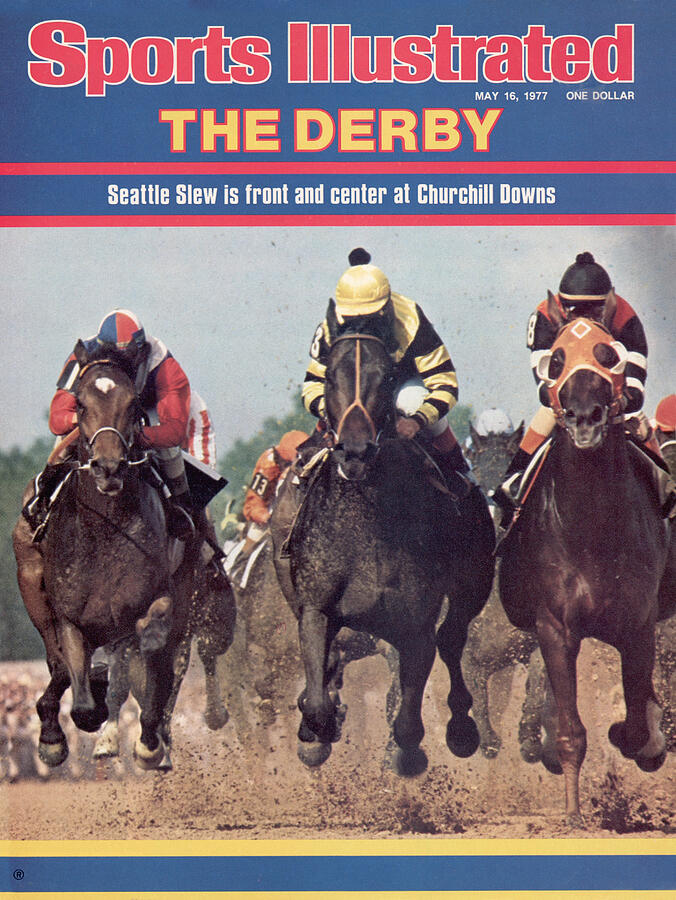
With the Kentucky Derby drawing near, it’s all about horses and horseraces on “Sweetness and Light.”
We’ll hear William Bolcom’s ballet “Seattle Slew;” a concert piece arranged from one of John Williams’ breakout film scores, for Mark Rydell’s “The Reivers,” adapted from William Faulkner’s coming-of-age novel about a boy swept up in automobile theft and illicit horseracing; and of course Stephen Foster’s “Old Kentucky Home.”
In addition, there will be Derby and thoroughbred-related works by Robert Farnon, Louis Moreau Gottschalk, William Schuman, and Leroy Anderson.
Meet me at the starting gate. It will be an hour of jockeys and juleps on “Sweetness and Light,” this Saturday morning at 11:00 EDT/8:00 PDT, exclusively on KWAX Classical Oregon!
Stream it, wherever you are, at the link:
https://kwax.uoregon.edu/
——–
I had this Sports Illustrated in 1977. I wonder if I have it still? I don’t know why, but I was crazy about Seattle Slew. But then, everyone was. The kind of media attention focused on the race back then would be baffling to anyone who grew up in the internet age. I was 10 years old in May 1977. I named my hermit crab Seattle Slew.
Tag: John Williams
-
Jockeys and Juleps on “Sweetness and Light”
-
Raising a Pint to Barry Fitzgerald for St. Patrick’s Day
I try to watch “The Quiet Man” every year on St. Patrick’s Day, whether I need it or not. If, already a quarter of the way into the 21st century, this confirms that I am hopelessly out of touch, so be it. Someday, someone will pry this twee, politically-incorrect Irish fable from my cold dead hand.
I’m working my way through the recent John Williams biography by Tim Greiving, and although I am having some major issues with it (the book, published by Oxford University Press, reads like a first draft, to put it kindly), it is obviously written with love and chock full of valuable information. I know Williams always speaks fondly of Victor Young, but it was interesting to learn that Young’s music for “The Quiet Man,” which Williams saw in the theater in 1953, was one of the first film scores that really made him sit up and take notice and made him consider the possibility of writing for the movies.
I guess this makes sense, especially with having everything laid out chronologically in a biography. Progressions become clearer, and from the start Williams was always a gifted arranger. I mean, his first Academy Award was for his arrangements for Norman Jewison’s film of “Fiddler on the Roof,” and it was far from his first musical. Even apart from the movies, Williams was arranging for and accompanying Frank Sinatra, Vic Damone, Frankie Laine, and so many others. So he would have had a connoisseur’s appreciation of what Young achieved in his score for “The Quiet Man,” which positively overflows with inspiring arrangements of folk and popular song and sentimental ballads.
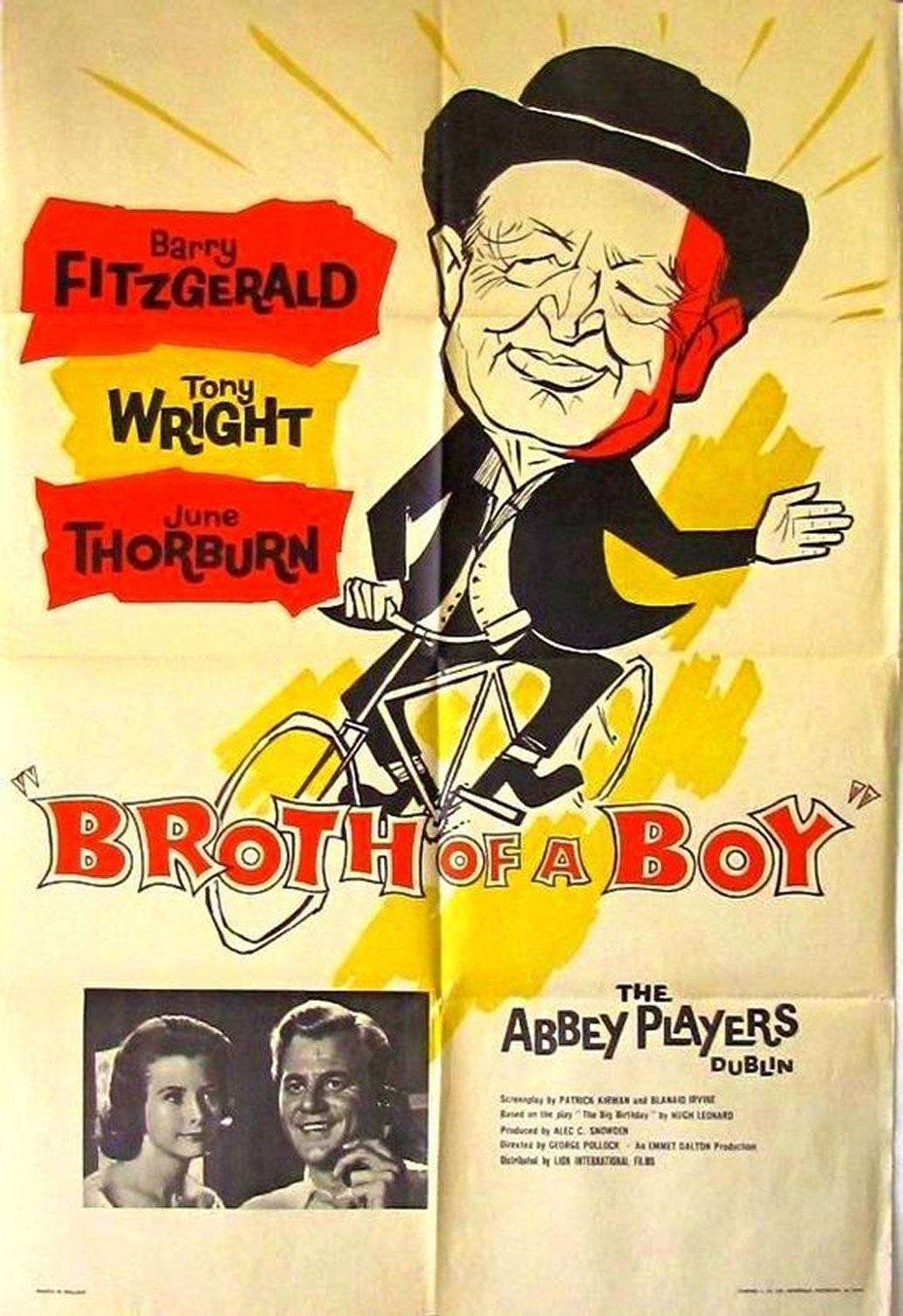
On a related note, for a long time, after having run across some clips, probably on YouTube, I’ve wanted to see a film called “Broth of a Boy.” It stars Barry Fitzgerald (who plays the “Quiet Man’s” insatiably thirsty Michaeleen Oge Flynn) as the oldest man in the world. With that premise, how could it miss? Unfortunately, the film is seemingly unavailable in the United States – only intensifying my desire to see it – and the reviews I’ve read ranged from mildly charmed to middling. So I certainly knew not to expect a classic.
Every year, around St. Patrick’s Day, I search for it, and what do you know, last night I found it on YouTube! The transfer is barely adequate, but you know how old movies are from the United Kingdom. Even the Alastair Sim version of “A Christmas Carol” (released in the U.K. as “Scrooge” in 1951 – a year before “The Quiet Man!”) looks like it was made in the 1930s. I don’t blame the technology; I blame post-war austerity.
Anyway, “Broth of a Boy” looks older than its years, as for that matter, does Barry Fitzgerald. His character is supposedly 110. Fitzgerald died in 1961 at the age of 72. But here, in 1959, he looks tired. Or maybe he was just hammered the whole time.
Be that as it may, if you’re a “Quiet Man” fan, I think you will find much to enjoy. The humor and characterizations are of the same cloth, and both films employ actors from Dublin’s Abbey Players – the National Theatre of Ireland – although, as far as I can tell, Fitzgerald is the only common denominator between the two.
Alas, the screenplay isn’t as consistent or sharp, and the scenes are not always the most imaginatively captured. I sure do miss John Ford’s direction and Technicolor. The score, by Stanley Black, will never be mistaken for Victor Young. The film feels longer than its 77 minutes, but if you are a “Quiet Man” die-hard, you might want to give it a shot. Or have a few yourself, if you know what’s good for you. -
John Williams’ Piano Concerto at the New York Philharmonic
It wasn’t until 6 p.m. Saturday that it occurred to me I might have a concert in New York City on Sunday. The thought popped into my head as I was adjusting some magnets on the refrigerator in order to lift the page on the calendar and have a glimpse at March.
Huh. No musical events listed until the weekend.
But I knew I had committed to see Emanuel Ax perform John Williams’ new piano concerto at the New York Philharmonic, and I thought it was sometime around the beginning of the month. So I went to the calendar I carry with me in my computer bag, and lo and behold, there it was, scrawled on March 1, at 2 p.m. Somehow I had missed it when copying over my appointments to the other calendar!
How could that possibly happen? If you’re wondering why it didn’t pop up on my Google calendar, then you really don’t know Classic Ross Amico. I still chisel all my commitments onto stone tablets.
Be that as it may, my mind immediately shifted into business mode. Should I drive or take the train? What time should I leave? What do I need to do in the morning? If I drive, where do I park? Where should I grab lunch? What should I eat, and when, in order to satisfy hunger without inducing drowsiness during the performance? How should I time my afternoon coffee? Shouldn’t I be thinking about getting to bed?
In the end, I decided to drive. Meters are free in New York on Sunday, and it turned out to be a lovely day, weather-wise, despite a chance of rain and snow in the morning forecast. So I zipped in, in about 70-75 minutes, Giuseppe Sinopoli conducting the “Enigma Variations” on my CD player, and parked on the street, a stone’s throw from Lincoln Center, at around 12:30. A grab-and-go lunch later, I had strolled as far north as Verdi Square, to have a glimpse at the monument in the March Sunday sunshine, despite a chill in the air, its warm glow promising the imminent arrival of spring. I visited the Strand Bookstore at its satellite at 2020 Broadway to grab a cup of coffee and run my eye over the sidewalk stalls, and then headed back down to Geffen Hall by 1:30.
There, I met my concert companion, H. Paul Moon, who was very kind to make all the ticket arrangements, and we made our way to our seats on the second tier, stage right (the left side of the auditorium). How narrow and perilous the path was, with a single row of seats angled for an easier view of the stage and a low rail beckoning me to just end it all already.
But I resisted.
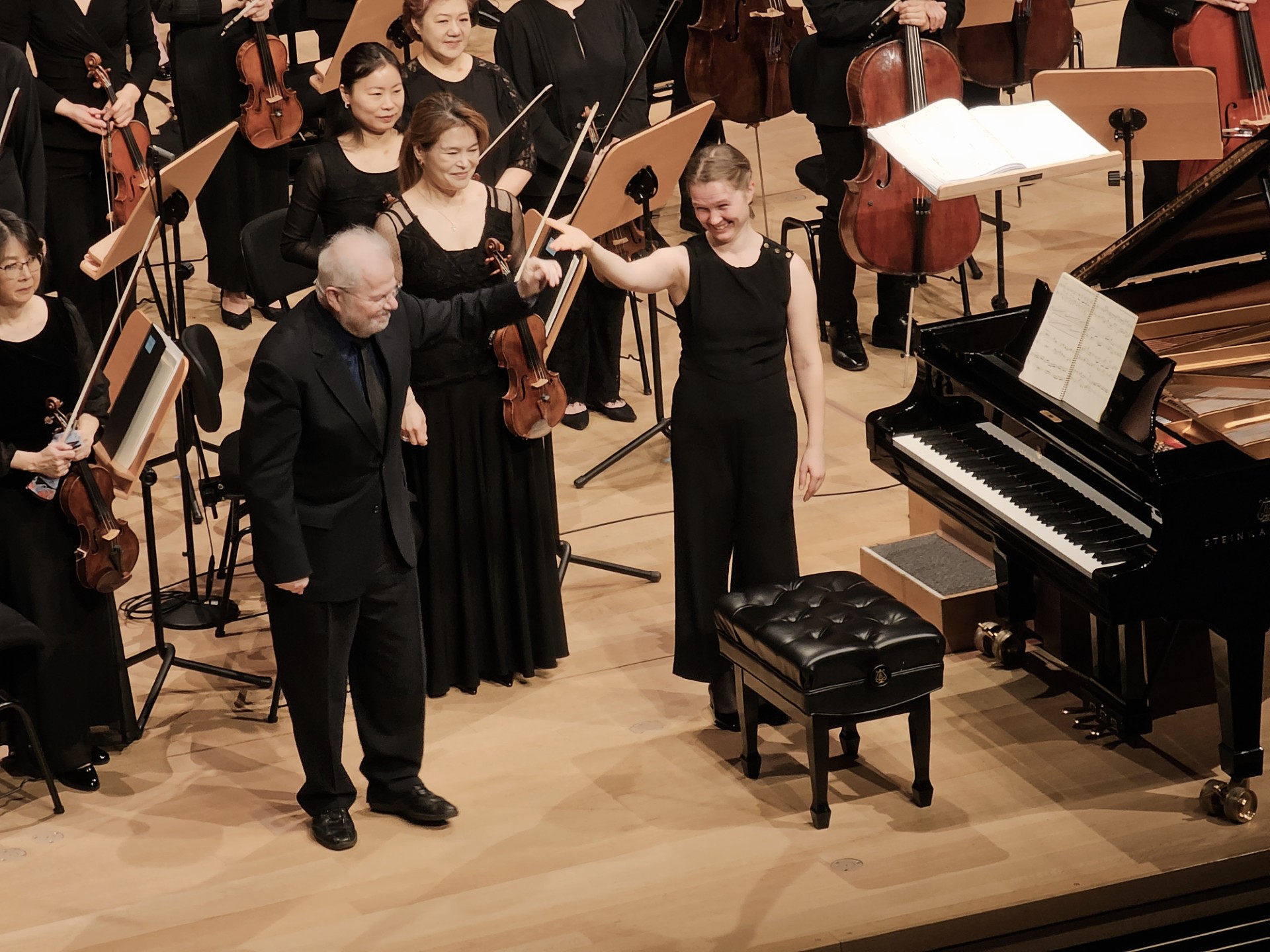
The conductor of the program was the somewhat elfin Lithuanian Mirga Gražinytė-Tyla, a Dudamel protégée in Los Angeles, who spread her wings as music director of the City of Birmingham Symphony Orchestra. Youthful and expressive, at times capricious even, she manages to stay tethered to reality, with interpretive decisions that seem grounded in practicality. It’s afterward, as she acknowledges the musicians, that she extends an open palm to the various sections and players, as if to offer them fey honey cakes.
The concert opened with Ralph Vaughan Williams (yay!): his “Fantasia on a Theme by Thomas Tallis,” with nine string players sequestered upstage, behind the larger body of musicians, the better to achieve the work’s antiphonal effects.
The work suggests the interplay of sacred voices in a cathedral, evocative of Renaissance church music, yet at the same time manages to convey kind of a transcendent radiance that lends it a certain timelessness. The music sways and swells in its Phrygian modality, alternating between austerity and a certain lushness that parallels the bygone English countryside so often celebrated and idealized by the pastoral school. Hearing it again only confirms its greatness. There’s a reason it’s Vaughan Williams’ most famous piece (alongside “The Lark Ascending”).
Gražinytė-Tyla’s interpretation was gorgeous without teetering into sentiment. Hers was a holistic approach. Unlike some, she didn’t attempt to whip the music into ecstasies. But as with all the great works, the piece stands up to different interpretive philosophies.
Stepping off the podium to acknowledge the musicians, the conductor was again full of smiles and asides to the first chair players. She seems to be a positive force, and though the Philharmonic has been known to be notoriously jaded, they responded well to her.
Here’s an excerpt of Gražinytė-Tyla conducting Vaughan Williams in Birmingham.
Next came John Williams – no relation to Vaughan Williams, though based on some of his film scores, the composer clearly admires English music.
It’s probably safe to say that few from the “Star Wars”/”Harry Potter” crowd that attend performances of Williams’ concert works are going to come out of them feeling wholly satisfied. Not that there aren’t touches in his concert music that could betray the voice of the composer to those exceptionally well-versed in his film scores. But there are no heroic marches or sweeping love themes. More often, the music is impressionistic, rather than cinematic.
In this new work, Williams also risks disappointing the jazz crowd, as each of the three movements is tied to an admired jazz pianist – Art Tatum, Bill Evans, and Oscar Peterson – all of whom Williams heard live. It might be perceived as another bait-and-switch, as there is very little “jazz” in it. Or when there is, it’s been internalized, processed, and given back as something else. Williams takes as his starting point his memories of the essence of each of these keyboard titans.
He certainly gives the soloist plenty to do, in a cadenza-heavy first movement and another virtuosic cadenza at the end. Of course, there’s more to classical piano than leaping technical hurdles and playing fast and loud, so there are also introspective passages and reflective interludes throughout. Emanuel Ax played the piece with the safety net of sheet music, but he did so with such confidence that it made you wonder why he thought it necessary.
When it comes to Williams’ concert music, which he has been writing since the 1960s, prior to his blockbuster successes as a film composer, one almost feels as if he protests too much, and for as much as I love just about every note this guy ever wrote (with a few exceptions), I sometimes wish he would indulge his natural melodic gift more in his concertos. I would recommend the Tuba Concerto as a good starting point for the uninitiated. His other works have lyrical passages – some more than others – but few will leave you humming.
For me, the work under consideration becomes more appealing as it progresses. In the second movement, the piano supports the principal viola (here Cynthia Phelps), who is given a substantial lyrical passage, before the movement gradually expands into the woodwinds and then the lower strings. Ax ruminates, until eventually the strings begin to swell. The woodwinds return, somewhat ethereally, and then the viola reappears to round off the movement.
I also like how Williams builds up to the end of the piece. For as large as the orchestra is – with no less than six percussionists, another piano within the orchestra, and a celesta – it’s remarkable just how restrained and precise the composer is in conjuring the different timbres. Say what you want about John Williams, he’s a master colorist and the guy really knows his way around the orchestra. More viscerally, he does give us a race to the finish and a satisfying “bang” to let us know when to applaud.
That Williams, who turned 94 on February 8, still has the intellectual rigor to pull off a work on this scale is astonishing. The concerto was introduced by Ax at Tanglewood last summer. Word is that a recording was made for commercial release. If you’re interested in checking it out, the premiere performance is posted on YouTube.
If you want to hear it live, Ax will be bringing it to the Philadelphia Orchestra next season.
The piano has always been Williams’ own instrument. He studied seriously with Juilliard’s Rosina Lhévinne, while also playing jazz piano and serving as a session pianist for innumerable singers. From well before he was a household name, you can hear him playing on the soundtracks to “Peter Gunn,” “Breakfast at Tiffany’s,” “West Side Story” (the film), “The Big Country,” “To Kill a Mockingbird,” and so many others. This is a man who’s had nine creative lives.
One wonders what kind of concerto he would have written for the keyboard had he tackled it 40 years earlier. But what we’ve got is a good one, even if it will never enter the public consciousness the way his film scores have. At least it was written with dignity and craftsmanship, and it never teeters into kitsch.
Even so, I can’t help but wonder what one of his concertos would sound like if he had he been writing a hundred years ago, when a significant number of major composers were still creating vital music in a tonal idiom. I’m all for composing a work that reveals more and more on repeated listening, but the surest way to get repeat performances is to be sure to give listeners something the first go-round that they’ll want to hear again.
For an encore, Ax offered Schubert’s “Ständchen” (“Serenade”), which was beautifully played, an ideal palate-cleanser, even if some nearby idiot thought it necessary to hum along off-key.
The second half of the program was devoted to the Symphony No. 5 by Mieczyslaw Weinberg, yet another composer who walked a perilous line in Soviet Russia. Weinberg fled the Nazi invasion of Poland – his parents and sister were killed – and throughout his life, even in “safety,” there were periods during which he weathered harrowing encounters with anti-Semitism and Stalin’s dangerous whims. Weinberg’s father-in-law was murdered by the secret police and he himself was arrested. His friend and colleague, Dmitri Shostakovich, went above and beyond, putting himself at risk to defend Weinberg to Stalin himself. Who knows what would have happened to Weinberg had Stalin not died unexpectedly.
While clearly laboring under the same tense reality as Shostakovich and many of his peers, Weinberg’s creative voice is very much his own. It is notable in his symphony that he actually supplies some melodic material to the piccolo, as opposed to merely using the instrument expressively, to pierce the listener’s eardrums, as Shostakovich is prone to do. Furthermore, Weinberg doesn’t descend into grotesquerie. Even so, despite having been composed under Krushchev’s “thaw,” it is a gloomy work. Following the somber, unsettled adagio that forms the symphony’s second movement, I noted at least six people heading for the exits on the ground floor. It is certainly worthwhile music, however, and in its way, often quite beautiful.
I probably have more Weinberg recordings in my library than most, but before yesterday I confess I had not heard the Symphony No. 5. There are a number of recordings of it on YouTube.
Gražinytė-Tyla has been a steadfast Weinberg champion. Her first recording for Deutsche Grammophon was of Weinberg’s Symphonies Nos. 2 & 21. A subsequent release documents her performances of his Symphonies Nos. 3 & 7 and his Flute Concerto.
Yesterday’s was quite a significant program – the last of a four-concert series, at that. Hats off to the New York Philharmonic for investing in such serious fare. Gražinytė-Tyla will continue with the orchestra, conducting music by György Kurtág (who just turned 100 last week), his “Brefs messages,” Elgar’s Cello Concerto (with soloist Vilde Frang), and Schumann’s Symphony No. 1 (the “Spring” Symphony), March 5-7.
For those in search of unusual and neglected repertoire, with a welcome appetizer in the form of a delectable modern classic, this was one Sunday matinee that very much satisfied.
Bravi, Mirga Gražinytė-Tyla and Emanuel Ax, and thank you, New York Philharmonic!———
Photo of Emanuel Ax and Mirga Gražinytė-Tyla, courtesy of Paul Moon
-
Himalayan Adventures on “Picture Perfect”
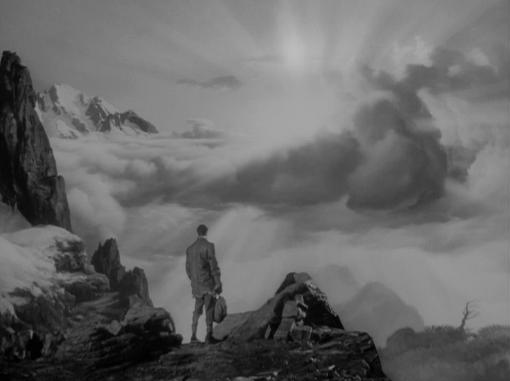
This week on “Picture Perfect,” we journey through the awe-inspiring landscapes of India and Tibet, even as we feel our way to the inner realms of spirit and psyche, with an hour of Himalayan adventures.
The Himalayas, in film, have frequently been the source of enlightenment; though occasionally their overwhelming influence has also led to madness. Intriguingly, the latter is the case in the Powell-Pressburger classic, “Black Narcissus” (1947). Psychological and emotional tensions abound in this tale of repressed nuns struggling to maintain their composure in a voluptuous Himalayan valley.
The stunning cinematography was by Jack Cardiff, and Brian Easdale (of “The Red Shoes” fame) wrote the music. Incredibly, the entire film was shot in England, mostly at Pinewood Studios. From a purely visual standpoint, “Black Narcissus” must be one of the most beautiful films ever made. It’s also one of the craziest, with unlikely object-of-desire Mr. Dean driving the sisters to the brink.
The Himalayas also form the backdrop to “Seven Years in Tibet” (1997), based on a memoir of Austrian mountaineer Heinrich Harrer. Harrer escapes from a British internment camp in India during the Second World War. He travels across Tibet to its capital, Lhasa, where he eventually becomes the tutor of the 14th Dalai Lama. In the film, Brad Pitt plays Harrer. John Williams wrote the music, and Yo-Yo Ma performs the cello solos.
“The Razor’s Edge” (1946) tells the story of a traumatized World War I veteran, who sets off in search of some kind of transcendent meaning to his existence. He finds it in India, at a Himalayan monastery. The 1946 adaptation of W. Somerset Maugham’s novel (which he claimed was thinly-veiled fact) features Tyrone Power, Gene Tierney, and Ann Baxter. The music is by Alfred Newman, who will conduct a selection from his score.
Finally, we’ll hear a suite from the Frank Capra classic, “Lost Horizon” (1937). Based on the book by James Hilton, the film stars Ronald Colman and an outstanding supporting cast, including Jane Wyatt, Thomas Mitchell, Edward Everett Horton, H.B. Warner, and Sam Jaffe. The novel, and the film, brought the term “Shangri-La” into popular usage, a Utopian paradise hidden in a secluded Himalayan valley, a place of ageless beauty and serenity.
“Lost Horizon” provided composer Dimitri Tiomkin (a pupil of Alexander Glazunov) with his first major project. The result is one of his most colorful scores. The recording is one of the gems of RCA’s Classic Film Scores series, originally issued in the early 1970s. Made in the presence of the composer, it features 157 performers, with the chorus standing on a platform behind the conductor, Charles Gerhardt, and the various percussionists stationed in the encircling balcony.
I can’t guarantee that you’ll find enlightenment, but there will be plenty to awe and inspire in these Himalayan adventures, on “Picture Perfect,” music for the movies, now in syndication on KWAX Classical Oregon!
——–
Clip and save the start times for all three of my recorded shows:
PICTURE PERFECT, the movie music show – Friday at 8:00 PM EST/5:00 PM PST
SWEETNESS AND LIGHT, the light music program – Saturday at 11:00 AM EST/8:00 AM PST
THE LOST CHORD, unusual and neglected rep – Saturday at 7:00 PM EST/4:00 PM PST
Stream them, wherever you are, at the link!
https://kwax.uoregon.edu -
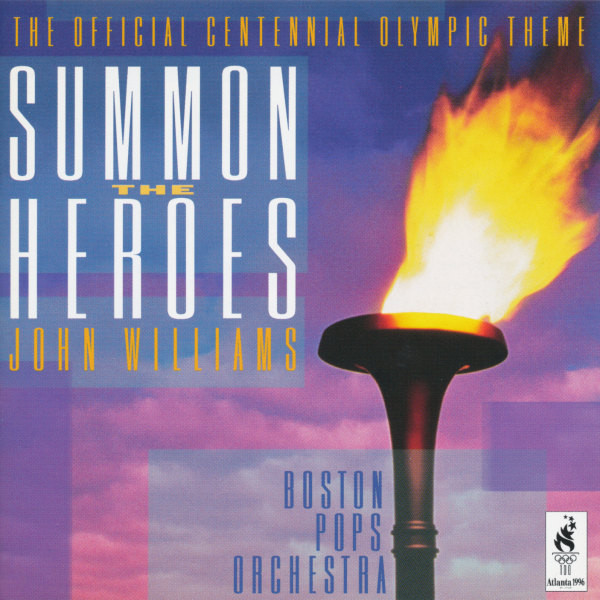
Summon the Heroes: John Williams Inspires Vic Damone to Save the Day
Anybody else watching the Olympics? I’ve been catching some, up to a couple hours a night. And I don’t usually watch TV. (I’m a movie guy.) But it’s been nice to follow some of the athletes and cocoon myself in nostalgia. And what could be more nostalgic than John Williams’ Olympic fanfares, two of which – “Olympic Fanfare and Theme,” composed for the 1984 games in Los Angeles, and “Summon the Heroes,” composed for the 1996 Games in Atlanta – are now staples of Olympics’ broadcasts. You can hear them, in arrangements by other hands, used as bumpers, as coverage fades into and out of commercial breaks, and as underscore in segues between events. (In 2016, I wrote a post speculating on Williams’ royalties package!)
Here’s a related anecdote, also prompted in part by my reading of Tim Greiving’s new John Williams’ biography, published by Oxford University Press. During a pledge drive at a certain local radio station around the turn of this century (a station I worked at for several decades, only to be let go, along with all the other local hosts, as a result of the pandemic), I had piled up some inspiring tracks, hoping to get the phones ringing. One of those was Williams’ “Summon the Heroes,” still fairly new at the time. Sure enough, it set the volunteers to work, and one of them walked in with a pledge sheet bearing a comment from Vic Damone.
Damone, the Italian-American crooner who had a big hit in 1947 with “I Have but One Heart,” auditioned a young Johnny Williams in 1955 and immediately hired him (after a falling out with Burt Bacharach) as his accompanist, arranger, and conductor. Damone goes into more detail in Greiving’s book. At the time, he basically said he used to tour with Johnny, and that Johnny was his pianist.
We’re usually giddy during pledge drives anyway, but getting a call from Vic Damone talking about John Williams got us all stirred up. So we started spinning more Williams and Damone’s recording of “Kismet.” (He played Caliph in the film, in which he sings “Stranger in Paradise” with Ann Blyth.) Damone must have been tickled pink, because he kept calling back and pledging more money – and it went on long after my shift!
I can say that Vic Damone was a huge hero that drive. One of the other announcers took it upon himself to hang a plaque on this hole in the wall where we used to eat our lunches when not sneaking them into the studio. It read: VIC DAMONE HOSPITALITY LOUNGE.
How Damone came to be listening that day, I don’t know. Not too much later, he suffered a stroke and spent his final years in Florida. But during that particular drive, John Williams really did summon a hero – Vic Damone!
“Summon the Heroes”
“Stranger in Paradise”
Williams’ arrangement of “Make Me Rainbows,” lyrics by Alan and Marilyn Bergman
A new musical called “My Fair Lady” was receiving its test run in Philadelphia when the sheet music was handed off to Damone and Williams by Mitch Miller, then working A&R at Columbia, Damone’s record label. Damone was partial to “I’ve Grown Accustomed to Her Face,” but Williams convinced him that “On the Street Where You Live” would be a much better fit. The problem was that the show’s producers were actually planning to cut the song. Once Miller and Percy Faith heard what Damone and Williams did with it, a recording session was hastily arranged. When Damone’s version became a major hit, it was decided to keep it in the show!
I venture to guess, this aspect of Williams’ career remains unknown to many of those who latched onto him through his blockbuster film scores. By the time he began to amass his shelf full of Oscars, he’d already been working as an arranger and jazz pianist and contributing to film and television productions for decades.
I have some reservations about Greiving’s biography (which could have used a more attentive editor), but it is valuable for having compiled so many previously uncollected details about the rise of “Johnny Williams.”
Tag Cloud
Aaron Copland (94) Beethoven (95) Composer (114) Film Music (148) Film Score (143) Film Scores (255) Halloween (97) John Williams (196) KWAX (232) Leonard Bernstein (105) Marlboro Music Festival (125) Movie Music (163) Mozart (91) Opera (215) Philadelphia Orchestra (90) Picture Perfect (174) Princeton Symphony Orchestra (110) Radio (90) Ross Amico (244) Roy's Tie-Dye Sci-Fi Corner (290) The Classical Network (101) The Lost Chord (269) Vaughan Williams (107) WPRB (397) WWFM (881)