Tag: Marlboro Music Festival

  • Smetana’s Syphilis a Composer’s Life in Music

    Smetana’s Syphilis a Composer’s Life in Music

    Nothing says May Day like syphilis. Fa la la la la la la, fa la la la la la la!

    The disease was something of an occupational hazard for the great composers. This week on “Music from Marlboro, we’ll examine the sad case of Bohemian master Bedřich Smetana.

    Smetana had already lost his hearing at the time he embarked on his String Quartet No. 1 in E minor, in 1876, at the age of 52. Understandably, his malady would have been much on his mind, and the work bears considerable autobiographical influence – so much so, that he subtitled it “From My Life.”

    Allegedly, the first movement is representative of the composer’s romantic ideals in life and music; the second, a recollection of the happiness of youth; and the third, a paean to love.

    But it is the fourth movement that contains the most dramatic stroke, as the first violin shatters a mood of artistic fulfillment through the intrusion of a high, sustained harmonic E, suggestive of a ringing in the composer’s ears he experienced prior to going deaf. Syphilis would claim Smetana’s sanity and eventually his life, in 1884.

    We’ll hear a performance of the quartet, from the 2007 Marlboro Music Festival, featuring violinists Hye-Jin Kim and Karina Canellakis, violist David Kim, and cellist David Soyer.

    Antonin Dvořák played the viola in the private premiere of the work in 1878. We’ll open the hour with Dvořák’s own, unpretentious “Serenade for Winds,” which was given its first performance the very same year, when the composer was 37 years-old.

    The serenade is written in the tried-and-true “Slavonic style” that established Dvořák’s fame. Its instrumentation and emphasis on melody recall occasional and ceremonial serenades of the 18th century.

    We’ll enjoy it in a recording made in 1957, with oboists Alfred Genovese and Earl Shuster, clarinetists Harold Wright and Richard Lesser, bassoonists Anthony Cecchia and Roland Small, hornists Myron Bloom, Richard Mackey, and Christopher Earnest, cellists Yuan Tung and Dorothy Reichenberger, and double bassist Raymond Benner, all under the direction of Louis Moyse.

    Marlboro musicians balance their Czechs, on the next “Music from Marlboro,” this Wednesday evening at 6:00 EDT, on WWFM – The Classical Network and wwfm.org.

    Marlboro School of Music and Festival: Official Page


    NOTE: Following today’s broadcast, I hope you’ll stick around for tonight’s Exploring Music with Bill McGlaughlin (at 7:00), as Bill continues his week-long celebration of Marlboro Music with performances of works by Jacques Ibert, Shulamit Ran, Mozart, and Beethoven.


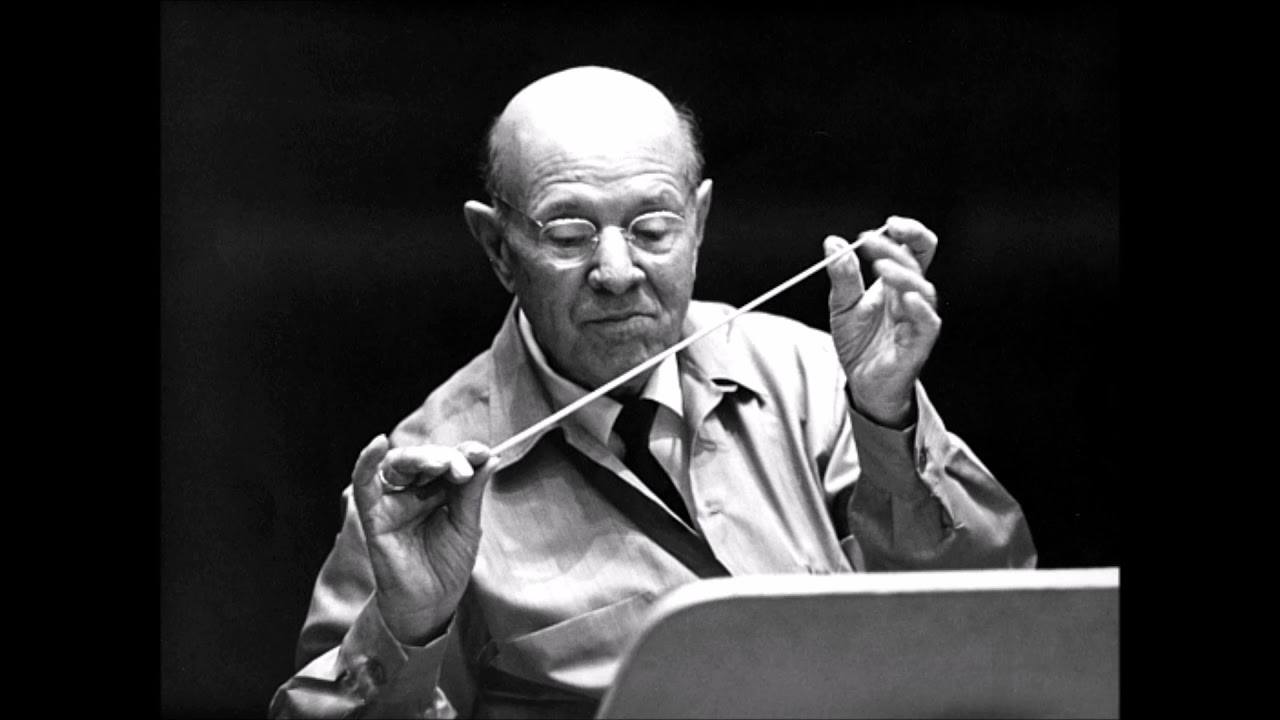
    PHOTOS: Czech out Dvořák (left) and Smetana

  • Marlboro Music Festival Spotlight on Exploring Music

    Marlboro Music Festival Spotlight on Exploring Music

    It’s an embarrassment of riches for chamber music enthusiasts on this week’s Exploring Music with Bill McGlaughlin, as the focus will be on the legendary Marlboro Music Festival.

    Marlboro Music was established by Rudolf Serkin, Adolf Busch, Marcel Moyse and friends in Marlboro, VT, in 1951. From the start, Marlboro has offered a unique environment for the study and performance of the chamber music repertoire, with ideas and insights passed between veteran and up-and-coming musicians performing side by side in a relaxed atmosphere far removed from the pressures of daily life.

    Marlboro has benefited from the indispensible mentorship of such luminaries as Pablo Casals, Felix Galimir, Mieczyslaw Horszowski, and Sándor Végh, among others, who have helped foster then-promising musicians such as Yo-Yo Ma, Paula Robison, Richard Stoltzman, and all four members of the Guarneri Quartet (well, five, if you count Peter Wiley). The tradition continues, and Marlboro musicians now fill out many of the world’s great chamber music and orchestral ensembles.

    Bill McGlaughlin will celebrate this famed chamber music retreat in five installments, this Monday through Friday at 7:00 p.m. EDT, on WWFM – The Classical Network and wwfm.org.

    In the meantime, check out all this invaluable interview material with many Marlboro stalwarts, including its current directors, Mitsuko Uchida and Jonathan Biss:

    https://exploringmusic.wfmt.com/discussion/

    Enjoy a Marlboro double-whammy this Wednesday, as I’ll present “Music from Marlboro,” as always, at 6 p.m., followed by Bill’s third installment.

    Marlboro School of Music and Festival: Official Page

  • Casals’ Beethoven at Marlboro Music

    Casals’ Beethoven at Marlboro Music

    The Marlboro Music Festival is recognized far and wide as a chamber music mecca. Summer after summer, Marlboro Music brings together classical music luminaries and rising young talent, as it continues to add links to a chain, begun by Rudolf Serkin, Adolf Busch, Marcel Moyse, and the rest, all the way back in 1951.

    Though chamber music is indeed Marlboro’s principal area of focus, every once in a while it’s fun to get everyone together to do a reading from the orchestral literature. On this week’s “Music from Marlboro,” we’ll listen in on one such occasion, as Marlboro players perform under the loving direction of Pablo Casals.

    Beethoven’s Symphony No. 3, the “Eroica (written in 1803-04) is enshrined in the history books as one of the torches that touched off the Romantic Era, but, on closer inspection, the composer was already playing with black powder in his Symphony No. 2.

    In his second symphony, completed two years earlier, Beethoven swaps out the Haydn-issue minuet for a scherzo, a move that would be emulated so frequently by other composers that it became the new standard.

    “Scherzo” is Italian for “joke,” and the last two movements of Beethoven’s symphony are full of them. I can’t say that they’re knee-slappers, but the composer plays enough with convention that it triggered a smart backlash from critics at the work’s premiere. One critic described the symphony as “a hideously writhing, wounded dragon that refuses to die, but writhing in its last agonies and, in the fourth movement, bleeding to death.”

    Ouch!

    I don’t think it’s anyone’s favorite Beethoven symphony, but in the hands of Pablo Casals, it is given a little more dignity than usual, in part because he just lets the music do its thing. There are no volcanic shifts in dynamics or hairpin turns in tempi. Many conductors interpret the earlier symphonies of Beethoven with retroactive insight, imposing a degree of vehemence more appropriate to the angrier passages of the 5th or the 9th. Casals non-interventionist approach allows the music to speak for itself.

    We’ll hear a performance from the 1969 Marlboro Music Festival. Casals directs a performance brimming with affection, and his players responding accordingly.

    Then, to fill out the remainder of the hour, we’ll find further delight in music by Wolfgang Amadeus Mozart – his Sonata in B-flat for Bassoon and Cello, K. 292. The 1975 performance will feature bassoonist Alexander Heller and a 19 year-old cellist named Yo-Yo Ma, also evidently having a good time.

    We’ll let the music do the talking, on the next “Music from Marlboro,” this Wednesday evening at 6:00 EDT, on WWFM – The Classical Network and wwfm.org.

    Marlboro School of Music and Festival: Official Page


    PHOTOS: Casals tames the dragon

  • Messiaen’s Quartet: Music from the End of Time

    Messiaen’s Quartet: Music from the End of Time

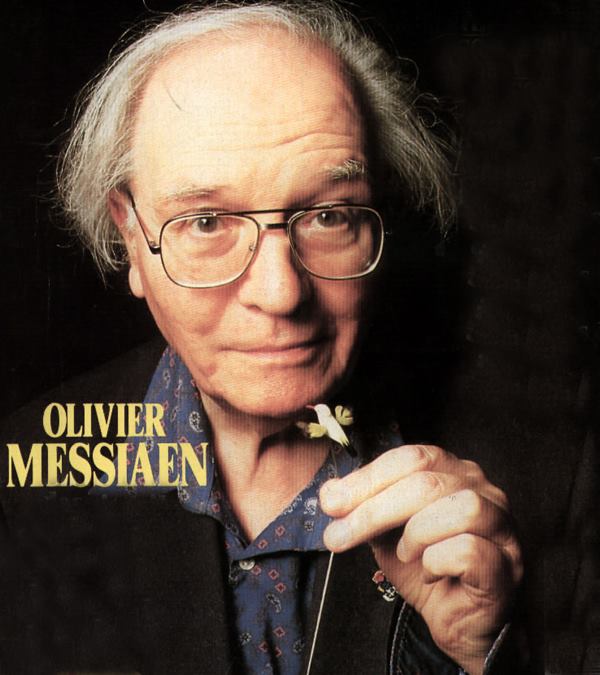
    As someone who definitely has a problem with managing his time, I am relieved to find it coming to an end, at least musically speaking. I hope you’ll join me for the next “Music from Marlboro,” as we listen to Olivier Messiaen’s “Quartet for the End of Time.”

    Messiaen famously wrote his piece, one of his most frequently performed, in a prisoner of war camp, using the only instruments at his disposal (clarinet, violin, cello, and piano). A sympathetic guard, Karl-Albert Brüll, saw to it that he had pencils, music paper, and plenty of quiet. He also helped to acquire the instruments.

    The piece was first performed in an unheated space, on January 15, 1941, before an audience made up of the camp’s prisoners and guards. Messiaen recollected, “Never was I listened to with such rapt attention and comprehension.” Shortly after the performance, Brüll forged papers, using a potato stamp, and liberated the musicians.

    Many years later, Brüll showed up on Messiaen’s doorstep, but was told the composer would not see him. Perhaps Messiaen didn’t wish to relive the war. But Brüll was no Nazi. In civilian life, he was a lawyer, a cultivated man who spoke fluent French. In the service, he treated his prisoners humanely. Messiaen eventually had a change of heart and sent a message to the man who had helped make his masterpiece possible. But it was too late. Brüll had been hit by a car.

    A devout Catholic, Messiaen drew inspiration for the quartet from the Book of Revelation. The score is prefaced by the following quote:

    “And I saw another mighty angel come down from heaven, clothed with a cloud: and a rainbow was upon his head, and his face was as it were the sun, and his feet as pillars of fire … and he set his right foot upon the sea, and his left foot on the earth…. And the angel which I saw stand upon the sea and upon the earth lifted up his hand to heaven, and sware by him that liveth for ever and ever… that there should be time no longer: But in the days of the voice of the seventh angel, when he shall begin to sound, the mystery of God should be finished…”

    The work falls into eight movements (here in English translation): “Crystal liturgy;” “Vocalise, for the Angel who announces the end of time,” “Abyss of birds;” “Interlude;” “Praise to the eternity of Jesus;” “Dance of fury, for the seven trumpets;” “Tangle of rainbows, for the Angel who announces the end of time;” and “Praise for the Immortality of Jesus.”

    Messiaen being Messiaen, the composer manages to include ample bird calls. Syncopated passages punctuate a kind of mystic yearning so intense that it borders on the erotic.

    During this holiest week on the Christian calendar, and in the wake of the tragedy at Notre Dame, which, thankfully, could have been a lot worse, I thought it only appropriate to revisit Messiaen’s luminous, ecstatic meditations.

    We’ll hear it performed at the 2005 Marlboro Music Festival, by pianist Ieva Jokubaviciute, clarinetist Charles Neidich, violinist Karina Canellakis, and cellist Soo Bae.

    The music will fill the entire hour. But there’s no need for an encore when time is at an end. I hope you’ll join me for the next “Music from Marlboro,” this Wednesday evening at 6:00 EDT, on WWFM – The Classical Network and wwfm.org.

    Marlboro School of Music and Festival: Official Page

  • Andrew Rudin 80th Birthday Concert on WWFM

    Andrew Rudin 80th Birthday Concert on WWFM

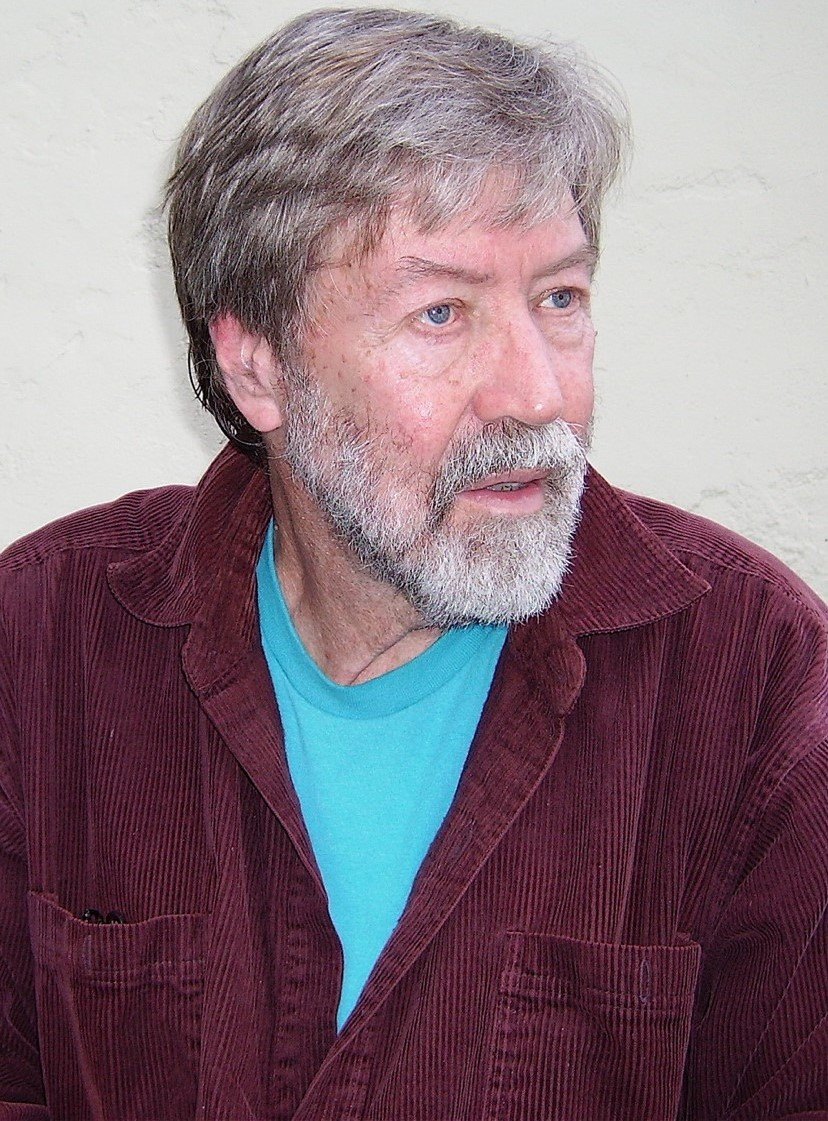
    I suppose it’s no secret – there’s an 80th birthday concert coming up at Bargemusic in Brooklyn tomorrow night – but it sure as hell stunned me to learn that Andrew Rudin is now four score. In addition to being a very fine composer, the evergreen Rudin, of course, was once a regular presence on the airwaves as a music host at WWFM.

    A former student of George Rochberg, Rudin writes uncompromising music of great integrity, yet manages to communicate with the listener without pandering. Nowhere is that more evident than in his attractive Piano Concerto, a recording of which I will include, among my featured works today, between 4 and 6 p.m. EDT, on The Classical Network. If you like Bartók or Ravel, give this one a shot.

    I’ll also mark the birthday anniversaries of Eugen d’Albert, Yefim Bronfman, Jorge Mester, and Victor de Sabata.

    There’s nothing quite like Schubert for a good palate cleanser. Wait a minute, that’s sherbet I’m thinking of. At any rate, come 6:00, enjoy an all-Schubert hour on the next “Music from Marlboro.”

    Among the melancholy masterpieces churned out during Schubert’s remarkably productive final year, the Piano Trio No. 1 in B-flat major, D. 898, actually comes across as comparatively light-hearted.

    We’ll hear it performed at the 2008 Marlboro Music Festival by pianist Jonathan Biss, violinist David Bowlin, and cellist Marcy Rosen. Biss, who is on the faculty of the Curtis Institute of Music in Philadelphia, was recently named co-artistic director (with Mitsuko Uchida) of Marlboro Music.

    Finally, we’ll turn to what may have been the last music Schubert ever wrote. “The Shepherd on the Rock,” D. 965, was completed barely a month before the composer’s death at the age of 31. This multi-sectional “lied” traverses a broad range of emotions, as a shepherd listens to echoes from the valley below, grapples with feelings of loneliness, and finds hope in the prospect of Spring and renewal.

    Marlboro legends, soprano Benita Valente, clarinetist Harold Wright, and pianist Rudolf Serkin, set down a classic recording of the work in 1960. We’ll hear a live performance captured at Marlboro nine years later.

    In all, it will be a playlist in celebration of births and renewals, from 4 to 7 p.m. EDT, on WWFM – The Classical Network and wwfm.org.

    Marlboro School of Music and Festival: Official Page

Tag Cloud

Aaron Copland (92) Beethoven (95) Composer (114) Film Music (123) Film Score (143) Film Scores (255) Halloween (94) John Williams (187) KWAX (229) Leonard Bernstein (101) Marlboro Music Festival (125) Movie Music (138) Opera (202) Philadelphia Orchestra (89) Picture Perfect (174) Princeton Symphony Orchestra (106) Radio (87) Ralph Vaughan Williams (85) Ross Amico (244) Roy's Tie-Dye Sci-Fi Corner (290) The Classical Network (101) The Lost Chord (268) Vaughan Williams (103) WPRB (396) WWFM (881)

DON’T MISS A BEAT

Receive a weekly digest every Sunday at noon by signing up here


RECENT POSTS