Tag: Marlboro Music Festival

  • Fauré & Gounod: Youthful Masterpieces

    Fauré & Gounod: Youthful Masterpieces

    Don’t let those grey whiskers fool you.

    From a certain limited perspective, I suppose, Gabriel Fauré might have been considered a little long in the tooth when he came to compose the music we’ll hear on this week’s “Music from Marlboro.” But, as he so eloquently demonstrated, when it comes to art, age is only a number.

    At 76 years-old, Fauré surprised just about everyone when he unveiled his Piano Quintet No. 2 in C minor in 1921. For one thing, no one except his wife knew he was even at work on anything. He was supposed to have retired, having stepped down from the directorship of the Paris Conservatory only the year before.

    Though the composer’s health in his later years was far from the best, thanks in part to decades of heavy smoking, the Quintet conveys a surprisingly youthful spirit, full of tenderness and ardor. Paradoxically, a knowing serenity hangs over the piece, lending it a kind of wisdom and balance. I am reminded of Wordsworth’s assessment that poetry is the spontaneous overflow of powerful feelings recollected in tranquility.

    We’ll hear it performed at the 2015 Marlboro Music Festival by pianist Roman Rabinovich, violinists YooJin Jang and Scott St. John, violist Shuangshuang Liu, and cellist Will Chow.

    The program will open with Charles Gounod’s classically proportioned and wholly delightful “Petite symphonie” for nine wind instruments. Gounod, best known for his opera “Faust,” “Funeral March of a Marionette” (appropriated by Alfred Hitchcock), and for his setting of “Ave Maria,” was 66 when his “little symphony” was first performed in 1885. Though structurally the work travels a well-worn path, beaten a hundred years earlier by composers like Haydn and Mozart, its long-limbed melodies and occasional harmonic surprises mark it as a product of its time. Despite its evident nostalgia, its spirit of youth is ever-green.

    It was played at Marlboro in 2013 by flutist Marina Piccinini, oboists Nathan Hughes and Joseph Peters, clarinetists Anthony McGill and Alicia Lee, bassoonists Brad Balliett and Steven Dibner, and hornists David Cooper and Radovan Vlatković.

    This summer’s Marlboro Music Festival will run through August 11, as always on the campus of Marlboro College in Marlboro, Vermont. This weekend will include performances of music by Mozart, Tchaikovsky, and Marlboro composer-in-residence Jörg Widmann, on Saturday at 8 p.m.; and Schubert and more Widmann, on Sunday at 2:30 p.m. For more information, visit marlboromusic.org.

    To get you in the mood, join me for an hour of French music that belies and defies the passage of time, on the next “Music from Marlboro, this Wednesday evening at 6:00 EDT, on WWFM – The Classical Network.

    Marlboro School of Music and Festival: Official Page


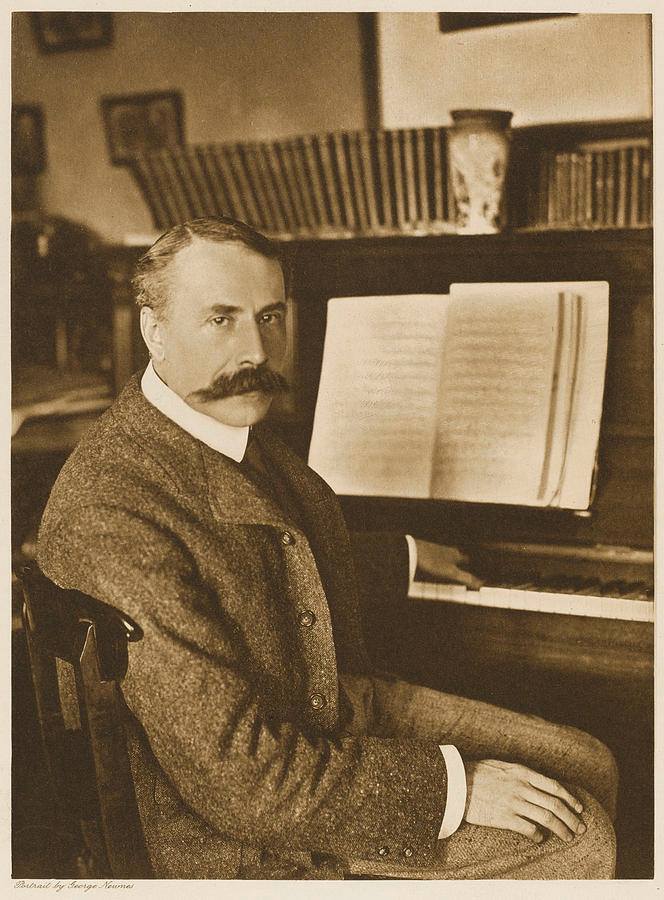
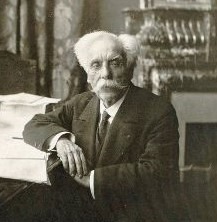
    Timeless beauties: Gabriel Fauré (left) and Charles Gounod

  • Mozart’s Gran Partita Marlboro Festival

    Mozart’s Gran Partita Marlboro Festival

    “This was no composition by a performing monkey. This was a music I’d never heard. Filled with such longing, such unfulfillable longing. It seemed to me that I was hearing the voice of God.”

    In Peter Schaffer’s “Amadeus,” it is the work that threw Antonio Salieri into ecstasies. “On the page it looked nothing – just a pulse, bassoons and basset-horns, like a rusty squeezebox. Then suddenly, high above it, an oboe, a single note, hanging there unwavering, until a clarinet took it over and sweetened it into a phrase of such delight!”

    Salieri (the character) had difficulty reconciling such sublime music with its composer’s vulgar personality. By extension, it’s easy to imagine Salieri smiling ruefully at the incongruity of a work of such sustained beauty being identified by the equivalent of an 18th century typo – the “Gran Partita.”

    Wolfgang Amadeus Mozart’s seven-movement tour de force will be featured on this week’s “Music from Marlboro.” We’ll hear it performed by an all-star cast of twelve wind players – and a double bassist – under the direction of Marcel Moyse, from the 1975 Marlboro Music Festival.

    Moyse was Marlboro royalty. Alongside Rudolf Serkin and Adolf Busch, the legendary flutist cofounded the Marlboro Music School and Festival in 1951. A veteran of Paris’ Opéra Comique, he would instruct his wind players to emulate the phrasings of the human voice in song.

    This summer’s Marlboro Music Festival will take place from July 13 to August 11, as always on the campus of Marlboro College in Marlboro, Vermont. This weekend will include two concerts: on Saturday at 8 p.m., featuring music by Haydn, John Harbison, Schubert, and Beethoven; and on Sunday at 2:30 p.m., with music by Ernest Chausson, Mendelssohn, and again Beethoven. More information is available at marlboromusic.org.

    Learn more about Marcel Moyse, who worked with some of the greatest artists of his time, in this generous biographical sketch by Marlboro Senior Administrator Frank Salomon:

    From the Archives: Marcel Moyse

    Then tune in and have a gran’ ol’ time with Mozart’s “Gran Partita,” on “Music from Marlboro,” this Wednesday evening at 6:00 EDT, on WWFM – The Classical Network and wwfm.org.

    Marlboro School of Music and Festival: Official Page

  • Janáček: Late Bloomer, Ageless Master

    Janáček: Late Bloomer, Ageless Master

    Some people are just late bloomers.

    Take the Czech master, Leoš Janáček. Janáček started out as a fairly unremarkable, albeit wholly capable composer, essentially following in the footsteps of his pioneering countrymen Bedřich Smetana and Antonin Dvořák. But then two things happened: (1) he discovered a way to distill his folkloric interests into a uniquely personal, modern idiom; and (2) he fell in love.

    Yet another overnight success decades in the making, Janáček began churning out masterpiece after masterpiece at an age when most respectable folk were teetering into retirement. His prolific Indian summer is attributable, in part, to his sublimated passion for Kamila Stösslová. Stösslová was a married woman some 38 years the composer’s junior.

    On the next “Music from Marlboro,” we’ll hear a string quartet written under the influence of his muse.

    The composer’s ardent feelings for Stösslová could be said to color both of his surviving quartets. At the time he undertook the first of these, Janáček was 69. (He composed the second, in the year of his death, at the age of 74.) The String Quartet No. 1 was written at white heat in October of 1923. Janáček revised it the following month.

    Subtitled “Kreutzer Sonata,” the work was inspired by Leo Tolstoy’s novella – which in turn takes its name from Beethoven’s famous violin sonata, dedicated to Rodolphe Kreutzer. Tolstoy’s story is a study in ungoverned passions – a triangle (real or imagined) between the first-person narrator, his wife (a pianist), and her perceived lover, a violinist, with whom she plays Beethoven’s sonata. The husband returns from a trip, finds the two dining together, and stabs his wife in a fit of jealous rage.

    Janáček made no attempt to follow a detailed program in the writing of his quartet. Instead, the music is reflective of the characters’ emotional and psychological states. In particular, he sympathizes with the wife.

    The music is heightened by certain “special effects” – harmonics, ostinatos, trills, pizzicatos, and muted passages, with the musicians employing a technique known as “sul ponticello,” playing on the bridges of their instruments, to achieve a kind of eerie quality. In the third movement, there is a veiled allusion to the slow movement of Beethoven’s sonata.

    We’ll hear it performed at the 2009 Marlboro Music Festival, by violinists Tien-Hsin Cindy Wu and Arnold Steinhardt, violist Yura Lee, and cellist Susan Babini.

    Then Antonin Dvořák demonstrates how it used to be done, with his String Sextet in A major, Op. 48. Dvorak’s sextet was composed largely in May of 1878, making it contemporaneous with his first set of “Slavonic Dances.” In fact, the work’s two inner movements bear overtly Czech nationalist titles: Dumka and Furiant.

    In music, dumka (literally, “thought”) signifies a kind of melancholy introspection. A furiant is a rapid and fiery Czech dance.

    The sextet holds an important place in Dvořák’s development. Thanks to a government subsidy, Dvořák was able to concentrate solely on composition, and he was determined to confirm his worth.

    The work was performed at the 2017 Marlboro Music Festival, by violinists Stephen Tavani and Scott St. John, violists Rosalind Ventris and Rebecca Albers, and cellists Alice Yoo and Judith Serkin.

    Happy birthday, Leoš Janáček. We’ll be picking up the Czech this week, on the next “Music from Marlboro,” this Wednesday evening at 6:00 EDT, on WWFM – The Classical Network and wwfm.org.

    Marlboro School of Music and Festival: Official Page


    “Kreutzer Sonata,” René François Xavier Prinet (1901)

  • Fauré, Poulenc & More from Marlboro Music Festival

    Fauré, Poulenc & More from Marlboro Music Festival

    On this week’s “Music from Marlboro,” we get Sharp, as baritone William Sharp performs Gabriel Fauré’s cycle of nine mélodies, “La bonne chanson.”

    These settings of poetry by Paul Verlaine were composed in the summers of 1892 and 1893, while Fauré was a guest of banker Sigismond Bardac and his wife (with whom Fauré was in love), soprano Emma Bardac. Fauré would compose the “Dolly Suite” for Bardac’s daughter, but it was Claude Debussy for whom she left her husband and eventually married.

    In 1898, Fauré expanded the accompaniment to “La bonne chanson” to include a string quartet. The cycle contains a number of musical themes that recur from song to song. The piece was much admired by Proust, though Saint-Saëns thought the composer had gone mad.

    We’ll hear a performance from the 1984 Marlboro Music Festival. Sharp is joined by violinists Carmit Zori and Margaret Batjer, violist John Graham, cellist Ulrich Boeckheler, and pianist Luis Batlle.

    Francis Poulenc labored over his Sextet for Piano and Winds for the better part of a decade. The work was given its premiere, in its original version, in 1931. Then it underwent a complete overhaul, so that the composer regarded it as an entirely different piece at its first performance, in this second incarnation, two years later. In 1939, with Europe on the brink of war, Poulenc extensively revised it again. The sextet reached its definitive form, with France under Nazi occupation, in 1940. The outer movements are frantic, but at the work’s core is the soul of the composer, jovial, wistful, and altogether irresistible.

    We’ll hear it performed at Marlboro in 2015, by flutist Marina Piccinini, oboist Mark Lynch, clarinetist Narek Arutyunian, bassoonist Brad Balliett, hornist Lauren Hunt, and pianist Zoltan Fejérvári.

    Since we’re in midst of a membership campaign, the rest of the program will unfurl as time allows. I would love to share Maurice Ravel’s “Trois Poèmes de Stéphane Mallarmé” – it would be a nice way to round out the hour, and an appropriate bookend to Fauré’s mélodies after Verlaine – but more than likely it will be his “Introduction and Allegro for Harp, Flute, Clarinet and String Quartet.”

    Which reminds me, it’s the end of our fiscal year! Please support us by calling 1-888-232-1212, or by contributing online at wwfm.org (click on “donate”).

    Then pardon my French. I’ll be talking a sacre bleu streak on the next “Music from Marlboro,” this Wednesday evening at 6:00 EDT, on WWFM – The Classical Network and wwfm.org.

    Marlboro School of Music and Festival: Official Page


    Incidentally, if you are a William Sharp fan, you’ll want to tune in on Friday at 8 p.m. for a rebroadcast of Bernard Herrmann’s music for the radio play “Whitman.” The concert was given at Washington’s National Cathedral on June 1. Sharp will be heard in the title role, reciting Whitman’s poetry, with the PostClassical Ensemble conducted by Angel Gil-Ordóñez. Also on the program will be Herrmann’s Clarinet Quintet, “Souvenirs de Voyage,” and “Psycho: A Narrative for String Orchestra.”


    PHOTOS: The young Fauré (left) and William Sharp, channeling his hair

  • Elgar & Vaughan Williams Quintets Marlboro

    Elgar & Vaughan Williams Quintets Marlboro

    English music is more than simply ham, lamb, and strawberry jam. On the next “Music from Marlboro,” we’ll highlight one of the most deeply personal utterances of perhaps Albion’s most respected composer.

    In the spring of 1918, Sir Edward Elgar underwent an operation in London to have an infected tonsil removed. At the time, this was considered a dangerous operation for a 61 year-old man. When the composer regained consciousness, the first thing he did was ask for a piece of paper, and he jotted down the opening theme of what was to become his last major work, the Cello Concerto in E minor.

    The Elgars retired to Brinkwells, a thatched cottage that was their summer home near Fittleworth, in Sussex, so that they could have time to relax and recover from their ailments. Even in this idyllic setting, with its trees and farmland, the guns could be heard at night rumbling across the Channel. The First World War had a profound effect on Elgar, as it did on everyone, but most especially those of the older generation, who had regarded the Boer War as a yardstick against which the cost and loss of armed conflict had been measured.

    Nevertheless, by August, Elgar was composing again. In quick succession came the Violin Sonata in E minor, the Piano Quintet in A minor, and the String Quartet in E minor. All three works were given their first performances one hundred years ago, in May of 1919, at which point Elgar launched into the Cello Concerto, which was to be his final masterpiece.

    Elgar labored with great intensity, rising at 4 or 5:00 every morning. His music from this period is spare and almost confessional in nature, colored by nostalgia, introspection, and a kind of sad beauty.

    But when it came time to play through the quintet, the composer was surrounded by some of his closest confidantes, and he couldn’t have been happier. These included W.H. Reed, with whom he had worked on the Violin Concerto; Albert Sammons, who would make the concerto’s first complete recording, and Felix Salmond, who would assist him on the Cello Concerto.

    We’ll hear a performance of Elgar’s Piano Quintet from the 2002 Marlboro Music Festival, featuring pianist Jeremy Denk, violinists Erin Keefe and Bradley Creswick, violist Teng Li, and cellist Joel Noyes.

    That will be prefaced by another quintet, from 1912, by Ralph Vaughan Williams. Vaughan Williams’ “Phantasy Quintet” was one of a number of works commissioned from England’s great composers by Walter Wilson Cobbett, a businessman and amateur musician whose dual passions were chamber music and music of the Elizabethan era. (“Phantasy” was Cobbett’s preferred spelling.)

    Vaughan Williams’ quintet is full of Tudor inflections and stamped by the composer’s tell-tale love of folk music. RVW doubles his violas, and the instrument is heard to great effect throughout the piece. We’ll enjoy it in a 1975 performance from Marlboro, featuring violinists James Buswell and Sachiko Nakajima, violists Philipp Naegele and Caroline Levine, and cellist Anne Martindale.

    I hope you’ll join me for the quintessence of English quintets – and one fantastic phantasy – on the next “Music from Marlboro,” this Wednesday evening at 6:00 EDT, on WWFM – The Classical Network and wwfm.org.

    Marlboro School of Music and Festival: Official Page

Tag Cloud

Aaron Copland (92) Beethoven (95) Composer (114) Film Music (123) Film Score (143) Film Scores (255) Halloween (94) John Williams (187) KWAX (229) Leonard Bernstein (101) Marlboro Music Festival (125) Movie Music (138) Opera (202) Philadelphia Orchestra (89) Picture Perfect (174) Princeton Symphony Orchestra (106) Radio (87) Ralph Vaughan Williams (85) Ross Amico (244) Roy's Tie-Dye Sci-Fi Corner (290) The Classical Network (101) The Lost Chord (268) Vaughan Williams (103) WPRB (396) WWFM (881)

DON’T MISS A BEAT

Receive a weekly digest every Sunday at noon by signing up here


RECENT POSTS