Tag: Marlboro Music Festival

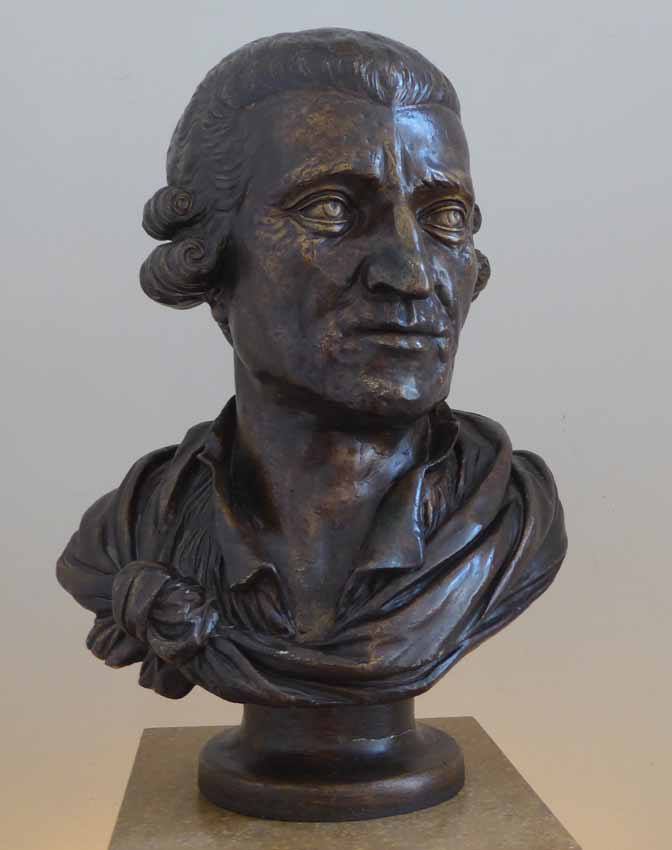
  • Haydn, Rochberg & Marlboro’s Musical Rebellion

    Haydn, Rochberg & Marlboro’s Musical Rebellion

    On this week’s “Music from Marlboro,” you may be good at Haydn, but there’s no escaping the Roch. And I don’t mean Alcatraz.

    George Rochberg’s big claim to fame – or, in some circles, notoriety – is that he was one of the first composers to emerge from the predominant serialism of the 1960s to embrace a new tonality, a shift brought on, it is said, by the untimely death of his son.

    Rochberg found the brand of expressionism he had been exploring at mid-career inadequate to convey the strong emotional upheaval he felt. The reintroduction of tonal passages into his works acted as a kind of balm, even as it lit a slow fuse that would blow wide open the future for up-and-coming composers. At the time, this would have been viewed by some as a criminal offense.

    Rochberg is often credited with having ushered in the Age of Pluralism. Now a composer can write any way he or she wants and still be taken seriously. It’s easy to forget that that was not always the case.

    Rochberg’s desire to communicate must have been a latent one, since his Trio for Clarinet, Horn, and Piano, from 1947 (predating his “twelve tone” period), is direct and, in its second movement adagio, introspective and full of feeling. We’ll hear it performed at the 2007 Marlboro Music Festival by clarinetist Charles Neidich, hornist José Vicente Castelló, and pianist Igor Levit.

    The trio will be bookended by two works associated with Franz Joseph Haydn – the String Quartet in B flat major, Op. 33, No. 4, by turns puckish and transporting, and Johannes Brahms’ “Variations on a Theme of Haydn.”

    Who cares that the theme that inspired Brahms to write his variations isn’t by Haydn at all? The “Saint Anthony Chorale” that forms the basis of the slow movement of Haydn’s Divertimento No. 1 in B flat major, Hob. II: 46, is a preexisting melody. In fact, the composer of the divertimento itself has been disputed. A clear case of forgery?

    A lenient judge would understand that none of that really matters in music this well-crafted, especially when performed at the 1976 Marlboro Music Festival by pianists Stephanie Brown and Cynthia Raim.

    Haydn’s Op. 33, No. 4, will open the hour. We’ll hear it played by a band on the run, from 1990, made up of violinists Chee-Yun Kim and Felix Galimir, violist Caroline Levine, and cellist Jean-Guihen Queyras.

    Haydn and Rochberg get busted on this week’s “Music from Marlboro,” Wednesday evening at 6:00 EDT, on WWFM – The Classical Network and wwfm.org.

    Marlboro School of Music and Festival: Official Page
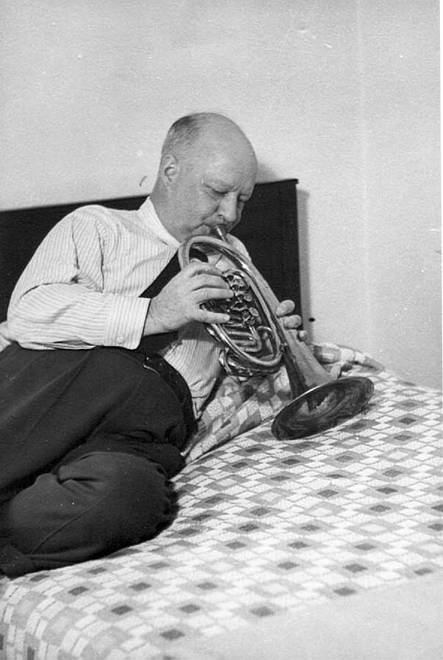
  • Hindemith’s Octet: An Endurance Test

    Hindemith’s Octet: An Endurance Test

    There’s Hindemith on a good day. Then there’s the Hindemith of the Octet for Winds and Strings.

    At 27 minutes, Hindemith’s Octet is something of an endurance test for performers, and perhaps even more so for listeners. The piece is ugly, grey, cranky, and noodly – gebrauchsmusik at its worst. And I say this as a Hindemith fan. There are times when Hindemith’s music can be glorious, thrilling, or transcendent, even. And then there are those when he just makes you feel like you’ve been reading a newspaper in the back seat on a too-long car trip.

    This is not a piece I would attempt to share under the glare of a sunny summer’s day. But there are thunderstorms in the forecast, so let the good times roll.

    Eight talented musicians make of it what they can, on this week’s “Music from Marlboro.” We’ll hear as fine a performance of the piece as you’re ever likely to encounter, from the 1983 Marlboro Music Festival.

    Then, by way of apology, I’ll do the best that I can to repair our friendship with Beethoven’s wholly delightful Serenade in D major, Op. 25. Beethoven’s Serenade is a late entry in the 18th century divertimento craze. Its date of composition is uncertain, but recent scholarship places it around the time Beethoven wrote his popular Septet. We’ll hear a performance from Marlboro in 1980, with flutist Christine Nield, violinist Young Uck Kim, and violist Michael Tree (of the legendary Guarneri Quartet).

    Hindemith may have had Beethoven and Schubert in mind when he embarked on his Octet. But beyond that, I have no idea what he was thinking. Form is no substitute for content, on this week’s “Music from Marlboro,” this Wednesday evening at 6:00 EDT, on WWFM – The Classical Network and wwfm.org.

    Marlboro School of Music and Festival: Official Page

    HINDEMITH: Whatever pops into my head is gold

  • Schubert’s Bittersweet Farewell at Marlboro

    Schubert’s Bittersweet Farewell at Marlboro

    Blissful days, you are eternally past!

    On this week’s “Music from Marlboro,” as this year’s Marlboro Music Festival approaches its final weekend, we’ll partake of an hour of bittersweet musings, courtesy of Franz Schubert. Even at the best of times, Schubert’s emotional equilibrium could be extraordinarily sensitive to change. But the works of his final year seem especially intimate – confessional, even.

    Is the melancholy traveler borne out to sea in “Auf dem Strom” (“On the River”) actually parting from life? The narrator is cut off from all human contact. He is unable to hear songs from the distant shore. His memory of his beloved is intense, even as she grows increasingly distant. The text, by Ludwig Rellstab, was originally intended for Beethoven, but Beethoven died before he could set to work on it.

    We’ll hear a performance of this remarkable art song from the 1960 Marlboro Music Festival, featuring soprano Benita Valente, hornist Myron Bloom, and pianist Rudolf Serkin.

    Faced with his own mortality, Schubert reacted as only Schubert could, by churning out masterpiece after masterpiece: two piano trios, three piano sonatas, the String Quintet in C, the song cycle “Schwanengesang,” and “The Shepherd on the Rock,” alongside assorted smaller works, all within the span of only six months. It’s an extraordinary act of defiance, or perhaps acceptance, of the inevitable.

    The haunting second movement of his Piano Trio No. 2 in E-flat major was written just as he received the news that his illness was beyond cure and that the end was near. The music holds the tragic and the romantic in devastating balance.

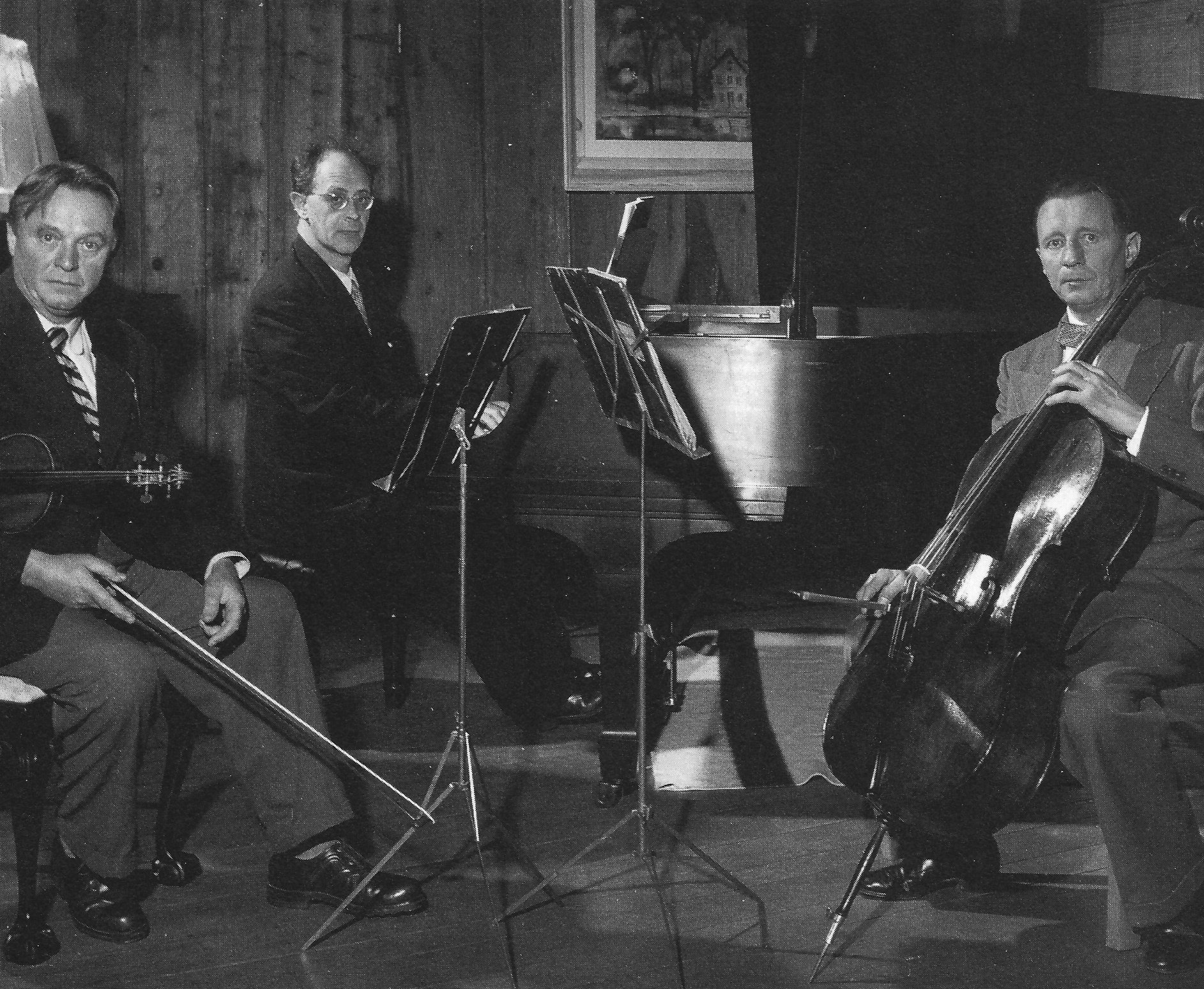
    The entire trio will be heard in a recording made in Brattleboro, VT, all the way back at the beginning, on October of 1951, featuring Marlboro cofounders, pianist Rudolf Serkin, violinist Adolf Busch, and cellist Herman Busch.

    By coincidence, tomorrow, August 8, is Adolf Busch’s birthday. What better way to celebrate than to remember him making music with those he loved?

    Both of these works, by the way, were presented on the only public concert devoted exclusively to Schubert’s music during the composer’s lifetime. The concert was held on the first anniversary of Beethoven’s death, March 26, 1828. Schubert himself would be dead only eight months later, at the age of 31.

    For more information on the concluding weekend of this summer’s Marlboro Music Festival, and its three valedictory concerts, visit marlboromusic.org.

    All good things must come to an end, on the next “Music from Marlboro,” this Wednesday evening at 6:00 EDT, on WWFM – The Classical Network and wwfm.org.

    Marlboro School of Music and Festival: Official Page
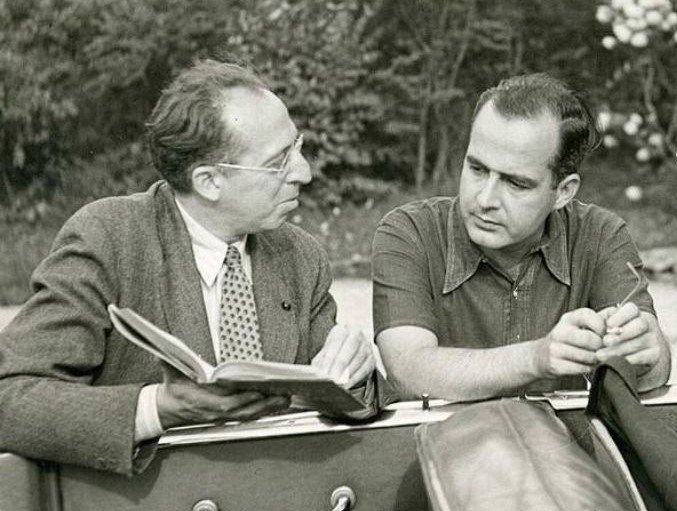

    PHOTO: Rudi and the Busches

  • Barber, Antes, & Copland from Marlboro

    Barber, Antes, & Copland from Marlboro

    How many times a summer do we hear Samuel Barber’s “Summer Music?”

    Well, I ask you, then – in whose tomb would you have Grant buried? What color should we paint the White House? It’s summer! Honor your appointment with the Barber, already.

    Barber wrote his wind quintet on a commission from the Chamber Music Society of the Detroit Institute for the Arts in 1953. Unusually, in lieu of a commissioning fee, the composer agreed to accept donations from the audience, with the Chamber Music Society guaranteeing the difference up to $2000. The work is set in one continuous movement, with three subsections discernible within the neoclassical whole.

    On this week’s “Music from Marlboro,” we’ll hear “Summer Music” performed at the 1981 Marlboro Music Festival, by flutist Susan Rotholz, oboist Elaine Douvas, clarinetist Joaquin Valdepeñas, bassoonist Stefanie Przybylska, and hornist Robin Graham.

    Then we’ll turn our attention to American Moravian composer John Antes. Antes, born in Frederick, Montgomery County, PA, in 1740, is credited with being one the first composers born on American soil to write chamber music, and as the creator of perhaps the earliest surviving bowed string instrument made in the American colonies. Antes’ violin, made in 1759, is housed in the Museum of the Moravian Historical Society in Nazareth, PA. A viola, made by Antes in 1764 (again believed to be the earliest surviving of American origin), is housed in the Lititz Moravian Congregation Collection in Lancaster County. Antes created at least seven such instruments.

    In 1752, Antes attended school in Bethlehem, PA. In 1760, he was admitted into the Single Brethren’s choir there. From Bethlehem, he traveled to Herrnhut, Germany, the international center of the Moravians, to prepare for a career as a missionary. In the meantime, he also took up watchmaking. He was ordained a minister in 1769, then set out for Egypt. There, he served as a missionary to the Coptic Church in Grand Cairo. After a largely uneventful decade, he was captured and tortured by followers of Osman Bey.

    During his convalescence, he occupied himself with the composition of three string trios. He also sent a copy of six quartets to Benjamin Franklin, whom he had known in America. The quartets are lost (nice job, Ben), but the trios survive. We’ll hear Antes’ Trio in D minor, from the 1976 Marlboro Music Festival, with violinists Isadore Cohen and Kathleen Lenski, and cellist Timothy Eddy performing.

    We’ll round out the hour with Aaron Copland’s beloved and evergreen Pulitzer Prize winning ballet “Appalachian Spring,” from 1944, in its rarely-heard original version for chamber orchestra, performed by 13 Marlboro musicians in 2006.

    “Appalachian Spring” will be heard this Saturday at 8 p.m., during the fourth weekend of this year’s Marlboro Music Festival – held, as always, on the campus of Marlboro College in Marlboro, VT – alongside works by Alban Berg, Benjamin Britten, and Pulitzer Prize winner Caroline Shaw. Beethoven, Britten, and Dvořák will be performed on Sunday at 2:30 p.m. For details, look online at marlboromusic.org.

    It’s American music for two seasons, and all seasons – with a Moravian palate cleanser from the 18th century – on this week’s “Music from Marlboro,” this Wednesday evening at 6:00 EDT, on WWFM – The Classical Network and wwfm.org.

    Marlboro School of Music and Festival: Official Page

    PHOTO: Music by Aaron Copland and Samuel Barber will be heard on this week’s “Music from Marlboro”

  • Peter Serkin & Marlboro Music Festival

    Peter Serkin & Marlboro Music Festival

    For some reason, I always equate Peter Serkin in my mind with Peter Fonda. Perhaps it’s because he’s like the Easy Rider of pianists. At one point, he even totally dropped out, moving to Mexico and not playing for a couple of years. When he returned, as often as not, he was a kind of countercultural champion of modernist works (he was one of the founders of the new music ensemble Tashi). But he is, after all, his father’s son (sired by legendary pianist Rudolf Serkin), so Bach and Beethoven have been just as important to him as an artist and as a person.

    Hard to believe that Peter Serkin is 72 years-old today. On this week’s “Music from Marlboro,” we’ll hear a performance of Mozart’s Concerto for Two Pianos (the Piano Concerto No. 10), KV 365, with Peter, at 15, joined in music-making by his Marlboro co-founding father.

    Then we’ll keep our spirits high, as Pablo Casals conducts the Marlboro Festival Orchestra in Franz Schubert’s Symphony No. 5. Schubert was totally under the spell of Mozart at the time of its composition, remarking in his diary, “O Mozart! Immortal Mozart! what countless impressions of a brighter, better life hast thou stamped upon our souls!”

    This summer’s Marlboro Music Festival is about to enter its third weekend, with three concerts on the agenda. The festival’s annual town benefit concert will be held on Friday at 8 p.m., featuring music by Schumann, Stravinsky, Mozart, and György Kurtág. Marlboro co-directors Mitsuko Uchida and Jonathan Biss will appear on separate concerts on Saturday and Sunday. Uchida will be the pianist in Schumann’s Piano Quintet on a program which will also feature music by Schoenberg, on Saturday at 8 p.m. Biss will perform Dvořák’s Piano Trio in F minor on a concert which will also include works by Mozart and Marlboro composer-in-residence Jörg Widmann, on Sunday at 2:30 p.m. For complete listings and more information, visit marlboromusic.org.

    For today, musicians from the renowned chamber music festival take a break from playing chamber music. It’s a well-orchestrated program on this week’s “Music from Marlboro,” this Wednesday evening at 6:00 EDT, on WWFM – The Classical Network and wwfm.org.

    Marlboro School of Music and Festival: Official Page


    PHOTO: Young Peter Serkin performs Mozart on today’s broadcast of recordings from the archive of Marlboro Music.

Tag Cloud

Aaron Copland (92) Beethoven (95) Composer (114) Film Music (123) Film Score (143) Film Scores (255) Halloween (94) John Williams (187) KWAX (229) Leonard Bernstein (101) Marlboro Music Festival (125) Movie Music (138) Opera (202) Philadelphia Orchestra (89) Picture Perfect (174) Princeton Symphony Orchestra (106) Radio (87) Ralph Vaughan Williams (85) Ross Amico (244) Roy's Tie-Dye Sci-Fi Corner (290) The Classical Network (101) The Lost Chord (268) Vaughan Williams (103) WPRB (396) WWFM (881)

DON’T MISS A BEAT

Receive a weekly digest every Sunday at noon by signing up here


RECENT POSTS