Tag: Marlboro Music Festival

  • Unrequited Love Music from Marlboro Festival

    Unrequited Love Music from Marlboro Festival

    Few torments are as unshakeable as that of unrequited love. Yet sublimated passion has led to more than its share of artistic masterpieces. In advance of Valentine’s Day, we’ll enjoy the fruits of others’ longing, on this week’s “Music for Marlboro.”

    It’s been speculated that Johannes Brahms’ “Liebeslieder Waltzes” was the product of his frustrated affection for Julie Schumann, the daughter of Robert and Clara Schumann. The dance-like settings for four voices and piano four-hands are based on love songs from Georg Friedrich Daumer’s collection “Polydora.”

    We’ll hear them performed at the 1971 Marlboro Music Festival by soprano Kathryn Bouleyn, mezzo-soprano Mary Burgess, tenor Seth McCoy, and baritone John Magnuson, with Rudolf Serkin and Luis Batlle at the keyboard.

    The remarkably prolific Indian summer of Czech master Leoš Janáček can attributed in part to the sublimated passion he felt for Kamila Stösslová. Stösslová was a married woman some 38 years the composer’s junior.

    Janacek’s String Quartet No. 2, written in 1928, when he was about 74 years-old, was inspired by their long and intimate – though unconsummated – relationship, which is detailed in their more than 700 letters. The work has been described as a “manifesto on love.”

    We’ll hear Janáček’s “Intimate Letters,” performed at Marlboro in 2002 by violinists Nicholas Kendall and Hiroko Yajima, violist Richard O’Neill, and cellist Alexis Pia Gerlach.

    Great composers’ romantic frustrations are our gain, on “Music from Marlboro,” this Wednesday evening at 6:00 EST.

    I’ll be in a little earlier, to woo you with some recorded serenades and hopefully convince you to show your support for great music with a financial contribution at 1-888-232-1212 or wwfm.org.

    All told, I’ll be donning Cupid’s wings from 4 to 7 p.m. EST, on WWFM – The Classical Network and wwfm.org.

    Marlboro School of Music and Festival: Official Page

  • Haydn & Heiden at Marlboro

    Haydn & Heiden at Marlboro

    Stereophonic homophones dominate this week’s “Music from Marlboro.” Worlds collide through the juxtaposition of music by Haydn and Heiden.

    Franz Joseph Haydn, of course, requires little introduction. For a quarter century, he was music director at the remote estate of Esterháza, where he essentially created the modern symphony and legitimized the string quartet. He established the piano trio as an accepted combination and standardized sonata form. His music was written for the delectation of Prince Nikolaus Esterházy and his associates. Even so, by the time of his death in 1809, at the age of 77, he had become one of the most celebrated composers in Europe.

    Bernhard HEIDEN was a Hindemith pupil, who fled fascism in Germany to settle in the American Midwest. There, he conducted the Detroit Chamber Orchestra and taught at the Art Center Music School. Later, he joined the faculty of the Indiana University School of Music. To him, it was more important to reach performers than an audience, for the practical reason that audiences change and performers need to believe in the music in order to be able to sell it. He composed prolifically right up until his death in 2000 at the age of 89.

    On this evening’s program, we’ll hear a serenade and two divertimentos (“divertimenti” for those who prefer the Italian). What’s the difference? There’s a lot of blurring of boundaries between these 18th century categories – divertimento, serenade, cassation, notturno. Basically it’s all entertainment music, at least as it was originally intended. No weighty arguments, profound introspection, or showy virtuosity of the type one might expect from a symphony, concerto, or string quartet.

    The cassation was often a piece designed for outdoor performance, a loosey-goosey assemblage of undemanding, blissfully short movements one might listen to while eating cucumber sandwiches or admiring a sculpted hedge.

    The interchangeability of the terms led Haydn to give his Divertmento in F the alternate title of “Cassation.” What’s in a name? We’ll hear it performed at the 1981 Marlboro Music Festival by violinists Lucy Chapman (Stoltzman) and Carmit Zori, violists Thomas Turner and Toby Hoffman, cellist Gary Hoffman, double bassist Carolyn Davis, oboists Elaine Douvas and John Ferrillo, hornists Robin Graham and Stewart Rose, and bassoonist Stefanie Przybylska.

    A serenade, too, was originally a light, tuneful diversion, often intended as “occasional” music (that is to say, music written for a specific occasion) or in someone’s honor. I guess somebody forgot to tell Heiden. Though his style is generally identified as neoclassical, it is neoclassicism in the mold of Hindemith. The structure is there, but I can’t say that his serenade of 1955 is all that buoyant, and the tunes are secondary. It does score points, however, for its unusual instrumentation.

    It was performed at the 1984 Marlboro Music Festival by bassoonist Nancy Goeres, violinist Saschko Gawriloff, violist Ah Ling Neu, and cellist Grace Bahng.

    We’ll round out the hour with a refreshing after dinner mint in the form of the Divertimento in F Major (K. 213) by Wolfgang Amadeus Mozart. It was performed at Marlboro in 1990 by oboists Rudolf Vrbsky and Alex Klein, bassoonists Clelia Goldings and Matthew Carr, and hornists Christine Chapman and Chris Komer.

    Forget your cares! Join me for an hour of diverting music on the next “Music from Marlboro,” this Wednesday evening at 6:00 EST, on WWFM – The Classical Network and wwfm.org.

    Marlboro School of Music and Festival: Official Page


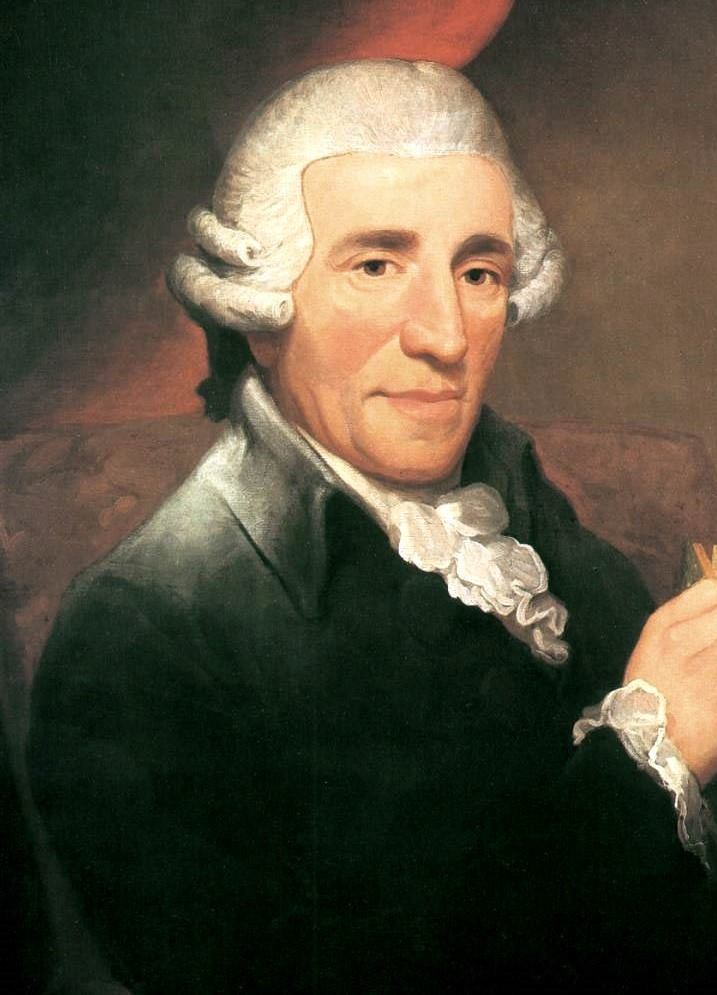
    DUELING PORTRAITS: Haydn & Heiden

  • Sergei Taneyev Honest Russian Composer

    Sergei Taneyev Honest Russian Composer

    Never one to hold back or sugar-coat the truth, Sergei Taneyev (1856-1915) could be brutally honest and in fact generally was. He managed to offend every one of the musicians of the Mighty Handful (Mily Balakirev, Alexander Borodin, César Cui, Modest Mussorgsky, and Nikolai Rimsky-Korsakov) with his blunt assessments. Yet somehow Peter Ilych Tchaikovsky, who was probably the most sensitive composer in all of Russia, actually went out of his way to invite Taneyev’s criticism, even when it threw him into fits of despair.

    On this week’s “Music from Marlboro,” we’ll have music by this most forthright of Russian composers, alongside a delightful caprice by a Frenchman, based on Danish and Russian airs.

    Tchaikovsky valued Taneyev’s keen insight and transparent honesty, perhaps in part because he knew, as Taneyev’s teacher at the Moscow Conservatory, that Taneyev was equally hard on himself. Also, there was little doubt of his disciple’s devotion. Taneyev was the soloist in the Moscow premiere of Tchaikovsky’s Piano Concerto No. 1, and in the Russian premiere of his Piano Concerto No. 2. After Tchaikovsky’s death, Taneyev completed several of his master’s works from sketches left in various states of completion, including the Piano Concerto No. 3. In turn, Tchaikovsky dedicated his symphonic fantasy, “Francesca da Rimini,” to Taneyev.

    Taneyev entered the Moscow Conservatory at the age of nine. His characteristic diligence and impeccable craftsmanship revealed themselves early, and through their application he rose quickly in the estimation of his professors. Tchaikovsky rated Taneyev as Russia’s greatest master of counterpoint and questioned if there was anyone, even in the West, who could match him in this regard.

    When Tchaikovsky resigned his post at the conservatory in 1878, Taneyev was appointed in his place to teach harmony and orchestration. Soon, he was also teaching piano and composition. Finally, he served as the conservatory’s director from 1885 to 1889. Among his own pupils were Sergei Rachmaninoff, Nikolai Medtner, and Alexander Scriabin. (FUN FACT: Taneyev died in 1915 after catching pneumonia at Scriabin’s funeral.)

    For the most part, Taneyev’s life was as orderly as his music. He never married; all his needs were tended to by his childhood nanny. He even managed to remain oblivious when the wife of his friend, Leo Tolstoy, basically threw herself at him. He preferred study to relaxation, passing countless hours poring over volumes on natural and social science, history, mathematics, Plato and Spinoza. He also taught himself Esperanto.

    Perhaps he could have used a little of Tchaikovsky’s spontaneity, both in his life and in his music. Tchaikovsky was more of an impulsive artist, always allowing his creativity and emotion to lead the way, while Taneyev tended to hold his raw materials in balance, carefully considering his ideas and themes, subjecting them to intensive analysis before committing them to manuscript. For as dry as that may sound, his music is still rewarding to listen to!

    Taneyev’s String Quintet in G major, Op. 14, dates from 1901. We’ll hear it performed at the 2005 Marlboro Music Festival by violinists Lily Francis and David Bowlin, violist Yu Jin, and cellists Michael Nicholas and David Soyer.

    By way of introduction, the program will open with a “Caprice on Danish and Russian Airs” by Camille Saint-Saëns (1835-1921). Scored for flute, oboe, clarinet, and piano, the work was composed for a series of concerts organized by the Russian Red Cross that were held in St. Petersburg during Easter Week, 1887. The piece was dedicated to the the Tsarina, Maria Feodorovna, formerly Princess Sophie Frederika Dagmar, daughter of the King of Denmark – hence, Saint-Saëns’ use of Danish and Russian themes.

    We’ll hear it performed at Marlboro in 1968 by pianist Ruth Laredo, flutist Paula Robison, oboist John Mack, and clarinetist Larry Combs.

    No doubt Taneyev would decline my invitation – and he wouldn’t hesitate to tell me why – but there is nothing to keep us from reckless enjoyment of the next “Music from Marlboro,” this Wednesday evening at 6:00 EST, on WWFM – The Classical Network and wwfm.org.

    Marlboro School of Music and Festival: Official Page


    PHOTO: Tell us what you really think, Sergei.

  • Marlboro’s Haunting Chamber Music Classics

    Marlboro’s Haunting Chamber Music Classics

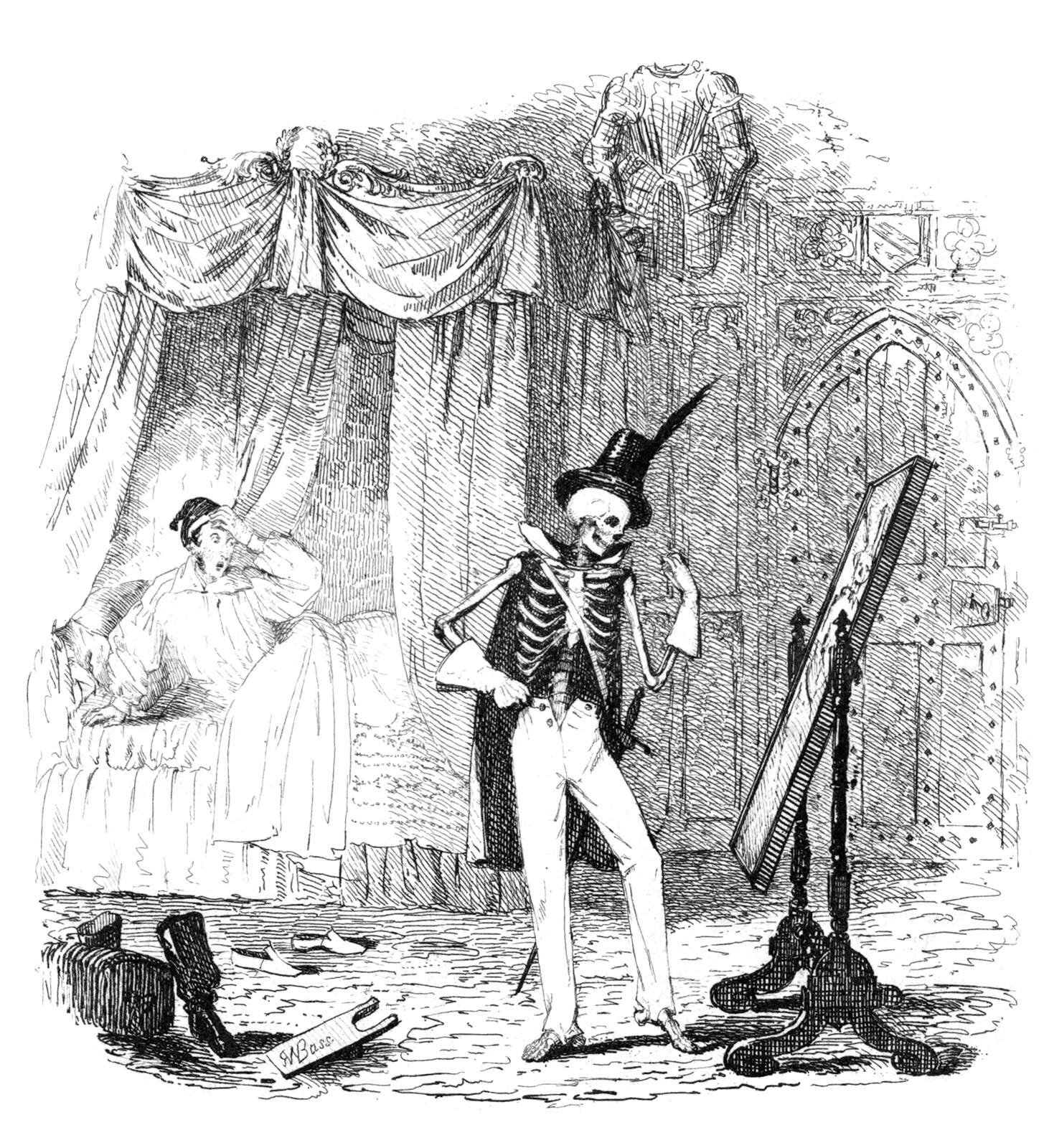
    For obvious reason, the ghost story is inextricably linked in many people’s thoughts with Hallowe’en. But there was a time when reading and sharing eldritch tales were common pastimes even at Christmas. I suppose it makes sense that during a time of year when there is less light, the skies are bleak, and the landscapes withered – a time when people are essentially housebound and comparatively isolated – the mind would be most susceptible to chilling thoughts of something sinister underlying a gust of wind or a creak on the cellar stairs.

    I thought it rather appropriate, then, to revisit a couple of chamber music classics with a supernatural bent on this week’s “Music from Marlboro.”

    French composer André Caplet was winner of the esteemed Prix de Rome in 1901, placing ahead of Maurice Ravel. He played percussion with the Colonne Orchestra and trained as a conductor under Arthur Nikisch. From 1910 to 1914, he served as director of the Boston Opera. While serving in the First World War, he was engulfed in poisonous gas, which resulted in the pleurisy that plagued him for the remainder of his short life. Caplet died in 1925, at the age of 44.

    As the Prix de Rome would suggest, Caplet composed music of considerable merit. Nonetheless, he was fated to be remembered for his work as an orchestrator for Claude Debussy. Debussy’s “Children’s Corner,” “The Martyrdom of Saint Sebastian,” “La Boiîte à joujoux,” and “Clair de lune” would all be draped in Caplet’s finery.

    Of Caplet’s original music, only his “Conte fantastique” (“Fantastic Tale”), after Edgar Allan Poe’s “The Masque of the Red Death,” retains a foothold on the repertoire. Composed in 1908 for harp and string orchestra, it was arranged for harp and string quartet in 1922. The work crackles with atmosphere, invention and suspense. In fact, the program is brought so vividly to life that one can’t help but think that Caplet would have made an excellent film composer. Savor the chill as Prince Prospero’s decadent revels are curtailed by the implacable chimes of midnight!

    The Marlboro performance, which dates from 2009, features Sivan Magen, harp; Liana Gourdjia and Bella Hristova, violins; Sally Chisolm, viola; and Paul Wiancko, cello. As an added bonus, the music will be prefaced by a reading from Poe’s creepy classic.

    Fifteen years after the death of Beethoven, the composer’s star pupil, Carl Czerny, noted that the slow movement of his Piano Trio in D, Op. 70, No.1, reminded him of the ghost of Hamlet’s father. Czerny may not have been all that far off the mark.

    Actually, at the time of the work’s composition, in 1808, Beethoven had been kicking around the idea for opera on the subject of Macbeth. The words “Macbett” and “Ende” appear near sketches for the Largo. It’s been speculated that the music may have been a working out of ideas for a proposed scene featuring the three witches. The ominous mood is heightened by eerie and mournful touches, sudden pauses and outbursts, and the use of a ghostly tremolo. The operatic project collapsed when Beethoven’s librettist, Heinrich Joseph von Collin (to whom Beethoven had dedicated the “Coriolan Overture”), begged off of the project, thinking it was too dark.

    We’ll hear Marlboro musicians Dénes Várjon, piano; Michelle Ross, violin; and Brook Speltz, cello, captured on tour in Washington, D.C., in 2015. You can learn more about this season’s tours (the next two are coming up in March) by visiting marlboromusic.org.

    Turning up your radio has been proven to drown out bumps in the night. Join me for “haunting” performances from the legendary Marlboro Music Festival, this Wednesday evening at 6:00 EST, on WWFM – The Classical Network and wwfm.org.

    Marlboro School of Music and Festival: Official Page

  • Chausson’s Death and Debussy’s Music

    Chausson’s Death and Debussy’s Music

    Suicide by bicycle?

    That’s the theory put forth by Debussy biographer Edward Lockspeiser concerning the untimely death of Ernest Chausson. In 1899, Chausson hurtled downhill into a brick wall at the age of 44. While Chausson was certainly prone to depression, the theory of slamming into a wall with intent was emphatically refuted by Chausson’s own biographer, Ralph Scott Grover.

    Chausson left behind a comparatively small, but meticulous output, a mere 39 opus numbers – Chausson got a late start, abandoning law at 25 to devote himself to composition – among them are the ravishing “Poème” for violin and orchestra, the song cycle “Poème de l’amour et de la mer,” and the Concert for Piano, Violin and String Quartet.

    Chausson’s “Concert” of 1891 is especially noteworthy, its title recalling chamber music of the French baroque by composers such as Couperin and Rameau, but also suggesting more of a concerto than a sextet, with solo violin and piano playing against the backdrop of a standard string quartet. It’s a creative gamble with its own unique challenges, and Chausson acquits himself marvelously.

    On this week’s “Music from Marlboro,” we’ll hear a 1968 performance, featuring solo violinist Jaime Laredo and pianist Ruth Laredo, with violinists Michael Tree and Hidetaro Suzuki, violist Nobuko Imai, and cellist Robert Sylvester. That’s a starry line-up by anyone’s standards. You’ll note that Tree is best known as a violist from his 45-year tenure with the Guarneri String Quartet.

    Chausson and Claude Debussy were like brothers. Chausson invited his friend for a long stay in the summer of 1893 at a rented house in Luzancy. To make the visit even more agreeable, Chausson sent away for the score to Mussorgsky’s “Boris Godunov,” knowing Debussy’s fondness for it, and the they passed many enjoyable hours together at the piano, with Debussy playing through the opera while Chausson acted as page-turner.

    The two were close enough that Chausson felt he could speak frankly of his disapproval of Debussy’s profligate lifestyle. Whether or not he overstepped his bounds, their friendship did cool somewhat after that, though they continued to find much to admire in one another’s music.

    Chausson did not live to hear Debussy’s Sonata for Flute, Viola and Harp, a late work composed in 1915. We’ll hear it performed at the 1978 Marlboro Music Festival by flutist Carol Wincenc, violist Samuel Rhodes, and harpist Moya Wright.

    Incidentally, Chausson biographer Ralph Scott Grover lived next store to my grandparents. Grover was the head of the music department at Lafayette College and also a great Anglophile – so much so that he spoke with a Mid-Atlantic accent. Even as a boy, I found this puzzling. It turns out he was a world authority on the music of Edmund Rubbra and a personal friend of the composer. In fact, he wrote a book on Rubbra in 1993 and his encapsulated biography for “The New Grove Dictionary of Music and Musicians.” Grover died in 2002. Though I regret not comprehending who he was, as a child, well before I developed my passion for music, we did get to know one another a little toward the end of his life, by which time he was already listening to me on the radio. We nearly missed one another completely, but I am thankful for the conversations we enjoyed. If only the timing had been better, I might have benefited from more of a master-disciple relationship.

    But let us not speak of regrets! Rather, join me for works of Debussy and Chausson on the next “Music from Marlboro,” this Wednesday evening at 6:00 EST, on WWFM – The Classical Network and wwfm.org.

    Marlboro School of Music and Festival: Official Page


    PHOTO: Chausson turning pages for Debussy

Tag Cloud

Aaron Copland (92) Beethoven (95) Composer (114) Film Music (123) Film Score (143) Film Scores (255) Halloween (94) John Williams (187) KWAX (229) Leonard Bernstein (101) Marlboro Music Festival (125) Movie Music (138) Opera (202) Philadelphia Orchestra (89) Picture Perfect (174) Princeton Symphony Orchestra (106) Radio (87) Ralph Vaughan Williams (85) Ross Amico (244) Roy's Tie-Dye Sci-Fi Corner (290) The Classical Network (101) The Lost Chord (268) Vaughan Williams (103) WPRB (396) WWFM (881)

DON’T MISS A BEAT

Receive a weekly digest every Sunday at noon by signing up here


RECENT POSTS