Tag: Marlboro Music Festival

  • Marlboro Festival: Hindemith & Beethoven Unleashed

    Marlboro Festival: Hindemith & Beethoven Unleashed

    A chamber music festival takes a break from chamber music this week, as musicians from Marlboro band together under two legendary artists.

    Paul Hindemith was evidently feeling his oats when he launched into his series of Kammermusiken, 20th century analogues to the Bach Brandenburg Concertos, only with a little more vinegar. Hindemith was about 26 when he wrote his exuberant Kammermusik No. 1 in 1922, the piece sounding like a post-modern mash-up of “Petrushka,” the Rondo-Burleske from Mahler’s Ninth Symphony, and hot jazz. Watch out for that siren! The performance, from 2016, will feature an ensemble of 12 Marlboro musicians under the direction of a figure better known as a pianist, Leon Fleisher.

    Then Pablo Casals will preside over a makeshift orchestra at the 1969 Marlboro Music Festival for a spiritually potent performance of Beethoven’s Symphony No. 7. Casals’ loving, humanistic interpretations of the orchestral works of Beethoven, Mozart, Schubert, Mendelssohn, Schumann, and of course Bach form a remarkable capstone to an enviable career. The legendary cellist was affiliated with Marlboro for the last 13 years of his life, from 1960 to 1973.

    Wagner characterized Beethoven’s Seventh as “the apotheosis of the dance,” but not even he could have foreseen Hindemith’s foxtrot. We’ll be dancing up a storm on the next “Music from Marlboro,” this Wednesday evening at 6:00 EST, on WWFM – The Classical Network and wwfm.org.

    Marlboro School of Music and Festival: Official Page
  • Copland’s Appalachian Spring: A Ballet’s Journey

    Copland’s Appalachian Spring: A Ballet’s Journey

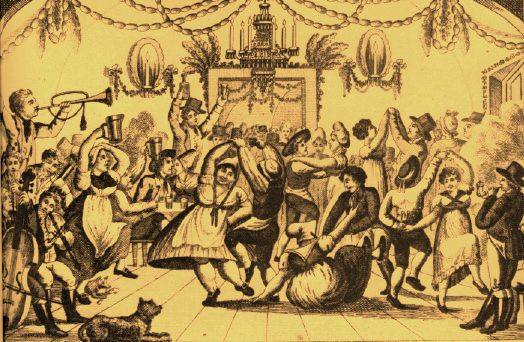
    One might say it’s a little cool for spring. But when Aaron Copland came to write his magnum opus, he wasn’t thinking of spring or even the Appalachia, for that matter. What he had to work with were a series of impressions from Martha Graham. In fact, while composing the music, he thought of the project simply as “Ballet for Martha.”

    This week on “Music from Marlboro,” we’ll celebrate Copland’s birthday with a suite from this most durable of American ballets, since recognized as “Appalachian Spring.”

    It was Graham who came up with the title, well after Copland had finished. A phrase in a poem by Hart Crane had caught her fancy. When Copland asked her if the ballet had anything to do with the poem, Graham said, “No, I just liked the title and I took it.” Yet, as Copland loved to relate, people were always coming up to him and saying, “Mr. Copland… when I hear your music I can just see the Appalachians and I can just feel spring.” (FUN FACT: In Crane’s poem, “spring” isn’t even seasonal; it refers to a source of water.)

    Graham, every bit as concerned as Copland with forging a uniquely American art, had envisioned a ballet set during the Civil War. In her correspondence with the composer, she was quite specific in the moods she wished to evoke.

    By the time she came to choreograph the piece, Graham decided on a scenario built around the courtship and wedding of a young couple in a western Pennsylvania community in the early 19th century. One of the original dancers, Pearl Lange, remembered, “The first day we heard the music, it was like the sun spread over the floor.”

    All the themes are Copland’s own, except of course for “Simple Gifts,” the Shaker hymn that forms the basis for a series of variations at the work’s climax.

    “Appalachian Spring” was given its first performance at the Library of Congress on October 30, 1944. On V-E Day, 1945, the work was awarded the Pulitzer Prize for Music. We’ll hear it performed this evening in its original guise, for a chamber ensemble of thirteen instruments, from the 2006 Marlboro Music Festival.

    We’ll preface that with music by Heitor Villa-Lobos. In parallel with Copland’s experiments to the north, Villa-Lobos made a conscious effort in the late ‘30s to embrace a more populist style. The sixth of his seventeen string quartets was composed in Rio de Janeiro in 1938. The work received its first performance there on November 30, 1943. The quartet incorporates elements of Brazilian folk and popular music. At the same time, the composer is not at all bashful about his debt to the works of Franz Joseph Haydn.

    We’ll hear a performance of Villa-Lobos’ String Quartet No. 6, from the 2007 Marlboro Music Festival, featuring violinists Celeste Golden and Lucy Chapman, violist Kyle Armbrust, and cellist Wendy Law.

    It’s music from the Americas on this week’s “Music from Marlboro,” Wednesday evening at 6:00 EST, on WWFM – The Classical Network and wwfm.org.

    Marlboro School of Music and Festival: Official Page
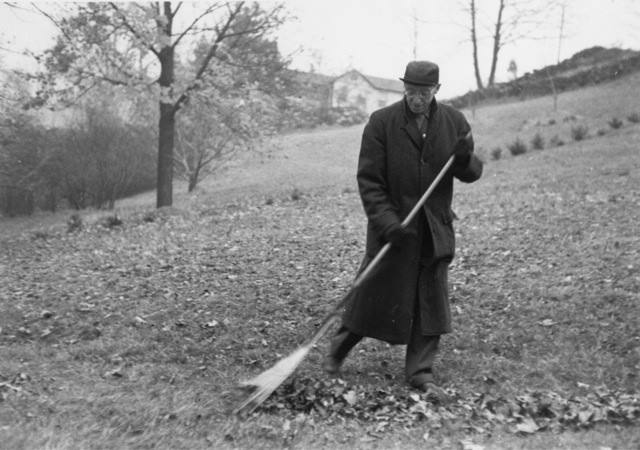

    PHOTO: Copland, feeling a little nostalgic for that Appalachian spring

  • Licorice Sticks Beethoven Dutilleux at Marlboro

    Licorice Sticks Beethoven Dutilleux at Marlboro

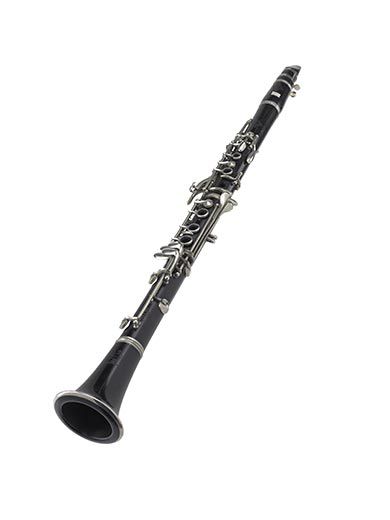
    I hope you’re in the mood for some licorice stick. On this week’s “Music from Marlboro,” our program will be bookended by two works for clarinet trio.

    For Darius Milhaud, as a member of that loose collective known as “Les six,” tomfoolery and high-spirits were a matter of course. Milhaud’s Suite for Violin, Clarinet and Piano, composed in 1936, revisits material from incidental music written for Jean Anouilh’s play “Le Voyageur sans bagages” (“The Traveler without Luggage”). The play deals with an amnesiac World War I soldier attempting to reestablish his identity. Milhaud might seem like an unlikely source for such a serious subject – but then the drama turns out to be a comedy!

    The piece falls into four movements: “Ouverture;” “Divertissement;” “Jeu” (literally “Game”); and “Introduction et Final.” We’ll hear it performed at the 1971 Marlboro Music Festival by violinist Marilyn Dubow, clarinetist Richard Stoltzman, and pianist David Effron.

    All things considered, Beethoven tended to be a little more severe than Milhaud. If there is play in his music, it is the play of a cat, pursuing a musical idea relentlessly, batting it around, adopting an air of calm, and then tearing off its appendages and hammering it through the floorboards.

    Even if that is not your idea of a good time, there is plenty to smile about in his Trio in B-flat, Op. 11. Sometimes identified by the nickname “Gassenhauer,” the work borrows a theme for its third movement set of variations from the drama giocoso (literally, drama with jokes) “L’amor marinaro ossia il corsaro” by Joseph Weigl. Weigl, by the way, was Haydn’s godson.

    “Gassenhauser” denotes a certain kind of popular music, a tune picked up by your average man in the street, and sung or whistled oblivious to its origins. The melody was so well-known, in fact, that it was also treated by Johann Nepomuk Hummel and Niccolo Paganini, among others.

    You’ll sometimes hear the trio performed with a violin in place of the clarinet – the cello is also sometimes swapped out for a bassoon – but for our purposes this evening we’ll go with the distinctive timbres of the sanctioned version for clarinet trio. Again, Richard Stoltzman will be the clarinetist, alongside cellist Alain Meunier, and pianist (and Marlboro co-founder) Rudolf Serkin.

    In between, we’ll experience something completely different. Henri Dutilleux meticulously crafted his seven-movement string quartet, “Ainsi la nuit” (Thus the Night), between 1973 and 1976, after intensive studies of the works of Beethoven, Bartok, and Webern, and a series of preliminary sketches he called “Nights.” All the hard work certainly paid off – the quartet was embraced as a modern masterpiece – though, to my ears, I’ve yet to find any humor in it.

    We’ll hear a performance from Marlboro in 2001. Joseph Lin and Harumi Rhodes will be the violinists, Richard O’Neill the violist, and Marcy Rosen the cellist.

    It’s said that licorice is very good for the digestion. You’ll find plenty to chew on, on this week’s “Music from Marlboro. Join me this Wednesday evening at 6:00 EDT, on WWFM – The Classical Network and wwfm.org.

    Marlboro School of Music and Festival: Official Page
  • Berg, Mozart & Marlboro Zigzags on WWFM

    Berg, Mozart & Marlboro Zigzags on WWFM

    There are times when I suspect Alban Berg felt he zigged when he should have zagged.

    Berg, a pupil of Arnold Schoenberg, was always the Romantic among serialists – one critic described him as “the Puccini of twelve-tone music” – so it’s not difficult to divine a shimmering, unresolved longing common to the works of his Viennese contemporaries.

    On this week’s “Music from Marlboro,” we’ll hear Berg’s two-movement String Quartet of 1910. Like much of Berg’s music, the quartet is not really a strict adherent to any system. The music wafts spectrally, sharing tonal and atonal characteristics, a kind of fever dream of uncertainty.

    There will be no lack of commitment in the performance, which dates from 1984. We’ll experience Marlboro excellence in the form of Ida Levin and Felix Galimir, violins; Benjamin Simon, viola; and Sara Sant’Ambrogio, cello.

    Then we’ll emerge from the fin de siècle fog to find enlightenment with Wolfgang Amadeus Mozart. Mozart’s String Quintet No. 5 in D Major, K. 593, composed in 1790, adds a second viola to the mix. The work was recollected by the composer’s widow, Constanze, to have been written for a musical amateur, often speculated to be Johann Trost. Trost must have been quite the gifted dilettante. He also knew Haydn from Esterhaza, and Haydn dedicated some of his quartets to him.

    When Haydn and Mozart played through the D Major Quintet together before Haydn’s first visit to London, the two men took turns indulging in the first viola part. The work was known for centuries as the “Zigzag” because of an alteration to the original manuscript that modified what had been a descending chromatic figure in the final movement into something decidedly more humorous.

    We’ll hear a Marlboro performance from 2005, with Sarah Kapustin and Diana Cohen, violins; Mark Holloway and Sebastian Krunnies, violas; and David Soyer, cello.

    The music may be jagged, but the path to enjoyment is always straight. It’s another hour of superb chamber music making from the legendary Marlboro Music Festival, this Wednesday evening at 6:00 EDT, on WWFM – The Classical Network and wwfm.org.

    Marlboro School of Music and Festival: Official Page

  • Fauré, Gounod: Ageless Music from Marlboro

    Fauré, Gounod: Ageless Music from Marlboro

    Maybe it’s all that red wine.

    From a certain, limited perspective, Gabriel Fauré might have been considered a little long in the tooth when he came to write the music we’ll hear on this week’s “Music from Marlboro.” But, as he so eloquently proved, when it comes to art, age is only a number.

    At 76 years-old, Fauré surprised just about everyone when he unveiled his Piano Quintet No. 2 in C minor in 1921. For one thing, no one except his wife knew he was even working on anything. For another, he was supposed to be retired, having stepped down from the directorship of the Paris Conservatory only the year before.

    Though the composer’s health in his later years was far from the best, thanks in part to decades of heavy smoking, the Quintet conveys a surprisingly youthful spirit, full of tenderness and ardor. Paradoxically, a knowing serenity hangs over the piece, lending it a kind of wisdom and balance. I am reminded of Wordsworth’s assessment that poetry is the spontaneous overflow of powerful feelings recollected in tranquility.

    We’ll hear it performed at the 2015 Marlboro Music Festival by pianist Roman Rabinovich, violinists YooJin Jang and Scott St. John, violist Shuangshuang Liu, and cellist Will Chow.

    The program will open with Charles Gounod’s classically proportioned and wholly delightful “Petite symphonie” for nine wind instruments. Gounod, best known for his opera “Faust” and for his setting of “Ave Maria,” was 66 at the time of the work’s premiere in 1885. Though the structure is well-worn, based on the standard symphonic form developed a hundred years earlier by composers like Haydn and Mozart, its long-limbed melodies and occasional harmonic surprises mark it as a product of its time. In spite of its evident nostalgia, its spirit of youth seems ever-green.

    The performance, from 2013, will feature flutist Marina Piccinini, oboists Nathan Hughes and Joseph Peters, clarinetists Anthony McGill and Alicia Lee, bassoonists Brad Balliett and Steven Dibner, and hornists David Cooper and Radovan Vlatković.

    It’s an hour of French music that belies and defies the passage of time, with performances from the archives of the legendary Marlboro Music Festival, this Wednesday evening at 6:00 EDT, on WWFM – The Classical Network and wwfm.org.

    Marlboro School of Music and Festival: Official Page
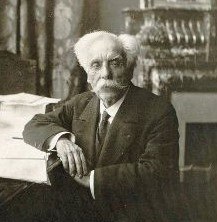

    FOREVER YOUNG: Gabriel Fauré (left) and Charles Gounod

Tag Cloud

Aaron Copland (92) Beethoven (95) Composer (114) Film Music (123) Film Score (143) Film Scores (255) Halloween (94) John Williams (187) KWAX (229) Leonard Bernstein (101) Marlboro Music Festival (125) Movie Music (138) Opera (202) Philadelphia Orchestra (89) Picture Perfect (174) Princeton Symphony Orchestra (106) Radio (87) Ralph Vaughan Williams (85) Ross Amico (244) Roy's Tie-Dye Sci-Fi Corner (290) The Classical Network (101) The Lost Chord (268) Vaughan Williams (103) WPRB (396) WWFM (881)

DON’T MISS A BEAT

Receive a weekly digest every Sunday at noon by signing up here


RECENT POSTS