Tag: Marlboro Music Festival

  • Hungary’s Forgotten Composers: Dohnányi & Ligeti

    Hungary’s Forgotten Composers: Dohnányi & Ligeti

    When it comes to the whole Hungarian nationalist movement, Béla Bartók and Zoltán Kodály would get all the glory. Sure, they did a lot of the legwork, heading out into the field in a race against time to document authentic folk traditions before they were swept away by industrialization. But as director of the Budapest Academy of Music and music director of the Budapest Philharmonic Orchestra, Ernő Dohnányi (1877-1960) would exert as much influence over his country’s musical development as that of his folk music mad friends and contemporaries.

    On the next “Music from Marlboro,” we’ll give Dohnányi his due. We’ll also hear music by György Ligeti, a composer who survived several totalitarian regimes to become one of the leading composers of the second half of the 20th century.

    Dohnányi himself would become the target of character assassination campaigns following World War II. Painted as a Nazi sympathizer by his enemies, he would be investigated and cleared by the U.S. Military Government several times. He has since been defended as a forgotten hero of Holocaust resistance. It was through Dohnányi’s administrations that countless Jewish musicians survived. Also, between the wars, he went to bat for Kodály, a leftist, by refusing to fire him from the Budapest Academy. As a result, Dohnányi too lost his position, although he was later reinstated. Nevertheless, he continued to be eyed with suspicion, and his reputation never fully recovered.

    Equally fatal is the fact that much of his music bears a more cosmopolitan stamp than that of the more blatantly “Hungarian” output of his peers. His composition teacher, the German-born Hans von Koessler (known in Hungary as János Koessler) was a cousin of Max Reger. Of course, Koessler also taught Bartók and Kodály. But Dohnányi was perfectly happy nestled in the world of Brahms. For his international career, he adopted the name Ernst von Dohnányi.

    Dohnányi’s Piano Quintet in C minor, completed in June of 1895, one month before his 18th birthday, earned Brahms’ stamp of approval. We’ll hear it performed at the 1977 Marlboro Music Festival, by pianist Stephanie Brown, violinists Joseph Genualdi and Mayuki Fukuhara, violist Philipp Naegele, and cellist Lisa Lancaster.

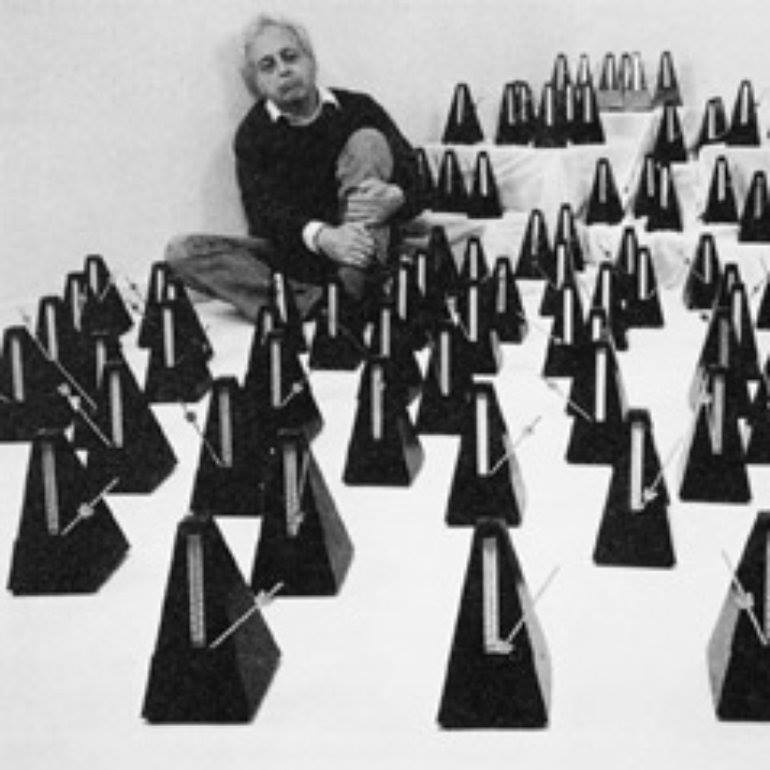
    György Ligeti (1923-2006) was born in Transylvania. If anything, his hardships proved even more severe: most of his family was wiped out in the Holocaust, he was conscripted into a forced labor brigade, and he lived for a time under strict communist rule. He survived the violent Soviet putdown of the Hungarian Revolution, and finally escaped with his on-again/off-again wife in a pair of mail sacks, leaping off a night train and crawling for miles through the mud to find safety in Vienna.

    Ligeti was that rare bird: an avant-garde composer whose music could actually inspire affection. He rocketed to broader fame when some of his works were used, without permission, in Stanley Kubrick’s “2001: A Space Odyssey.”

    The first of Ligeti’s three string quartets, subtitled “Métamorphoses nocturnes,” was written in 1953-54, prior to his flight from Hungary. The work was heavily influenced by Bartók; the composer György Kurtág memorably described it as “Bartók’s seventh string quartet.” Ligeti himself characterized that phase of his career as “prehistoric.” Although performances of Bartók’s quartets were banned under the communist regime, Ligeti was familiar with them through the study of their scores.

    Ligeti’s quartet is cast in one continuous movement, but subdivided into seventeen contrasting sections. We’ll hear it performed at the 1996 Marlboro Music Festival by violinists Soovin Kim and Catherine Cho, violist Kirsten Johnson, and cellist Siegfried Palm.

    That’s two contrasting works by Hungarian composers buffeted by war and politics, on the next “Music from Marlboro,” this Wednesday evening at 6:00 EST, on WWFM – The Classical Network.

    Marlboro School of Music and Festival: Official Page


    “I am in a prison: one wall is the avant-garde, the other wall is the past, and I want to escape.” – György Ligeti
  • Bach & Mendelssohn from Marlboro Festival

    Bach & Mendelssohn from Marlboro Festival

    On this week’s “Music from Marlboro,” we get a good start on 2019, with music by Felix Mendelssohn, bounding out of the gate at 16 years-old with one of the most astonishing works in the repertoire.

    Mendelssohn’s Octet for Strings in E-flat is the piece that established him as music’s foremost preternatural genius. Hear a 1960 performance from the legendary Marlboro Music Festival, featuring violinists Jaime Laredo, Alexander Schneider, Arnold Steinhardt and John Dalley, violists Michael Tree and Samuel Rhodes, and cellists Leslie Parnas and David Soyer.

    Holy smokes! In case you didn’t notice, the performers include the entire Guarneri String Quartet – which didn’t formally come together as a group until four years later, at Marlboro – and then some.

    Of course, Mendelssohn was also the most important figure in the revival of the music of Johann Sebastian Bach, at the age of 20 spearheading the first performance since Bach’s death of the “St. Matthew Passion.”

    Equally important to Bach’s rehabilitation was Pablo Casals, who rediscovered Bach’s cello suites in a Catalan bookshop at the age of 13. Casals championed the pieces for the remainder of his days. Thanks to him, what had previously been regarded as dimly-recollected etudes are now standard repertoire.

    Casals was affiliated with the Marlboro Music Festival from 1960 to 1973, the last 13 years of his life. We’ll hear Casals conduct Marlboro musicians in Bach’s Bradenburg Concerto No. 5. Flutist Ornulf Gulbransen, violinist Alexander Schneider, and pianist Rudolf Serkin are standouts in this 1964 recording. Serkin, of course, was the Marlboro Music School and Festival’s founding artistic director.

    Begin the new year with inspirational performances of music by Bach and Mendelssohn – a surefire balm for the back-to-work blues – on the next “Music from Marlboro,” this Wednesday evening at 6:00 EST, on WWFM – The Classical Network and wwfm.org.

    Marlboro School of Music and Festival: Official Page


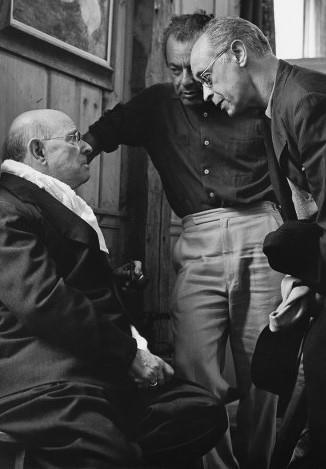
    PHOTO: Pablo Casals, Alexander Schneider, and Rudolf Serkin will feature prominently on this week’s “Music from Marlboro.”

  • A Brahms Christmas at Marlboro Music

    A Brahms Christmas at Marlboro Music

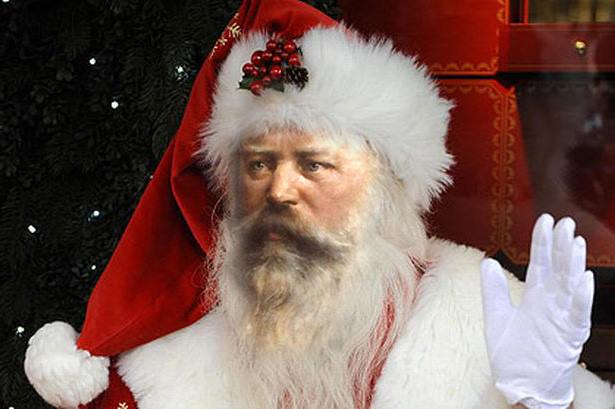
    Despite his remarkable resemblance to a certain Mr. Claus, Brahms is probably about the last composer you’d think of cozying up to on Christmas. This is the man who infamously left a party, after all, with one of the all-time great exit lines: “If there’s anyone here I’ve failed to insult, I apologize!”

    This week on “Music from Marlboro,” it’s a Brahms Christmas.

    Actually, Johannes Brahms had a very generous spirit. He did not shoot cats with a homemade bow-and-arrow and work the sounds of their pain into his music, as his enemies suggested. What he did enjoy was Christmas shopping! On one occasion he gifted the Schumann boys some rather pricey toy soldiers. On another, he surprised his housekeeper’s sons with a Christmas tree. Sure, Brahms could be a bit of a hard nut sometimes, but he retained a certain child-like demeanor at Christmas throughout his life.

    The second of his “Zwei Gesänge” (“Two Songs”) for voice, viola and piano, Op. 91, was written in 1863 for his friend, the violinist Joseph Joachim, and Joachim’s wife, Amalie. It had originally been intended as a wedding present, but Brahms resubmitted it the following year for the baptism of the couple’s son (who was named after him). Joseph was also well-versed on the viola, and Amalie was a contralto.

    The work, “Geistliches Wiegenlied” (“Sacred Lullaby”), after a text by Emanuel Geibel, is a cradle song sung by Mary, mother of Jesus, who addresses the holy angels, requesting that they silence the rustling palms because her Child is sleeping. The viola quotes the Christmas melody “Joseph, lieber Joseph mein,” a sly reference on the part of the composer, who incorporates the carol’s text in order to include Joachim’s given name.

    We’ll hear a performance from the 2011 Marlboro Music Festival, featuring mezzo-soprano Jennifer Johnson Cano, violist Hélène Clément, and, at the keyboard, Marlboro co-director Mitsuko Uchida.

    The adult Brahms had no family of his own. He divided Christmas Day between his favorite tavern and coffee shop, but Christmas Eve was another matter. In his later years, he greatly enjoyed passing the night with friends – once he was done shopping, that is – as part of a kind of extended family.

    Though he rarely spent Christmas with his longtime crush, Clara Schumann, Brahms thought of her every year, on at least one occasion writing her a nice Christmas letter in which he imagines sitting beside her at her breakfast table, conversing with her, and delighting in all of her last-minute holiday preparations.

    Clara joined Brahms for the first performance of his “Variations on a Theme by Haydn,” in its original version for two pianos, at a private gathering in Bonn, in August of 1873. The first performance of the orchestral version took place three months later, with the Vienna Philharmonic conducted by the composer.

    Brahms owed much of his interest in Haydn, who died 60 years earlier and whose music had pretty much fallen out of fashion, to his friend Karl Ferdinand Pohl, scholar-librarian of the Vienna Philharmonic. The theme that had so captivated Brahms is the famous “St. Anthony Chorale,” employed in the Wind Partita in B-flat, which at the time was attributed to Haydn.

    This evening, we’ll have an opportunity to compare both versions of Brahms’ celebrated variations. First, we’ll hear them performed in 1976 by pianists Stephanie Brown and Cynthia Raim; then the great Pablo Casals will conduct the Marlboro Festival Orchestra, from 1969.

    Of course, the theme is probably not by Haydn at all, but who are you going to believe, scholarship or Brahms? It is the Christmas season, after all. I’m willing to take it on faith. I hope you’ll join me for the next “Music from Marlboro,” this Wednesday evening at 6:00 EST, on WWFM – The Classical Network and wwfm.org.


    In the meantime, feel free to enjoy this profile of Pablo Casals by Marlboro’s Frank Salomon:

    https://mailchi.mp/marlboromusic/from-the-archives-pablo-casals?fbclid=IwAR1JlaAnoqYGZYZqzaUQtEjCU5NouYF_QzWw5-rDrIb9vWfryIt43xbYppE

    Marlboro School of Music and Festival: Official Page

  • Danish Light: Kuhlau, Nielsen & Marlboro

    Danish Light: Kuhlau, Nielsen & Marlboro

    As we approach the shortest day, it’s all the more important to keep looking on the bright side.

    Just ask German-Danish composer Friedrich Kuhlau. At the age of seven, Kuhlau lost an eye when he slipped on the ice and fell on a bottle. In 1810, he fled to Copenhagen to avoid conscription into Napoleon’s army. There, he struggled to gain acceptance into Danish musical life. It was a bumpy ride, marked by modest success and spectacular failure.

    Then, only a few years after he scored his greatest hit, in 1828, with incidental music to the play “Elverhøj” (“The Elf’s Hill”), his house caught fire. He was forced to spend most of the night out in the freezing cold, as a result of which he developed a chest ailment that drove him to an untimely death at the age of 46.

    Happily, his ill-fortune is nowhere in evidence in his flute quintets. We’ll hear one of them on this week’s “Music from Marlboro.” The Flute Quintet in D major, Op. 51, No. 1, will be performed by flutist Julia Bogorad, violinist Ralph Evans, violists Ira Weller and Samuel Rhodes, and cellist Marcy Rosen, at the 1979 Marlboro Music Festival.

    Like “The Ugly Duckling” of his compatriot, Hans Christian Andersen, Carl Nielsen emerged from humble beginnings to blossom into Denmark’s national composer. Internationally, Nielsen has flitted in and out of the seemingly inescapable shadow of Finnish master Jean Sibelius. Both men were born in 1865. In fact, Nielsen was six months older. But it is an unfair comparison, not so much apples and oranges; more like kipper and pickled herring.

    The very fact that Nielsen is not referred to reductively as “The Sibelius of Denmark” is attributable to an unusually strong individual voice. His music is modern, yet traditional; Scandinavian, yet Germanic. Most important, it is full of personality, freshness and vitality.

    Nielsen’s Wind Quintet of 1922 reflects the composer’s optimism and good humor. These he retained despite great personal, professional, and global turmoil. Each part of the quintet was tailored to the personality of the individual performer for which it was written (members of the Copenhagen Wind Quintet). There is also something of the outdoors about the piece. Nielsen was always fascinated by nature, and there are ample suggestions of bird song woven into the texture of the work’s pastoral neoclassicism.

    We’ll enjoy a recording made at Marlboro in 1971, with flutist Paula Robison, oboist Joseph Turner, clarinetist Larry Combs, bassoonist William Winstead, and hornist Robin Graham.

    Lighten up with an hour of Danish quintets, on the next “Music from Marlboro,” this Wednesday evening at 6:00 EST, on WWFM – The Classical Network and wwfm.org.

    Marlboro School of Music and Festival: Official Page


    PHOTOS: Tak for kaffe, with cheese Danish: the young Carl Nielsen

  • Saint-Saëns, Rossini & More From Marlboro

    Saint-Saëns, Rossini & More From Marlboro

    On this week’s “Music from Marlboro,” we’ll travel from Saint-Saëns to Saint Petersburg, with a performance by Lara St. John tossed into the mix.

    Works by two child prodigies (well, one of them “former”) will be heard on the first half of the program.

    Camille Saint-Saëns demonstrated perfect pitch at the age of two and gave his first public concert at five. He was 72, at the other end of a very long career, when he composed his Fantaisie, Op. 124. We’ll hear it performed by violinist Thomas Zehetmair and harpist Alice Giles, at the 1982 Marlboro Music Festival.

    Gioachino Rossini would blossom into one the most productive of opera composers, but even as a boy there was evidence of his remarkable facility and fecundity. He wrote his six string sonatas, scored for two violins, cello, and double bass, in 1804, over a period of three days. Rossini was twelve years-old. The sonatas are rhythmically vital and full of the kinds of melodies that would soon endear him to audiences the world over. We’ll hear the third of these, the String Sonata in C major, in a 1989 performance, featuring violinists St. John and Ivan Chan, cellist Paul Tortelier, and double bassist Timothy Cobb.

    Then we’ll round out the hour with Anton Arensky’s Piano Trio No. 1 in D minor. Arensky, a pupil of that icon of Russian nationalism, Nikolai Rimsky-Korsakov, gravitated more toward the cosmopolitan sound of Rimsky’s rival, Peter Ilych Tchaikovsky. His trio is full of good tunes, always charming, regardless of whether the music is melancholy, turbulent, reflective, or good humored. It’s the kind of piece that will have you humming for the rest of the day. It was played at the 1982 Marlboro Music Festival by pianist Frederick Moyer, violinist Isodore Cohen, and cellist John Sharp.

    We’re grasping for saints on this Krampusnacht. I hope you’ll join me for the next “Music from Marlboro,” this Wednesday evening at 6:00 EST, on WWFM – The Classical Network and wwfm.org.

    In the meantime, here’s a link to Lara St. John’s new “Hanukkah Carol,” co-written with accordionist Ronn Yedidia and sung by countertenor Aryeh Nussbaum Cohen.

    Marlboro School of Music and Festival: Official Page

Tag Cloud

Aaron Copland (92) Beethoven (95) Composer (114) Film Music (123) Film Score (143) Film Scores (255) Halloween (94) John Williams (187) KWAX (229) Leonard Bernstein (101) Marlboro Music Festival (125) Movie Music (138) Opera (202) Philadelphia Orchestra (89) Picture Perfect (174) Princeton Symphony Orchestra (106) Radio (87) Ralph Vaughan Williams (85) Ross Amico (244) Roy's Tie-Dye Sci-Fi Corner (290) The Classical Network (101) The Lost Chord (268) Vaughan Williams (103) WPRB (396) WWFM (881)

DON’T MISS A BEAT

Receive a weekly digest every Sunday at noon by signing up here


RECENT POSTS