Tag: Marlboro Music Festival

  • Winds of Marlboro Music Danzi & Beethoven

    Winds of Marlboro Music Danzi & Beethoven

    It’s a high wind alert on the next “Music from Marlboro.” Tune in for an hour of chamber music colored by winds.

    Like many of his contemporaries, Franz Danzi had decidedly mixed feelings about the music of Beethoven. Beethoven may have only been six years Danzi’s junior, but he was a volatile force that felt no compunction about blowing over the fence posts of tradition.

    Danzi, on the other hand, was a devout classicist. As a young musician in the famed Mannheim Orchestra, he was deeply impressed by a visit from Mozart, whose own music remained his ideal.

    In addition to being a composer himself, Danzi was also a fine cellist (his father was the principal at Mannheim) and a reliable conductor. Danzi composed steadily, producing concertos, chamber music, and no less than 17 works for the stage. Much of his output has fallen into comparative neglect, with the notable exception of his woodwind quintets.

    Be that as it may, it is Danzi’s Bassoon Quartet in B-flat major, Op. 40, No. 3, that we’ll hear. It was performed at the 1975 Marlboro Music Festival by bassoonist Milan Turkovic, violinist Young Uck Kim, violist Philipp Naegele, and cellist Alain Meunier.

    Danzi’s reservations about him aside, it’s clear from Beethoven’s Quintet for Piano and Winds, Op. 16, that he too was an admirer of Mozart. The work is evidently modeled on Mozart’s earlier piece for the same instrumental combination. It’s even written in the same key (E-flat). In fact, I venture to guess, there’s little in the quintet, written when Beethoven was in his mid-20s, that would have made even Danzi squeamish.

    We’ll hear it performed by pianist – and Marlboro cofounder – Rudolf Serkin, oboist Rudolf Vrbsky, clarinetist Richard Stoltzman, hornist Robert Routch, and bassoonist Alexander Heller, in a recording made in 1974.

    Everyone knows it’s windy. Catch your breath for the next “Music from Marlboro,” this Wednesday evening at 6:00 EDT, on WWFM – The Classical Network and wwfm.org.

    Marlboro School of Music and Festival: Official Page
  • Bach Birthday & Marlboro’s Music

    Bach Birthday & Marlboro’s Music

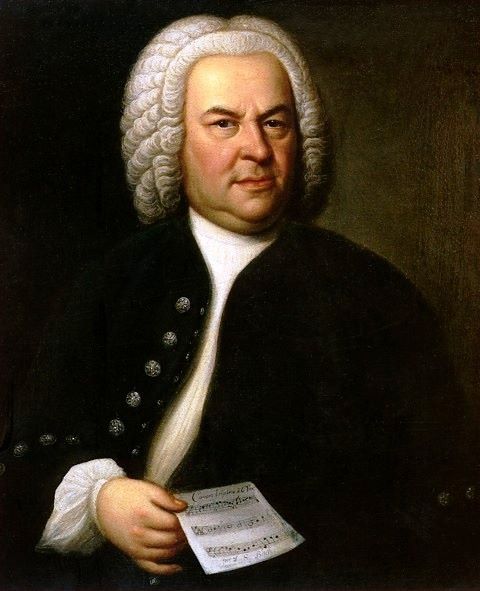
    The Eve of Bach is upon us.

    Tomorrow will mark the 334th anniversary of Johann Sebastian Bach’s birth. I’m sure you are aware by now that The Classical Network is in the final hours of its Bach 500 campaign. Every March, we ask that 500 generous listeners step up and support the music by making a donation to the station IN ANY AMOUNT. Once we hit those 500 contributions, we stop asking and throw open the floodgates, filling the airwaves with undiluted Bach all day on March 21st. If we don’t hit that goal, we have to keep asking. The champagne goes flat and the ice cream cake melts.

    So I’m asking one final time: if you haven’t contributed yet, or if you haven’t given in a while, or if your St. Patrick’s Day peregrinations have left you with a pot of gold, please do whatever you can. YOU set the amount. You won’t catch us sneering at an Andrew Jackson or two. But the truth is, anything counts toward the 500. Once we hit 500 donations, we can collect over $14,000 in challenge money from our Bach Pot, and then the Bacchanal can begin in earnest. Please call us during business hours at 1-888-232-1212, or contribute anytime at wwfm.org (click on “Donate”).

    To prime the pump, on this week’s “Music from Marlboro,” I’ll be presenting an hour of fabulous Bach recordings from the archive of the legendary music school and festival.

    Forget the period instrument movement. Scholarship has its place, but these artists believed unwaveringly in the transcendent quality of Bach’s music and its ability to communicate across the ages.

    These are Old School performances. You’ll hear pianos all over the place. Marlboro co-founder Rudolf Serkin will offer a sensitive interpretation of 14 canons on the aria ground from the “Goldberg Variations,” in a performance recorded at Marlboro in 1976.

    Then the venerable Mieczyslaw Horszowski will join a Marlboro orchestra led by Felix Galimir for Bach’s Keyboard Concerto No. 7 in G minor, BWV 1058. The performance was captured in 1982, when the pianist was 90 years-old. Horszowski, who gave his first public performance in 1901(!), died in 1993, just shy of his 101st birthday. No doubt his extraordinary longevity can be attributed in part to his healthy and sustained immersion in music such as this.

    And of course, we can’t have an hour of Marlboro Bach performances without hearing from Pablo Casals. The legendary cellist was affiliated with the Marlboro Music Festival for the last 13 years of his life, from 1960 to 1973. His loving, humanistic interpretations of Bach’s orchestral works form a remarkable capstone to an extraordinary career.

    Don’t let the “festival orchestra” appellation deceive you. These are no ragtag assemblages of itinerant performers. The ensembles are made up of world-class artists and stars-of-tomorrow, many of whom maintained their relationships with Marlboro for years.

    You don’t have to break the bank for Bach, but your contribution in any amount will make a difference. Call now at 1-888-232-1212 or click on “Donate” at wwfm.org. Then kick back and enjoy an hour of magical Bach performances on the next “Music from Marlboro,” this Wednesday evening at 6:00 EDT, on WWFM – The Classical Network and wwfm.org.

    Marlboro School of Music and Festival: Official Page


    Bach with Marlboro advocates (top to bottom) Pablo Casals, Mieczyslaw Horszowski & Felix Galimir, and Rudolf Serkin.

  • Marlboro Music’s Czech Gems & Dvořák Preview

    Marlboro Music’s Czech Gems & Dvořák Preview

    Each summer, the Marlboro Music School and Festival becomes a destination for chamber music performers and enthusiasts. But periodically, throughout the year, Marlboro also takes it show on the road.

    The next Marlboro tour will take place from March 17-24, with stops in Greenwich, CT, New York City (at Carnegie Hall’s Weill Recital Hall), Philadelphia (at the Kimmel Center for the Performing Arts’ Perleman Theater), Washington, DC, and Boston.

    Capping a program of music by Franz Joseph Haydn, Henry Purcell, and Benjamin Britten will be Antonin Dvořák’s String Quintet in A major, Op. 48. On this week’s “Music from Marlboro,” I’ll offer a preview of this attractive work, in the context of an all-Czech hour.

    Dvořák’s sextet was composed largely in May of 1878, making it contemporaneous with the “Slavonic Dances,” Op. 46. It’s hardly surprising, then, that the work betrays a similarly nationalist character. The sextet’s two inner movements, in fact, bear overtly Czech names: dumka and furiant.

    In music, dumka (literally, “thought”) signifies a kind of melancholy introspection. A furiant is a rapid and fiery Czech dance.

    The sextet holds an important place in Dvořák’s development. Thanks to a government subsidy, Dvořák was able to concentrate solely on composition, and he was determined to confirm his worth. The sextet proved to be the first of Dvořák’s works to receive its premiere outside of Bohemia. It was given its first public performance in Berlin, headed up by the famed violinist Joseph Joachim.

    We’ll hear it performed at the Marlboro Music Festival in 2017 by violinists Stephen Tavani and Scott St. John, violists Rosalind Ventris and Rebecca Albers, and cellists Alice Yoo and Judith Serkin. Serkin, the daughter of Marlboro co-founder Rudolf Serkin, will also appear on the Marlboro tour.

    By way of introduction, we’ll have a hell of bonus in the form of Leoš Janáček’s “Concertino,” a chamber concerto of sorts, composed in 1925. Amusingly, the composer added descriptive notes to the program of the piece, comparing the theme of the first movement to a “grumpy hedgehog,” the clarinet in the second movement to a “fidgety squirrel,” the atmosphere of the third movement to “a night owl and other night animals,” and the character of the fourth movement to a “scene from a fairy tale, where everybody is arguing.” It’s worth noting, perhaps, that Janáček had written his opera “The Cunning Little Vixen” between 1921 and 1923.

    We’ll hear a 1982 performance of the “Concertino,” with violinists Elena Barere and Mei-Chen Liao, violinist Steven Tenenbom, clarinetists Cheryl Hill (E-flat) and Steven Jackson (B-flat), bassoonist Stefanie Przybylska, and hornist Robin Graham.

    The pianist is none other than Rudolf Firkušný. Firkušný, born in Moravia in 1912, was a living link to the composer. He also studied with Josef Suk, the pupil and son-in-law of Dvořák, and with Alfred Cortot and Artur Schnabel. That’s quite a pedigree!

    You’re not going to want to miss this one. Czech it out, on the next “Music from Marlboro,” this Wednesday evening at 6:00 EDT, on WWFM – The Classical Network and wwfm.org.

    To learn more about the Marlboro Music School and Festival – its history, its tours, and its summer concerts – visit marlboromusic.org.

    Marlboro School of Music and Festival: Official Page


    PHOTOS (clockwise from left): Dvořák, Janáček, Firkušný, hedgehog

  • Mendelssohn & Reger: Bridging Worlds at Marlboro

    Mendelssohn & Reger: Bridging Worlds at Marlboro

    On this week’s “Music from Marlboro,” we’ll have music by two undersold composers who seemed trapped between two worlds.

    While Felix Mendelssohn and Max Reger were very much figures of their respective times, they both found abundant inspiration in music of the past, frequently the distant past. In addition, they often gave the impression of being just a little tentative when it came to exploring musical trends of the present.

    Common to both was an overarching respect for the works of Johann Sebastian Bach. It was Mendelssohn, of course, who at the age of 20 would engineer the first modern performance of Bach’s “St. Matthew Passion.”

    Reger composed a lot of fugues and sets of variations, fancying himself the heir of Beethoven and Brahms; but also, in his own gargantuan, overbaked way, modeling himself on the Baroque’s most outstanding genius.

    Though both Mendelssohn and Reger subsumed romantic characteristics into their music, neither did so at the expense of traditional forms. There are exceptions to every rule, as they say, but generally speaking Mendelssohn’s more emotional utterances seemed to flow most convincingly in the works of his early maturity.

    When he came to write his String Quartet in A minor, it was not Bach but Beethoven who was foremost in his thoughts. The composer was 18 years-old at the time of Beethoven’s death in 1827. He was clearly intoxicated by the Master’s late quartets, which had only recently been published.

    Though certainly influenced by Beethoven, Mendelssohn’s own essay in the form is quite at odds with the introspection of Beethoven’s Op. 135. In contrast, he infuses his own quartet’s Classical structure with a passionate Romanticism. That the synthesis would be so successful is hardly surprising from a teenaged marvel who, within the last two years, had already written an astonishing Octet for Strings and the overture to “A Midsummer Night’s Dream.” In his quartet, Mendelssohn also explores the possibilities of cyclic form more exhaustively than just about any other composer before César Franck.

    We’ll hear the Quartet in A minor performed at the 1995 Marlboro Music Festival by violinists Lisa-Beth Lambert and Hiroko Yajima, violist Annemarie Moorcroft, and cellist Sophie Shao.

    There are times when Reger’s music can be beyond rigorous. In fact, it might be better termed “Regerous.” Perhaps the craziest exemplar of vertiginous Teutonic counterpoint, he could write organ music of such density that the individual voices get lost in a tangle, deep inside a knot, somewhere in an impenetrable thicket.

    However, on two pianos, it all seems to make sense. The program will begin with a 1977 performance of Reger’s “Introduction, Passacaglia and Fugue,” Op, 96, performed by Marlboro stalwart Luis Batlle and a 19 year-old Yefim Bronfman.

    Were they born too late, or merely uneasy with the more progressive impulses of their times? Quiet your head and enjoy the music. I hope you’ll join me for works by Reger and Mendelssohn on the next “Music from Marlboro,” this Wednesday evening at 6:00 EST, on WWFM – The Classical Network Network and wwfm.org.

    Marlboro School of Music and Festival: Official Page

  • Stravinsky Grieg Boulez Marlboro Music

    Stravinsky Grieg Boulez Marlboro Music

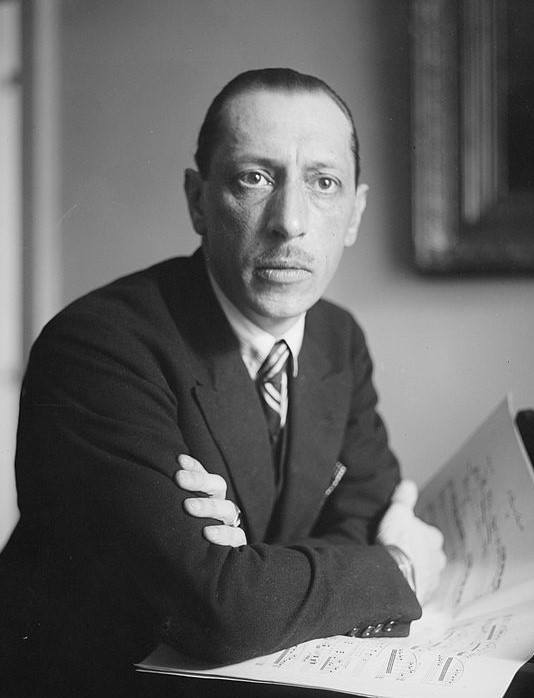
    When Igor Stravinsky unveiled his “Four Norwegian Moods” in 1945, Pierre Boulez was appalled. Stravinsky had been a kind of god to him. The young man had been dissecting the score to “The Rite of Spring” under Olivier Messiaen at the Paris Conservatory. That the Master who had revealed to the world the unvarnished brutality of “The Rite” had retreated to a pastiche of Edvard Grieg, of all people – it was unforgivable. Boulez and his classmates booed vigorously.

    Boulez must be spinning in his grave right now, as Stravinsky and Grieg will reunite for this week’s “Music from Marlboro.”

    With a wintry mix in the forecast, our featured work for the hour will be Grieg’s String Quartet in G minor. Grieg wrote his quartet in 1877-78 while living on a farm in Hardanger. It’s a rare long-form piece from a composer generally typecast as a miniaturist.

    From his letters, we know that Grieg was frustrated by his propensity for shorter works. “Nothing that I do satisfies me,” he wrote, “and though it seems to me that I have ideas, they neither soar nor take form when I proceed to the working out of something big.”

    In addition to giving Grieg the opportunity to flex his creative muscle, the quartet may also reveal something of autobiographical significance. The work opens with a motto lifted from one of Grieg’s songs, “The Minstrel,” on a text by Henrik Ibsen. The poem tells of Hulder, a spirit from Norse mythology, who dwells in waterfalls and lures aspiring musicians with the promise to reveal art in music. However, in return for this invaluable gift, Hulder robs its recipient of both happiness and peace of mind.

    Claude Debussy was also dismissive of Grieg’s music, which he famously derided as “pink bonbons filled with snow.” (What is it about the Norwegian’s music that could have so galled the Gauls?) That said, it has been convincingly demonstrated that Debussy owed more than a little to Grieg in the writing of his own String Quartet in G minor and in some of his piano miniatures.

    We’ll hear a performance of the Grieg quartet from the 2002 Marlboro Music Festival, featuring violinists Ayano Ninomiya and Sharon Roffman, violist Teng Li, and cellist David Soyer.

    Beyond its overt Norwegianisms, what really put Boulez over the edge about the “Four Norwegian Moods” was Stravinsky’s embrace of neoclassicism. Boulez, an austere disciple of the serialist techniques advocated by Arnold Schoenberg and his circle, would later conduct and record Stravinsky’s very neoclassical “Pulcinella.” Perhaps he softened his stance somewhat in light of Stravinsky’s late conversion to the serial cause.

    In any case, one wonders what Boulez would have made of the “Octet for Wind Instruments.” Composed in 1922, this is the work with which Stravinsky really threw down the gauntlet as neoclassicism’s foremost champion.

    We’ll hear it performed at Marlboro in 1968 by flutist Paula Robison, clarinetist Larry Combs, bassoonists Sol Schoenbach and Thomas Woodhams, trumpeters Henry Nowak and Ronald Anderson, and trombonists John Swallow and Richard Rodda, all directed by Leon Kirchner.

    The weather outside is frightful. Cozy in with an abominable bouillabaisse for Boulez, on the next “Music from Marlboro,” this Wednesday evening at 6:00 EST, on WWFM – The Classical Network and wwfm.org.

    Marlboro School of Music and Festival: Official Page

Tag Cloud

Aaron Copland (92) Beethoven (95) Composer (114) Film Music (123) Film Score (143) Film Scores (255) Halloween (94) John Williams (187) KWAX (229) Leonard Bernstein (101) Marlboro Music Festival (125) Movie Music (138) Opera (202) Philadelphia Orchestra (89) Picture Perfect (174) Princeton Symphony Orchestra (106) Radio (87) Ralph Vaughan Williams (85) Ross Amico (244) Roy's Tie-Dye Sci-Fi Corner (290) The Classical Network (101) The Lost Chord (268) Vaughan Williams (103) WPRB (396) WWFM (881)

DON’T MISS A BEAT

Receive a weekly digest every Sunday at noon by signing up here


RECENT POSTS