Tag: Marlboro Music Festival

  • Czech Music from Marlboro Festival Schulhoff & Dvořák

    Czech Music from Marlboro Festival Schulhoff & Dvořák

    In a spirit of unusual generosity, I’ll be picking up the Czech for this week’s “Music from Marlboro.”

    That’s right, it’s an all-Czech hour.

    We’ll begin with music by Erwin Schulhoff, who was encouraged as a young man by Antonin Dvořák. A Jew, a communist, and a nose-thumbing Dadaist, Schulhoff must have been regarded as a triple threat by the Nazis. Who else but Schulhoff would set “The Communist Manifesto” to music? His promising career was cut short when he was arrested while fleeing to the Soviet Union. He died of tuberculosis in a concentration camp in 1942.

    We’ll hear Schulhoff’s cheeky “Divertissement for Wind Trio” from 1928. The 2002 performance will feature oboist Ariana Ghez, clarinetist Charles Neidich, and bassoonist Shinyee Na.

    Then kick back and enjoy Dvořák’s beloved Piano Quintet in A Major. Composed in 1887, Dvořák’s amply melodic and affirmatively gorgeous Quintet is the perfect antidote to any of your day’s cares. The 2008 performance will feature Marlboro Artistic Director Mitsuko Uchida as pianist, with Benjamin Beilman and David Bowlin, violins; Maiya Papach, viola; and Judith Serkin, cello.

    Only three weekends left to attend this year’s Marlboro Music Festival in Marlboro, VT. On Sunday at 2:30 p.m., Uchida will perform Mozart’s Piano Quartet No. 2 in E-flat, K. 493, on a program that will also include works by Schumann and Marlboro Resident Composer, Pulitzer Prize winner Shulamit Ran.

    Ran’s music will also feature on Saturday’s program, at 8 p.m., which will also include works by Beethoven and Alexander Zemlinsky. For more information or to plan your visit, look online at marlboromusic.org.

    Then join me this Wednesday evening at 6:00 EDT for an all-Czech hour, on the next “Music from Marlboro,” on WWFM – The Classical Network and wwfm.org.

    Marlboro School of Music and Festival: Official Page

  • Marlboro Music Festival Beethoven & Spohr

    Marlboro Music Festival Beethoven & Spohr

    Caution! Musicians at play!

    The Marlboro Music Festival will present this summer’s opening concerts this weekend, in Marlboro, VT. Extraordinarily talented young performers will share the stage with seasoned veterans when presenting music by Mozart, Copland and Schumann (Saturday) and Beethoven, Schubert, Nielsen and Schumann (Sunday). For the complete schedule and to plan your visit, look online at marlboromusic.org.

    Then join me this Wednesday evening on The Classical Network, for performances by Marlboro musicians of works by Ludwig van Beethoven and Ludwig “Louis” Spohr.

    In his day, Spohr was as highly regarded as Beethoven. A triple threat – a violinist, a conductor, and a composer – he churned out music in all genres. He wrote nine symphonies, ten operas, fifteen violin concertos, four clarinet concertos, and 36 string quartets. Add to that, innumerable chamber works for all sorts of instrumental combinations – with a special emphasis on the harp, since it was the instrument of his wife, with whom he often appeared in concert.

    Following his death, in 1859, his reputation plummeted. It wasn’t until the late 20th century that his music underwent a significant revival.

    We’ll hear Spohr’s Sextet in C major, Op. 140, a comparatively late work, but one infused with a remarkably youthful spirit. A supporter of German unification, republicanism, and democratic causes, Spohr was inspired by the revolutions that swept across Europe in 1848.

    From the 1980 Marlboro Music Festival, we’ll enjoy a performance by violinists Pina Carmirelli and Veronica Knittel, violists Philipp Naegele and Karen Dreyfus, and cellists Peter Wiley and Georg Faust.

    Spohr was a friend and colleague of Beethoven. He participated in a memorable run-through of Beethoven’s “Ghost” Trio, with the composer banging away at an out-of-tune piano. He also played in the premiere of Beethoven’s Seventh Symphony.

    With their association in mind, we’ll also hear Beethoven’s Wind Octet in E-flat major, Op. 103, from 1792. The 1957 recording will feature Marlboro cofounder Marcel Moyse as director of an ensemble made up of oboists Alfred Genovese and Earl Schuster, clarinetists Harold Wright and Richard Lesser, bassoonists Anthony Checchia and Roland Small, and hornists Myron Bloom and Richard Mackey.

    I hope you’ll join me for music by the two Ludwigs, this Wednesday evening at 6:00 EST, on WWFM – The Classical Network and wwfm.org.

    Marlboro School of Music and Festival: Official Page
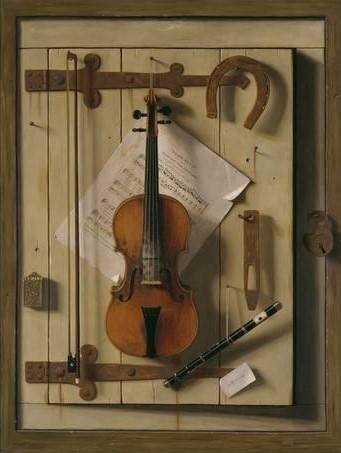
  • July 4th: American Music from Marlboro

    July 4th: American Music from Marlboro

    Somewhere between the pie-eating contests and the fireworks displays comes “Music from Marlboro.” We’ve got the perfect soundtrack for your Independence Day, with an all-American hour.

    At the heart of the program will be a work by Moravian composer John Antes (1740-1811). Antes, born in Frederick, Montgomery County, PA, is credited with being one the first composers born on American soil to write chamber music, and as the creator of perhaps the earliest surviving bowed string instrument made in the American colonies. Antes’ violin, made in 1759, is housed in the Museum of the Moravian Historical Society in Nazareth, PA. A viola, made by Antes in 1764 (again believed to be the earliest surviving of American origin), is housed in the Lititz Moravian Congregation Collection in Lancaster County. Antes created at least seven such instruments.

    In 1752, Antes attended school in Bethlehem, PA. In 1760, he was admitted into the Single Brethren’s choir there. From Bethlehem, he travelled to Herrnhut, Germany, the international center of the Moravians, to prepare for a career as a missionary. In the meantime, he also took up watchmaking. He was ordained a minister in 1769, then set out for Egypt. There, he served as a missionary to the Coptic Church in Grand Cairo. After a largely uneventful decade, he was captured and tortured by followers of Osman Bey.

    During his convalescence, he occupied himself with the composition of three string trios. He also sent a copy of six quartets to Benjamin Franklin, whom he had known in America. The quartets are lost (nice job, Ben), but the trios survive. We’ll hear Antes’ Trio in D minor, from the 1976 Marlboro Music Festival.

    To open the hour, from the 1977 festival, we’ll hear a Divertimento for Nine Instruments by two-time Pulitzer Prize winner Walter Piston. In addition to being an important teacher, Piston was regarded as one of our country’s great symphonists. Finally, we’ll have the suite from Aaron Copland’s beloved Pulitzer Prize decorated ballet “Appalachian Spring,” in its original version for 13 instruments, performed at Marlboro in 2006.

    Enjoy these musical fireworks with performances from the archives of the celebrated Marlboro Music Festival, this Wednesday evening at 6:00 EDT, on WWFM – The Classical Network and wwfm.org.

    Marlboro School of Music and Festival: Official Page

  • Schoenberg Mozart Decadence Regeneration Marlboro

    Schoenberg Mozart Decadence Regeneration Marlboro

    You might say that Arnold Schoenberg was a man of contradictions. In him, the radical and conservative existed in perpetual tension. He may have started out by preaching revolution, but he ended up insisting he was a traditionalist. He labeled Brahms a progressive, and claimed he owed very much to Mozart.

    On this week’s “Music from Marlboro,” a chamber symphony by one of music’s least charismatic figures will be heard side-by-side with one of the 18th century’s most congenial works.

    Mozart and Schoenberg, two seemingly disparate composers, pushed boundaries at the opposite ends of a grand tradition. Mozart conveyed his understanding of the complexities of human nature through the all-pervasive beauty of an artist formed during the Enlightenment. Schoenberg, divided from Mozart by more than a century, was the product of a world slipping into chaos. The Romantic Era raised music to the heights of ecstasy, even as it plunged it into the depths of highly subjective darkness. Tonality dissolved right alongside the decay of balance and moderation. Schoenberg’s development of a dodecaphonic or twelve-tone method in the early 1920s might be viewed as an aftershock of the First World War. More accurately, both – the music and the war – were likely symptoms of an overall downward trajectory.

    In Schoenberg’s Chamber Symphony No. 1 of 1906, harmony is pushed to the brink. We’ll hear Leon Kirchner direct an ensemble of fifteen players at the 1982 Marlboro Music Festival.

    Then we’ll unwind with Mozart’s gentle giant, the Clarinet Quintet in A major of 1789. The 1968 performance will feature clarinetist Harold Wright, violinists Alexander Schneider and Isadore Cohen, violist Samuel Rhodes, and cellist Leslie Parnas.

    I hope you’ll join me for music of decadence and regeneration, on the next “Music from Marlboro,” this Wednesday evening at 6:00 EDT, on WWFM – The Classical Network and wwfm.org.

    Marlboro School of Music and Festival: Official Page

  • Respighi & Pizzetti: Italian Masters at Marlboro

    Respighi & Pizzetti: Italian Masters at Marlboro

    We’re headed back to the ‘80s for this week’s “Music from Marlboro” – the 1880s, that is.

    We’ll hear music by two composers of “la generazione dell’Ottanta” (literally, “the Generation of the ‘80s”), artists of the post-Puccini era, born around 1880, who made their reputations largely in the concert halls, as opposed to in the opera houses. This would have been a change of pace for Italy.

    The best known of these, of course, was Ottorino Respighi. Respighi may have written twelve operas – can you name them? – but unquestionably it is for his roof-raising tone poems and time-traveling suites for chamber orchestra that he is most celebrated.

    Respighi’s “Il Tramonto” (or “The Sunset”), composed in 1918, was inspired by a poem of Shelley, which tells of a pair of crepuscular lovers who meet in the woods at twilight. The young woman wakes to find that the man has passed in the night.

    We’ll hear a performance by Marlboro musicians on tour at the Isabella Stewart Gardner Museum in Boston, in 2010, including Metropolitan Opera mezzo-soprano Jennifer Johnson Cano, violinists Ira Levin and Yonah Zur, violist Beth Guterman, and cellist Saeunn Thorsteindottir.

    Ildebrando Pizzetti was best known as an associate of the poet and playwright Gabriele d’Annunzio, providing incidental music for a number of d’Annunzio’s plays and setting his drama “Fedra” as an opera. Pizzetti’s Piano Trio in A major, written in 1925, is big music with big things to say. There is plenty of drama, lyricism, and warmth throughout the 30 minute piece, which is almost never heard.

    It was performed, however, at the Marlboro Music Festival in 1968, by violinist Pina Carmirelli, cellist Leslie Parnas, and that venerable poet of the keyboard, Mieczyslaw Horszowski.

    Temperatures will rise into the ‘80s, on this week’s “Music from Marlboro” – chamber music performances from the legendary Marlboro Music Festival – this Wednesday evening at 6:00 EDT, on WWFM – The Classical Network and wwfm.org.

    Marlboro School of Music and Festival: Official Page

Tag Cloud

Aaron Copland (92) Beethoven (95) Composer (114) Film Music (123) Film Score (143) Film Scores (255) Halloween (94) John Williams (187) KWAX (229) Leonard Bernstein (101) Marlboro Music Festival (125) Movie Music (138) Opera (202) Philadelphia Orchestra (89) Picture Perfect (174) Princeton Symphony Orchestra (106) Radio (87) Ralph Vaughan Williams (85) Ross Amico (244) Roy's Tie-Dye Sci-Fi Corner (290) The Classical Network (101) The Lost Chord (268) Vaughan Williams (103) WPRB (396) WWFM (881)

DON’T MISS A BEAT

Receive a weekly digest every Sunday at noon by signing up here


RECENT POSTS