Tag: Marlboro Music Festival

  • Mendelssohn Genius at 16 Marlboro Music Fest

    Mendelssohn Genius at 16 Marlboro Music Fest

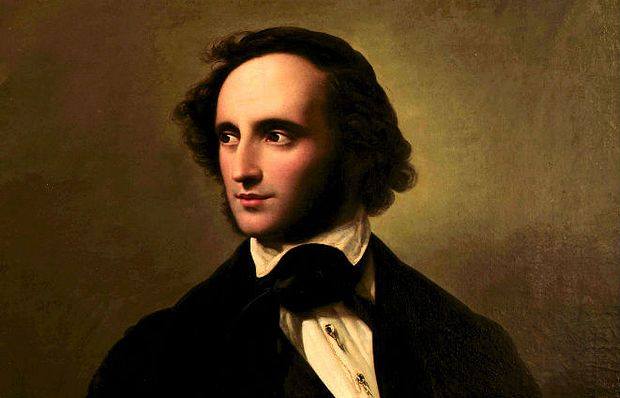
    What were you doing when you were 16 years old? If you were Felix Mendelssohn, you would have been composing one of the most astonishing works in the repertoire. And the year after that you would go on to write an equally impressive overture to “A Midsummer Night’s Dream.”

    Mendelssohn’s Octet for Strings in E-flat is the work that established him as music’s foremost preternatural genius. Hear a 1960 performance from the legendary Marlboro Music Festival, featuring violinists Jaime Laredo, Alexander Schneider, Arnold Steinhardt and John Dalley, violists Michael Tree and Samuel Rhodes, and cellists Leslie Parnas and David Soyer. Holy smokes! In case you didn’t notice, the personnel includes the entire Guarneri String Quartet, technically founded at Marlboro four years later, and then some.

    The piece was chosen as another one of our listener favorites. I’ll be continuing to mop up some of last week’s playlists compiled for our “Play It Again” membership campaign, along with some thoughtful choices to commemorate the anniversaries of D-Day and the assassination of Robert F. Kennedy. The fundraiser may be over, but, by all means, if you feel moved to support us, you may do so at any time at wwfm.org.

    The favorites continue at 4:00 EDT; “Music from Marlboro” begins at 6:00. Join me in commiseration over our misspent youth, on WWFM – The Classical Network and wwfm.org.

    Marlboro School of Music and Festival: Official Page

  • Dvořák Wagner & Marlboro Music Festival

    Dvořák Wagner & Marlboro Music Festival

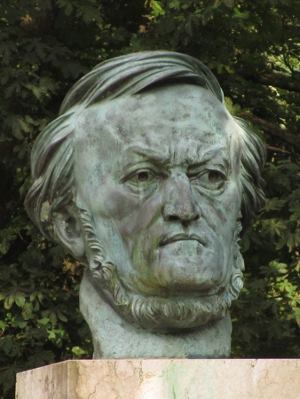
    In an interview granted in 1885, Bohemian composer Antonin Dvořák expressed his early admiration for Richard Wagner. Wagner visited Prague in 1863. Dvořák recalled, “I was perfectly crazy about him, and recollect following him as he walked along the streets to get a chance now and again of seeing the great little man’s face.” General opinion seems to be that the Czech master outgrew his infatuation by the 1870s – but perhaps not entirely.

    The two composers will be reunited in spirit on this week’s “Music from Marlboro.” Tying in with The Classical Network’s end-of-the-fiscal-year fundraiser, “Play It Again,” I’ve selected two works from the lists of favorites submitted last week by WWFM hosts and listeners. These will be performed, in their entirety, by musicians from the legendary Marlboro Music Festival.

    So as not to spoil the surprise(s), I won’t tell you what they are in advance, but I do hope you’ll tune in, and I hope you’ll support us with your financial contribution at 1-888-232-1212, or online at wwfm.org.

    We’re now in our second day of sharing YOUR playlists. You never know from one moment to the next what we’ll be playing. In the spirit of the occasion, I won’t know from one moment to the next what I’m doing – but you’re guaranteed I will execute it with such grace, beginning this afternoon at 4 p.m. EDT. “Music from Marlboro” starts at 6.

    Thank you for supporting WWFM – The Classical Network!

    Marlboro School of Music and Festival: Official Page

  • Bartók & Dohnányi: Contrasting Hungarians

    Bartók & Dohnányi: Contrasting Hungarians

    It’s all about contrasts on this week’s “Music from Marlboro.”

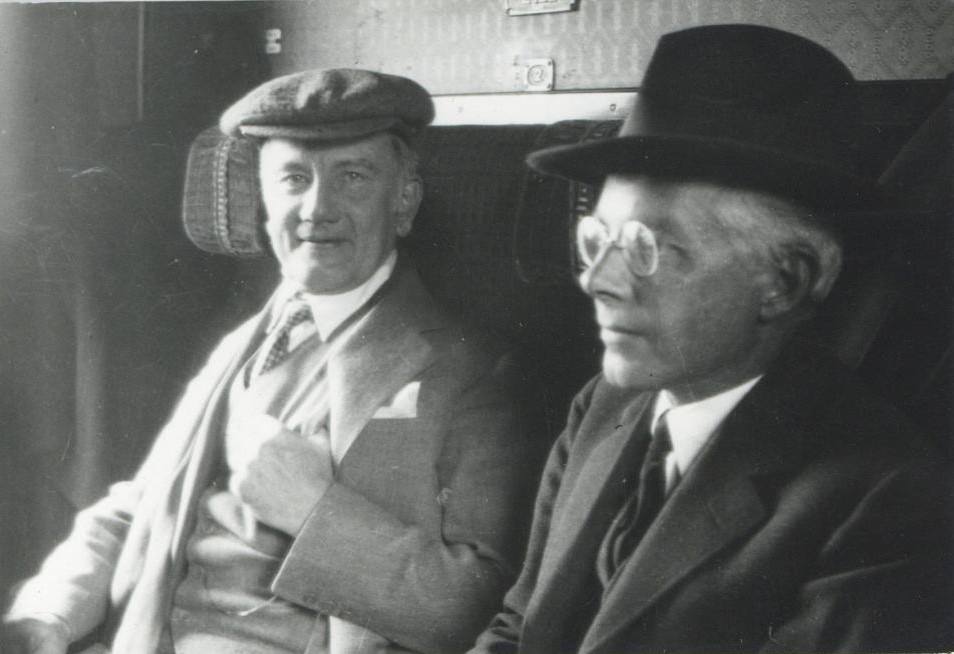
    While Béla Bartók is respected as the foremost Hungarian composer of the 20th century, Ernő Dohnányi, until recently, has been subject to neglect, at least in proportion to his significance. Sure, Bartók and his friend Zoltán Kodály were at the forefront of the whole nationalist movement, traipsing around the countryside in order to document authentic folk traditions before they were swallowed up forever by industrialization. But as director of the Budapest Academy of Music and music director of the Budapest Philharmonic Orchestra, Dohnányi would exert as much influence over his country’s musical development as that of his folk music-mad friends and contemporaries

    Unfortunately, he would become the target of character assassination campaigns after World War II, in which he was painted as a Nazi sympathizer. Dohnányi was investigated and cleared several times by the U.S. Military Government, and in fact has been defended as a forgotten hero of Holocaust resistance, since it was through his administrations that countless Jewish musicians survived. Also, between the wars, he went to bat for Kodály, a leftist, by refusing to fire him from the Budapest Academy. As a result, Dohnányi too lost his position, albeit temporarily. Nevertheless, he continued to be eyed with suspicion, and his slandered reputation never fully recovered.

    Equally fatal is the fact that much of his music bears a more cosmopolitan stamp than that of the Hungarian composers of his era that are now so celebrated. His composition teacher, the German-born Hans von Koessler (known in Hungary as János Koessler) was a cousin of Max Reger. Of course, Koessler also taught Bartók and Kodály. But Dohnányi was perfectly happy nestled in the world of Brahms. For his international career, he assumed the name Ernst von Dohnanyi.

    Dohnányi’s Piano Quintet in C minor, completed in June of 1895, one month before his 18th birthday, earned Brahms’ approval. We’ll hear it performed at the 1977 Marlboro Music Festival, by pianist Stephanie Brown, violinists Joseph Genualdi and Mayuki Fukuhara, violist Philipp Naegele, and cellist Lisa Lancaster.

    The program will open with Bartók’s “Contrasts,” a raw, fascinating work, from 1938. The piece, inspired by Hungarian and Romanian dance melodies, was commissioned by Benny Goodman, of all people. The trio – for clarinet, violin, and piano – contains passages of bitonality and frenzied dances for scordatura violin. We’ll hear it performed at the 1998 Marlboro Music Festival by clarinetist Anthony McGill, violinist Catherine Cho, and pianist Pierre-Laurent Aimard.

    I hope you’re hungry for Hungarian music. Variety is the spice of life on this week’s “Music from Marlboro,” Wednesday evening at 6:00 EDT, on WWFM – The Classical Network and wwfm.org.

    Marlboro School of Music and Festival: Official Page


    Strangers on a Train: Ernő Dohnányi (left) and Béla Bartók
  • Poulenc Beethoven Scherzo? Music from Marlboro

    Poulenc Beethoven Scherzo? Music from Marlboro

    Is it just me, or does Francis Poulenc playfully riff on the scherzo to Beethoven’s “Eroica” Symphony in the third movement of his Trio for Oboe, Bassoon and Piano? Maybe not, but I’m going to go with it, since the potential delusion serves as an excellent excuse for me to juxtapose music of Poulenc and Beethoven on this week’s “Music from Marlboro.”

    Poulenc’s Trio, composed in 1926, begins very somberly indeed, before taking off with irrepressible joie de vivre. The central movement is both elegant and wistful in a manner characteristic of this composer, and the cheeky finale is presented with an ironic smile. We’ll hear a 1972 performance featuring oboist Rudolph Vrbsky, bassoonist Alexander Heller, and pianist Seth Carlin.

    Then Pablo Casals will preside over a makeshift orchestra consisting of dozens of musicians at the 1969 Marlboro Music Festival for a warm traversal of Beethoven’s Symphony No. 4. (While Casals conducted a number of the Beethoven symphonies at Marlboro, he did not do the “Eroica.”) The legendary cellist was affiliated with the Marlboro festival for the last 13 years of his life, from 1960 to 1973.

    Robert Schumann once characterized the symphony as “a Greek maiden between two Norse giants” – certainly a provocative image. We’ll temper this very Teutonic utterance with a splash of Gallic insouciance, on “Music from Marlboro,” this Wednesday at 6 p.m. EDT, on WWFM – The Classical Network and wwfm.org.

    Marlboro School of Music and Festival: Official Page


    PHOTO: A caricature of Beethoven adorning a dinner plate designed by Jean Cocteau; decades earlier, Cocteau was responsible for promoting Poulenc and five of his composer-colleagues as the collective “Les six”

  • Mozart’s Gran Partita Marlboro Festival

    Mozart’s Gran Partita Marlboro Festival

    “This was no composition by a performing monkey. This was a music I’d never heard. Filled with such longing, such unfulfillable longing. It seemed to me that I was hearing the voice of God.”

    In Peter Schaffer’s “Amadeus,” it is the work that threw Antonio Salieri into ecstasies. “On the page it looked nothing – just a pulse, bassoons and basset-horns, like a rusty squeezebox. Then suddenly, high above it, an oboe, a single note, hanging there unwavering, until a clarinet took it over and sweetened it into a phrase of such delight!”

    Salieri (the character) had difficulty reconciling such sublime music with its composer’s vulgar personality. By extension, it’s easy to imagine Salieri smiling ruefully at the incongruity of a work of such sustained beauty being identified by the equivalent of an 18th century typo – the “Gran Partita.”

    Wolfgang Amadeus Mozart’s seven-movement tour de force will be featured on this week’s “Music from Marlboro.” We’ll hear it performed by an all-star cast of twelve wind players – and a double bassist – under the direction of Marcel Moyse, from the 1975 Marlboro Music Festival.

    Moyse was Marlboro royalty. Alongside Rudolf Serkin and Adolf Busch, the legendary flutist cofounded the Marlboro Music School and Festival in 1951. A veteran of Paris’ Opéra Comique, he would instruct his wind players to emulate the phrasings of the human voice in song. Learn more about this remarkable musician, who worked with some of the greatest artists of his time, in this generous biographical sketch by Marlboro Senior Administrator Frank Salomon:

    https://www.marlboromusic.org/from-the-archive/blog/archives-marcel-moyse/

    Then tune in and have a gran’ ol’ time with Mozart’s “Gran Partita,” on “Music from Marlboro,” this Wednesday evening at 6:00 EDT, on WWFM – The Classical Network and wwfm.org.

    Marlboro School of Music and Festival: Official Page

Tag Cloud

Aaron Copland (92) Beethoven (95) Composer (114) Film Music (123) Film Score (143) Film Scores (255) Halloween (94) John Williams (187) KWAX (229) Leonard Bernstein (101) Marlboro Music Festival (125) Movie Music (138) Opera (202) Philadelphia Orchestra (89) Picture Perfect (174) Princeton Symphony Orchestra (106) Radio (87) Ralph Vaughan Williams (85) Ross Amico (244) Roy's Tie-Dye Sci-Fi Corner (290) The Classical Network (101) The Lost Chord (268) Vaughan Williams (103) WPRB (396) WWFM (881)

DON’T MISS A BEAT

Receive a weekly digest every Sunday at noon by signing up here


RECENT POSTS