Tag: Marlboro Music Festival

  • Haydn to Rochberg: Marlboro’s Musical Journey

    Haydn to Rochberg: Marlboro’s Musical Journey

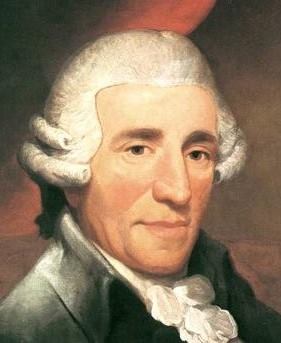
    Where has this music been Haydn?

    Discover music of George Rochberg on this week’s “Music from Marlboro.”

    Rochberg, born in Paterson, NJ, in 1918, studied at the Mannes College of Music and the Curtis Institute in Philadelphia. He later served as chairman of the music department at the University of Pennsylvania.

    His big claim to fame – or, in some circles, notoriety – is that he was one of the first composers to emerge from the predominant serialism of the 1960s to embrace a new tonality, a shift brought on, it is said, by the untimely death of his son. Rochberg found his particular brand of expressionism inadequate to convey his strong emotional upheaval. The inclusion of tonal passages in his works acted as a balm, even as it lit a slow fuse that would blow wide open the future for up-and-coming composers. He is often credited with having ushered in the Age of Pluralism. Now a composer can write any way he or she wants and still be taken seriously. It’s easy to forget that that was not always the case.

    Rochberg’s desire to communicate must have been a latent one, since his Trio for Clarinet, Horn, and Piano, from 1947 (predating his “twelve tone” period), is direct and, in its second movement adagio, introspective and full of feeling. We’ll hear it performed at the 2007 Marlboro Music Festival by clarinetist Charles Neidich, hornist José Vicente Castelló, and pianist Igor Levit.

    The trio will be bookended by two works associated with Franz Joseph Haydn – the String Quartet in B flat major, Op. 33, No. 4, by turns puckish and transporting, and Johannes Brahms’ “Variations on a Theme of Haydn.”

    Who cares that the theme that inspired Brahms to write his variations isn’t by Haydn at all? The “Saint Anthony Chorale” that forms the basis of the slow movement of Haydn’s Divertimento No. 1 in B flat major, Hob. II: 46, is a preexisting melody. In fact, the composer of the divertimento itself has been disputed. None of that really matters in music this well-crafted, especially when performed at the 1976 Marlboro Music Festival by pianists Stephanie Brown and Cynthia Raim.

    Haydn’s Op. 33, No. 4, will open the hour. We’ll hear it played in 1990 by violinists Chee-Yun Kim and Felix Galimir, violist Caroline Levine, and cellist Jean-Guihen Queyras.

    Listen in, as Rochberg emerges from Haydn, on this week’s “Music from Marlboro,” Wednesday evening at 6:00 EST, on WWFM – The Classical Network and wwfm.org.

    Marlboro School of Music and Festival: Official Page

  • Verdi, Rossini, and Mignone at Marlboro Music

    Verdi, Rossini, and Mignone at Marlboro Music

    Viva Verdi!

    When we think of “Aida,” perhaps what springs immediately to mind is a stage full of elephants, but when a Naples performance of Verdi’s grandest grand opera was delayed, the composer found diversion on a much smaller scale. Verdi tossed off his first piece of chamber music at the age of 60. The String Quartet in E minor was given an informal performance at the Hotel delle Crocelle on April 1, 1873. Said Verdi of his latest creation, “I don’t know whether the Quartet is beautiful or ugly, but I do know that it’s a Quartet!” We’ll get to hear it on this week’s “Music from Marlboro,” in a 1969 performance featuring violinists Pina Carmirelli and Endre Granat, violist Martha Strongin Katz, and cellist Ronald Leonard.

    The hour will open with another quartet by a figure who would go on to become one of the most productive of opera composers, Gioachino Rossini. Even as a boy, there was evidence of his remarkable fecundity. He wrote his six string sonatas, scored for two violins, cello, and double bass in 1804, over a period of three days. Rossini was twelve years-old. The sonatas are rhythmically vital and full of the kinds of melodies that would soon endear him to audiences the world over. We’ll hear the third of these, the String Sonata in C major, in a 1989 performance, with violinists Lara St. John and Ivan Chan, cellist Paul Tortelier, and double bassist Timothy Cobb.

    In between, we’ll find further enjoyment in the music of Brazilian composer Franciso Mignone. Born in São Paolo to an Italian immigrant flutist, Mignone studied at the Milan Conservatory before returning to accept a teaching position in Rio de Janeiro. Over the course of his career, he accumulated a diverse output written across many styles, from native “choros” to highly-schooled serialism. He is best known for his music composed in a folk-inflected, nationalistic idiom. Brazilian influences color many of his works, including his “Five Songs for Voice and Bassoon,” written around 1931 and revised in 1976. We’ll hear it performed at the 2016 Marlboro Music Festival by soprano Lucy Fitz Gibbon and bassoonist Catherine Chen.

    I hope you’ll join me for music by two Italian masters and one of Italian descent, on “Music from Marlboro,” this Wednesday evening at 6:00 EST, on WWFM – The Classical Network and wwfm.org.

    Marlboro School of Music and Festival: Official Page
  • Unrequited Love at Marlboro Music Festival

    Unrequited Love at Marlboro Music Festival

    Few torments are as unshakeable as that of unrequited love. Yet sublimated passion has led to more than its share of artistic masterpieces. For this Valentine’s Day, we’ll enjoy the fruits of others’ longing, on this week’s “Music for Marlboro.”

    It’s been speculated that Johannes Brahms’ “Liebeslieder Waltzes” was the product of his frustrated affection for Clara Schumann, the wife of composer Robert Schumann. The dance-like settings for four voices and piano (four hands) are based on love songs from Georg Friedrich Daumer’s collection “Polydora.”

    We’ll hear a performance from the 1971 Marlboro Music Festival, featuring soprano Kathryn Bouleyn, mezzo-soprano Mary Burgess, tenor Seth McCoy, and baritone John Magnuson, with Rudolf Serkin and Luis Batlle at the keyboard.

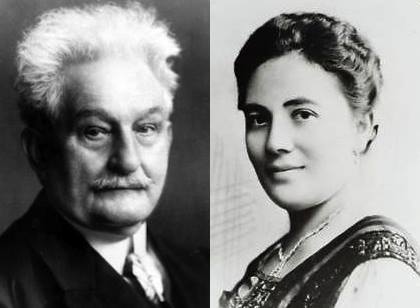
    The remarkably prolific Indian summer of Czech master Leoš Janáček can attributed in part to the sublimated passion he felt for Kamila Stösslová, a married woman some 38 years his junior. Janacek’s String Quartet No. 2, composed in 1928, when the composer was about 74 years-old, was inspired by their long and intimate – though unconsummated – relationship, detailed in their more than 700 letters. The work has been described as a “manifesto on love.”

    We’ll hear Janáček’s “Intimate Letters,” performed at the 2002 Marlboro Festival by violinists Nicholas Kendall and Hiroko Yajima, violist Richard O’Neill, and cellist Alexis Pia Gerlach.

    Great composers’ romantic frustrations are our gain this week, on “Music from Marlboro,” this Wednesday evening at 6:00 EST, on WWFM – The Classical Network and wwfm.org.

    Marlboro School of Music and Festival: Official Page

    Top (left to right): Janáček and his muse; bottom: Brahms, not yet “free but happy”

  • Enescu Bartók Unity at Marlboro

    Enescu Bartók Unity at Marlboro

    Romania and Hungary share a common border, if an uneasy history. They also happen to share two of the 20th century’s most talented composers, both of them born in 1881. On this week’s “Music from Marlboro,” as always, we look past nationalistic concerns to seek unity in music.

    George Enescu (1881-1955) was arguably Romania’s greatest musical export, a child prodigy who excelled also as a violinist, a pianist, a conductor, and a teacher. At the age of seven, he became the youngest student ever to be admitted to the Vienna Conservatory. He graduated before his 13th birthday. From there, he went to Paris and embarked on a charmed career with too many highlights to detail here. Pablo Casals, who was affiliated with the Marlboro Music Festival for the last 13 years of his life, described him as “the greatest musical phenomenon since Mozart.”

    Enescu’s Violin Sonata No. 2 in F minor (1899), was completed during his final year at the Paris Conservatory. He had already composed an ambitious, thirty-minute “Romanian Poem” (1898), when just 16, and wasn’t far from achieving world fame with his “Romanian Rhapsody No. 1” (1901). Enescu later claimed that the sonata, along with his Octet for Strings, marked the point where he felt he had truly become himself.

    We’ll hear it performed at the 1974 Marlboro Music Festival, by violinist Pina Carmirelli and pianist Alan Weiss.

    Hungarian composer Béla Bartók (1881-1945) was also a gifted pianist and a pioneering ethnomusicologist, who did much to deepen musical understanding through his documentary journeys and insights into the cultures of Eastern Europe and North Africa – including the region of Transylvania, which was to become the source of such complicated feelings between Hungary and Romania.

    He also happened to be one of the most innovative musical thinkers of his time, beating an alternative route to modernism through the assimilation of folk music into a highly personal idiom that owes little to either Stravinsky or Schoenberg.

    Bartók’s “Divertimento for String Orchestra” (1939) is a fascinating chimera – it takes its name from an 18th century form (appropriate for its neo-classical ambitions), shares qualities with the Baroque concerto grosso (with a small group of soloists at times contrasting with the greater body of the orchestra), and yet remains distinctly of its time. Even here, the composer’s love of folk music is evident.

    The “Divertimento” was Bartók’s final composition before fleeing Nazi Europe for the United States. He wrote the work in only fifteen days, while staying at the Swiss chalet of conductor Paul Sacher, who had commissioned the piece. Though it was composed very quickly, as befits a divertimento – which traditionally, in the 18th century, was regarded as “entertainment” music – Bartók left meticulous instructions for its performance.

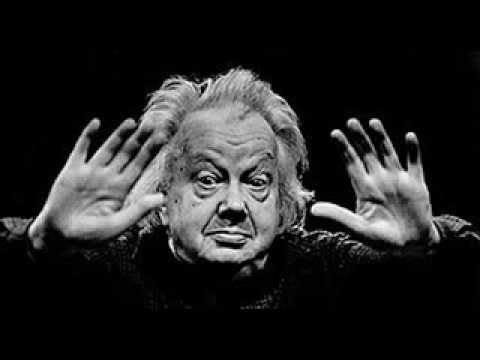
    We’ll hear it played by a collection of Marlboro string players, conducted by Sándor Végh, in 1974. Végh, born in Transylvania, was one of the great chamber musicians. He participated in the first Hungarian performance of Bartók’s String Quartet No. 5.

    That’s music by Enescu and Bartók on the next “Music for Marlboro,” this Wednesday evening at 6:00 EST, on WWFM – The Classical Network and wwfm.org.

    Marlboro School of Music and Festival: Official Page

    Sándor Végh promoting unity on this week’s “Music for Marlboro”

  • Schubert’s Light & Shadow From Marlboro

    Schubert’s Light & Shadow From Marlboro

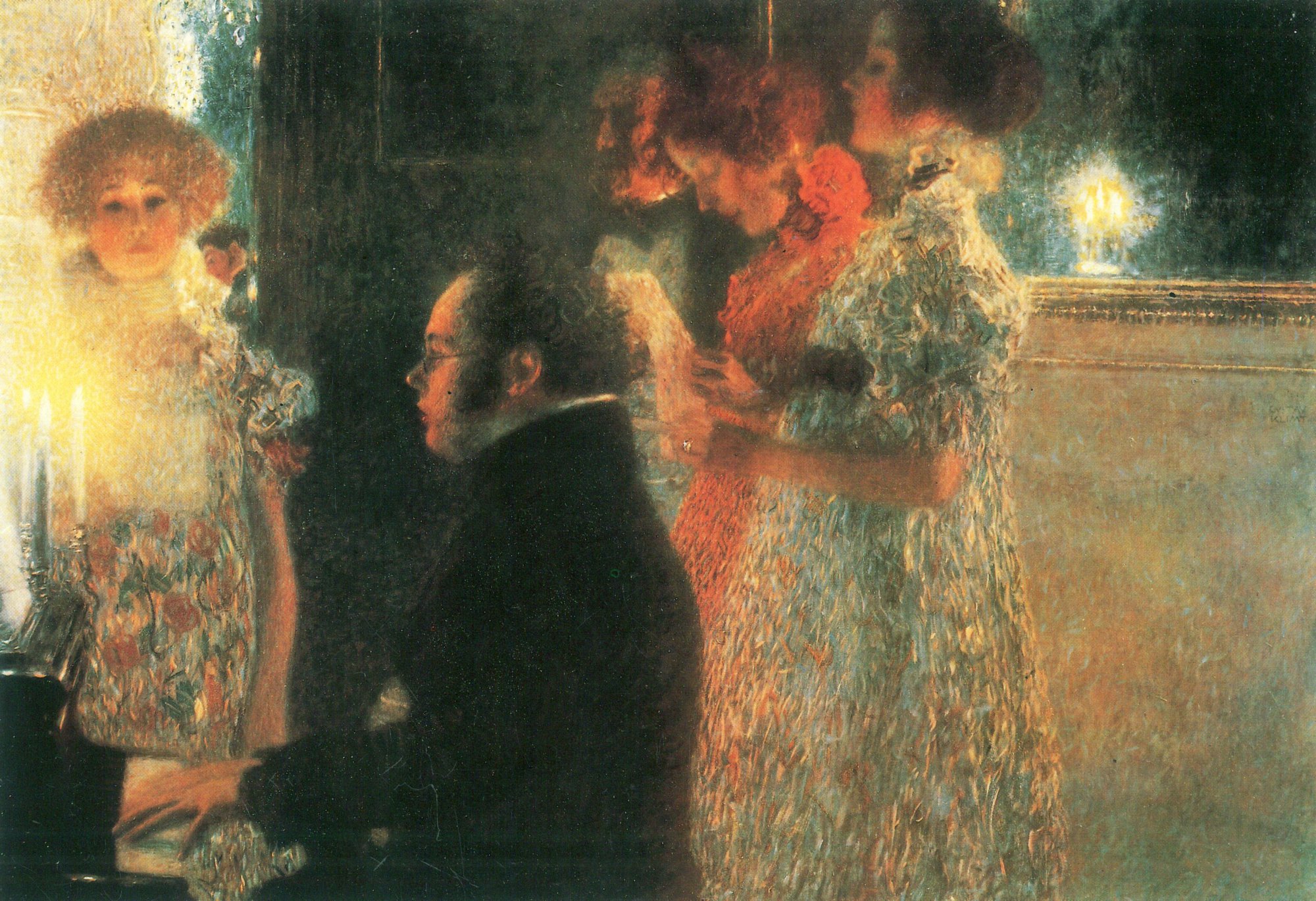
    When we think of the music of Schubert’s final year, what comes across most strikingly, perhaps, is the complexity of feeling. Sensitively modulated light and shadow – the unpredictable contrasts of major and minor, agitation and calm, ecstasy and depression – create a sensation not unlike that experienced when wisps of cloud sweep across the sun on a mild autumn day. We find it in the late piano sonatas; we find it in the transcendent String Quintet in C major. It’s a beauty so intense that it actually kind of hurts.

    Every rule has its exception, of course, and on this week’s “Music from Marlboro,” we catch Schubert in a comparatively light-hearted mood – which I think appropriate on the occasion of his birthday – with his Piano Trio No. 1 in B-flat major, D. 898. While the trio does venture into remote keys and has its share of turbulence, the overarching spirit is very, very far from the eerie resignation of “The Hurdy-Gurdy Man.” In fact, it’s a pretty happy piece. We’ll hear it performed at the 2008 Marlboro Music Festival by pianist Jonathan Biss, violinist David Bowlin, and cellist Marcy Rosen.

    Then we’ll round out the hour with what might possibly have been the final music Schubert ever wrote. “The Shepherd on the Rock,” D. 965, on a text by Wilhelm Müller and Karl August Varnhagen von Ense, was composed barely a month before the composer’s death at the age of 31. The multi-sectional “lied” traverses a wide range of moods, as a shepherd listens to echoes from the valley below, grapples with his feeling of loneliness, and finds hope in the prospect of Spring and rebirth.

    Marlboro veterans, soprano Benita Valente, clarinetist Harold Wright, and pianist Rudolf Serkin, set down a classic – indeed legendary – recording of the work in 1960. This live performance was captured at Marlboro nine years later. In the words of Rudolf Serkin, “An artistic achievement cannot and should not be repeated. Isn’t it a miracle that a performance never is the same?”

    Get ready to share his wonder. It’s an all-Schubert hour, on this week’s “Music from Marlboro,” this Wednesday evening at 6:00 EST, on WWFM – The Classical Network and wwfm.org.

    Marlboro School of Music and Festival: Official Page

Tag Cloud

Aaron Copland (92) Beethoven (95) Composer (114) Film Music (123) Film Score (143) Film Scores (255) Halloween (94) John Williams (187) KWAX (229) Leonard Bernstein (101) Marlboro Music Festival (125) Movie Music (138) Opera (202) Philadelphia Orchestra (89) Picture Perfect (174) Princeton Symphony Orchestra (106) Radio (87) Ralph Vaughan Williams (85) Ross Amico (244) Roy's Tie-Dye Sci-Fi Corner (290) The Classical Network (101) The Lost Chord (268) Vaughan Williams (103) WPRB (396) WWFM (881)

DON’T MISS A BEAT

Receive a weekly digest every Sunday at noon by signing up here


RECENT POSTS