Tag: Marlboro Music Festival

  • Czech Music at Marlboro: Janáček & Dvořák

    Czech Music at Marlboro: Janáček & Dvořák

    Czech, please!

    On this week’s “Music from Marlboro,” it’s an all-Czech affair.

    Legendary pianist Rudolf Firkušný, born in Moravia in 1912, was a living link to composers Leoš Janáček and Josef Suk (the pupil and son-in-law of Antonin Dvořák). Firkušný studied with both and with pianists Alfred Cortot and Artur Schnabel. What a pedigree!

    Despite a very long and remarkable career, Firkušný was likely recognized by more Americans because of an unlikely venture – selling Nike sneakers alongside David Robinson of the San Antonio Spurs:

    Firkušný was 78 years-old at the time of his television “15 minutes-of-fame” in 1990. He was about to make his triumphant return to Czechoslovakia, which he had fled ahead of the Nazi occupation in 1939 and then shunned during Communist rule. Firkušný had not performed in his homeland since 1946. He has been described by author, radio personality, and noted pedagogue David Dubal as “the preeminent Czech pianist of the 20th century.”

    We’ll hear Firkušný at the 1982 Marlboro Music Festival, performing Janáček’s “Concertino,” a chamber concerto of sorts, written in 1925. He’ll be joined by violinists Elena Barere and Mei-Chen Liao, violist Steven Tenenbom, clarinetists Cheryl Hill (E-flat) and Steven Jackson (B-flat), bassoonist Stefanie Przybylska, and hornist Robin Graham.

    Then we’ll turn to Dvořák’s String Quintet No. 2 in G major, Op. 77. Dvořák’s quintet is unusual in several regards. First, rather than doubling the violas or cellos, as you’ll find in most quintets for strings, Dvořák adds a double bass. Second, the piece originally included five movements, two of them slow. The composer second-guessed its length and removed one of them, which he later reworked as his “Nocturne for Strings” in B major.

    Dvořák dedicated the quintet, a competition winner, “To my Nation.” It was originally composed in 1875, then slightly revised and published in 1888.

    We’ll hear it performed at the 1985 Marlboro Music Festival by violinists Isidore Cohen and Ralph de Souza, violist Benjamin Simon, cellist Astrid Schween, and double bassist Peter Lloyd.

    That’s music by Janáček and Dvořák on this week’s “Music from Marlboro.” Czech it out, this Wednesday evening at 6:00 EST, on WWFM The Classical Network and wwfm.org.

    Marlboro School of Music and Festival: Official Page


    Firkušný knows… Nike and Janáček
  • Nielsen & Sibelius at Marlboro

    Nielsen & Sibelius at Marlboro

    We head north for this week’s “Music from Marlboro” for selections by the most famous composers from Denmark and Finland, respectively.

    Like “The Ugly Duckling” of his compatriot, Hans Christian Andersen, Carl Nielsen emerged from humble beginnings to blossom into Denmark’s national composer. Internationally, Nielsen has flitted in and out of the seemingly inescapable shadow of Finnish master Jean Sibelius. Both men were born in 1865. In fact, Nielsen was six months older. But it is an unfair comparison, not so much apples and oranges; more like kipper and pickled herring.

    The very fact that Nielsen is not referred to reductively as “The Sibelius of Denmark” is attributable to an unusually strong individual voice. His music is modern, yet traditional; Scandinavian, yet Germanic. Most important, it is full of personality, freshness and vitality.

    Nielsen’s Wind Quintet of 1922 reflects the composer’s optimism and good humor. Each part was tailored to the personality of the individual performer for which it was written (members of the Copenhagen Wind Quintet). There is also something of the outdoors about the piece. Nielsen was always fascinated by nature, and there are ample suggestions of bird song woven into the texture of the work’s pastoral neoclassicism.

    We’ll enjoy a recording made at Marlboro in 1971, with Paula Robison, flute; Joseph Turner, oboe; Larry Combs, clarinet; William Winstead, bassoon; and Robin Graham, horn.

    Sibelius, too, was influenced by nature. However, the very subtitle of his String Quartet in D minor, “Voces Intimae,” suggests a looking inward. The piece was composed in 1909, between the Third and Fourth Symphonies. It is the only chamber work of Sibelius’ maturity. The composer wrote to his wife, “It turned out as something wonderful. The kind of thing that brings a smile to your lips at the hour of death. I will say no more.” Ah, sweet nothings.

    We’ll hear it performed at the 2005 Marlboro Music Festival, by Dan Zhu and Sarah Kapustin, violins; Samuel Rhodes, viola; and Amir Eldan, cello.

    The prevailing winds will be from the north (strings, too, for that matter), on “Music from Marlboro,” this Wednesday evening at 6:00 EST, on WWFM – The Classical Network and wwfm.org.

    Marlboro School of Music and Festival: Official Page


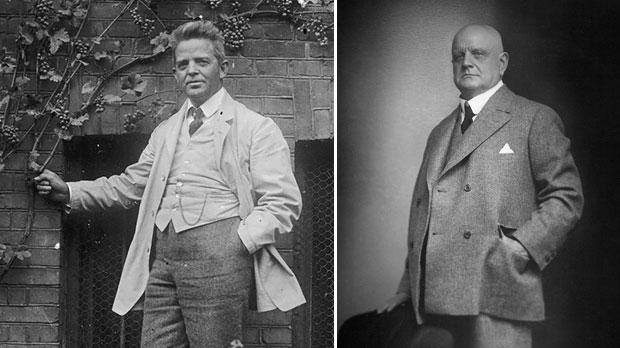
    HAIR TODAY, GONE TOMORROW: Carl Nielsen (left) and Jean Sibelius

  • Schubert’s Quintet: A Marlboro Masterpiece

    Schubert’s Quintet: A Marlboro Masterpiece

    On this week’s “Music from Marlboro,” we’ll have a single work – but what a work it is! Franz Schubert’s String Quintet in C major (D. 956, Op. posth. 163) sits at the very pinnacle of the composer’s mountain of masterpieces – which is to say, it is among the greatest pieces of chamber music ever written.

    Schubert wrote at least 15 string quartets. Here he doubles his cellos (a break from Mozart and Beethoven, who preferred to double their violas), enriching the ensemble’s lower register. The quintet’s emotional terrain is as comprehensive and kaleidoscopic as the ever-shifting autumnal skies.

    Though the work was completed in 1828, two months before Schubert’s death, its first public performance did not take place until 1850 – 22 years later.

    We’ll hear a recording made in conjunction with the 1986 Marlboro Music Festival, featuring Pamela Frank and Felix Galimir, violins; Steven Tenenbom, viola; and Peter Wiley and Julia Lichten, cellos.

    I hope you’ll join me for this, the quintessence of quintets, on “Music from Marlboro,” this Wednesday evening at 6 EST, on WWFM – The Classical Network and wwfm.org.

    Marlboro School of Music and Festival: Official Page


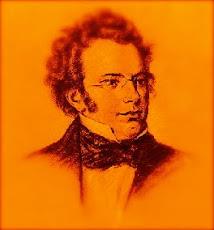
    Always refreshing: orange Schubert

  • Thanksgiving American Music from Marlboro

    Thanksgiving American Music from Marlboro

    Happy Thanksgiving to you! On the busiest travel day of the year, we’ve got the perfect soundtrack for your journey over the river and through the woods, with an all-American hour on this week’s “Music from Marlboro.”

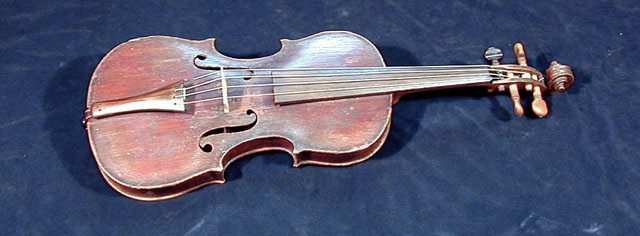
    At the heart of the program will be a work by Moravian composer John Antes (1740-1811). Antes, born in Frederick, Montgomery County, PA, is credited with being one the first composers born on American soil to write chamber music, and as the creator of perhaps the earliest surviving bowed string instrument made in the American colonies. Antes’ violin, made in 1759, is housed in the Museum of the Moravian Historical Society in Nazareth, PA. A viola, made by Antes in 1764 (again believed to be the earliest surviving of American origin), is housed in the Lititz Moravian Congregation Collection in Lancaster County. Antes created at least seven such instruments.

    In 1752, Antes attended school in Bethlehem, PA. In 1760, he was admitted into the Single Brethren’s choir there. From Bethlehem, he travelled to Herrnhut, Germany, the international center of the Moravians, to prepare for a career as a missionary. In the meantime, he also took up watchmaking. He was ordained a minister in 1769, then set out for Egypt. There, he served as a missionary to the Coptic Church in Grand Cairo. After a largely uneventful decade, he was captured and tortured by followers of Osman Bey.

    During his convalescence, he occupied himself with the composition of three string trios. He also sent a copy of six quartets to Benjamin Franklin, whom he had known in America. The quartets are lost (nice job, Ben), but the trios survive. We’ll hear Antes’ Trio in D minor, from the 1976 Marlboro Music Festival.

    To open the hour, from the 1977 festival, we’ll hear a Divertimento for Nine Instruments by two-time Pulitzer Prize winner Walter Piston. In addition to being an important teacher, Piston was regarded as one of our country’s great symphonists. Finally, we’ll have the suite from Aaron Copland’s beloved Pulitzer Prize decorated ballet “Appalachian Spring,” in its original version for 13 instruments, performed at Marlboro in 2006.

    Give thanks for performances of American music from the archives of the celebrated Marlboro Music Festival, this Wednesday evening at 6 EST, on WWFM – The Classical Network and wwfm.org.

    Marlboro School of Music and Festival: Official Page


    PHOTO: The Antes violin (which kind of sounds more like a creation of Salvador Dali), now in Nazareth, PA

  • Shostakovich Arensky Marlboro Russian Music on WWFM

    Shostakovich Arensky Marlboro Russian Music on WWFM

    D is for Da!

    It also happens to be the key signature of Dmitri Shostakovich’s String Quartet No. 4. Shostakovich’s quartet will be one of two Russian works on this week’s “Music from Marlboro.”

    The String Quartet No. 4 grew out of a newfound confidence, on the part of the composer, as a result of Stalin personally selecting him as a cultural ambassador to the West. Shostakovich persuaded Stalin that if that were going to be the case, then perhaps it would be a good idea to lift the ban on Soviet performances of his music. Otherwise, it might look a little peculiar to outsiders.

    Papa Joe agreed, and Shostakovich promptly embarked on a new string quartet, which he loaded up with Jewish folk songs and all sorts of things that had a history of angering the “wise leader and teacher.” Fortunately for Shostakovich, who had walked a very precarious line with the authorities, his friends persuaded him not to allow the work to be performed publicly, and the composer put it in a drawer for another day.

    That other day is now, and we’ll hear it performed by violinists Sylvie Gazeau and Yuzuko Horigome, violist Philipp Naegele, and cellist Robie Brown Dan, from the 1983 Marlboro Music Festival.

    Anton Arensky’s Piano Trio No. 1 is in the key of D minor. Arensky, a pupil of that icon of Russian nationalism, Nikolai Rimsky-Korsakov, gravitated more toward the cosmopolitan sound of Rimsky’s rival, Peter Ilych Tchaikovsky. His trio is full of good tunes, always charming, regardless of whether the music is melancholy, turbulent, reflective, or good humored. It’s the kind of piece that will have you humming for the rest of the day.

    We’ll hear it performed by pianist Frederick Moyer, violinist Isodore Cohen, and cellist John Sharp, who played it at Marlboro in 1982.

    What are you waiting for? Quit your Stalin. Join me for an hour of Russian music, major and minor, from the Marlboro Music Festival, this Wednesday evening at 6:00 EST, on WWFM – The Classical Network and wwfm.org.

    Marlboro School of Music and Festival: Official Page

Tag Cloud

Aaron Copland (92) Beethoven (95) Composer (114) Film Music (123) Film Score (143) Film Scores (255) Halloween (94) John Williams (187) KWAX (229) Leonard Bernstein (101) Marlboro Music Festival (125) Movie Music (138) Opera (202) Philadelphia Orchestra (89) Picture Perfect (174) Princeton Symphony Orchestra (106) Radio (87) Ralph Vaughan Williams (85) Ross Amico (244) Roy's Tie-Dye Sci-Fi Corner (290) The Classical Network (101) The Lost Chord (268) Vaughan Williams (103) WPRB (396) WWFM (881)

DON’T MISS A BEAT

Receive a weekly digest every Sunday at noon by signing up here


RECENT POSTS