Tag: Mel Brooks

  • The 2000 Year Old Man Is 100

    The 2000 Year Old Man Is 100

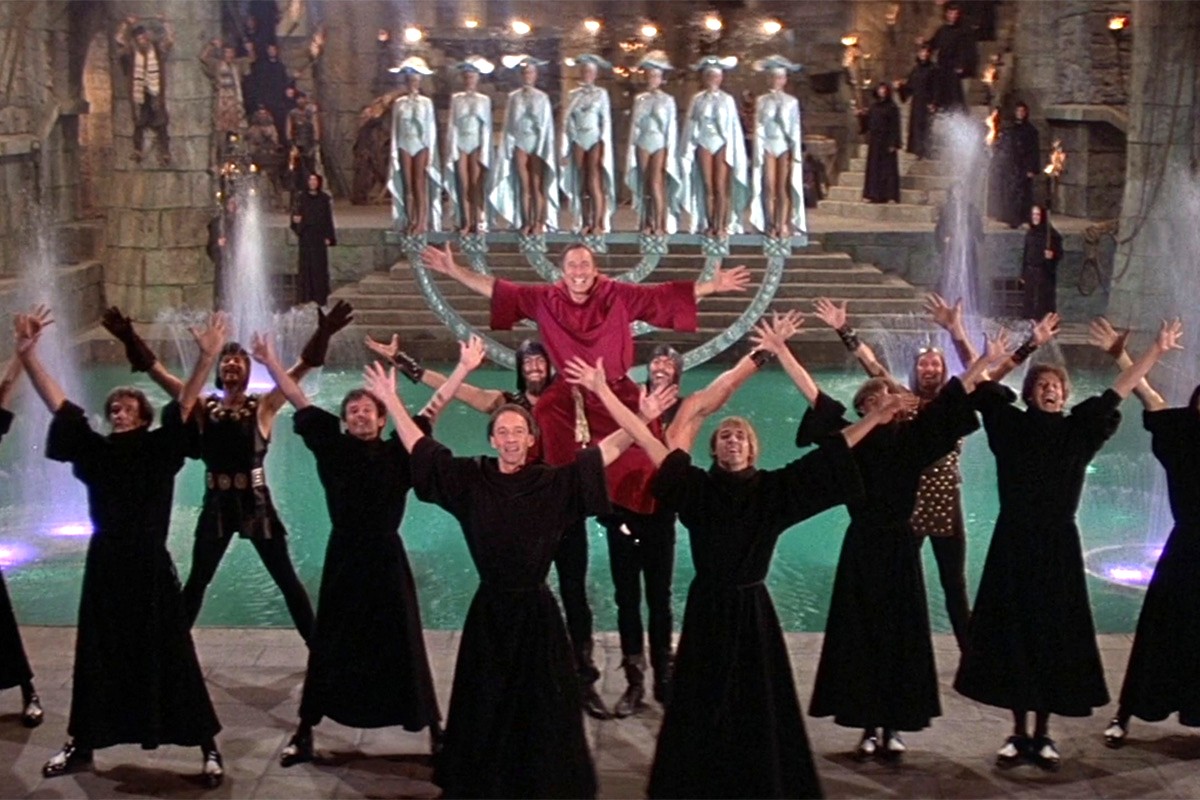
    Mel Brooks is 100 today. Here he is at his most tasteless – and most hilarious. (View the sequence in full at the link below.) Is there anything about it that isn’t genius? The slide, the choreography, the patter, the mallets, the slot machine, the handspring, the Busby Berkeley nuns. Yet it should be one of the most offensive sequences in the history of motion pictures. Instead, it’s the funniest bit from “History of the World, Part I.” This is “Springtime for Hitler” taken to the nth degree. If the entire movie were at this level, it would be THE mainstream comedy classic everyone would be afraid to screen.

    But by 1981, anyone who went to the cinema to see a Mel Brooks movie knew to check their pearls at the front door. “Blazing Saddles” trafficked in racial tension with taboo situations and slurs, and “The Producers” trivialized the Thousand-Year Reich by introducing showgirls clad in Bavarian pretzels and a Nazi kickline. NO ONE would have the guts to mount anything like it today, or would get away with it. But Mel tackled controversial subjects with the precision of a scalpel and the conviction of a wielded sledge hammer. Fascinatingly, in the end, it was always the laugh that was the most important.

    Also, it was a different world, remember. Brooks didn’t come up with all this stuff out of thin air. He was born Melvin Kaminsky on a Brooklyn tenement kitchen table. His grandparents and his mother were Jewish immigrants, who came to this country fleeing hardship and persecution and hoping for a better, safer life. So the ethnicity – the culture, the accents, and the injustices – were all ingrained. He had a humble start and also some bad luck. When he was two years old, his father died of tuberculosis at the age of 34.

    Yet as a first-generation American, he was born at an exciting time, one ripe with potential for upward mobility, when aspiring artists and entertainers in all fields were seizing their moment0 and shaping the country.

    But first he would have to defend it, drafted into World War II at the age of 18, and unlike many entertainers, he wasn’t just doing USO shows. He was at the Battle of the Bulge, and he saw a lot of horrific things. He had important responsibilities as a forward artillery observer and a combat engineer. He was often perilously close to the enemy, and he was tasked with clearing booby-traps and defusing landmines. This is one comedian who saw a lot of life. His sense of humor kept him sane, and it brought levity to those around him.

    After the war, he found work as a musician in the Catskills. Then he was pushed on stage to do stand-up. He also did summer stock and radio. Within a few years he had crashed television. He had met Sid Caesar for the first time while working at a Borscht Belt hotel when the two were still in their teens. Later, he buffeted Caesar with gags until he was hired as a writer on “Your Show of Shows.” At 24, he was working with Neil Simon, Woody Allen, Larry Gelbart, and lifelong friend Carl Reiner.

    With Reiner, he introduced his popular character, the 2000 Year Old Man, which soon found its way onto a hit record. With Buck Henry, he created the television series “Get Smart.” Then he wrote the screenplay for “The Producers.” The failure of his film “The Five Chairs” led to the success of “Blazing Saddles,” “Young Frankenstein,” and many others.

    He channeled some of the profits into producing, quietly (so that they would be taken seriously) underwriting David Lynch’s “The Elephant Man,” “Frances” (with Jessica Lange), “The Fly,” and “84 Charing Cross Road” (which starred his wife, Anne Bancroft).

    In his 70s, he made a late-in-life stab for the Great White Way – always a Brooksian ideal, as evidenced by the frequent, staged musical numbers in his movies – when he adapted “The Producers” for Broadway.

    What I didn’t fully appreciate when I was younger was just how ballsy the movie “The Producers” was. Yes, there was still shock value when I saw it for the first time in the 1970s. Even when I was a kid, I knew Hitler was no laughing matter. But at the time the movie was released in 1967, it had only been roughly two decades since the end of the war. Millions of people had largely unfunny experiences with, and memories of, the Nazis. Countless lives had been destroyed. People who fought in the war were only entering middle age. All in all, Brooks’ conceit of two Broadway impresarios’ get-rich-quick scheme, mounting a Broadway musical so outrageous (about Hitler, of course) that the show would be forced to close on opening night – unexpectedly backfiring when it becomes a runaway hit – was an unlikely premise for a screen comedy.

    By the time the movie was adapted into an honest-to-goodness Broadway musical in 2001, Nazism must have seemed like a conquered evil of the past. And now here we are, a quarter century on, and the hydra of antisemitism and neo-Nazism is sprouting new heads. But Brooks always maintained that the best way to defang evil was to mock it.

    Of course, on a more basic level, he also reveled in sending up conventions and just being plain silly. He was a champion of Borscht Belt schtick and Yiddish theater zaniness. Rewatching his Hitchcock parody “High Anxiety” only last week, after many years, I found myself absurdly entertained by an onscreen psychiatric session that devolves into a boxing match between Brooks’ character and his mentor, played with Freudian gusto by Howard Morris (also of “Your Show of Shows), with Harvey Korman peeling off his jacket to reveal the striped shirt and black bowtie of a referee. It is a moment of inspired insanity that would have done the Marx Brothers proud.

    Likewise, in the aforementioned (and below-linked) Inquisition number, Brooks’ juxtaposition of the cruelty and horrors of persecution and torture with the buoyant razzle dazzle of John Morris’ floorshow arrangements and orchestrations is deliriously ludicrous.

    It’s not that he’s insensitive. Brooks once theorized that a lot of his humor is based on anger or hostility. If so, it’s actually a very healthy way to process. Society’s earnest attempts to rise above its baser qualities can sometimes come across as more ridiculous than any Brooks comedy, and a lot less entertaining. Progress comes easier when you can make people laugh than when you try to lead them by the nose. It’s a lesson that’s been lost, unhappily, and it’s entirely possible there’s a lot more friction and division in the world because of it.

    C0omedy can’t be expected to mend all our faults, but Brooks has succeeded in making a lot of people lighter of spirit. Along the way, he’s also flown in the teeth of racism, atrocity, and historical tragedy by making us all roar at outrage. Ridicule can make the horrific risible. It’s fascinating how Brooks can be subversive as hell, and yet at the same time he’s always been one of the establishment’s greatest comics.

    He is one of only 28 entertainers to achieve EGOT status – the recipient of four Emmys, three Grammys, an Oscar, and multiple Tonys (for his stage musical of “The Producers”). And yet, somehow, he has always been somewhat underrated.

    And now, here he is, 100 years old and filming another “Spaceballs.”

    Happy birthday, Mel. Sincere thanks for a lifetime of service. Every time you’ve made someone laugh, you’ve made the world a better place.

    Now that you’re hopefully in the right frame of mind, dear reader, if you’re ready for the Inquisition, click the link.

  • Young Frankenstein with Roy’s Tie-Dye Sci-Fi Corner

    Young Frankenstein with Roy’s Tie-Dye Sci-Fi Corner

    Penny for your thoughts… you little zipper-necks!

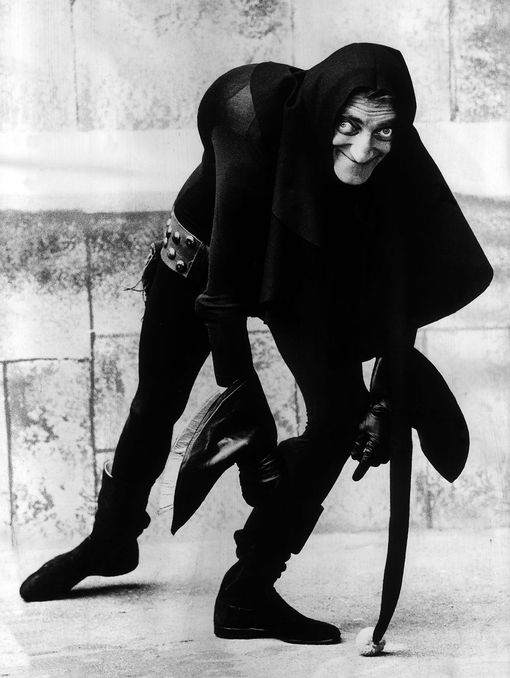
    To wrap up our celebration of Halloween month, Roy Bjellquist and I will be joined by our special guests, Michael Rizzo and Marybeth Ritkouski of SciFi Distilled, for an exhaustive, perhaps exhausting, discussion of the Gene Wilder-Mel Brooks classic, “Young Frankenstein” (1974). As always, your thoughts and insights are welcome! We’ll be watching for your comments.

    Also, we hope you’ll stick around for our post-conversation virtual costume party.

    We’ll hurl the gauntlet of science into the frightful face of death itself!

    But first… walk this way.

    Roy’s Tie-Dye Sci-Fi Corner live-streams on Facebook, this Friday night at 7:00 EDT!

    https://www.facebook.com/roystiedyescificorner/

  • Young Frankenstein A Hilarious Halloween Event

    Young Frankenstein A Hilarious Halloween Event

    It’s one of those rare films that, if anyone quotes just about any line, everyone knows exactly where it’s from. And yet, although it’s one of the great movie comedies, beneath the schtick and excruciating wordplay, the torment and isolation of Mary Shelley’s “monster” endures. The laughter is leavened with sentiment, so that there’s still a beating heart at the center of “Young Frankenstein” (1974).

    Roy Bjellquist and I will be joined by our special guests, Michael Rizzo and Marybeth Ritkouski of SciFi Distilled, as we wrap up our month-long celebration of Halloween with an exhaustive discussion of this Gene Wilder-Mel Brooks creation and its pitch-perfect cast: Wilder, Peter Boyle, Teri Garr, Marty Feldman, Cloris Leachman, Kenneth Mars, Madeline Kahn, and Gene Hackman as the Hermit, in a comic highlight lifted almost directly from “The Bride of Frankenstein.”

    Brooks’ impulse toward freewheeling parody is tempered by genuine affection for the great Universal Studio horror classics, extending even to the use of authentic lab equipment from the 1930s originals. And there is nothing but respect in John Morris’ soulful, evocative score.

    Following our conversation, as an added bonus, there will also be a virtual costume contest, for anyone interested in joining us on Zoom. Personally, my make-up test yesterday was a failure, so I’m on to Plan B.

    Share some laughs and leave your comments, on the next Roy’s Tie-Dye Sci-Fi Corner. We’ll be in stitches for “Young Frankenstein.” Our costumed discourse will begin, live-streamed on Facebook, this Friday evening at 7:00 EDT!

    https://www.facebook.com/roystiedyescificorner/


    “And now, ladies and gentlemen, from what was only an inarticulate mass of lifeless tissue, I give you a cultured… sophisticated… man about town.”

  • Remembering Carl Reiner: A Comedy Legend

    Remembering Carl Reiner: A Comedy Legend

    In common, I suppose, with just about anyone familiar his work – which would be anyone with any kind of familiarity with American popular culture since 1950 – I was saddened to learn of the passing of Carl Reiner, who died on Monday at the age of 98.

    As a writer, producer, director, and actor, Reiner earned 11 Emmy Awards, including two for his work on “Your Show of Shows” and five for his own creation, “The Dick Van Dyke Show.” He acted in “It’s a Mad Mad Mad Mad World” and “The Russians Are Coming, the Russians Are Coming.” He directed “Where’s Poppa?” with Ruth Gordon and “Oh, God!” with George Burns.

    In his later years, he appeared in the “Ocean’s Eleven” films, with George Clooney and Brad Pitt, had recurring roles on the sitcoms “Two and a Half Men” and “Hot in Cleveland,’ and did voice work for animated shows such as “Family Guy” and “King of the Hill.”

    On top of everything else – his work in movies, television, Broadway, and print – Reiner directed four of Steve Martin’s funniest comedies: “The Jerk” (1979), “Dead Men Don’t Wear Plaid” (1982), “The Man with Two Brains” (1983), and “All of Me” (1984).

    “The Jerk” gets all the love (it had the most quotable lines), but “Dead Men Don’t Wear Plaid” is a cinematic valentine for classic movie buffs. The film’s conceit – concocted over lunch by Martin, Reiner, and screenwriter George Gipe – was to construct a new story around scenes culled from movies of the 1940s, employing insert shots and trick photography so that Martin, as hardboiled detective Rigby Reardon, interacts onscreen with Barbara Stanwyck, Veronica Lake, Humphrey Bogart, and other luminaries of Hollywood’s golden age.

    Gimmicky? Sure! But for 90 minutes, I’ll take it. Reiner himself turns up fairly late in the game as a Nazi fugitive operating out of Peru.

    “Dead Men Don’t Wear Plaid” went to great lengths to imbue its pastiche with a sense of verisimilitude. To this end, Reiner secured legendary costume designer Edith Head, who had worked in Hollywood since the 1920s. (A number of her movies – including “The Glass Key,” “Double Indemnity,” “The Lost Weekend,” and “Sorry, Wrong Number” – were sampled for the new project). It would be Head’s final film. The production designer, John DeCuir, had also been active since the 1930s.

    But the real masterstroke was the hiring of film composer Miklós Rózsa, whose career flourished during the heyday of noir, having provided scores for “Double Indemnity,” “The Lost Weekend,” and “The Killers,” scenes from which were also recreated in Reiner’s film. This was meta before meta was cool. Sadly, it would also turn out to be Rózsa’s final film. But what a way to go!

    Of course, I haven’t seen the movie in years – we’re now as far away from “Dead Men Don’t Wear Plaid” as “Dead Men Don’t Wear Plaid” was from “Double Indemnity” – but I remember being mightily entertained as a 15 year-old. I’m sure I was well below the demographic that would have gotten most of the references. But then, I was a rather unusual child.

    Sadly, plaid is no longer among Reiner’s wardrobe options. I’ve also been thinking a lot about Mel Brooks, Reiner’s best friend for 70 years. The two men met while working with Sid Caesar and Imogene Coca on “Your Show of Shows” in 1950, and have been inseparable companions throughout their golden years. According to Reiner, their daily routine involved having dinner, watching “Jeopardy” (taped), and then Mel falling asleep while watching a movie.

    Reiner and Brooks formulated their classic “2000 Year Old-Man” routine when goofing around behind the scenes on “Your Show of Shows.” By 1960, they were recording it. Their final collaboration, “The 2000 Year-Old Man in 2000,” released in 1998, received a Grammy Award for Spoken Comedy Album.

    It’s always especially sad to lose a comedian. Comedians should not age (except perhaps to 2000). They never really grow old, so there should be an exemption. Here’s hoping there’s a special place in heaven for those who make us laugh.


    PHOTO: Reiner, channeling Erich von Stroheim in “Dead Men Don’t Wear Plaid”

Tag Cloud

Aaron Copland (93) Beethoven (95) Composer (114) Film Music (129) Film Score (143) Film Scores (255) Halloween (94) John Williams (192) KWAX (229) Leonard Bernstein (103) Marlboro Music Festival (125) Movie Music (144) Mozart (88) Opera (206) Philadelphia Orchestra (89) Picture Perfect (174) Princeton Symphony Orchestra (108) Radio (88) Ross Amico (244) Roy's Tie-Dye Sci-Fi Corner (290) The Classical Network (101) The Lost Chord (268) Vaughan Williams (103) WPRB (396) WWFM (881)

DON’T MISS A BEAT

Receive a weekly digest every Sunday at noon by signing up here


RECENT POSTS