Tag: Miklos Rozsa

  • Film Noir: Shadows and Moral Ambiguity

    Film Noir: Shadows and Moral Ambiguity

    This week on “Picture Perfect,” as the shadows lengthen, we revisit the world of film noir, a genre notoriously slippery to define, but easy to know when you see it – with its long shadows and moral ambiguities; cock-eyed camera angles and snappy repartee; isolation and innuendo. It’s a genre where a pair of gams is an invitation to the gallows; where a man’s best friend – and sometimes his worst enemy – is his Colt .38, where only cigarettes and bourbon can ease the pain.

    The labyrinthine mystery at the heart of “The Big Sleep” (1946) is so disorienting, even the book’s author, Raymond Chandler, couldn’t tell whodunit. Who cares? Humphrey Bogart and Lauren Bacall get some more steamy dialogue to satisfy fans of “To Have and Have Not,” and there’s plenty of Bogey pounding the pavement and tossing off tart one-liners in pursuit of the truth. But my favorite scene involves Dorothy Malone, who runs the hottest bookstore in town.

    https://www.youtube.com/watch?v=AO9Q-81w6KQ

    Whenever there are gallows to be built or gangsters to be beaten, Warner Brothers could be counted on to assign Max Steiner.

    “Chinatown” (1974) is one of the best of the neo-noirs of the 1970s. This time, Jack Nicholson plays private dick J.J. Gittes, who takes on a seemingly routine case that begins to spiral out of control. When producer Robert Evans rejected Philip Lambro’s original score, Jerry Goldsmith stepped in as a last-minute replacement. The composer was hired with the understanding that he had only ten days to write and record new music. For his effort, Goldsmith received an Academy Award nomination.

    The Coen Brothers clearly love noir, from their first feature, “Blood Simple,” to their Academy Award winners, “Fargo” and “No Country for Old Men,” to their absurdly entertaining reimagining of “The Big Sleep,” “The Big Lebowski.” “Miller’s Crossing” (1990) was one of the more underappreciated of these. The film follows the well-worn device of an anti-hero playing two sides off of one another, until he is the last one standing – shades of Dashiell Hammett’s “Red Harvest,” with a healthy dose of “The Glass Key” thrown in, for good measure. The Irish-inflected score is by Coen regular Carter Burwell.

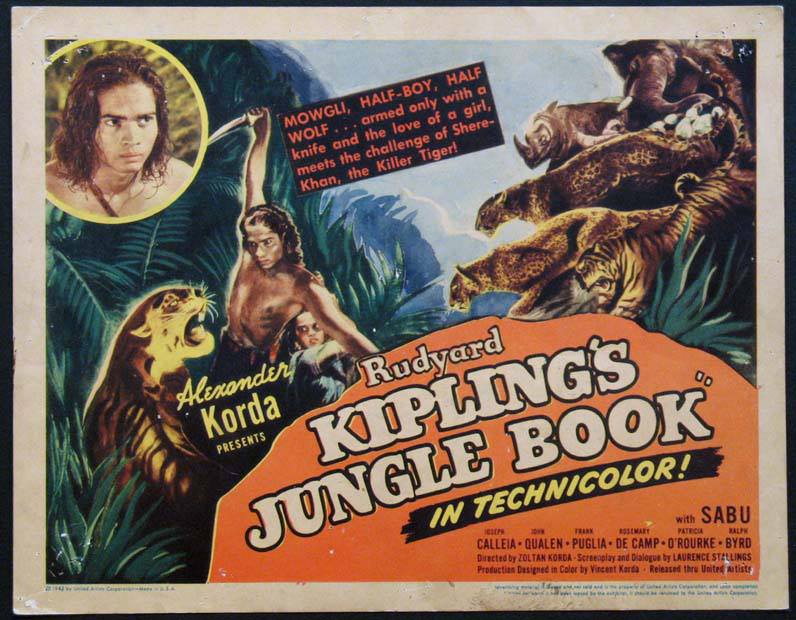
    Before he became stereotyped as a composer for epic films like “Ben-Hur,” “King of Kings” and “El Cid,” Miklos Rozsa was the king of noir, providing scores for genre classics such as “Double Indemnity” and “The Strange Love of Martha Ivers.” We’ll hear a suite assembled from three such projects: “Brute Force” (1947), a hard-hitting prison drama, starring Burt Lancaster as a desperate inmate and a contemptible Hume Cronyn as a sadistic guard; “The Killers” (1946), also starring Lancaster as a marked boxer; and “The Naked City” (1948), with Barry Fitzgerald leading a police investigation into the murder of a young model. The suite is titled “Background to Violence.”

    Put on your rumpled linen suit, draw the Venetian blinds, and play the sap for nobody this week. It’s film noir in the gritty city, on “Picture Perfect” – music for the movies – this Friday evening at 6, with a repeat Saturday morning at 6; or you can listen to it later as a webcast at http://www.wwfm.org.

    The theatrical trailer for “Brute Force”:

    PHOTO: Jack “nose” noir

  • Film Composers Times Changing?

    Film Composers Times Changing?

    “Times sure have changed for film composers,” writes Allan Kozinn of the New York Times. I’m not so sure.

    Kozinn is of the opinion that film music is making massive strides in the concert halls. While it’s true that orchestras have embraced the profitability of performing film scores with showings of the actual movies, for the most part you’ll find music written for film relegated to pops concerts. And you’ll likely hear only the main themes. That’s not to say that all film music deserves to stand toe-to-toe with the world’s masterpieces. But judicious selections from the best would be at least as welcome as Berlioz or Liszt.

    Part of the problem is that many of the composers themselves weren’t thinking of posterity. They were just churning the stuff out against deadline and then chasing the next paycheck. But when you think about it, so was Mozart.

    Some of the music is derivative, certainly, but that can be gotten around. There is plenty of finely-crafted music from which to draw by composers with a strong, original voice. Miklós Rózsa, for instance.

    Another part of the problem is that because of the nature of the film business, many of the scores weren’t even preserved. So many modern recordings have taken place only after painstaking reconstruction. If the actual, widespread rehabilitation of classic film music ever catches fire, it could be the biggest business since the period instrument movement.

    Finally, it was comparatively seldom that film composers made usable concert arrangements, so that the music can be enjoyed separate from the images. There are notable exceptions: for instance, Bernard Herrmann’s “Psycho: A Narrative for String Orchestra.” Can you name another piece of orchestral music composed in 1960 that is as widely recognized as that written for the film’s shower scene? Herrmann’s suite contains 15 minutes of alternately driving, moody and chilling music.

    On the other hand, sometimes composers are not the best judge of their own material. I cringe whenever I hear John Williams’ concert arrangement, “Adventures on Earth,” drawn from his score to “E.T.,” which completely subverts the perfection he achieved when writing for the film. The music was so good, director Steven Spielberg told Williams to just go with it when conducting and he’d edit the images to suit the music. That’s a show of respect rarely bestowed on the film composer. Yet rather than allow the music to speak as it did so eloquently in the film’s final 15 minutes, Williams’ concert arrangement jumps all over the place, grabbing a little bit from here and a little bit from there. Even judging from a purely musical standpoint, the end result is a much weaker statement.

    Anyone who has ever listened to Sibelius’ incidental music to “The Tempest” understands the wisdom of taking the best moments and arranging them into concert suites. In the digital age, there are multiple recordings of the complete score for the curious. For the average symphony concert, I don’t propose programming the complete music from “King Kong,” say, any more than I would the complete incidental music to Mendelssohn’s “Oepidus at Colonus” (though I certainly believe there is a niche to be filled by some enterprising orchestra that would devote itself exclusively to just that – playing and preserving classic film scores in their entirety). Often the best bits are already in the concert suites, or even the overtures.

    There is at least one positive development, in terms of respectability. Kozinn reports that London’s Royal College of Music is offering a new scholarship named for the composer John Barry. Barry was the winner of five Academy Awards, including two for “Born Free,” and one each for “The Lion in Winter,” “Out of Africa” and “Dances with Wolves.” The John Barry Scholarship for Film Composition, established by the composer’s widow, Laurie Barry, covers tuition fees for a two year period, as well as a student’s living expenses.

    While this post has devolved into a rant about preservation and acceptance, what we really need in the present are educated film composers. I am so sick of Hans Zimmer.

    But if the music is going to get better, one hopes so will the films, or at least the conditions, so that the composer is able to write something good. Writing music takes time, and time is money. In Hollywood, there has always been a tension between art and commerce. Over the decades, however, the shift has been decidedly in favor of the latter. Can independent films afford the expense of recording with a symphony orchestra? The ball, sadly, appears to remain in Hollywood’s court.

    Here’s Kozinn’s article:

    PHOTO: John Barry accepts his Oscar for “Out of Africa.”
  • Medieval Movie Scores Chivalry Lives

    Medieval Movie Scores Chivalry Lives

    Chivalry is not dead this week on “Picture Perfect,” as we listen to music from movies set in the Middle Ages. The term “chivalry” conjures images of knights in armor, of courtly behavior, of bravery, honor, courtesy, moral virtue and willingness to defend the weak. For the average filmmaker and moviegoer, that likely translates into spectacle and adventure.

    We’ll hear scores that celebrate or circumvent the code, with selections from “The Warlord” by Jerome Moross, “El Cid” by Miklós Rózsa, “Lionheart” by Jerry Goldsmith and “The Adventures of Robin Hood” by Erich Wolfgang Korngold.

    As always, we go on a crusade for great film music this week, on “Picture Perfect,” this Friday evening at 6 ET. If you miss it, you can enjoy it later as a webcast at http://www.wwfm.org.

    Robin is a bold rascal:

  • WWII Film Scores Memorial Day Special

    WWII Film Scores Memorial Day Special

    Today is Richard Wagner’s birthday. Perhaps in his honor, I am going to go his megalomania one better by completely ignoring the fact and using the space for shameless self-promotion!

    This week on “Picture Perfect,” as we near Memorial Day, the focus will be on music from World War II classics.

    Among the selections will be a new release – and a very fine one – on the Intrada label of music by Miklós Rózsa. The album is called “The Man in Half Moon Street,” and includes re-recordings of some of his underrepresented though certainly deserving scores, among them, “Valley of the Kings,” “The Strange Love of Martha Ivers,” and “Sahara.”

    In “Sahara,” Humphrey Bogart plays a WWII tank commander who holes up at a desert well and uses his apparent position of power to delay a parched German battalion from participating in the First Battle of El Alamein. Allan Wilson conducts the Royal Scottish National Orchestra, in what is truly the best project of its kind I have encountered in quite some time. Re-recordings so often lack the punch of the originals, but here is Rózsa is all his glory, sounding wholly idiomatic and presented in vivid digital splendor.

    Jerry Goldsmith’s music for “Patton” should require no introduction. The film is a bona fide classic, a winner of seven Academy Awards, including Best Picture. Unfortunately for Goldsmith, at that stage of his career, he was always a bridesmaid but never a bride. George C. Scott notoriously rejected his Oscar for Best Actor; he should have given it to Goldsmith.

    Errol Flynn may seem an unlikely choice to play a U.S. Army captain, but he does just that in “Objective, Burma!” Flynn received criticism for remaining in Hollywood during the war, but the Warner Brothers publicity machine did what it could to hush up the fact that the world’s most famous swashbuckler had tried to enlist but was rejected on medical grounds. “Objective, Burma!” infuriated Churchill, and the film was actually banned in Britain for what was perceived as the Americanization of a largely British, Indian and Commonwealth conflict. The rousing score, also nominated for an Oscar, was by Franz Waxman.

    “The Guns of Navarone,” adapted from the novel of Alistair MacLean, is one of the all-time great adventure films. A team of Allied military specialists – played by Gregory Peck, David Niven and Anthony Quinn, among others – undertake a mission to blow up some very big Nazi guns trained over the Aegean Sea. Dimitri Tiomkin pulled out all the stops for his Oscar-nominated music. The recording features a spoken introduction by James Robertson Justice, who plays Commodore Jensen in the film.

    Join me for these scores from World War II classics on “Picture Perfect,” music for the movies, this Friday evening at 6:00 ET, or listen to it as a webcast, at http://www.wwfm.org.

  • Passover Movie Music From Biblical Epics

    Passover Movie Music From Biblical Epics

    This week on “Picture Perfect,” with Passover right around the corner, it’s an hour of music from epics inspired by the Old Testament – including “Samson and Delilah” (Victor Young), “Solomon and Sheba” (Mario Nascimbene), “Sodom and Gomorrah” (Miklós Rózsa) and “The Ten Commandments” (Elmer Bernstein).

    We begin and end with two Cecil B. DeMille productions. DeMille could always be counted on to give his audience a good show. Both “Samson” and “The Ten Commandments” feature sultry temptresses, violent, bare-chested men, and plenty of austere moralizing. The climactic special effects in both films are still sublime.

    Tyrone Power was originally cast as Solomon in King Vidor’s “Solomon and Sheba.” However, he died of a massive heart attack during shooting (at the age of 44), paving the way for Yul Brynner to assume the role of the wise king. Brynner, of course, would later become DeMille’s pharaoh Rameses. With Gina Lollobrigida as the Queen of Sheba, you know there has to be an orgiastic dance.

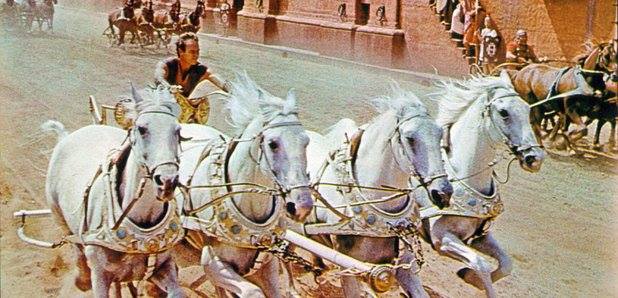
    Miklós Rózsa characterized “Sodom of Gomorrah” as “an intriguing subject which developed into a bad picture,” and most critics agreed. Any film that casts Stewart Granger as Lot should be taken with a pillar of salt. Rózsa determined not to score any more Biblical epics after “Sodom,” though his music is nothing to be ashamed of. It possesses that classic Rózsa epic sound, much beloved thanks to his work on “Quo Vadis,” “Ben-Hur” and “King of Kings.”

    Chariots! Tunics! Histrionic acting! Get in on the fun, this Friday evening at 6 p.m. ET at http://www.wwfm.org .

    Miss a show? Past and recent installments of “Picture Perfect” and “The Lost Chord” are archived for your enjoyment at the WWFM website. Click on “webcasts,” and then select the show.

    PHOTOS: Victor Mature’s stuffed lion vs. Charlton Heston’s cotton candy beard

Tag Cloud

Aaron Copland (92) Beethoven (95) Composer (114) Film Music (123) Film Score (143) Film Scores (255) Halloween (94) John Williams (187) KWAX (229) Leonard Bernstein (101) Marlboro Music Festival (125) Movie Music (138) Opera (202) Philadelphia Orchestra (89) Picture Perfect (174) Princeton Symphony Orchestra (106) Radio (87) Ralph Vaughan Williams (85) Ross Amico (244) Roy's Tie-Dye Sci-Fi Corner (290) The Classical Network (101) The Lost Chord (268) Vaughan Williams (103) WPRB (396) WWFM (881)

DON’T MISS A BEAT

Receive a weekly digest every Sunday at noon by signing up here


RECENT POSTS