Tag: Miklos Rozsa

  • Movie Music with Women’s Names

    Movie Music with Women’s Names

    This week on “Picture Perfect,” we’ll have music from movies with women’s names for titles.

    “Rachel, Rachel” (1968) stars Joanne Woodward as a repressed, small-town schoolteacher, who learns to take control of her own life. The film marked the directorial debut of Woodward’s husband, Paul Newman. “Rachel, Rachel” was nominated for four Academy Awards, including those for Best Actress and Best Picture. Newman picked up a Golden Globe and a New York Critics Circle Award for his direction. The lovely Americana score was composed by Jerome Moross.

    “Emma” (1996) was adapted from the Jane Austen novel. Gwyneth Paltrow plays the high spirited-though-somewhat-clueless matchmaker, who fails to recognize her own feelings or those of the men around her. Also among the cast are Alan Cumming, Toni Collette, Ewan McGregor and Jeremy Northam. Screenwriter and director Douglas McGrath fell in love with the book while an undergraduate at Princeton University. Rachel Portman wrote the Academy Award-winning score.

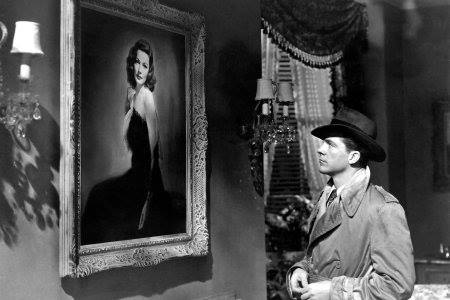
    Otto Preminger’s film noir, “Laura” (1944), features quite the cast, including Gene Tierney, Dana Andrews, Clifton Webb, Judith Anderson and Vincent Price. The equally impressive theme, which is heard in endless permutations throughout the film, was by Philadelphia-born David Raksin. Outfitted with lyrics by Johnny Mercer, it became the second most-recorded song during the composer’s lifetime, after only Hoagie Carmichael’s “Stardust.”

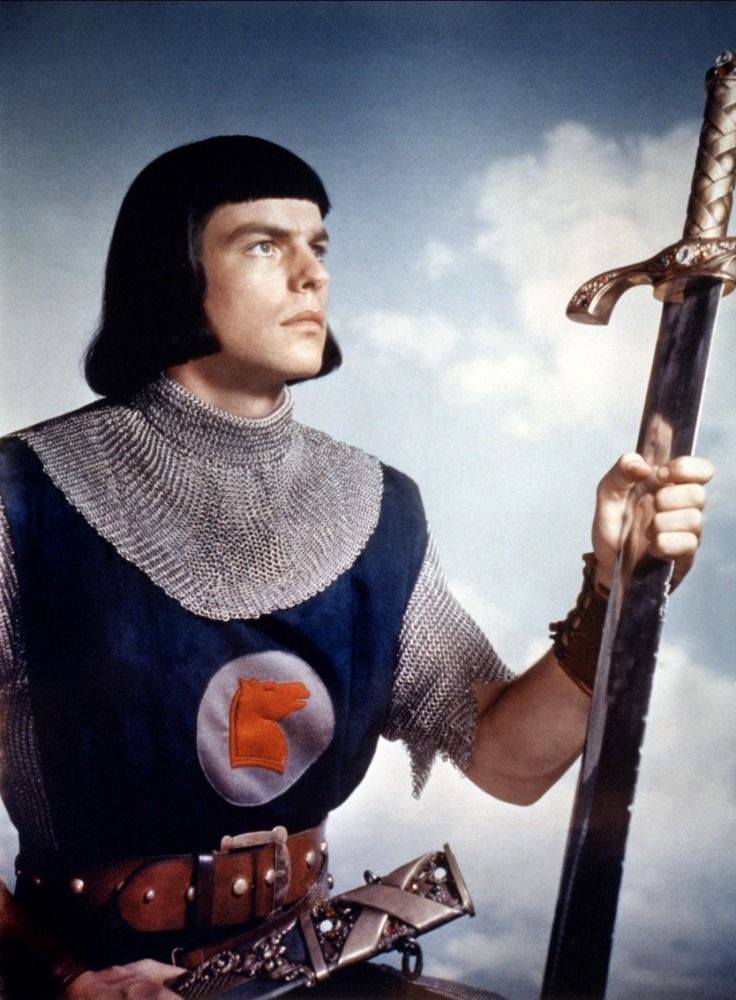
    Finally, “Diane” (1956) takes us back to 16th century France, with a plot concerning Diane de Poitiers (played by Lana Turner), a member of the court of Francis I, who becomes the mistress of the king’s son, Henri d’Orleon (played by a very young Roger Moore). Their illicit love unfolds against the backdrop of Medici intrigue and lust for power. Miklós Rózsa, M-G-M’s go-to-composer for its historical spectacles, wrote the music.

    I hope you’ll join me for “What’s in a Name?,” tonight at 6 ET, with a repeat tomorrow morning at 6; or that you’ll listen to it later as a webcast at http://www.wwfm.org.

    PHOTO: Dana Andrews likes his women stiff, like his bourbon

  • Happy Birthday Miklós Rózsa Film Score Legend

    Happy Birthday Miklós Rózsa Film Score Legend

    BTW – and not incidentally – today is the birthday of the great Miklós Rózsa (1907-1995). Here he is, conducting a suite from arguably his greatest film score:

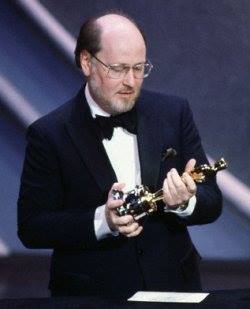
    Rózsa receives his third Academy Award, from the hand of Gene Kelly (BONUS: André Previn wins for his work on “Porgy and Bess”):


    PHOTO: “Singin’ in the Rain,” and reining in the charioteers: Miklós Rózsa (left), with Gene Kelly

  • André Rieu Ben-Hur Oscar Party

    André Rieu Ben-Hur Oscar Party

    André Rieu needs more brass! Here he is to conduct “The Parade of the Charioteers” from “Ben-Hur.” The Academy Award-winning music is by Miklós Rózsa.

    Ordinarily, I’m not a huge fan (of Rieu, not Rózsa), but holy cow, the vulgarity is hard to resist.

    Academy Awards Sunday. How can I be so in love with Oscar, and yet have so little interest in tonight’s ceremony? Of course I’ll be watching, but I’ll be thinking of Gregory Peck, Gene Hackman, George C. Scott, Sean Connery, David Niven, the streaker.

    If you are looking for some background music to accompany your Oscar preparations, Friday night’s two-hour “Picture Perfect” Oscar Party is now posted as a webcast, at http://www.wwfm.org.

    PHOTO: Though its record 11 Academy Awards was later matched, unfathomably, by “Titanic” and “The Lord of the Rings: The Return of the King” (really?!!), “Ben-Hur” is still the all-time Oscar champ, at least in my book – epic scope, compelling story, amazing craftsmanship, outstanding music, real stunts, a cast of thousands, and no CGI anywhere.

  • Warsaw Concerto and the Rage for Cinematic Concerti

    Warsaw Concerto and the Rage for Cinematic Concerti

    Yesterday, Richard Addinsell’s birthday, I wrote about the “Warsaw Concerto,” which was introduced in the English film “Dangerous Moonlight” (released in the U.S. as “Suicide Squadron”). The mini Rachmaninoff-style concerto went on to sell millions. I want to live in a world where a piano concerto can attain Platinum status!

    As I mentioned, the work’s success sparked an unlikely rage for cinematic concerti. There followed the “Cornish Rhapsody” by Hubert Bath, from the film “Love Story” (1944), the “Dream of Olwen” by Charles Williams, from “While I Live” (1947), and most successfully, the “Spellbound Concerto,” from the Alfred Hitchcock classic (1945), actually arranged into a concerto after the fact, by Miklós Rózsa.

    Other Hollywood productions, such as “The Enchanted Cottage” (1945), with music by Roy Webb, flirted with the concept, with blind pianist Herbert Marshall’s “tone poem” played throughout the film, but whether or not there was ever a commercial recording, I don’t know.

    David Lean’s “Brief Encounter” (1945) went whole hog and simply used Rachmaninoff’s Piano Concerto No. 2, which is interesting since Addinsell’s orchestrator, Roy Douglas, claimed the reason for creating the “Warsaw Concerto” in the first place was because either the Rachmaninoff’s use was forbidden by the copyright holders or that it was simply too expensive.

    “Dangerous Moonlight” tells the tale of a Polish pianist and composer who becomes a fighter pilot during World War II. He is discovered by an American reporter while practicing one of his compositions in a bombed-out building, and their love story commences. The title refers not only to the romantic influence of the moon, but also the more palpable threat of nighttime bombing raids.

    By the way, Douglas who whipped Addinsell’s sketches into the concerto’s final form, worked for years as an assistant to Ralph Vaughan Williams and Sir William Walton. He is still listed as a vice president of the Ralph Vaughan Williams Society. Probably best known for his ballet “Les Sylphides,” he was born on December 12, 1907 – which means, as of last month, he is 107 years old!

    Here’s Miklós Rózsa’s “Spellbound Concerto,” in its superior version for two pianos and orchestra, with ondes Martenot (in lieu of theremin), arranged by the composer to twice its former length:

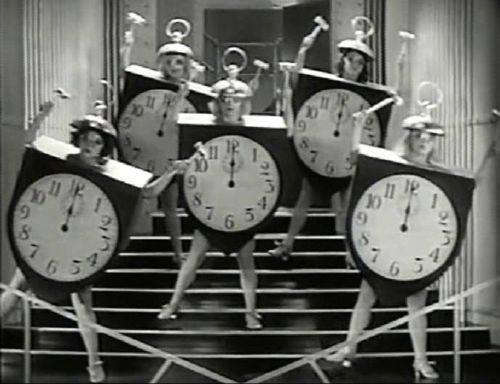
    PHOTO: The dangerous moonlight pales beside the hazard of secondhand smoke

  • Black Friday Escape to the Wild Picture Perfect

    Black Friday Escape to the Wild Picture Perfect

    This week on “Picture Perfect,” for Black Friday, we flee “civilization” for the relative safety of the wilderness.

    We’ll hear music from “Born Free” by John Barry, “Hatari!” by Henry Mancini, National Geographic’s “Grizzly!” by Jerome Moross, and “The Jungle Book,” by Miklós Rózsa.

    I hope you’ll join me for “The Call of the Wild,” this Friday evening at 6 ET (leftover turkey and cranberry sauce sandwiches optional), or for the repeat Saturday morning at 6; or that you’ll listen to it later as a webcast, at http://www.wwfm.org.

    As something of a bonus, since it’s Thanksgiving, here’s a second helping of Rózsa, assembled from his score to “Plymouth Adventure”:

    The main title is based on the Ainsworth Psalter, written by English Separatist clergyman Henry Ainsworth. It was published in Holland in 1612 and brought to America by the Pilgrims in 1620.

    Happy Thanksgiving to all!

    PHOTO: I’d rather face Shere Khan than mall traffic

Tag Cloud

Aaron Copland (92) Beethoven (95) Composer (114) Film Music (123) Film Score (143) Film Scores (255) Halloween (94) John Williams (187) KWAX (229) Leonard Bernstein (101) Marlboro Music Festival (125) Movie Music (138) Opera (202) Philadelphia Orchestra (89) Picture Perfect (174) Princeton Symphony Orchestra (106) Radio (87) Ralph Vaughan Williams (85) Ross Amico (244) Roy's Tie-Dye Sci-Fi Corner (290) The Classical Network (101) The Lost Chord (268) Vaughan Williams (103) WPRB (396) WWFM (881)

DON’T MISS A BEAT

Receive a weekly digest every Sunday at noon by signing up here


RECENT POSTS