Tag: Miklos Rozsa

  • Sherlock Holmes Movie Music on WWFM

    Sherlock Holmes Movie Music on WWFM

    The game’s afoot! It’s an afternoon of mystery and imagination.

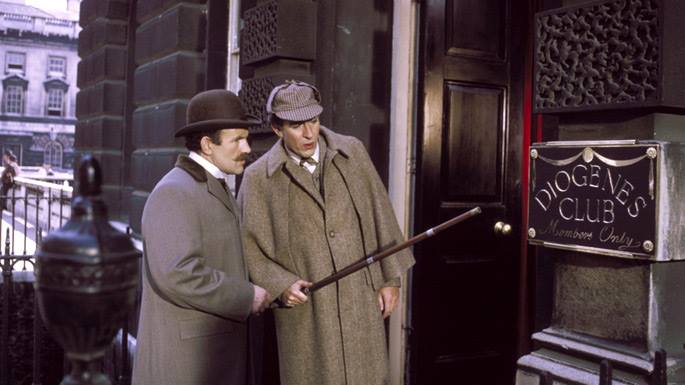
    This week on “Picture Perfect,” the focus will be on films inspired by the world’s greatest detective, including “Sherlock Holmes” (2009), with music by Hans Zimmer, “The Private Life of Sherlock Holmes” (1970), with music by Miklos Rozsa, “Without a Clue” (1988), with music by Henry Mancini, and “Young Sherlock Holmes” (1985), with music by Bruce Broughton. That’s all coming up at 6:00 EDT.

    To get you in the mood, I’ll be playing Rozsa’s Violin Concerto in the 4:00 hour, a work director Billy Wilder listened to incessantly while writing his screenplay for “The Private Life” and upon which he requested the composer base his film score.

    Then in the 5:00 hour, we’ll have the Sherlock Holmes ballet, in all-but-name, “The Great Detective,” by English composer Richard Arnell.

    In the words of Holmes himself, “Once you eliminate the impossible, whatever remains, no matter how improbable, must be the truth.” Join me for an afternoon of improbably good music, from 4 to 7:00 EDT, on WWFM – The Classical Network and at wwfm.org.
  • Bernstein Conducts Rózsa Rare 1943 Broadcast

    Bernstein Conducts Rózsa Rare 1943 Broadcast

    Leonard Bernstein conducts Miklós Rózsa? No way. YES, WAY!

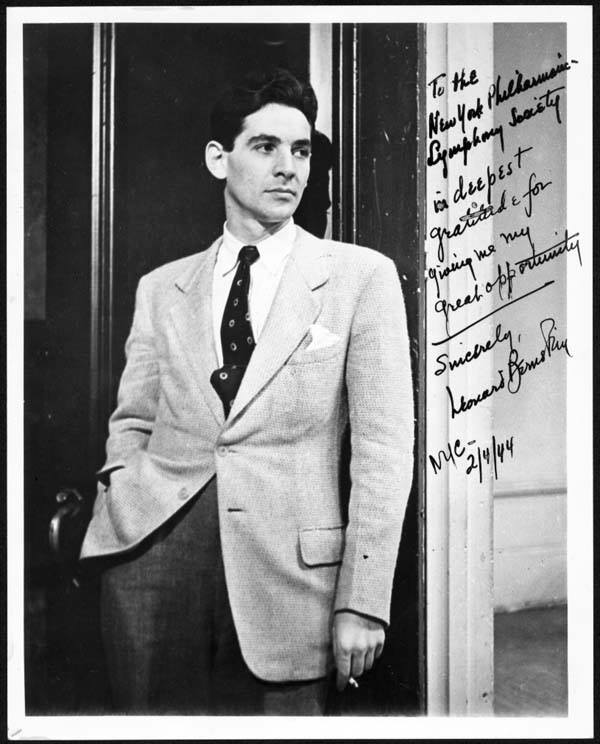
    On November 14, 1943, a 25 year-old Bernstein strode onto the podium to replace an ailing Bruno Walter – without rehearsal – for what became his New York Philharmonic debut. The rest, as they say, is history. On the program was Robert Schumann’s “Manfred Overture,” Richard Strauss’ “Don Quixote” and Miklós Rózsa’s “Theme, Variations and Finale.” The concert was broadcast nationwide. The New York Philharmonic issued the CBS transmission on CD in 1996. To my knowledge, this is the only document of Bernstein conducting Rózsa, who is best known for his film scores – especially that for “Ben-Hur,” but in 1943, Rózsa was chin-deep in his film noir phase.

    You’ll be able to enjoy this historic concert broadcast and much more, as I salute Bernstein on his birthday anniversary, tomorrow morning from 6 to 11 EDT, on WPRB 103.3 FM and at wprb.com. We’ll go loony for Lenny, on Classic Ross Amico.

  • Hungarian Music on “The Lost Chord”

    Hungarian Music on “The Lost Chord”

    Have you a hunger for Hungarian music?

    This Sunday night on “The Lost Chord,” I’ll be joined by Mariusz Smolij for the first of a two-part series, in which we sample from his recording projects for the Naxos label, focusing on Eastern European composers.

    Smolij is known in the Greater Delaware Valley as the Music Director of the Riverside Symphonia, based in Lambertville, NJ, which he has directed for over 20 years. He is also music director of the Acadiana Symphony Orchestra and Conservatory of Music in Lafayette, LA, and formerly associated with the Houston Symphony Orchestra and the New Jersey Symphony Orchestra. He has taught conducting at the music school of Northwestern University in Chicago and was a founding violinist of the internationally acclaimed Penderecki String Quartet.

    We’ll hear selections from a concert work by celebrated film composer Miklós Rózsa (he of “Ben-Hur” fame), as well as several by his lesser-known friend and colleague Eugene Zador.

    That’s “Famished for Hungary” – Mariusz Smolij’s recordings of Hungarian music for the Naxos label – this Sunday night at 10 EDT, with a repeat Wednesday evening at 6, on WWFM – The Classical Network; or listen to it later as a webcast at wwfm.org.


    PHOTO: Mariusz Smolij (right), Ross Amico (left), conspicuous product placement (center)

  • WWII Film Scores for Memorial Day

    WWII Film Scores for Memorial Day

    While you’re sitting in traffic heading into your three-day weekend, take a moment to consider that you’ve got it easy compared to what Allied soldiers went through in Europe, the Pacific and North Africa to keep the world free from tyranny.

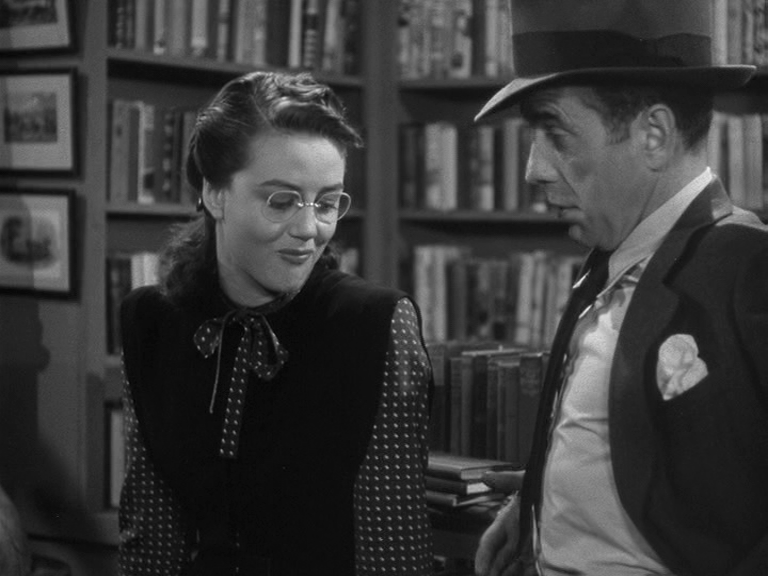
    This week on “Picture Perfect,” we’ll have music from two films of the World War II era that exemplify Hollywood’s morale-boosting approach. “Sahara” (1943) pits Humphrey Bogart as a tank commander who defends a watering hole against a superior force of parched Nazis. “Objective: Burma!” (1945) drops Errol Flynn behind enemy lines to take out a Japanese radar station.

    Neither film shuns the reality that war is hell (with some particularly suggestive gruesomeness in the latter), yet the filmmakers rose above the kind of nihilistic edge that underscores so many movies made today. When all was said and done, war movies in the 1940s sold America on hope and sacrifice and the promise of final victory.

    The conflict cast a long shadow, and in the 1950s and ‘60s Hollywood continued to churn out WWII films at an impressive rate, selling tickets to the generation that had “been there.” “The Guns of Navarone” (1961) features Gregory Peck (exempt from service during the actual war because Martha Graham injured his back), David Niven (Lieutenant Colonel in the British Commandos at Normandy) and Anthony Quinn (born in Mexico and not naturalized until 1947) as a special unit of Allied military specialists on a mission to blow up some big Nazi guns trained over the Aegean Sea.

    Efforts to get “Patton” (1970) off the ground had been in motion since 1953! The filmmakers wanted access to Patton’s diaries, but displayed horrible timing in approaching the late general’s family the day after the death of his widow. Not surprisingly, the family was completely turned off and withheld its cooperation. In the end Franklin J. Schaffner directed from a script by Francis Ford Coppola and Edmund H. North. Patton’s colleague, Omar Bradley, served as an advisor on the film. (He’s played on screen by Karl Malden.)

    “Patton” likely would have been a knockout on any level (Rod Steiger turned down the lead, much to his later regret), but it is really George C. Scott that pushes it over the top. And how much more over the top can it get than that opening monologue, assembled from Patton’s speech to the Third Army, delivered in front of an enormous American flag? Only a larger-than-life actor such as Scott could have done it justice and not been dwarfed by both the subject and the iconography. Scott won a much-deserved Academy Award for his performance – which he famously refused to accept.

    I hope you can join me for equally outsized music by Miklós Rózsa (“Sahara”), Franz Waxman (“Objective: Burma!”), Dimitri Tiomkin (“The Guns of Navarone”) and Jerry Goldsmith (“Patton”), as we look forward to Memorial Day with classic films set during World War II, this Friday evening at 6 EDT, with a repeat Saturday morning at 6; or that you’ll listen to it later as a webcast at wwfm.org.

  • Jungle Book & Wild Film Scores

    Jungle Book & Wild Film Scores

    This week on “Picture Perfect,” with the box office success of the most recent incarnation of Rudyard Kipling’s “The Jungle Book,” I thought it might be fun to revisit music from the 1942 Korda Brothers’ version. The film starred the charismatic Sabu as Mowgli (for the record, Kipling pronounced “Mowgli” so that the first syllable rhymes with “cow”), and Miklós Rózsa wrote the enchanting score.

    We’ll also hear selections from John Barry’s music for “Born Free” (1966), based on Joy Adamson’s memoir about the raising of Elsa, an orphaned lion cub who grows to adulthood and is eventually released into the Kenyan wilderness. The music proved a double Academy Award winner for Barry, who was recognized for Best Original Score and Best Original Song.

    Jerome Moross, best known for his music to “The Big Country,” had such a strong personality that his immediately recognizable sound extended even to his work on the National Geographic special, “Grizzly!” (1967), a documentary about a pair of ecologists studying North American bears. “Grizzly!” sports an energetic Americana score that is cut very much from the same cloth.

    And I can’t get through the hour without playing Henry Mancini’s “Baby Elephant Walk,” from “Hatari!” (So many exclamation points in these wilderness titles.) The film was directed by Howard Hawks and starred John Wayne. In case you’re wondering, “Hatari!” is Swahili for “Danger!”

    No danger in treating yourself to this cinematic carnival of the animals. We’re going wild this week on “Picture Perfect,” this Friday evening at 6 EDT, with a repeat Saturday morning at 6; or listen to it later as a webcast at wwfm.org.

Tag Cloud

Aaron Copland (92) Beethoven (95) Composer (114) Film Music (123) Film Score (143) Film Scores (255) Halloween (94) John Williams (187) KWAX (229) Leonard Bernstein (101) Marlboro Music Festival (125) Movie Music (138) Opera (202) Philadelphia Orchestra (89) Picture Perfect (174) Princeton Symphony Orchestra (106) Radio (87) Ralph Vaughan Williams (85) Ross Amico (244) Roy's Tie-Dye Sci-Fi Corner (290) The Classical Network (101) The Lost Chord (268) Vaughan Williams (103) WPRB (396) WWFM (881)

DON’T MISS A BEAT

Receive a weekly digest every Sunday at noon by signing up here


RECENT POSTS