Tag: Miklos Rozsa

  • Golden Age Film Scores Return to Trenton

    Golden Age Film Scores Return to Trenton

    There’s a moment in the Billy Wilder classic “Sunset Boulevard” when Gloria Swanson, as a faded silent movie actress, remarks, “I am big. It’s the pictures that got small.”

    Much the same could be said, setting aside the delusions of grandeur, of the great composers who worked during Hollywood’s golden age. It’s ironic that in the current era of vertiginous CGI that so many of our movies seem to lack dimension. There was a time when music with a strong profile was regarded as an essential element of the moviemaking process. It was a way of creating 3-D without the necessity of special glasses.

    On May 14, the New Jersey Capital Philharmonic Orchestra will remind us of what’s been missing, to great extent, from the movie-going experience in recent years. The program “Cinematic Classics” will be presented at Patriots Theater in the Trenton War Memorial. Works by composers Miklós Rózsa, Erich Wolfgang Korngold, Bernard Herrmann and William Walton prove what can be achieved by a skilled musician with a gift for melody, an innate sense of drama, and good old-fashioned musical know-how.

    For those of you who believe that they don’t make ‘em like they used to, this concert is highly recommendable. You can read more about it in my article in today’s Trenton Times:

    http://www.nj.com/times-entertainment/index.ssf/2016/05/classical_music_njcp_performin_1.html

  • Miklós Rózsa Film Score Celebration

    Miklós Rózsa Film Score Celebration

    Happy birthday, Miklós Rózsa (1907-1995)!

    Can you spare ten minutes to soak up some Golden Age greatness? Check out this wonderful medley of some of his classic film scores.

    I had a blast picking out the films without looking at the images. I own recordings of all of them, of course. (What? No “Lust for Life???”)

    Rózsa conducts the Pittsburgh Symphony in a suite from “Ben-Hur”:

    They don’t make ‘em like Miklós anymore.

  • Film Composers Beyond the Screen

    Film Composers Beyond the Screen

    If after about three hours you find yourself getting played out on the Academy Awards– once Ennio Morricone finally wins his first competitive Oscar, that is (fingers crossed) – you might consider tuning in to “The Lost Chord.” We’ll both complement and enjoy counterprogramming to the ceremony by listening to concert works by composers better known for their work in film.

    Franz Waxman was a two-time Academy Award winner, honored with back-to-back Oscars, in 1950 and 1951, for his work on “Sunset Boulevard” and “A Place in the Sun.” Some of his other classic scores include those for “The Bride of Frankenstein,” “Rebecca,” “Rear Window,” “Peyton Place” and “The Nun’s Story.”

    In 1955, he was traveling from California to Zurich to conduct a new piece commissioned by Rolf Liebermann. When Waxman reached New York he was met with a request from Lieberman’s office for program notes for the impending premiere. Waxman was forced to admit he hadn’t yet begun work on the piece, which he had planned to write during the ocean voyage. Fortunately, he was accustomed from his experience in Hollywood to write very quickly. The result was his “Sinfonietta for String Orchestra and Timpani.”

    Five-time Academy Award winner John Williams – whose 50th nominated score, for “Star Wars: The Force Awakens,” is in contention tonight – is of course very well-known for his collaborations with George Lucas and Steven Spielberg. Over the years, he’s also accrued an impressive quantity of concertos. One of the more immediately attractive of these is his Tuba Concerto of 1985, written for the 100th anniversary of the Boston Pops.

    Finally, we’ll turn to three-time Academy Award winner Miklós Rózsa, honored for his work on Alfred Hitchcock’s “Spellbound” in 1945, the Ronald Colman thriller “A Double Life” in 1947, and “Ben-Hur” in 1959. He also composed quite a bit of concert music, including concertos for Jascha Heifetz, Gregor Piatigorsky, Janos Starker, Leonard Pennario and Pinchas Zukerman.

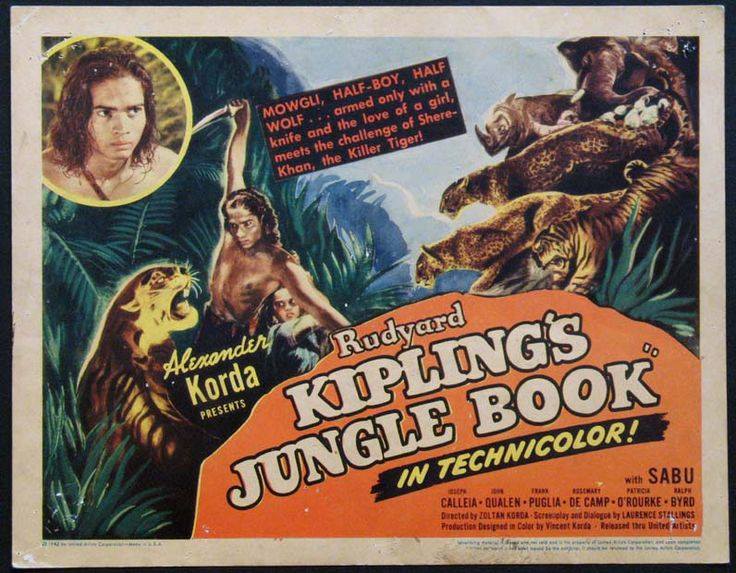
    Rózsa, Hungarian by birth, turned to film after a period of struggle as a young artist in Paris, where he learned from Arthur Honegger that he was able to pay the rent by supplementing his concert music with cinematic efforts. Rózsa’s “Theme, Variations and Finale,” Op. 13, of 1933, preceded the start of his film career by a few years. He revised the piece in 1943, by which time he had already completed his classic fantasy scores for Alexander Korda’s “The Thief of Bagdad” and “Jungle Book,” and was on the verge of becoming a leading composer of film noir.

    “Theme, Variations and Finale” received performances by Charles Munch, Karl Böhm, Georg Solti, and Eugene Ormandy. It was also one of the works that featured on the legendary concert that launched Leonard Bernstein with the New York Philharmonic, on November 14, 1943, when the young assistant conductor substituted at the last minute for an ailing Bruno Walter.

    I hope you’ll join me for an hour of concert music by composers better known for their work in film – “Against Type” on “The Lost Chord” – this Sunday night at 10 ET, with a repeat Wednesday evening at 6; or that you’ll listen to it later as a webcast at wwfm.org.

    PHOTOS: Has anyone here seen Kelly? (Clockwise from left) John Williams wins the Oscar for “Star Wars;” Franz Waxman and Miklós Rózsa receive their awards from the hands of Gene Kelly

  • Arthurian Movie Music Legends on Screen

    Arthurian Movie Music Legends on Screen

    “Whoso pulleth out this sword of this stone and anvil is rightwise king born of all England.”

    — Sir Thomas Malory, “Le Morte d’Arthur” (because simply pulling a sword from a stone isn’t enough)


    This week on “Picture Perfect,” we have music from movies inspired by the legends of King Arthur.

    The legends provide so much grist for “Prince Valiant” (1954), based on Hal Foster’s enduring comic strip, set in the days of Arthur, though Val himself is a Viking prince of the kingdom of Scandia. Janet Leigh plays Princess Aleta, James Mason the villainous Sir Brack, Victor McLaglen Val’s Viking pal Boltar, and Sterling Hayden a preposterous Gawain. For the title role, Robert Wagner dons the signature page-boy haircut. The score, by Franz Waxman, is every bit as vivid as the film’s Technicolor, and a clear prototype for the thrilling, leitmotif-driven music of John Williams.

    “The Mists of Avalon” (2001), adapted from Marion Zimmer Bradley’s novel, took the ingenious approach of retelling the Arthurian stories from the perspective of the often-marginalized female characters. The revisionist perspective breathed fresh life into the familiar tales, so that the book was greeted with critical and popular acclaim upon its release in 1983. A television miniseries, starring Julianna Margulies, Angelica Huston and Joan Allen, was produced for TNT, with music by Lee Holdridge.

    “First Knight” (1995) featured the unlikely cast of Sean Connery as Arthur, Richard Gere as Lancelot, and Julia Ormond as Guinevere. The film is unique, to my knowledge, in being based on the writings of medieval French poet Chretien de Troyes, as opposed to the more frequent source, Sir Thomas Malory.

    The score was by Jerry Goldsmith. It was actually a bit of a rush job for Goldsmith, who stepped up at the very last minute to replace Maurice Jarre. Jarre had been approached to write music for what was originally a three-hour cut of the film. However, he only had four weeks to do so. Goldsmith, very well-known for his ability to write at white heat, was able to complete the score, and record the music in the allotted time.

    For my money, the version most faithful to the spirit – if not always the letter – of “Le Morte d’Arthur” is “Excalibur” (1981). The film sports a peerless British and Irish cast, with an uncanny number of the supporting players going on to achieve world fame.

    Unfortunately the soundtrack is largely made up of pre-existing music by Wagner and Carl Orff (put to brilliant use, by the way) – with only a few atmospheric numbers composed by Trevor Jones. These, to my knowledge, have never been issued commercially. However, the same story was given the M-G-M treatment, as “Knights of the Round Table” (1953), with Robert Taylor as Lancelot, Ava Gardner as Guinevere, and Mel Ferrer as Arthur.

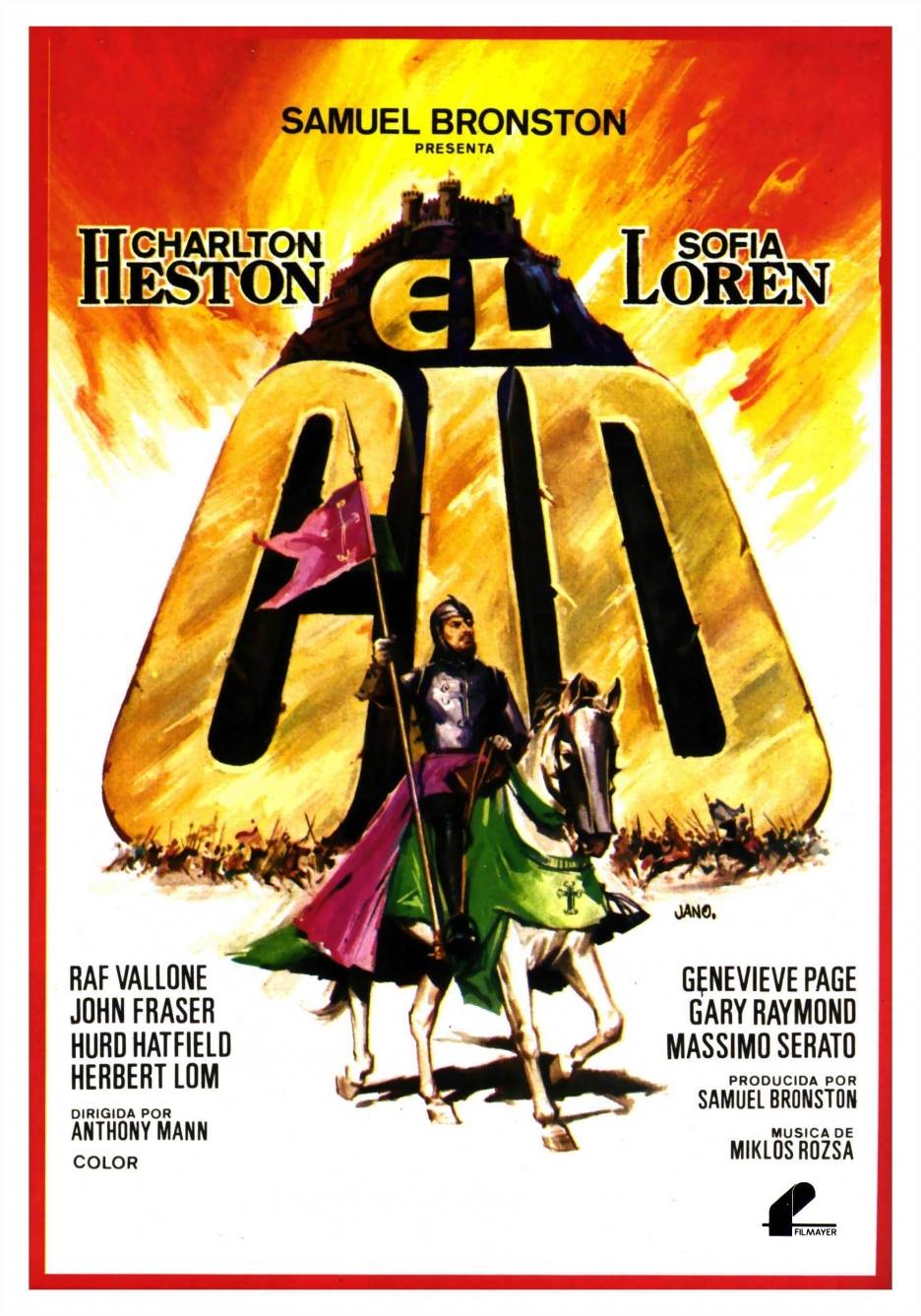
    While the film is nowhere in the same league as “Excalibur” – it’s far too glossy and pat – it does sport some satisfying 1950s spectacle, and a fine score by Miklós Rózsa.

    I hope you’ll join me, in the name of God, St. Michael and St. George, for music inspired by the legends of Arthur, on “Picture Perfect” – music for the movies – this Friday evening at 6, with a repeat tomorrow morning at 6; or enjoy it later as a webcast at wwfm.org.

  • Happy New Year Time Travel Movie Music

    Happy New Year Time Travel Movie Music

    Happy New Year, everyone!

    2016 is poised to be a most curious, wonderful and disorienting one, with enormous professional and personal changes ahead. I hope yours is a good one.

    If you’re a late riser after the intensity of last night’s revels, or if you find you just can’t take another “bowl” game, you might find an hour’s respite in music from time travel movies, on this week’s “Picture Perfect.”

    We’ll hear selections from “The Time Machine” (1960) by Russell Garcia, “Time After Time” (1979) by Miklós Rózsa, “Somewhere in Time” (1980) by John Barry, and “Back to the Future” (1985) by Alan Silvestri.

    That’s a time travel toddy for New Year’s, tonight at 6 ET, with a repeat tomorrow morning at 6. Or you can enjoy it later as a webcast at wwfm.org.

Tag Cloud

Aaron Copland (92) Beethoven (95) Composer (114) Film Music (123) Film Score (143) Film Scores (255) Halloween (94) John Williams (187) KWAX (229) Leonard Bernstein (101) Marlboro Music Festival (125) Movie Music (138) Opera (202) Philadelphia Orchestra (89) Picture Perfect (174) Princeton Symphony Orchestra (106) Radio (87) Ralph Vaughan Williams (85) Ross Amico (244) Roy's Tie-Dye Sci-Fi Corner (290) The Classical Network (101) The Lost Chord (268) Vaughan Williams (103) WPRB (396) WWFM (881)

DON’T MISS A BEAT

Receive a weekly digest every Sunday at noon by signing up here


RECENT POSTS