Tag: Movie Music

  • Sherlock Holmes Movie Music Picture Perfect

    Sherlock Holmes Movie Music Picture Perfect

    The game is afoot! This week on “Picture Perfect,” it’s an hour of music from movies inspired by the world’s greatest detective.

    “Sherlock Holmes” (2009) features Robert Downey Jr. and Jude Law, in Michael Ritchie’s post-“Matrix” take on the master detective. While some of the film adaptations over the years may have glossed over the character’s physicality, Ritchie’s revisionist Holmes perhaps errs a mite too far in the other direction. Hans Zimmer wrote the music, he too going against received wisdom, and in the process coming up with one of his more interesting scores, if only for the quirky instrumentation, which includes a Hungarian cimbalom, accordion, fiddles and a broken pub piano.

    Perhaps it’s unfair to put Zimmer up against an old pro like Miklós Rózsa. Rózsa wrote the music for Billy Wilder’s melancholy portrait of the great detective, “The Private Life of Sherlock Holmes” (1970). Wilder requested that the composer adapt his lovely Violin Concerto for the project, a recording of which the director had listened to repeatedly during the writing of the screenplay. Rózsa and Wilder had previously collaborated on “Double Indemnity” and “The Lost Weekend.”

    The Sherlock Holmes comedy, “Without a Clue” (1988), represents a missed opportunity of sorts. The hope had been for Sean Connery to play Watson opposite Michael Caine’s Holmes, a longed-for reunion between the two who had worked so well together in “The Man Who Would Be King.” In the end, it was Ben Kingsley who assumed the role.

    The fun conceit that sets “Without a Clue” apart is that Holmes is the fictional creation of mastermind Watson, who in reality is the gifted crime-solver. Through necessity, Watson hires a second-rate actor to play the role of Holmes. Of course, the actor turns out to be a bumbling idiot. Henry Mancini provides the British Light Music style score, with a nod to Edmund White’s “Puffin’ Billy” (familiar stateside as the theme to “Captain Kangaroo”).

    Finally the Steven Spielberg-produced “Young Sherlock Holmes” (1985) offers a conjectural origins story, including Holmes and Watson’s first meeting as teenagers (ignoring the particulars laid out by Arthur Conan Doyle in his stories, with Watson already a war veteran who had served in Afghanistan). It’s all for fun, though it’s unfortunate the filmmakers felt the need to interject ‘80s-style special effects, rather than simply trust in the inherent magic of the subject matter. “Young Sherlock Holmes” features the first photorealistic, fully computer-generated character (a stained glass knight). Also, some Indiana Jones B-movie antics involving an Egyptian cult seem especially out of place.

    Interestingly, the film’s screenwriter, Chris Columbus, went on to direct the first two Harry Potter films. By my recollection, “Young Sherlock Holmes,” with its boarding school setting, has some of that same feel.

    The music, by Bruce Broughton, is certainly buoyant and beautiful, in the best John Williams tradition. Broughton scored a handful of big screen hits, notably “Silverado” and “Tombstone,” though arguably it is in the medium of television that he’s made his greatest impact. Thus far, his work has been recognized with a record 10 Grammy Awards.

    It’s elementary, my dear Watson. Join me for “Picture Perfect,” this Friday evening at 6:00 EDT, on WWFM – The Classical Network and wwfm.org.

  • Bernstein’s Waterfront A Champion Score

    Bernstein’s Waterfront A Champion Score

    “I coulda had class. I coulda been a contender. I coulda been somebody – instead of a bum, which is what I am.”

    We’ve all had those kinds of days, haven’t we?

    Yet Leonard Bernstein’s score for “On the Waterfront” (1954) was always a contender, even if at times the composer found himself on the ropes.

    “On the Waterfront” was the only original film score composed by Bernstein (the screen adaptations of his stage musicals were adapted by other hands). Narrative film, of course, is a collaborative effort, in which music is usually the last to the table and the first to go. Bernstein’s score was edited and dialed down to suit the overall needs of the film.

    Unused to such rough treatment, Bernstein found his brush with Hollywood to be dispiriting, to say the least. He arranged his music into a concert suite, over which he had complete control, and the work has gone on to become one of his better-known pieces. That said, what can be heard in the film remains a powerful statement, and one of the great film scores.

    The original recordings, as they appear in the film, were long believed to have been lost. However, in the course of restoration of “On the Waterfront” for release on BluRay, it was discovered that audio had been preserved on acetate discs used for playback during the original recording sessions. Material from these were issued for the first time in 2014, on the Intrada label.

    Bernstein’s music would be nominated for an Academy Award, one of “On the Waterfront”s twelve nominations. The film would be recognized with wins in eight categories, including Best Picture, Best Actor (Marlon Brando), and Best Director (Elia Kazan). Bernstein may have lost out to Dimitri Tiomkin for his work on “The High and the Mighty.” However, like Brando’s Terry Malloy, his score to “On the Waterfront” proves itself a champion.

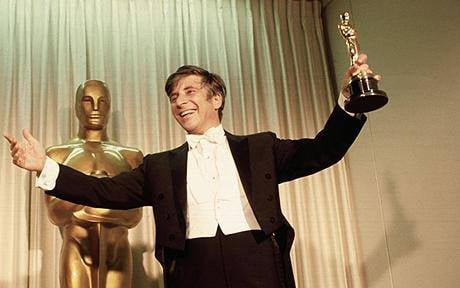
    We’ll hear selections, alongside some of Aaron Copland’s music for “The Red Pony” (1949), once again, from the film’s original elements; dances from the only film score ever to be awarded the Pulitzer Prize for Music, “Louisiana Story” (1948), by Virgil Thomson; and the music that lends “Picture Perfect” its signature tune, “They Came to Cordura” (1959), by Elie Siegmeister.

    New York composers visit Hollywood this week, as we celebrate the centennial of the birth of Leonard Bernstein, on “Picture Perfect,” music for the movies. This Friday evening at 6:00 EDT, on WWFM – The Classical Network and wwfm.org.


    Tune in to The Classical Network all day today and tomorrow for more great music and recordings in honor of Bernstein at 100!

  • Tall Ships Music from Classic Movies

    Tall Ships Music from Classic Movies

    Ahoy!

    This week on “Picture Perfect,” we give in to the impulse to run away to sea, with music from movies featuring tall ships.

    Though Gregory Peck cuts a dashing figure as “Captain Horatio Hornblower” (1951), the movie itself is a bit episodic, adapted as it was from three of C.S. Forester’s Hornblower novels. Canadian-born master of British Light Music Robert Farnon wrote the music, lending another dimension to this nautical adventure.

    Alan Ladd and James Mason engage in a battle of wills in “Botany Bay” (1953). Ladd plays a doctor, wrongly convicted of a crime, who is transported to a penal colony in New South Wales on a ship under the harsh command of Mason. In perhaps the film’s most memorable sequence, Mason has one of his charges keelhauled. Franz Waxman wrote the score.

    If it all sounds a mite familiar, it’s because the story was by Charles Nordhoff and James Norman Hall, who also wrote the book that became the basis for “Mutiny on the Bounty” (1962). The classic film version of “Bounty” dates from 1935, with Clark Gable butting up against Charles Laughton’s Captain Bligh. The ‘60s version bears a certain notoriety, mostly for Marlon Brando’s eccentric performance, which turns Fletcher Christian into a fop, and the fact that he essentially directed all his own scenes himself. The film was colossal failure, earning back only $13 million of its $19 million budget. Nonetheless, it managed to inspire Bronislau Kaper to compose one of his most monumental scores.

    (Interesting fact: the enlarged replica of the 1787 HMS Bounty, constructed specifically for the 1962 film, sank off the coast of North Carolina during Hurricane Sandy in 2012. The ship had also been used in the “Pirates of the Caribbean” franchise.)

    Finally, we’ll hear selections from “Windjammer” (1958), the only film shot using the Cinemiracle process. The film documents the round-trip, transatlantic journey of a Norwegian vessel from Oslo to the Caribbean to New York to Portsmouth, NH, and then back home again. Morton Gould wrote the evocative score, which alternates dance rhythms and sea shanties with a recurring melody suggestive of the sweeping romance of the high seas.

    Join me for these tall ships recommissioned on “Picture Perfect,” music for the movies, this Friday evening at 6:00 EDT, on WWFM – The Classical Network and wwfm.org.

  • Confidence Games & Movie Music

    Confidence Games & Movie Music

    This week on “Picture Perfect,” it’s the equivalent of a cinematic shell game. We’ll have musical selections from films about confidence games, charlatans and hucksters.

    In “The Magician” (1958), also known as “The Face,” Ingmar Bergman explores the idea of theatre as both confidence game and beautiful mystery. Max von Sydow stars as a traveling illusionist whose troupe of strolling entertainers, The Magnetic Healing Theatre, is put to test before being granted permission to perform at the royal court. The score, by Erik Nordgren, is sparse, made up of a dozen very short pieces for harp and two guitars, some movements for brass band, and in the main title, the addition of percussion.

    George C. Scott plays Mordecai Jones, a confidence man who defrauds the populace of the American South through various means, with a specialty in rigged punchboards, in “The Flim-Flam Man” (1967). The film, shot on location in Kentucky by director Irvin Kershner, features a gallery of colorful character actors, including Jack Albertson, Slim Pickens, Strother Martin and Harry Morgan. The happy-go-lucky score, by Jerry Goldsmith, makes use of harmonica, banjo, and freewheeling honky-tonk piano.

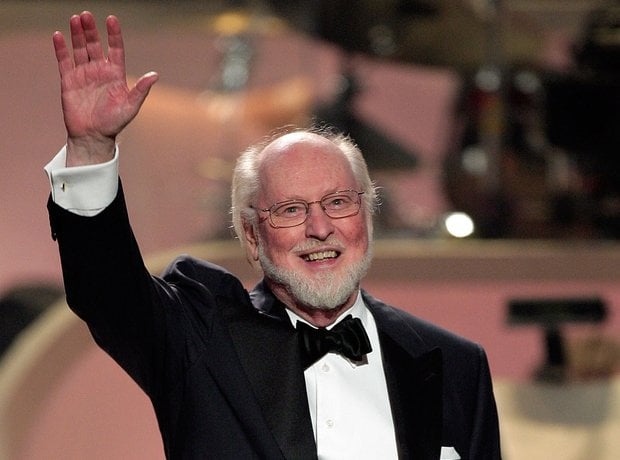
    Steven Spielberg’s “Catch Me If You Can” (2002) is based on the real-life exploits of the chameleonic Frank Abagnale, who, before his 19th birthday, managed to successfully pull a series of cons worth millions of dollars. Along the way, he posed convincingly as a lawyer, a doctor, and a pilot. Leonardo DiCaprio plays Abagnale, and Tom Hanks, the bank fraud agent who develops an unusual relationship with him, as the light-hearted cat-and-mouse thriller unfolds. John Williams wrote the intimate and jazzy score, a throw-back to the musical syntax of caper films of the 1960s, but also to the composer’s own jazz roots (when he still went by “Johnny Williams”).

    Finally, we’ll hear music from that classic of religious hucksterism, “Elmer Gantry” (1960). Burt Lancaster plays the hard-drinking, fast-talking salesman-turned-revivalist, in one of the great movie performances. Lancaster was recognized with a much-deserved Academy Award for Best Actor. Shirley Jones, of “The Partridge Family” fame, won Best Supporting Actress for playing one of Gantry’s shady ladies. The film’s brilliant score was by none other than André Previn.

    You can listen with “confidence” to “Picture Perfect,” music for the movies, this Friday evening at 6:00 EDT, on WWFM – The Classical Network and wwfm.org.

  • Escape Abroad with Movie Music on WWFM

    Escape Abroad with Movie Music on WWFM

    All aboard!

    “Picture Perfect” follows the English abroad this week, with music from “Enchanted April” (Richard Rodney Bennett), “A Passage to India” (Maurice Jarre), “The Best Exotic Marigold Hotel” (Thomas Newman) and “Around the World in 80 Days” (Victor Young).

    Bennett, quite the accomplished concert composer (and occasional torch song singer), provides a sensitive score for the 1991 Merchant/Ivory adaptation of Elizabeth von Arnim’s novel about four English ladies who spend an idyllic month at an Italian villa.

    Jarre received his third Academy Award for his music to David Lean’s final film, the 1984 adaptation of E.M. Forster’s novel of repression and racial tension in colonial India.

    Newman incorporates traditional Indian elements into his score for “The Best Exotic Marigold Hotel,” the 2012 surprise hit about English pensioners reinventing themselves in their retirement abroad.

    Young won his only Oscar (alas, posthumously bestowed) for “Around the World in 80 Days,” the star-studded, light-as-a-feather, though admittedly charming megawinner at the 1956 Academy Awards. It takes longer to watch the movie than it does to read Jules Verne’s novel – though it does provide a rare opportunity to see Ronald Colman in color.

    The weekend’s coming, so pack your valise and join me for “Picture Perfect,” this Friday evening at 6:00 EDT, on WWFM – The Classical Network and wwfm.org.

Tag Cloud

Aaron Copland (92) Beethoven (95) Composer (114) Film Music (123) Film Score (143) Film Scores (255) Halloween (94) John Williams (187) KWAX (229) Leonard Bernstein (101) Marlboro Music Festival (125) Movie Music (138) Opera (202) Philadelphia Orchestra (89) Picture Perfect (174) Princeton Symphony Orchestra (106) Radio (87) Ralph Vaughan Williams (85) Ross Amico (244) Roy's Tie-Dye Sci-Fi Corner (290) The Classical Network (101) The Lost Chord (268) Vaughan Williams (103) WPRB (396) WWFM (881)

DON’T MISS A BEAT

Receive a weekly digest every Sunday at noon by signing up here


RECENT POSTS