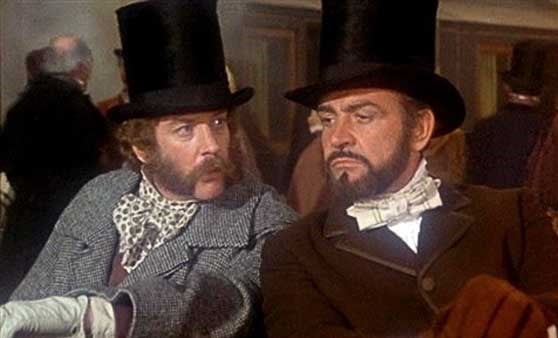
This week on “Picture Perfect,” it’s an hour of top hats and crinoline, with music from movies set during the Victorian Era. Enjoy selections from “The Importance of Being Earnest” (Benjamin Frankel), “Oliver Twist” (Arnold Bax), “Champagne Charlie” (Lord Berners), and “The Great Train Robbery” (Jerry Goldsmith). Even the pianos wear skirts, this Saturday evening at 6:00 EDT, on WWFM – The Classical Network and wwfm.org.
Tag: Movie Music
-

Labor Day Movie Music Working Stiffs on Film
Heigh-ho! This week on “Picture Perfect,” we celebrate Labor Day with music from movies about the working stiff.
“The Molly Maguires” (1970), set in and around the anthracite mines of Pennsylvania, illustrates the unfair labor practices imposed on immigrant workers there, which triggered violent strikes and acts of sabotage. Sean Connery is the ringleader and Richard Harris the Pinkerton detective brought in to infiltrate the gang.
The film was directed by Martin Ritt, a number of whose projects deal with labor, corruption, and intimidation, and his own experiences living through the era of the Hollywood blacklist – among these, “Edge of the City,” “The Front,” and “Norma Rae.”
The music is by Henry Mancini, a far cry from his work on “The Pink Panther,” “Peter Gunn,” and “Breakfast at Tiffany’s,” with a decidedly Celtic lilt.
Charlie Chaplin was a brilliant comedian, of course, but his perfectionism often resulted in uncomfortably close supervision over every aspect of his films. The young David Raksin found this out the hard way, when he accepted the job of assisting Chaplin in the writing of the score to “Modern Times” (1936).
Chaplin, a violinist and cellist himself, would whistle tunes and then stand over Raksin’s shoulder as he figured out how to make them fit the action. Alfred Newman, a much more seasoned hand, resented the micromanagement and stormed out of the film’s recording sessions. Raksin was actually fired once, after only a week and a half, but he was quickly rehired. Despite the creative friction, Chaplin and Raksin became friends, and Raksin recollected his work on “Modern Times” as some of the happiest days of his life.
The film begins with an iconic factory scene, Chaplin working an assembly line at an increasingly hectic pace, literally being put through the gears of the machinery. He suffers a breakdown, goes berserk, and throws the entire mechanized dystopia into chaos.
Speaking of dystopias, few can match the OSHA-flouting nightmare of Fritz Lang’s “Metropolis” (1927). One of the landmarks of silent cinema, “Metropolis,” unfortunately, is eerily prescient of a world divided between the haves and the have-nots. Once seen, the subterranean hell of the workers’ hive is not soon to be forgotten.
Lang’s vision continues to resonate in more ways than one, with its iconography shamelessly recycled by dewy-eyed fans and film students down the generations. Similarly, Gottfried Huppertz’s influential, Straussian score led the way for the opulent symphonic canvases of Max Steiner, Erich Wolfgang Korngold, and John Williams.
Finally, we’ll accept a helping hand – as well as claw, tail, beak, and tongue – from the benevolent woodland creatures of “Snow White and the Seven Dwarfs” (1937). Frank Churchill and Larry Morey’s songs are justifiably immortal.
The “picks” are all “mine” for Labor Day. Whistle along to music from movies about work, on “Picture Perfect,” this Saturday evening at 6:00 EDT, on WWFM – The Classical Network and wwfm.org.
-

Back to School Movie Music on WWFM
It’s back to school time! Enjoy it while you can.
Take notes, as we get all pedantic about music from movies with academic settings, including selections from “Goodbye, Mr. Chips” (Richard Addinsell), “Dead Poets Society” (Maurice Jarre), “Back to School” (Danny Elfman), “Mr. Holland’s Opus” (Michael Kamen), and “Tom Brown’s School Days” (again, Richard Addinsell).
Minds will be sharpened and buttons will be pushed, on “Picture Perfect,” music for the movies, this Saturday evening at 6:00 EDT, on WWFM – The Classical Network and wwfm.org.
-
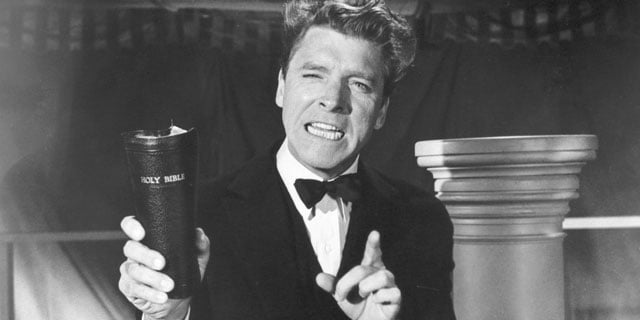
Movie Music for Con Men and Hucksters
This week on “Picture Perfect,” it’s an hour of cinematic shell-games. We’ll have musical selections from films about confidence men, charlatans, and hucksters.
In “The Magician” (1958), also known as “The Face,” Ingmar Bergman explores the idea of theatre as both confidence game and beautiful mystery. Max von Sydow stars as a traveling illusionist whose troupe of strolling entertainers, The Magnetic Healing Theatre, is put to test before being granted permission to perform at the royal court. The score, by Erik Nordgren, is sparse, made up of a dozen very short pieces for harp and two guitars, some movements for brass band, and in the main title, the addition of percussion.
George C. Scott plays Mordecai Jones, a confidence man who defrauds the populace of the American South through various means, with a specialty in rigged punchboards, in “The Flim-Flam Man” (1967). The film, shot on location in Kentucky by director Irvin Kershner, features a gallery of colorful character actors, including Jack Albertson, Slim Pickens, Strother Martin and Harry Morgan. The happy-go-lucky score, by Jerry Goldsmith, makes use of harmonica, banjo, and freewheeling honky-tonk piano.
Steven Spielberg’s “Catch Me If You Can” (2002) is based on the real-life exploits of the chameleonic Frank Abagnale, who, before his 19th birthday, manages to successfully pull a series of cons worth millions of dollars. Along the way, he poses convincingly as a lawyer, a doctor, and a pilot. Leonardo DiCaprio plays Abagnale, and Tom Hanks, the bank fraud agent who develops an unusual relationship with him, as the light-hearted cat-and-mouse thriller unfolds. John Williams wrote the intimate and jazzy score, a throwback to the musical syntax of caper films of the 1960s, but also to the composer’s own jazz roots (when he still went by “Johnny Williams”).
Finally, we’ll hear music from that classic of religious hucksterism, “Elmer Gantry” (1960). Burt Lancaster plays the hard-drinking, fast-talking salesman-turned-revivalist, in one of the great movie performances. Lancaster was recognized with a much-deserved Academy Award for Best Actor. Shirley Jones, of “The Partridge Family” fame, won Best Supporting Actress for playing one of Gantry’s shady ladies. The film’s brilliant score was by none other than André Previn.
You can listen with “confidence” to “Picture Perfect,” music for the movies, this Saturday evening at 6:00 EDT, on WWFM – The Classical Network and wwfm.org.
-
Tyrannical Sea Captains in Movie Music
This week on “Picture Perfect,” taste the lash and prepare to be keelhauled! We’ll have music from movies featuring tyrannical sea captains.
Tyranny and sadism are common ingredients in nautical adventure films, where hard-bitten sea captains find it “Better to reign in Hell, than serve in Heaven.”
At least that’s the mantra of Wolf Larsen, who does his best to uphold the philosophy of Milton’s Satan, in Jack London’s “The Sea Wolf” (1941). Larsen is a tough Norwegian sea captain who presides over his ship, the Ghost, with strength and brutality.
Edward G. Robinson plays Larsen. John Garfield is the working class seaman who opposes him. And Ida Lupino is the castaway with a past, with whom he falls in love in spite of himself. The score is by Erich Wolfgang Korngold, who also provided the music for the seafaring adventures of Errol Flynn.
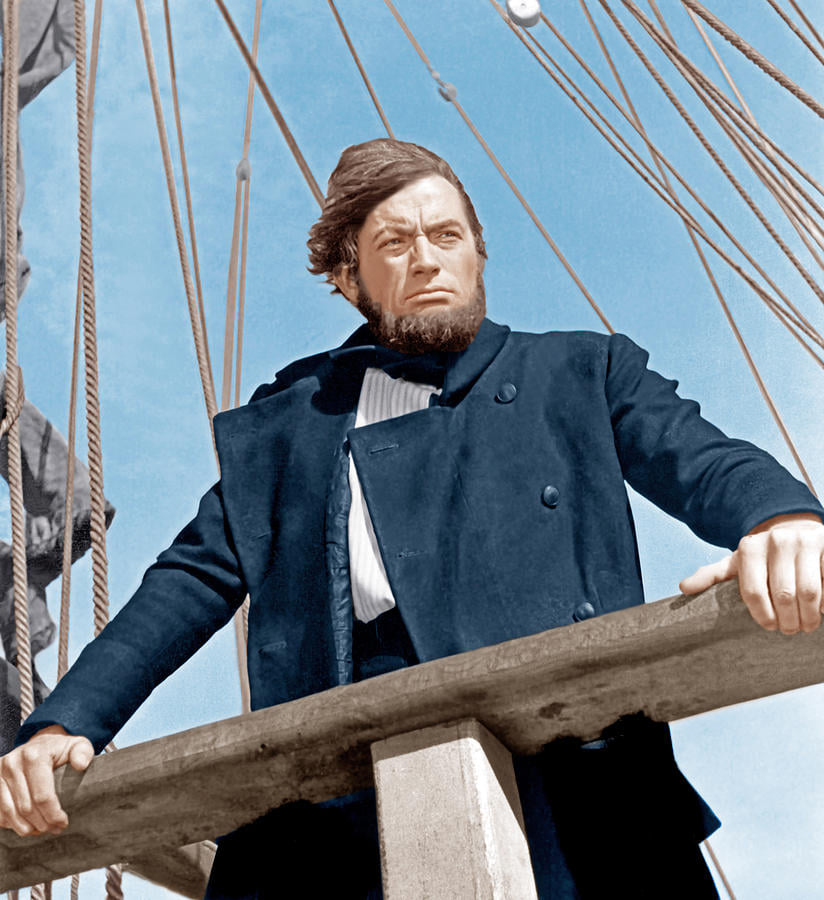
Captain Ahab requires little introduction. Everyone knows his ivory leg and his obsessive quest for the White Whale. Gregory Peck plays him in a film version of Herman Melville’s “Moby Dick” (1956), which was adapted by Ray Bradbury and directed by John Huston. The score is by English composer Philip Sainton.
Humphrey Bogart was nominated for an Academy Award for his performance as Lieutenant Commander Phillip Francis Queeg, in a big screen adaptation of Herman Wouk’s “The Caine Mutiny” (1954). Queeg, in charge of a U.S. Navy destroyer-minesweeper, is pushed over the edge by his obsession for strawberries pilfered from the officers’ mess. Max Steiner’s upbeat, patriotic theme provides a nice counterpoint to the interpersonal turmoil aboard the Caine.
Finally, the most iconic of tyrannical sea captains, Captain Bligh, is represented by “Mutiny on the Bounty” (1962). Historical novelists Charles Nordhoff and James Norman Hall make hay from the 1789 insurrection aboard the HMS Bounty.
The classic film version from 1935 starred Charles Laughton as Bligh and Clark Gable as Fletcher Christian. The remake featured Trevor Howard as Bligh, with Marlon Brando, envisioning Christian as a kind of high seas dandy.
It’s said that Brando essentially directed all his own scenes himself. The film was colossal failure, earning back only $13 million of its $19 million budget. Nonetheless, it managed to inspire Bronislau Kaper to compose one of his most monumental scores.
Take a bucket of salt water with your stripes, you dog! Then join me for tyrannical sea captains on “Picture Perfect,” music for the movies, this Saturday evening at 6:00 EDT, on WWFM – The Classical Network and wwfm.org!
CAPTAINS OUTRAGEOUS (clockwise from left): Gregory Peck as Captain Ahab, Edward G. Robinson as Wolf Larsen, Humphrey Bogart as Captain Queeg, and Trevor Howard as Captain Bligh
Tag Cloud
Aaron Copland (94) Beethoven (95) Composer (114) Film Music (149) Film Score (143) Film Scores (255) Halloween (97) John Williams (197) KWAX (232) Leonard Bernstein (105) Marlboro Music Festival (125) Movie Music (164) Mozart (91) Opera (215) Philadelphia Orchestra (90) Picture Perfect (174) Princeton Symphony Orchestra (110) Radio (90) Ross Amico (244) Roy's Tie-Dye Sci-Fi Corner (290) The Classical Network (101) The Lost Chord (269) Vaughan Williams (107) WPRB (397) WWFM (881)