There’s no love like star-crossed love.
This week on “Picture Perfect,” February gets overheated with music from movies inspired by the Brontës. Collectively, the Brontë sisters were responsible for some of the most tortured romances in English literature.
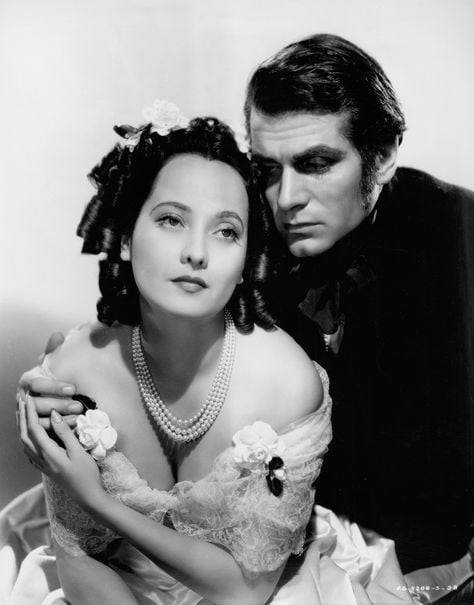
We’ll begin with one of the all-time classics, a beloved adaptation of Emily Brontë’s “Wuthering Heights.” The 1939 film features Merle Oberon as Cathy, Laurence Olivier as Heathcliff, and David Niven as Edgar, “that milksop with buckles on his shoes.” Alfred Newman’s score is one of the most moving of his storied career.
Then we’ll turn to Charlotte Brontë’s “Jane Eyre.” The 1943 adaptation stars Joan Fontaine as Jane and Orson Welles as Rochester. The music is by Bernard Herrmann, who had written scores for Welles as a director, both for “Citizen Kane” and “The Magnificent Andersons,” as well as for his Mercury Theatre radio shows. Welles involvement in “Jane Eyre,” however, was strictly as an actor.
A 1971 television movie of “Jane Eyre” stars Susannah York as Jane and George C. Scott as Rochester. The music, in this case, is by an up-and-coming John Williams, who was still a few years away from becoming a household name, for his work on “Jaws,” “Star Wars,” “Raiders of the Lost Ark,” and “E.T. The Extra-Terrestrial.” Williams has said that his score for “Jane Eyre” is one of his personal favorites.
We’ll conclude with a piece of biographical fiction about the Brontës, a 1943 Warner Brothers production called “Devotion.” The film stars Ida Lupino as Emily, Olivia de Havilland as Charlotte, Nancy Coleman as Anne, and Arthur Kennedy as their dissolute brother Branwell. It also features Sidney Greenstreet as William Makepeace Thackeray, Paul Henreid as an Irish priest, and – well, you get the idea. The casting, at times, strains credibility.
De Havilland had originally been slated to play Emily, and her real-life sister, Joan Fontaine, was to play Charlotte. When an offer came through for Fontaine to play Charlotte’s most famous creation, Jane Eyre – opposite Orson Welles’ Rochester, over at 20th Century Fox – De Havilland pivoted into the role vacated by her sister. In the end, “Jane Eyre” wound up being the better film.
By far the most attractive element of “Devotion” is the rich score provided by Erich Wolfgang Korngold. Korngold himself became so enamored with one of its themes that he resurrected it for use in the first movement of his Violin Concerto.
I hope you’ll join me for a Yorkshire pudding of passion, torment, and cruelty. Sigh along to tortured romances of the Brontës, for Valentine’s Day, on “Picture Perfect,” music for the movies, this Saturday evening at 6:00 EST, on WWFM – The Classical Network and wwfm.org.